
COMMENT | Danger signs of public confidence erosion in our systems
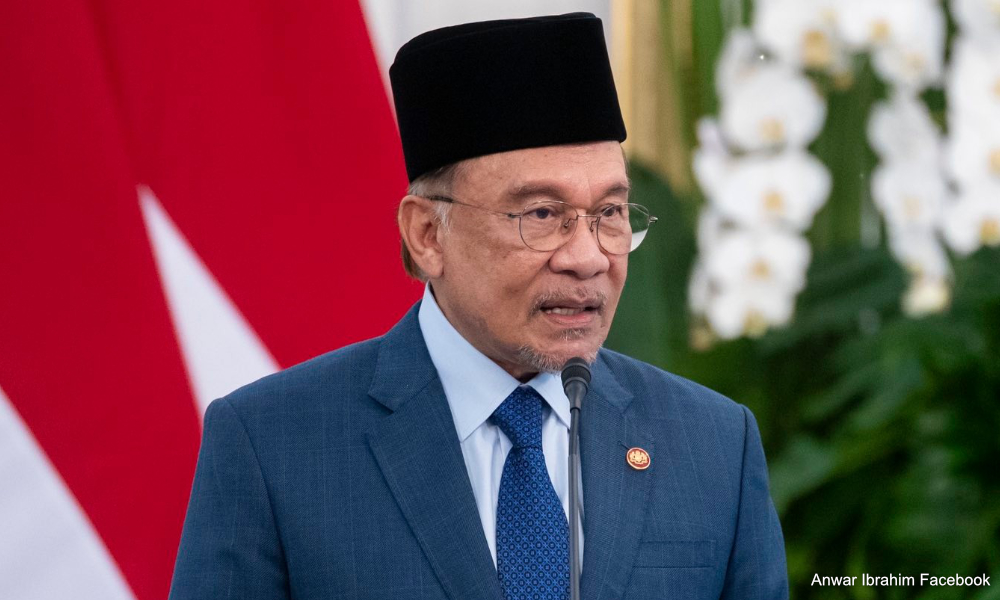
“There are only two kinds of lawyers: those who know the law and those who know the judge.”
- Anwar Ibrahim, speaking at the Law Asia conference in Brisbane, Australia, on March 22, 2005.
COMMENT | Perceived or otherwise, it was a suggestion that some lawyers rely on their understanding of legal principles while others may leverage personal relationships with judges.
Although Anwar Ibrahim was a nobody in 2005, his words implied that knowing the judge could be a more effective strategy than understanding the law in certain situations.
However, having witnessed all the drama, the conspiracies, the twists and turns in his trial, perhaps he was qualified to make that statement.
As he said in the same conference, he noted...
“There are only two kinds of lawyers: those who know the law and those who know the judge.”
- Anwar Ibrahim, speaking at the Law Asia conference in Brisbane, Australia, on March 22, 2005.
COMMENT | Perceived or otherwise, it was a suggestion that some lawyers rely on their understanding of legal principles while others may leverage personal relationships with judges.
Although Anwar Ibrahim was a nobody in 2005, his words implied that knowing the judge could be a more effective strategy than understanding the law in certain situations.
However, having witnessed all the drama, the conspiracies, the twists and turns in his trial, perhaps he was qualified to make that statement.
As he said in the same conference, he noted: “I say this not because six years of incarceration have transformed me into a jurist, much less a philosopher. I say this because six years, well it is actually eight years, including the two spent much earlier (in 1974 under the Internal Security Act).
“So, all these years behind bars have made me realise what it's like to be at the receiving end of unjust laws administered by unjust politicians. The earlier charge sheet was long, but there was to be no trial.”
He discussed his then-incarceration and concluded: “In a dictatorship masquerading as a democracy, however, where the judges are subservient to the political masters, judicial high-handedness is given free rein, and transparency is conspicuous by its absence.”
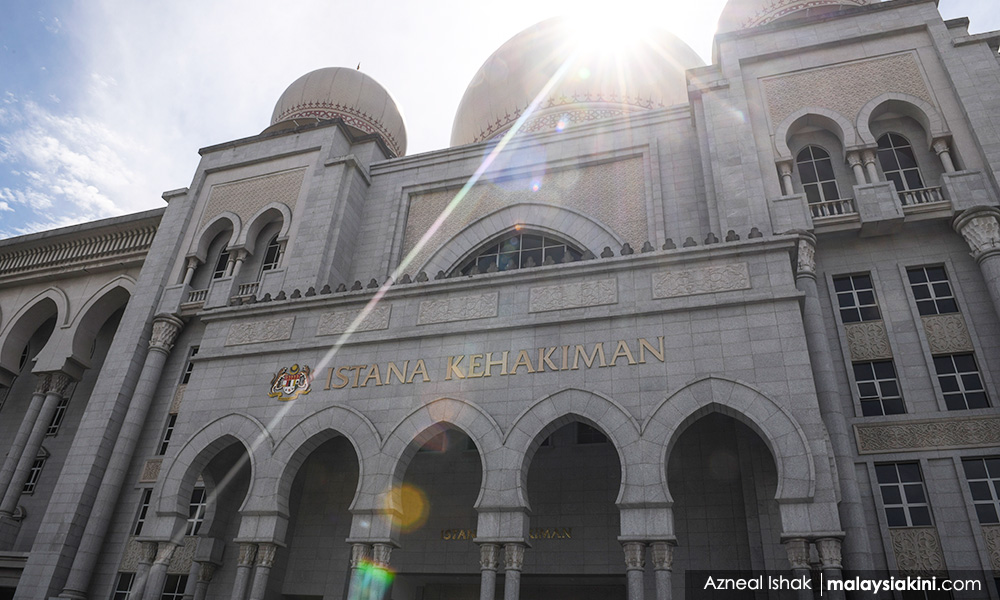
On the heels of the judicial crisis, which led to the sacking of the chief justice Salleh Abbas and five other judges, came the Air Molek case in 1995.
The late Justice N H Chan, sitting as a Court of Appeal judge, wrote in his judgment that “something is rotten in the state of Denmark”, referring to the High Courts, which were then situated in Wisma Denmark in Kuala Lumpur.
But the “mother of all controversies” arose in the case of Adorna Properties, which further eroded public confidence in the judicial system.
In December 2000, the then-chief justice Eusoff Chin (delivering the judgment of the Federal Court) ruled that the buyer had obtained a good title, despite the forgery committed by a con woman, who had since disappeared.
As Salleh, a noted academician, wrote: “He (Eusoff) made that erroneous decision after holding that, in Malaysia, we practise immediate indefeasibility. This was a grievous judicial error because there was abundant case-law (judicial precedents) clearly showing that we practise deferred indefeasibility.”
It took another 10 years before that decision was overruled and the mistake corrected.
Sex tape scandal
In January 2010, A five-member panel led by then-chief justice Zaki Azmi unanimously departed from the court's previous judgment made by a three-member panel headed by Eusoff.
But Anwar was again involved in another “standoff” of sorts with the administration of justice, and was perhaps justified. Because the entire court machinery was used to screen a sex tape, allegedly featuring Anwar.
Before that, editors and journalists were invited to a preview party at Carcosa Seri Negara Hotel in a room booked under the name of former Malacca chief minister Abdul Rahim Thamby Chik, who was then Risda chairperson.

Rahim was part of the “Datuk T trio” that also comprised businessperson Shazryl Eskay Abdullah and former MP Shuib Lazim - all three later claimed responsibility for the event.
They were fined RM5,500 for circulating, exhibiting, distributing, and displaying an obscene film.
Anwar had maintained that the government was involved in a conspiracy in the matter, asking how one can respect a government when its instruments are used so blatantly politically.
Saying it was pre-planned, he declared: “What is important is that I have declared my innocence. I am not the man in the video. They can use their experts from South Korea and America to say whatever they can say. This is nothing more than a vicious attack (on me) and a malicious campaign. Nothing beyond that.”
Why delve into history and evoke bitter memories of the past? The bitter experiences and the wrong decisions should be a reminder and a lesson of the mistakes of the past.
When the Pakatan Harapan government came into power with the support of the people, it promised to establish strong and independent institutions, along with adequate checks and balances.
Judges’ tenures
Today, we are at a crossroads. The events of the recent past and false accusations of lobbying have brought to the fore the hidden dangers of people losing trust and support in the judiciary.
The warnings sounded by former Malaysian Bar presidents and other prominent personalities underscore the continued need for an independent judiciary.
However, the former presidents believe “there is a perception that the judges’ tenures may not be extended as their court judgments were not in line with the wishes of the powers that be”, indirectly sending a message to other judges to “toe the line”.
“Rightly or wrongly, these perceptions strike at the foundation of the judiciary and erode the independence of the institution.
“We urge the government not to allow any backsliding in preserving, promoting, and protecting the independence of the judiciary, as this would hurl us into a past that Malaysians would rather forget,” they said.
When delivering a keynote address at the Negeri Sembilan Bar Law Conference in commemoration of NS Bar’s 60th Anniversary, Tengku Maimun Tuan Mat advised sitting judges to remain steadfast and dispense justice reasonably, even if faced with contrary requests from the executive.

“An independent judge decides cases on the merits, without regard to personalities involved, with no fear of any kind of threat or sanction,” she noted.
As a rejoinder, I wrote: “These remarks, made in tandem with previous ones, suggest that attempts had been made. After all, there is no smoke without fire. Have such requests been made? The chief justice knows better.”
Today, we must ask: What Tengku Maimun did or did not do warrants non-extension?
Related articles
Bar to hold EGM over judicial vacancies as CJ's term ends
On CJ's final day, DAP backs extension amid silence from Putrajaya
KINIGUIDE | On the appointment of judges and how PM has a role
COMMENT | Call for judges' tenure extension nothing to do with lobby
COMMENT | Anwar's Umno state of mind
COMMENT | Danger signs of public confidence erosion in our systems
YOURSAY | PM chooses key people in govt, not the royals
R NADESWARAN is a veteran journalist who strives to uphold the ethos of civil rights leader John Lewis: “When you see something that is not right, not fair, not just, you have to speak up. You have to say something; you have to do something.” Comments: citizen.nades22@gmail.com
The views expressed here are those of the author/contributor and do not necessarily represent the views of Malaysiakini.