


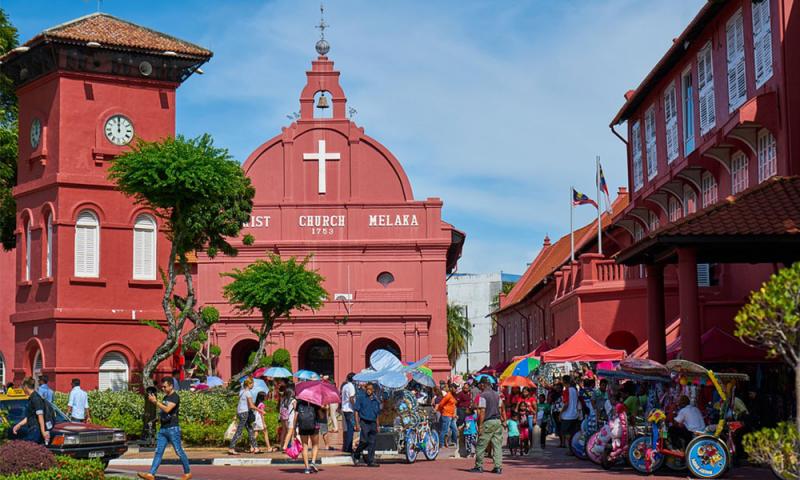

Malacca guidebook marred by historical inaccuracies
The Malacca Tourism Promotion Board’s book meant to serve as a guide for tourists visiting the state has instead drawn criticism over historical inaccuracies contained within.
One notable error in the book "Melaka: The Guide" is the statement that the Portuguese arrived in Melaka in the 15th century, when in fact they arrived in 1511, which is the 16th century.
Similarly, the book claims that the Chinese princess Hang Li Po...
The Malacca Tourism Promotion Board’s book meant to serve as a guide for tourists visiting the state has instead drawn criticism over historical inaccuracies contained within.
One notable error in the book “Melaka: The Guide” is the statement that the Portuguese arrived in Malacca in the 15th century, when in fact they arrived in 1511, which is the 16th century.
Similarly, the book claims that the Chinese princess Hang Li Po was married to Sultan Muzaffar Shah, whereas Hang actually married his son, Sultan Mansur Shah, also known as Raja Abdullah.
The information about Poh San Teng Temple is also inaccurate, with the book stating it was built in 1794 when the actual date of construction was 1795.
There are also inaccuracies regarding the duration of Portuguese colonisation, the year the Malacca Club building was built, the 750th anniversary of Malacca’s founding, the year the Queen Victoria’s Fountain was built, and the year of Saint Francis Xavier's death.
These errors were first highlighted by French historian Serge Jardin, who questioned those responsible for the book.
He raised these inaccuracies in a Facebook post on July 9.
“Please, Tourism Malacca, you shouldn’t take tourists for stupid […] Is there anyone in charge?” he said.
Facts, not myth
Commenting on the inaccuracies, Universiti Sains Malaysia historian Azmi Ariffin said experts should have reviewed the book before it was published.
“The book may have been written by laypersons (without in-depth historical knowledge) and the factual errors were not checked by the administration.
“It should have been reviewed by historians,” he told Malaysiakini.
He also opined that the current representation of Malacca’s history has been influenced by other interests, such as boosting tourism.
While this is beneficial, he said, the presentation of historical facts needs to be authentic and not mythical to attract tourists.
“(There is no need to) highlight names like Hang Tuah and Hang Jebat as those are uncertain.
“These should only be discussed to a certain extent and not (presented as conclusive fact),” he added.
On July 9, Tourism Malacca said the distribution of the book has been halted immediately pending a review of its contents.
“We greatly appreciate the feedback from the public and will take appropriate action to ensure the integrity of the information provided to tourists and the public.
“We apologise for any inconvenience caused and thank everyone for their cooperation,” said Tourism Malacca.


What is new ? There have been many instances , where history has been distorted by many including “ Professor’s Kangkung” in order to show a certain segment of society is better than the others or simply to benefit themselves!