




Time running out for 'deviationist' sect
While Malaysian Muslims this week ushered in their new year, members of a small Islamic sect huddled in a mosque in Selayang, Selangor, pondering about their future.
Their faith has come under renewed attacks from the authorities, especially from the Selangor religious department.
Only recently, the Selangor Islamic Affairs, Malay Customs, Infrastructure and Basic Amenities Committee chairperson Dr Hasan Ali had vowed to “bury” the movement.
They have been issued warnings not to put up Quranic verses and holy logos in their mosque. In addition, their main mosque and the land it is sitting on in Kampung Nakhoda, Selayang, are facing imminent seizure from the state religious authorities.
So who are these people? And why are they such a threat?
While Malaysian Muslims this week ushered in their new year, members of a small Islamic sect huddled in a mosque in Selayang, Selangor, pondering about their future.
Their faith has come under renewed attacks from the authorities, especially from the Selangor religious department.
Only recently, the Selangor Islamic Affairs, Malay Customs, Infrastructure and Basic Amenities Committee chairperson Dr Hasan Ali had vowed to “bury” the movement.
They have been issued warnings not to put up Quranic verses and holy logos in their mosque. In addition, their main mosque and the land it is sitting on in Kampung Nakhoda, Selayang, are facing imminent seizure from the state religious authorities.
So who are these people? And why are they such a threat?
The group has been labeled by the state religious authorities as Qadiani and accused of practising deviationist teachings.
But sect members call themselves Jemaat Ahmadiyah Muslim Malaysia, a branch of an international Ahmadiyah movement.
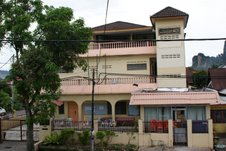 “We are definitely not involved in deviationist teachings. We are all Muslims, just like the others, including Dr Hasan and his PAS people,” said Ahmadiyah Malaysia’s leader Ungku Adnan Ismael.
“There are many lies being propagated against us by the religious authorities,” he told Malaysiakini recently during a meeting which also included some of his sect members.
While most of them had a lot to say about how they were being treated by the state religious authorities, they nevertheless agreed to channel their views through their spokesperson Ainul Yakin Mohd Zain, a born Ahmadiyah follower.
The lies and the truth
In recent weeks, Hasan, also the Selangor PAS chief, was reported in the media as saying that this sect believed its members were prophets and descendants of slaves; that the haj can be performed in India; and were using modified verses in the Quran.
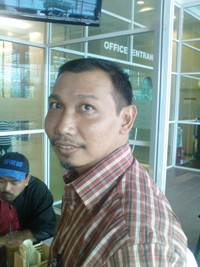 “None of this is true. We perform our haj in Mecca, just like all other Muslims. We use the holy Quran, without any modification. We pray five times a day, using the same verses used by other Muslims,” said Ainul.
Their only difference is – and it IS a major one – that they believe that there is another prophet after Muhammad. And for them, this new messiah is their founder Mirza Ghulam Ahmad Qadiani.
For the mainstream Islamic believers in Malaysia, this is a strong deviation from the true teachings of Islam as for them the last prophet is Muhammad.
Any other Islamic teaching which propagates the existence of a new prophet is automatically deemed deviant, and this included the Ahmadiyah movement.
The Ahmadiyah movement was founded by Mirza Gulam in India in 1889.
Qadiani is the village Mirza Gulam was born in 1839. He had declared himself as the promised messiah in 1891 and as the new prophet in 1901. Mirza Gulam died in 1908.
The movement is now headed by the fifth successor, Hadrat Mirza Masroor Ahmad, who is overseeing the international Ahmadiyah movement from his base in London, United Kingdom.
The Ahmadiyah teaching in Malaysia is not a new phenomenon.
It found its way to this shores in the 1930s. Their first base was in Jeram, Selangor, although in the years that followed Kampung Nakhoda had taken over as the unofficial headquarters for the movement.
At its height, the movement had about 10,000 members. Today, they stand at about 1,000 to 1,500, of which 500 are from Selangor.
“We have a strong following in Selangor, followed by Sabah and some in Johor,” said Ainul.
‘We are liberal Muslims’
The Ahmadiyah teaching was strenuously rejected by the local religious authorities from early on. A fatwa was declared against the movement in 1975.
Ainul said that the fatwa meant that the Ahmadiyah followers were not considered Muslims and their place of worship could not be called mosques.
“This is why we have not been charged in any syariah courts because we are not considered Muslims.
“Our mosque is only referred as a building for our gathering and not as a mosque as we are not allowed to call it a mosque due to our status,” he added.
These however, he added, had never stopped them from being true Muslims.
“Come to our mosque and you will see us praying like all the others. Nothing is different.
“Of course, we are more open minded than most of them. We believe that if you want to convert out, you may do so…
“That is something which you will have to deal with your maker… not us,” he added.
Likewise, he said, members of the Ahmadiyah were open to hold discussions on religion and interfaith dialogues, something which has been avoided by the mainstream Islamic groups.
He claimed that PAS leader Hasan was only trying to “make himself a hero by pushing for actions against us”.
“His is a political move - a move to portray himself and his party as true Muslims and all others as non-believers,” added Ungku Adnan.
“Orthodox Muslims, like PAS, would not like us. The enlightened one, however, may agree with us,” he added.
Running out of time
Ainul said that the next step for the Ahmadiyah movement was to explain its teachings to the people and the authorities.
“Even when the fatwa was issued, we were not called in to explain our teachings. And now Hasan, PAS and the Selangor religious authorities are working to clamp down on us.
“Why don’t they invite us for a dialogue? Or better still, if they think we are deviating from the true teaching, why not try to reform us?” asked Ainul.
“What we don’t want is to become a victim of a political game. We want to be left alone to practice our belief as Muslims. And they must realise that we are no different from them,” he added.
But before any of these can be done, the Ahmadiyah movement must first stem the state machinery which has been given the green light to forcibly remove Quranic verses and Islam logos from their ‘building’ (read: mosque) beginning tomorrow.
Plans are also afoot to use the National Land Code to examine the legality of the movement’s purchase of land several years ago, on which the mosque stands.
Ungku Adnan and his followers are worried that if the move against them is successful, they will not be around to celebrate Awal Muharram next year as Ahmadiyah followers.
More information
Selangor Religious Department’s paper on Qadiani/Ahmadiyah


