




Looking at the Malay problem
( PKR deputy president Dr Syed Husin Ali’s latest book The Malays: Their problems and future was launched by PKR Advisor and former deputy prime minister Anwar Ibrahim in Petaling Jaya on June 14. Below is the speech given by the author at the launching ceremony .)
Thank you all for coming tonight. I have heard rumours that most of you have come not to listen to speeches but ….. to buy my book. As you know, in Bolehland rumours are more reliable than news reports in the BN controlled mainstream media. Well, if you missed it, that was supposed to be an advertisement before the actual programme.
( PKR deputy president Dr Syed Husin Ali’s latest book The Malays: Their problems and future was launched by PKR Advisor and former deputy prime minister Anwar Ibrahim in Petaling Jaya on June 14. Below is the speech given by the author at the launching ceremony .)
Thank you all for coming tonight. I have heard rumours that most of you have come not to listen to speeches but ….. to buy my book. As you know, in Bolehland rumours are more reliable than news reports in the BN controlled mainstream media. Well, if you missed it, that was supposed to be an advertisement before the actual programme.
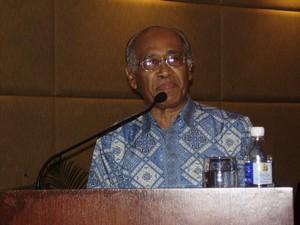 Allow me to begin by narrating a little experience as a prisoner of conscience which has something to do with the writing of my book. As some of you might already know, I was arrested under the ISA in December 1974 together with Anwar Ibrahim, following the hunger march of about 25,000 peasants in Baling. More than a thousand students and staff of the universities were arrested for demonstrating in KL to support the march. About a dozen students, ex-students and lecturers, including both of us, were subsequently sent to Kamunting.
After twenty months in that detention camp, I was taken to KL with the promise of release. Later Anwar was also taken there and indeed released before his two years were up. But I was put under solitary confinement in an unknown holding centre to be observed and dissected by a team of special branch operatives for more than six months.
The outcome was that I had to continue being guest of the Agung for an additional four years. Of course combined with his period of incarceration following a kangaroo court trial that took place after his sacking, Anwar managed to break my six year record.
In that unknown centre I was under intense interrogation for hours on end, sometimes without sleep, by a regular shift of officers, some playing kind and some not acting but really were cruel. I experienced being spit on, insulted, slapped, beaten or left on many occasions in my cell of eight by eight feet in total darkness. I am sure the same experiences have to be borne by the majority of detainees in Kamunting now, who have been there nearly six years.
Somehow or other, I managed to stop my tormentors continuing to spit or slap me merely by smiling or offering the other cheek. I also learnt to hear the sound of but not listen to their threatening tirades. Admittedly, what I found most difficult was to surmount the
psychological feeling of loneliness and abandonment in the dark cell. I need not elaborate on these because they have been narrated in Two Faces (Detention Without Trial) .
Please bear with me a little bit more about the excruciating experiences in my lonely cell. One of my senior interrogators proudly said he could destroy the only thing I have, my mind. This was after I refused to be coerced into implicating Dr Rajakumar, yes, this Rajakumar as a pro- communist and admitting that I was the intermediary between the then deputy prime minister Dr Mahathir Mohamad and the communist underground.
Not been rehabilitated
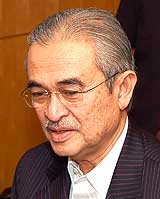 Had I admitted, perhaps the minister of home affairs then, Ghazali Shafie would have made sure that he replaces Mahathir as DPM and then proceed to become PM. Then we would have different type of problems for the country. Some people asked: "Why didn't you admit? You could have saved us from Mahathir's and now Abdullah's rule."
Of course I would not admit to such blatant lie. Further any admission would certainly be used as a new ground to extend my detention. Anyhow, Ghazali still signed my two year extension because the SB officers found I had not been rehabilitated.
Every time I was abandoned in the cell I would inevitably do three things, to make sure my body and mind remained strong. First. Exercise, mostly by pumping and jumping up and down. Second. Pray and recite whatever verses of the Quran I remembered. Third. Sing some old English Malay tunes that I was familiar with. But these were not sufficient. I wanted to do something more to keep my mind more active.
It was at this time that I remembered a suggestion from my friend Rajakumar, conveyed through my wife during my early days in Kamunting, to write a book on Malay values. But this topic was too specific and needed deep research. So I chose something easier. Whenever I was left in the cell, I thought about and planned this book. After a few months I had practically every page of all chapters clearly written in my mind.
When I was taken back to Kamunting and separated from the other detainees, I had all the time to myself to furiously type out the whole thing within three weeks. So you see, that is the genesis of my book. That is why I have chosen my two long standing and respected friends - Raja and Anwar – one to speak on the book and the other to launch it.
It was before the recent general elections I decided to update and revise it. I dare say that the Malay problems as I saw them from the dark cell I was dumped into three decades ago have not changed very much. Granted there have been improvement in certain aspects of the conditions of the Malays, but in some others they have indeed deteriorated.
It is true that the incidence of absolute poverty among Malays has decreased, but relative poverty has increased as the gap between the rich minority and the poor majority has widened. It is true there are more Malay new rich produced through the government development programmes, but concentration of wealth and corruption are becoming more chronic especially at the highest level in Malay society. Many new towns have been built with beautiful roads and unnecessary decorative bridges, but the condition of some Malay villages appear to have remained the same since Merdeka.
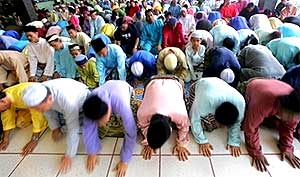 It is true that there are more Malays who are highly educated and have become successful professionals, but there is alarming deterioration in moral and ethical values among a growing number of Malays, including those holding important public offices. At the same time there is also increase in all kinds of criminal as well as anti-social activities.
It is true that there are many Malays who have built ostentatious palaces for themselves from the country's wealth they have robbed. But many in the rural areas still live in run-down huts
and study in ill-equipped schools, sans electricity and tap water, while a large number in urban slum areas are living in constant fear of forcible eviction.
I am not suggesting that these are exclusively Malay problems. They are also shared by other communities – the Chinese, Indian, Iban, Kadazandusun and many others. But, as I have statistically shown in the book, comparatively a larger proportion of Malays are still
lagging behind the Chinese especially and even the Indians too, in income, education, housing and so forth. This, ironically, prevails despite the so-called ‘ketuanan Melayu’ (Malay supremacy), constitutional guarantees on the Malay special position and the New
Economic Policy (NEP).
Social, ethical development
Admittedly, this country has witnessed a lot of development especially after the NEP. But unfortunately, they emphasise more on economic rather than social and human development. At the same time they stress more on physical or material rather than moral or ethical development.
There is more allocation on wasteful mega projects to provide big contracts and commissions to cronies rather than providing social facilities for greater benefit and welfare of the ordinary people, especially the disadvantaged groups.
Who do I mean by the disadvantaged groups? Of course, basically they are the poor in the lower class. But I must say, they also include the middle income groups who can hardly afford decent living because of their big family to support and the ever rising prices of daily needs. In fact, I would not exclude also the professionals, executives, businessmen and others in the upper middle class who often face discrimination because of their ethnic background or political association, for example.
These disadvantaged groups are from different ethnic groups and not confined only to the Malays. But those who form the majority are the poor and low income groups, the bulk of whom are Malays.
In the process of development the perception and the reality to large extent is that the Malays from the privileged groups are the greatest beneficiaries. Even the poor and disadvantaged Malays are not given their due share.
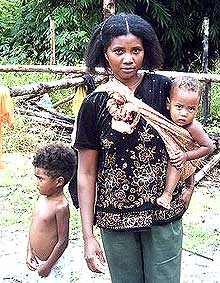 Several observations need to be emphasised here. First. Poverty and low income, although largely are not exclusively Malay problems. There are Orang Asli in the Peninsula and Orang Asal in Sabah and Sarawak who are in more oppressive conditions than a large number of the Malay poor. There are Indians and Chinese in the estates and slum areas who are poor too.
But just because their number is small it does not mean we can afford to neglect and exclude them from the development process.
Be that as it may, the fact to be stressed is that the Malays constitute the big majority of the poor and deprived in the country. So, primary attention must justifiably be focused on them; but there
is no justification for neglecting the non-Malays with similar or sometimes worse plights.
Second, in the name of the Malays as a whole, a small coterie of those in advantageous positions have managed to use or abuse the NEP and the constitutional provisions on Malay special position to enrich themselves. In most cases they succeed, though many of them only temporarily, on the basis of ‘know who’ and not ‘know how’. The privileges they enjoy are often misinterpreted as those of the whole Malay community. Ironically, beyond beautiful rhetoric there has been insufficient sensitivity and commitment among many Malay government leaders towards the poor who are the majority Malays.
At the same time, many non-Malay capitalists have become wealthier than the leading Malay corporate figures enjoying special support and sponsorship. Although far from being Bumiputera, they are able enjoy the benefits from the big allocations for development under NEP projects primarily through their ‘know who’ links with powerful politicians whom they can often easily buy off. They certainly have more privileges than the ordinary Malays.
Reappraise the NEP
Third, the persistence of absolute poverty and deterioration of
relative poverty affect the access to good education, health services, housing and so forth among the poor. Since the majority of Malays are poor, consequently they are most adversely affected. Again these plights are not the monopoly of just the Malays for they are shared also by the poor from other ethnic groups.
The cause of all these can be traced to the existing socio-economic system and the government policies, which are strongly rooted in the dominating free enterprise ( laissez faire ) philosophy.
There is something inherent in this system and policies that work
against the interest of the poor and the weak. With the influence of
globalisation (a new form of colonialism), the prevailing political
power structure and the dominating free enterprise philosophy, the
system favouring the rich few will persist for quite some time.
There is great need to temper this system with humanitarian and egalitarian values and programmes. There is still need for positive
discrimination. But it should not be based not on ethnicity, but
instead based on necessity that cut across ethnic line.
I share the view that after nearly forty years, there is need to
reappraise the NEP and replace it with a new Malaysian Economic Agenda (MEA) as mooted by Anwar and accepted as PKR party policy. This agenda contains the following important ingredients: (a) it focuses on the poor and disadvantaged, with social facilities provided more for their welfare and emancipation, (b) it introduces poverty alleviation and development programmes for the Malay rural poor, but providing similar opportunities and treatment to the other ethnic groups, cutting across ethnic boundaries, (c) it restricts powerful political leaders and their cronies accumulating wealth from filthy sources and by dirty means, (d) it wages effective war against corruption, waste and mismanagement, and (e) it empowers the people, particularly the poor and disadvantaged Malays, so that they they can be liberated from slavish mentality and have the courage to promote and defend their basic economic and social rights.
The idea of replacing the NEP with the MEA is to generate balanced
development to achieve social justice through fair and equitable
distribution of the country's economic and social resources. Since the policy and orientation of MEA is based on the dictum of kepedulian rakyat i.e. concern for the plight of the people, the poor in particular, it will certainly be most advantageous to the Malays who form the majority poor. At the same time it can guarantee greater ethnic stability because the non-Malays are included in the equation.
What is needed is ketuanan rakyat (people's supremacy). This is the
way forward.


