




Record high oil prices 'a strain' on budget
Record high world oil prices will put a strain on the national budget with the government forced to allocate more money to fuel and food subsidies, a senior minister said today.
Record high world oil prices will put a strain on the national budget with the government forced to allocate more money to fuel and food subsidies, a senior minister said today.
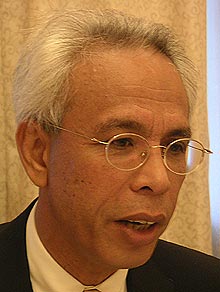 Shahrir Abdul Samad, domestic trade and consumer affairs minister told
AFP
that with oil prices at US$117.26 per barrel, it will "put a strain on the budget."
Shahrir Abdul Samad, domestic trade and consumer affairs minister told
AFP
that with oil prices at US$117.26 per barrel, it will "put a strain on the budget."
"With oil prices at 117 dollars, petrol and gas subsidies would be at least 40 billion ringgit for the year," he said.
Shahrir's remarks comes after Prime Minister Abdullah Ahmad Badawi said today that infrastructure projects under its multi-billion-dollar five-year development plan may be delayed due to escalating costs.
Abdullah, who is also finance minister, said high on the casualty list is the construction of a vital second bridge linking Penang to peninsular Malaysia.
Last September, Abdullah warned a spike in global oil prices could affect the country's multi-billion-dollar development programmes.
Need to contain price hikes
Shahrir said the government wants to reduce the adverse impact of rising fuel and food prices on Malaysia's low-income earners.
"With increased food prices, we have to decide how to give priority to our spending," he said.
Shahrir said the government may impose a "price control" mechanism and provide subsidies to contain price increases in essential goods such as some types of the rice, milk powder, cooking oil, flour and white bread.
Malaysia, Southeast Asia's third-largest economy, last September unveiled a 176.9-billion-ringgit budget which was focused on promoting sustainable domestic economic expansion.
Shahrir also said the rise in the price of certain grades of rice was a global phenomenon, adding that local farmers of vegetable products were not pushing up prices.
"There has not been any reports of profiteering by local farmers since they are producing perishable goods. They are not exploiting the situation.


