
Govt to strengthen semiconductor manufacturing and skills
The government aims to enhance packaging technologies in the semiconductor industry, shifting from back-end, labour-intensive work to high-end technical roles.
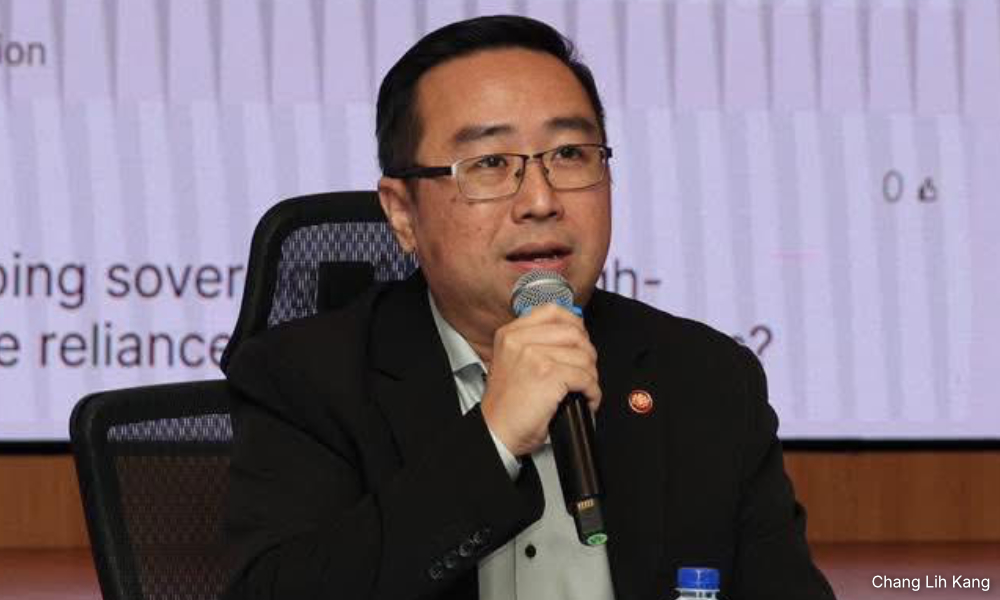
Science, Technology, and Innovation Minister Chang Lih Kang said the government will partner with five local semiconductor firms to establish the Advanced Packaging Consortium.
Other stakeholders include academic experts from the Academy of Sciences Malaysia (ASM) and Malaysia’s Applied Research and Development Centre (Mimos).
The minister noted that Malaysia’s semiconductor industry is currently stalled in the packaging, testing, and assembly stages - segments which require lower technical skills and high labour intensity.
To break through this status quo, Chang shared that his ministry will focus on an advanced packaging technology initiative to establish independent industrial technology for the nation and become a regional player.
“Currently, Malaysia still lacks advanced packaging capabilities. We aim to upgrade this within two years, intending to become a major regional exporter of advanced packaging by 2030,” he said.

“Actually, in terms of technologies, our local companies are quite mature; now they might be just a step away. Therefore, government investment is needed to help mitigate the risks.”
Chang further explained that the project involves RM180 million in funding, which will be exercised through a co-funding model between the government and the private sector for a two-year research and development (R&D) period.
He added that the government and private sector will each contribute about RM90 million, with further details to be announced later.
“The risk in R&D remains high, but overall, our semiconductor ecosystem is relatively mature.”
The minister disclosed these plans during a media interview at the Malaysian Space Agency (MYSA) on Feb 3.
Developing local talent
Chang also pointed out that his ministry had organised various competitions and seminars in schools and universities last year to cultivate more science talent, which received positive feedback.
“Our next step is to ensure that when (players of foreign) industries come here, our talent is sufficient for them.
“Not only do we want to train engineers, scholars, and researchers, but we also need to cultivate many hands-on technicians and technologists. These are all tasks we must undertake.”

He added that the ministry would strengthen talent development programmes to ensure stable industrial development and prevent capital flight.
“We see many foreign investments coming into high-paying industries. If we cannot provide enough tech talent, they may leave.”
He further said that even if foreign investors stay, they might hire foreign personnel who remit their salaries abroad, leading to capital outflow.
“If our people are not involved, how can we achieve technology transfer? We would be stuck in a vicious cycle, limited to low-end or back-end work.”
Pushing sustainable tech
Meanwhile, Chang said his ministry will align with the National Planetary Health Action Plan introduced by ASM to ensure government departments use sustainable technologies better when implementing policies.
“The main goal is to integrate the concept of sustainability into all government policies. Currently, sustainability seems confined to the Natural Resources and Environmental Sustainability Ministry; few other ministries discuss it other than them.
“But when we observe the global trends, sustainability will be a key driver for decades to come.”
Consequently, the minister said that one of the key focuses of his ministry in 2026 is keeping pace with international developments by advancing sustainable technology across various sectors.
“The core of our technical research includes energy, aerospace, biotechnology, nanotechnology, and others.”