




S'gor ruler: Tanjung Sepat pig farms to be relocated, no export plans
In a statement issued by Selangor Palace, Sultan Sharafuddin also decreed that existing operations in the area should be stopped gradually and transferred completely to Bukit Tagar, in compliance with all relevant legal and regulatory requirements...
After granting an audience to several Selangor executive councillors over pig farms in Tanjung Sepat, Sultan Sharafuddin Idris Shah approved several resolutions, including a decree that there will be no more pig farming operations in Tanjung Sepat.
In a statement issued by Selangor Palace, Sultan Sharafuddin also decreed that existing operations in the area should be stopped gradually and transferred completely to Bukit Tagar, in compliance with all relevant legal and regulatory requirements.
The ruler also ordered the state government to conduct a comprehensive study and detailed census to identify the amount of pork needed by non-Muslims in Selangor.
"His Majesty stressed that there is no intention or plan to export the livestock.
“The study conducted should be used as a benchmark to decide on the scale and capacity needed for pig farming in Bukit Tagar to ensure it remains at a reasonable and controlled level,” the statement added.
Sultan Sharafuddin also emphasised that public funds should not be used for any future pig farming operations, including those in Bukit Tagar.
Present during the meeting were Selangor state executive councillors Izham Hashim and Ng Suee Lim.
Palace displeasure
On Jan 10, Sultan Sharafuddin expressed disagreement over the current management of pig farms in the state.
Referring to existing farms in Tanjung Sepat, Sultan Sharafuddin suggested that elected representatives live next to pig farms in the area.
The ruler pointed out that residents living near pig farms are suffering from a multitude of negative effects - a lingering foul stench, river water pollution, and a ceaseless fly problem, which have all affected their quality of life while contributing to health concerns.
Speaking at a press conference later, Izham emphasised that Sultan Sharafuddin’s views on pig farming activities in the state are aligned with the administration’s proposal to relocate existing facilities to a new site in Bukit Tagar.
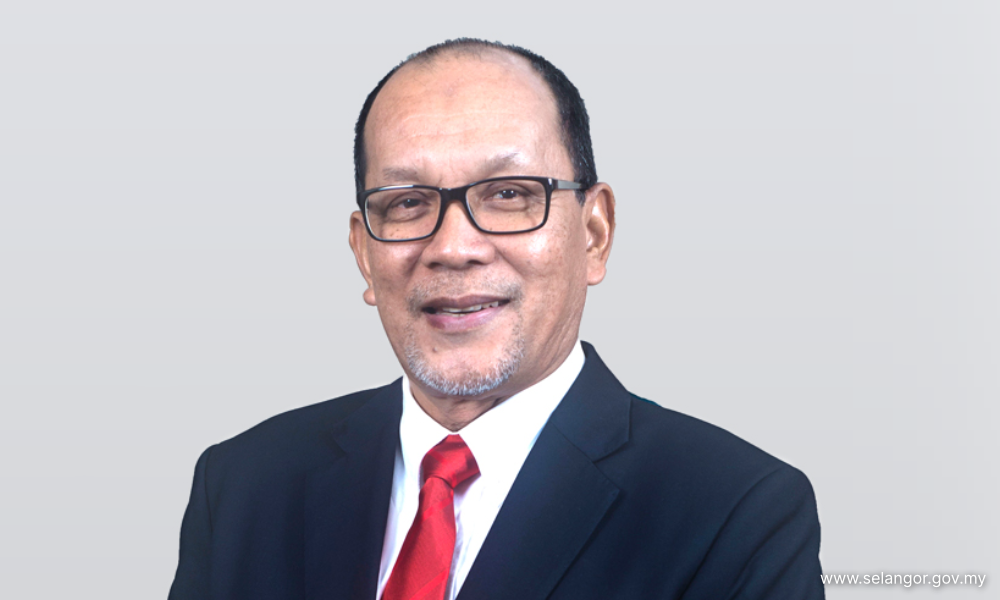
“Everyone has already reviewed the statement issued by His Royal Highness. Likewise, the menteri besar’s statement, and we fully express our gratitude for His Royal Highness’ suggestions and concern regarding issues affecting the people of Selangor, including this pig farming-related issue.
“In that discussion, we found the suggestions made by the state government are actually aligned with His Royal Highness’ suggestions,” said Izham, who is in charge of the infrastructure and agriculture portfolio.
‘Poor communications’
Asked about the ruler’s statement on Saturday, Izham said his own “weakness” in explaining the state government’s decision to centralise pig farming operations at Bukit Tagar by 2029 during a separate press conference on June 8 had prompted the ruler’s initial response.
He stressed that the ruler has no objection to the plan to implement a modern facility in Bukit Tagar.
On the proposed relocation plans, Izham said the Bukit Tagar project will be a private initiative, with the state government facilitating the necessary approvals.
He said contrary to the initial 2029 target, relocations of over 100 existing pig farms will commence this year in stages, following consultation with affected farmers.
“And no new license will also be approved,” he stressed.
Far from residential areas
Meanwhile, Izham said he had explained to Sultan Sharafuddin the site that would be chosen far from residential areas, with sufficient buffer zones.
“That is why the site is quite large - we are looking at around 500 acres. His Royal Highness also asked, ‘Why is it so large?’
“It is because buffers are needed - not only buffer zones along the perimeter, but also buffers between farms,” he explained.
Izham said the proposed modern facility will also retain the existing conditions on odour prevention, prevention of pig-related diseases, and on-site wastewater recycling.
“It must be ‘zero discharge’, meaning waste is recycled entirely on-site.
“This technology has already been implemented in Penang. They take pig wastewater and convert it into biogas to generate electricity. We will follow this model,” he said.


