


/file/publisher-c1a3f893382d2b2f8a9aa22a654d9c97/2025/12/c848a295abac0bb829cf047bd4e787fe.jpg)

'Disliked' Azam hints at retirement after contract ends
MACC chief commissioner Azam Baki has hinted that his tenure will end when his contract expires in May next year.
Azam said today that his thrice-extended contract had already drawn criticism from certain quarters.
“InsyaAllah...
MACC chief commissioner Azam Baki has hinted that his tenure will end when his contract expires in May next year.
Azam said today that his thrice-extended contract had already drawn criticism from certain quarters.
“InsyaAllah, next year, my service comes to an end. It has been extended three times.
“People already don’t like me. (PKR lawmaker) Rafizi (Ramli) also does not like me. He said, ‘Don’t extend Azam Baki’,” he told reporters after attending the “MACC-UiTM Inspira 2025: Hari Integriti & Kepimpinan” programme at UiTM Puncak Alam today.
On that note, Azam stressed that regardless of who succeeds him, the person must be committed to upholding integrity, good governance, and combating corruption without fear or favour.
Azam received his third contract extension last year, with his tenure set to expire on May 12, 2026.
Rafizi’s warning
On Dec 3, Rafizi warned that any further extension of Azam’s contract will erode whatever is left of Pakatan Harapan’s credibility in its commitment to eradicate corruption.

The former economy minister said, with Azam embroiled in controversies, it was time for the government to let him go.
“If people ask me what Harapan should do for a start after getting routed in Sabah, I would say we must rebuild our credibility as graft busters.
“And it should begin with having a new MACC chief commissioner,” Rafizi added.
Controversial extensions
Last year, Prime Minister Anwar Ibrahim came under fire from various quarters for giving Azam a third extension for his contract.
Even his daughter, Nurul Izzah, had expressed her disagreement with the move.
However, the premier defended his decision and insisted that Azam has shown “extraordinary courage” in tackling high-level corruption.
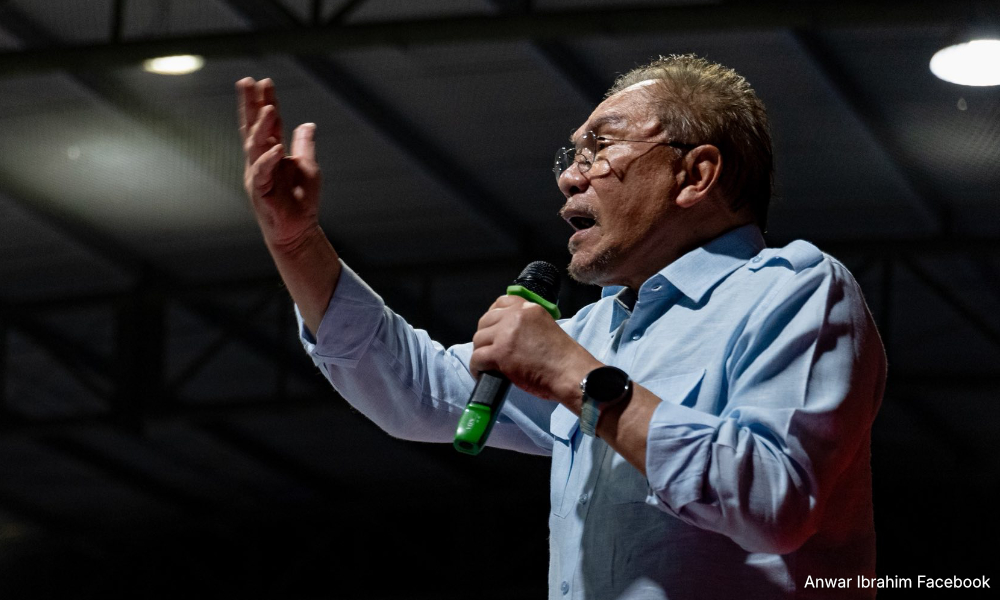
“There are those who talk, and the opposition is making noise about the extension of Azam’s contract. I want to say that I do not deny the criticisms that have been raised,” he said.
Anwar stressed that this was the first time in his experience that the MACC had taken firm action against powerful individuals with billions in assets, including influential businesspersons.
/file/publisher-c1a3f893382d2b2f8a9aa22a654d9c97/2023/10/fa849de98640ff2ae504397a158ab02a.jpg)
/file/publisher-c1a3f893382d2b2f8a9aa22a654d9c97/2025/10/dae3c9c6648362e6fde83782b923aa91.jpg)
/file/publisher-c1a3f893382d2b2f8a9aa22a654d9c97/2025/09/7bdeb932ba3bd20dc6b940dc7fd89453.jpg)
/file/publisher-c1a3f893382d2b2f8a9aa22a654d9c97/2024/08/d1eaba59c73f60dfcced0118b886d0f3.jpg)
/file/publisher-c1a3f893382d2b2f8a9aa22a654d9c97/2023/02/05b3f981d3aed1a8377bcbf544d335dd.jpg)
/file/publisher-c1a3f893382d2b2f8a9aa22a654d9c97/2025/04/6e2cc856f75931f9555e34862f3d5dec.jpg)


