


/file/publisher-c1a3f893382d2b2f8a9aa22a654d9c97/2021/08/efdd54814f2fc513734c840ae0544d8f.jpg)

Upko-Harapan break could cost coalition KDM votes: Analysts
When Sabah-based Upko walked out of Pakatan Harapan last night, it might have done more than unsettle the coalition’s state line-up.
It also reopened old wounds and raised the question of whether national parties can ever fully speak for Sabahans.
Summary
Upko’s exit from Pakatan Harapan not only reopens old wounds but also raises the question of whether national parties could truly understand Sabahans’ concerns.
Analyst Tony Paridi Bagang says Upko’s move shows the party’s struggle is rooted in genuine Sabah-centric aspirations.
Meanwhile, analyst Lee Kuok Tiung says Sabahans seem unhappy with how the 40pct revenue entitlement issue is being handled by Putrajaya.
When Sabah-based Upko walked out of Pakatan Harapan last night, it might have done more than unsettle the coalition’s state line-up.
It also reopened old wounds and raised the question of whether national parties can ever fully speak for Sabahans.
Nowhere will that question matter more than among the Kadazan-Dusun-Murut (Kadazandusun) heartlands - in which voters often decide which way Sabah tilts.
The timing could not be sharper. It came just hours after Prime Minister Anwar Ibrahim, who is also Harapan chairperson, made remarks in Kota Kinabalu that appeared to dismiss the distinction between federal development allocation and 40 percent revenue entitlement.
Political analyst Tony Paridi Bagang said Upko’s exit was both “bold and calculated,” a move that re-anchors the party in its old struggle for state identity.
“By taking this stand, Upko is sending a clear signal that its political struggle is rooted in genuine Sabah-centric aspirations, consistent with its tagline ‘Sabah First’,” he told Malaysiakini.
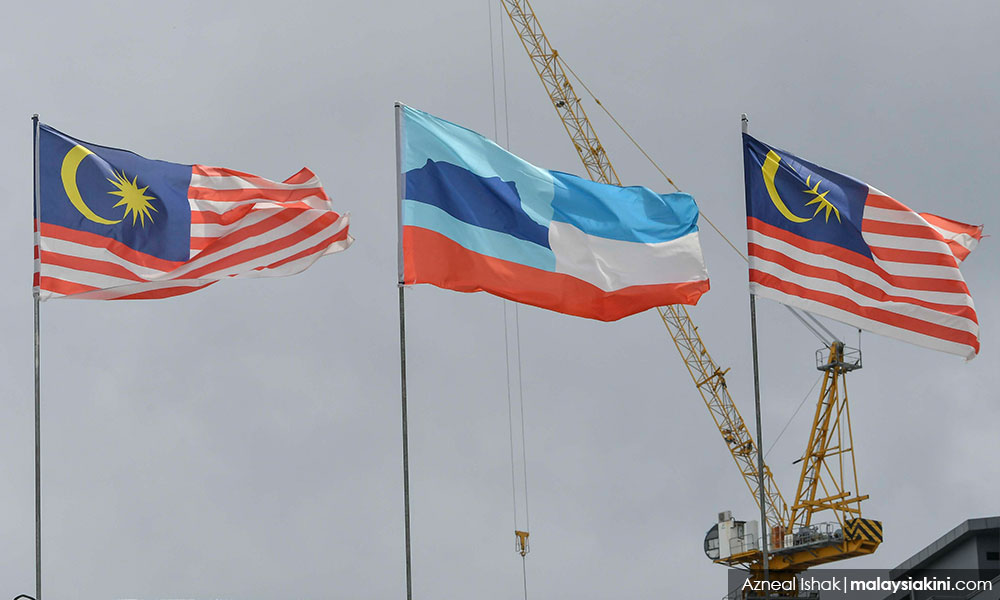
Bagang noted that while Harapan’s machinery may remain intact, the coalition could feel the pinch in KDM-majority areas, where local sentiment runs deep.
“Upko’s departure is likely to amplify that local voice, a sentiment that could be echoed by other Sabah-based parties,” he said.
While Upko had pledged to support the federal government until the expiry of its term, Bagang said questions remained on how it would play under the anti-hopping provision.
Immediate impact
Echoing Bagang’s sentiments, Universiti Malaysia Sabah analyst Lee Kuok Tiung said the impact will be immediate on the ground.
“It will definitely affect morale and the support that could have come from Upko’s grassroots. However, it depends on which seat and which candidate,” he said.
Lee believed Harapan could lose traction among traditional KDM supporters who identify strongly with Upko’s role in defending local rights.
“The pressure is now on the rise of local-party sentiment and the 40 percent issue, which is hot right now.
“And Sabahans seem to have zero tolerance for the way that issue is being handled, and everyone is playing that card,” he added.
The 40pct debate and PM’s exchange
On Nov 9, during a walkabout at Kota Kinabalu’s Gaya Street market, Anwar was confronted by a man asking when Putrajaya would pay Sabah its 40 percent share of federal revenue.
However, Anwar shot back by saying that federal allocations to Sabah had exceeded what was owed to the state.
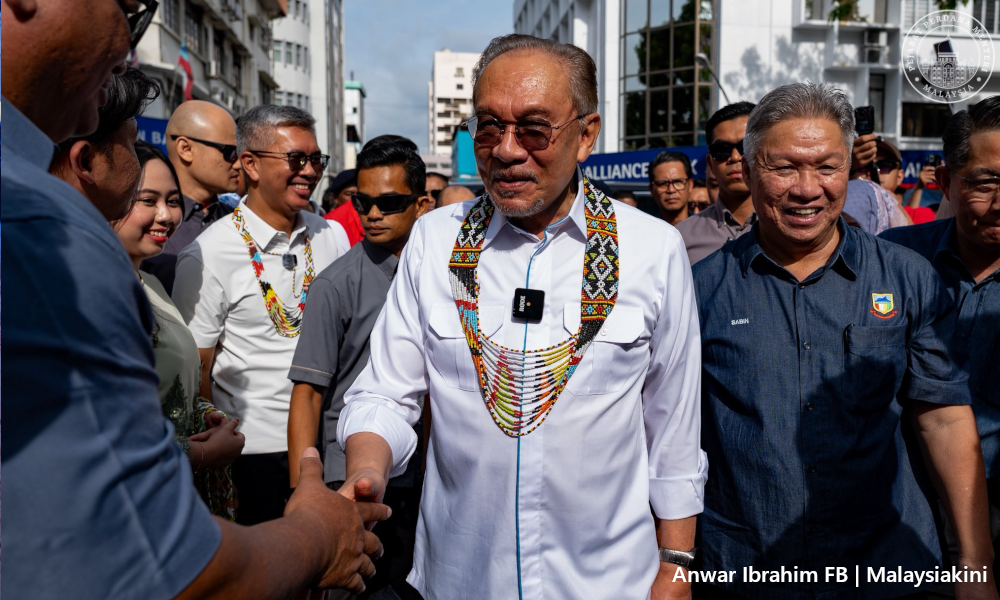
“How much do we collect from Sabah? RM10 billion. How much do we give back? RM17 billion,” he added.
However, the unidentified man countered that those allocations were obligations, not the constitutionally guaranteed special grant.
The video ended there, but by afternoon, the clip was already making rounds online. Anwar also recounted his encounter with the man in his speeches - including when announcing PKR’s candidates for the polls.
Later at a press conference in Tawau, Anwar doubled down, saying the government had “done more than any administration before” for Sabah.
“If you say it’s not perfect, fine. But you can never question that we have done more,” he stressed.
The remarks already did not sit well with many indigenous voters, who view the 40 percent claim as a symbol of Sabah’s autonomy, and one that cannot be replaced by discretionary funding.
Subsequently, Upko president Ewon Benedick resigned from the federal cabinet on Nov 8 over the revenue entitlement issue.
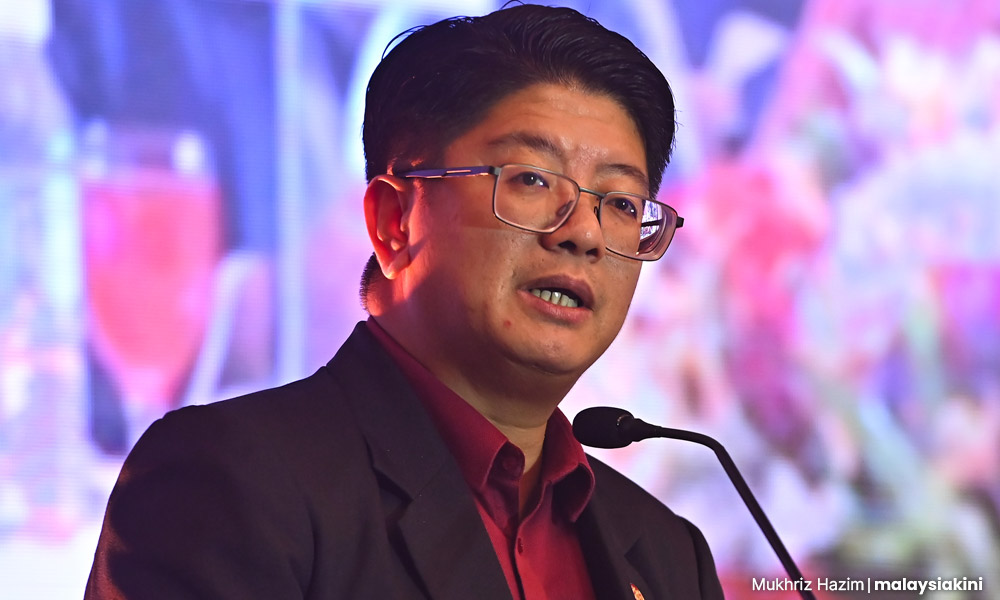
His move is seen as a protest against any decision by Putrajaya to appeal the Oct 17 High Court ruling, which ordered that the 40 percent revenue entitlement issue be resolved within 180 days.
Ultimately, Putrajaya decided not to file an appeal against the courts’ decision over the revenue claim.
The AGC said the federal government respects the constitutional principle of the “Special Grant” under Article 112C of the Federal Constitution and has agreed to proceed with negotiations with the Sabah government immediately.
The decision was made during a special cabinet meeting chaired by Anwar today.
Where KDM votes matter most
Approximately 17 of the 73 state constituencies are considered to be KDM-majority seats.
They include Moyog, Kadamaian, Tambunan, Bingkor, Kundasang, Kepayan, Melalap, Paginatan, Kiulu, and Inanam.
While the number of seats may be fewer, the communities are decisive in sentiment. Voters tend to shift with whoever speaks loudest about “Sabah’s rights” and “autonomy,” a pattern that has swung elections before.
Lee said this is where Harapan will face its biggest test.
“The challenge now is convincing voters that national parties can still deliver for Sabahans without diluting local interests,” he said.
For Harapan, the fallout from Upko’s exit isn’t just about lost machinery, it’s about credibility.
“Upko’s move may hurt Harapan in the short term,” Bagang said, adding that, “but it reflects a deeper undercurrent, the growing insistence that Sabah’s voice must be homegrown.”
/file/publisher-c1a3f893382d2b2f8a9aa22a654d9c97/2022/11/e6dac0989c512933965dd8ecb3d5de97.jpg)
/file/publisher-c1a3f893382d2b2f8a9aa22a654d9c97/2025/10/b28a548587bb6d7b0b3eb674b138b555.jpg)
/file/publisher-c1a3f893382d2b2f8a9aa22a654d9c97/2025/11/7b3e2a1d48dd5ebd50bf150fce404dff.jpg)
/file/publisher-c1a3f893382d2b2f8a9aa22a654d9c97/2025/11/5be2812582e1aa04ab401c83af5d2aff.jpg)
/file/publisher-c1a3f893382d2b2f8a9aa22a654d9c97/2020/09/597c34182eb5117b4197a53ca074e57c.jpg)
/file/publisher-c1a3f893382d2b2f8a9aa22a654d9c97/2025/10/8c4374ea2b1ef23210e3995c5534d364.jpg)


