
MCMC: Private broadcasters not affected by 80pct content terms in US trade deal
The response came amid concerns over Article 2.20 in the annex of the controversial Malaysia-US reciprocal trade agreement, which requires Malaysia to remove licensing conditions mandating that 80 percent of terrestrial airtime be devoted to local programming.
Summary
MCMC says that private broadcasters are not subject to 80 percent local content requirement, noting that such a quota has not applied since 1998.
It dismisses veteran journalist A Kadir Jasin’s claim linking the rule to the Malaysia-US trade agreement as false.
However, question remains over whether the provision in the trade deal instead concerns public broadcasters such as RTM.
MCMC said that private broadcasters are not bound by any rule requiring them to air 80 percent local content, pointing out that such a quota has not applied since 1998.
The response came amid concerns over Article 2.20 in the annex of the controversial Malaysia-US reciprocal trade agreement, which requires Malaysia to remove licensing conditions mandating that 80 percent of terrestrial airtime be devoted to local programming.
The provision also requires Malaysia to permit the broadcasting of foreign programmes during prime time.
"Under the Content Applications Service Provider Individual (CASP) licence, or individual broadcast licence issued under the Communications and Multimedia Act 1998 (CMA) 1998, there is no 80 percent local content quota imposed on private broadcasters in Malaysia.
"Current licences grant broadcasters the freedom to determine their own content based on guidelines and content standards set by the MCMC.
"Furthermore, broadcast licences under the CMA 1998 contain no restrictions on the airing of international content during prime time," it said.
The regulator also noted that the CMA 1998 does not prohibit the airing of foreign content during prime time, and that scheduling decisions are determined by broadcasters themselves based on market demand and existing content regulations.
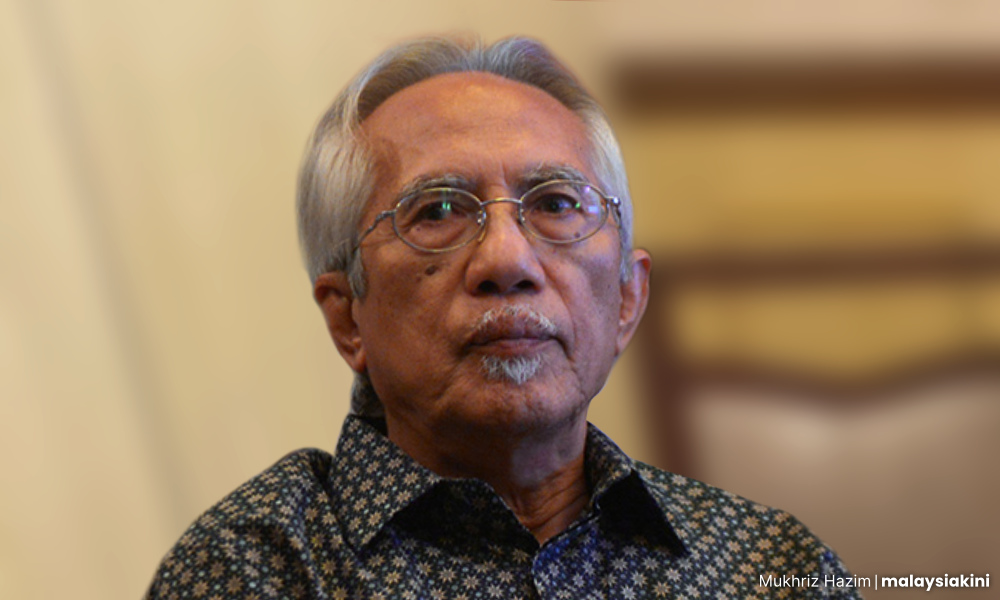
MCMC said national journalism laureate A Kadir Jasin‘s claim that Malaysia was obliged to abolish a local content condition in its broadcast licences due to the trade deal was “false and misleading.”
In his Facebook posting on Oct 28, Kadir, a veteran journalist, expressed concern over the agreement, saying some of its terms -particularly Article 2.20 - make "Malaysia appear like a colony again".
READ MORE: KINIGUIDE | What's in the US-M'sia trade deal that impacts China?
What about public broadcasters?
While MCMC’s clarification confirms that private broadcasters are unaffected by the 80 percent local content rule, it raises questions about whether the provision referenced in the trade deal applies to public broadcasters instead.

An excerpt from the Dewan Negara Hansard dated Dec 16, 2009, shows then deputy information, communications and culture minister Joseph Salang Gandum stating that RTM was required to air 80 percent local content.
At the same time, he said government policy for private broadcasters required them to allocate 60 percent of airtime to Malay-language programmes and ensure that 60 percent of non-Malay content was locally produced.
100pct tariff if trade deal rejected
On Nov 2, Investment, Trade and Industry Minister Tengku Zafrul Abdul Aziz warned that Malaysia could face punitive tariffs of up to 100 percent on its exports to the US, if it had rejected the recently concluded trade agreement.
Responding to criticism from former prime minister Muhyiddin Yassin, he said rejecting the deal would not only threaten Malaysia’s export competitiveness but also undermine investor confidence.
Zafrul explained that without the agreement, the US government could have reinstated tariffs at the original 24 percent rate, or even raised them to as high as 100 percent, which would severely damage Malaysia’s export position.
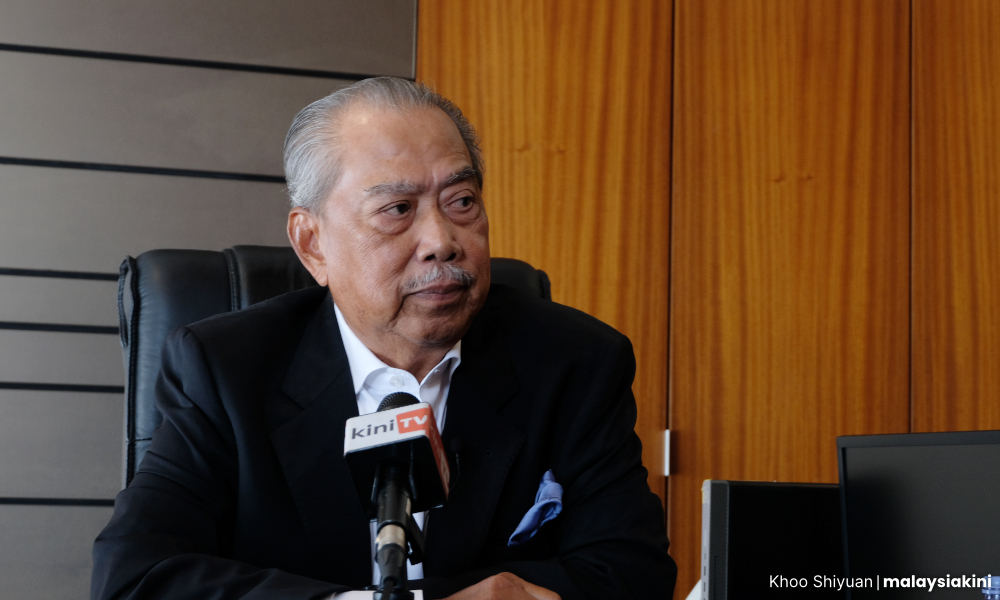
Muhyiddin, who is Perikatan Nasional chairperson, said that while US President Donald Trump’s administration has described the agreement as an achievement of “mutually beneficial bilateral diplomacy”, such a conclusion is highly inaccurate, misleading, and far from the truth.
In listing several provisions of the agreement which he took issue with, Muhyiddin asserted that the deal is likely to transform Malaysia into a “proxy or satellite state” of the US in Southeast Asia.