
Anwar's school hall alcohol ban stirred up hornet's nest: Guan Eng
DAP adviser Lim Guan Eng has taken a swipe at Prime Minister Anwar Ibrahim’s statement in Parliament that alcohol should not be served in public halls built within school compounds - including those funded by the Chinese community.
Lim claimed in a statement that Anwar’s remarks had stirred up a hornet’s nest and frustration among Chinese Malaysians, as the move was seen as an unnecessary intrusion into long-standing customs.
DAP adviser Lim Guan Eng has taken a swipe at Prime Minister Anwar Ibrahim’s statement in Parliament that alcohol should not be served in public halls built within school compounds - including those funded by the Chinese community.
Lim claimed in a statement that Anwar’s remarks had stirred up a hornet’s nest and frustration among Chinese Malaysians, as the move was seen as an unnecessary intrusion into long-standing customs.
The Bagan MP pointed out that Chinese community halls within vernacular schools have, for decades, hosted weddings, temple dinners, and entertainment events where alcohol was traditionally served - all held outside school hours and without student involvement.
“The unhappiness of the Chinese community is rooted in why Anwar allowed himself to dance to the tune of the extremists and racists by interfering, disrupting, and disturbing a customary arrangement that has not caused controversy, or impacted in any negative manner, on the Muslim community.
“Even when PAS was in government, PAS never interfered in Chinese primary schools and such activities continued undisturbed at Chinese school halls,” he said.

Lim argued that the prime minister’s stance - though couched as an effort to preserve the sanctity of educational institutions - appeared to pander to “extremist and racist” sentiments.
“After all, Chinese primary schools are widely renowned as educational institutions of excellence, and their students are not exposed to alcohol and have turned out to possess good moral character and ethical values.
“The number of rapes, sodomy, or sexual abuses of children in Chinese schools is low, if any at all, amongst all types of schools,” said Lim.
‘Where does it end?’
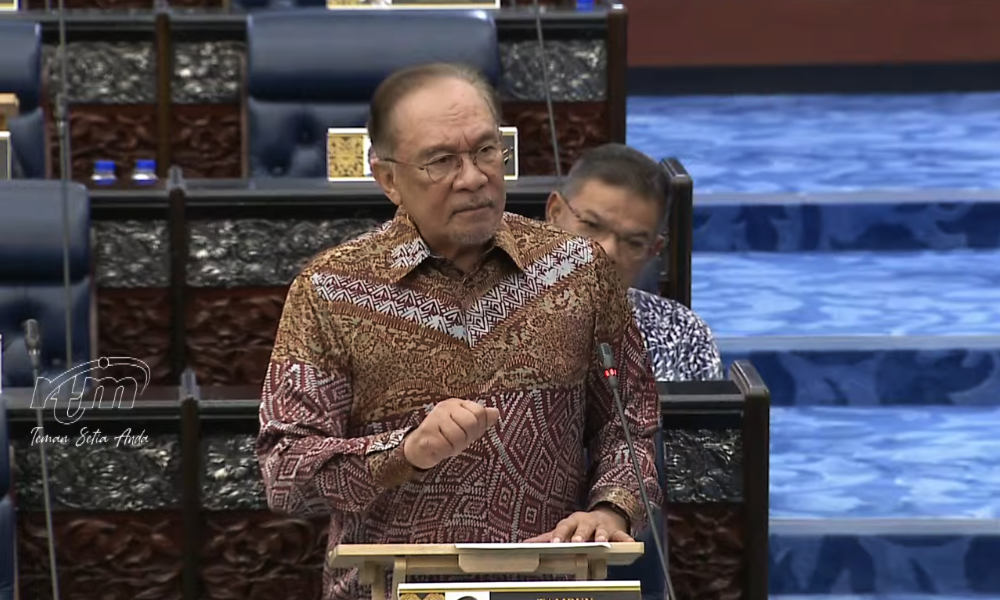
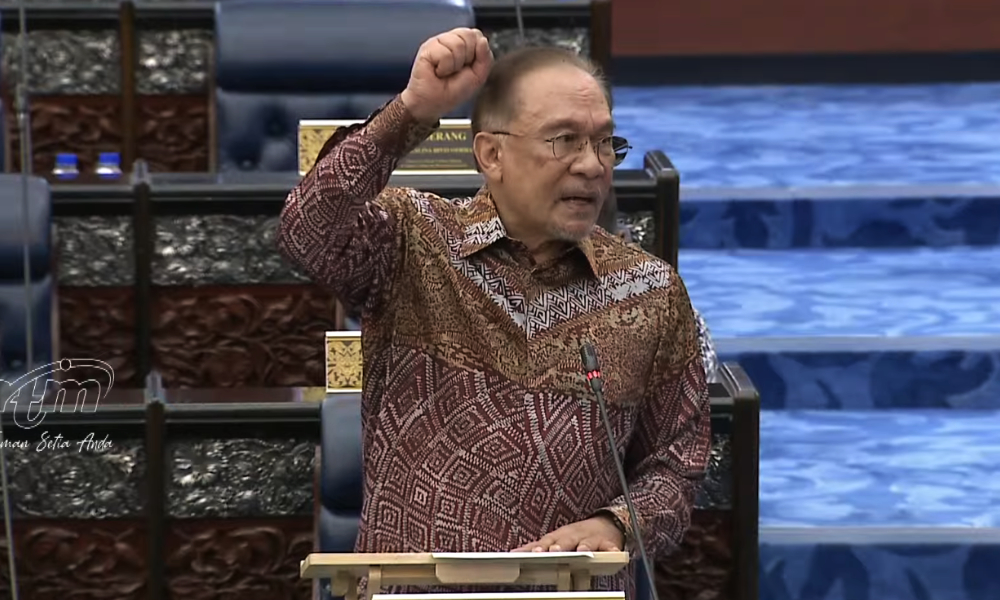
Anwar, during Minister’s Question Time in the Dewan Rakyat yesterday, said his preference is for alcohol not to be served on school grounds, but noted it could only be enforced in government schools.
He also stressed that this was not to restrict the rights of non-Muslims, but to uphold schools as places of education for children.
Lim, however, questioned where the restrictions might end, raising concerns that future prohibitions could extend to serving pork at community functions.
“Since pork is banned in government institutions, will Chinese primary schools also see a ban on serving pork at such customary functions like Chinese weddings, temple dinners, and entertainment events?” said Lim.
Further, Lim said DAP secretary-general Anthony Loke understood the community’s concerns and has engaged directly with Anwar to seek an “acceptable solution” that would allow the Chinese community to continue their traditional and customary practices at the Chinese primary school halls.
He added that Loke had previously succeeded in ensuring that top SPM students were granted matriculation placements and outstanding STPM students gained admission to their preferred university courses.
“We hope this issue can be resolved in the same spirit of fairness and understanding,” Lim said.
‘Will govt cover financial shortfalls?’
Meanwhile, MCA vice-president Tan Teik Cheng lashed out at Anwar, accusing him of using “educational values” as an excuse to suppress multiculturalism through the alcohol ban directive.
He said this religiously driven policy not only cuts off a vital source of fundraising for Chinese schools but also undermines the spirit of moderation and multiculturalism that has defined Malaysia since its founding.
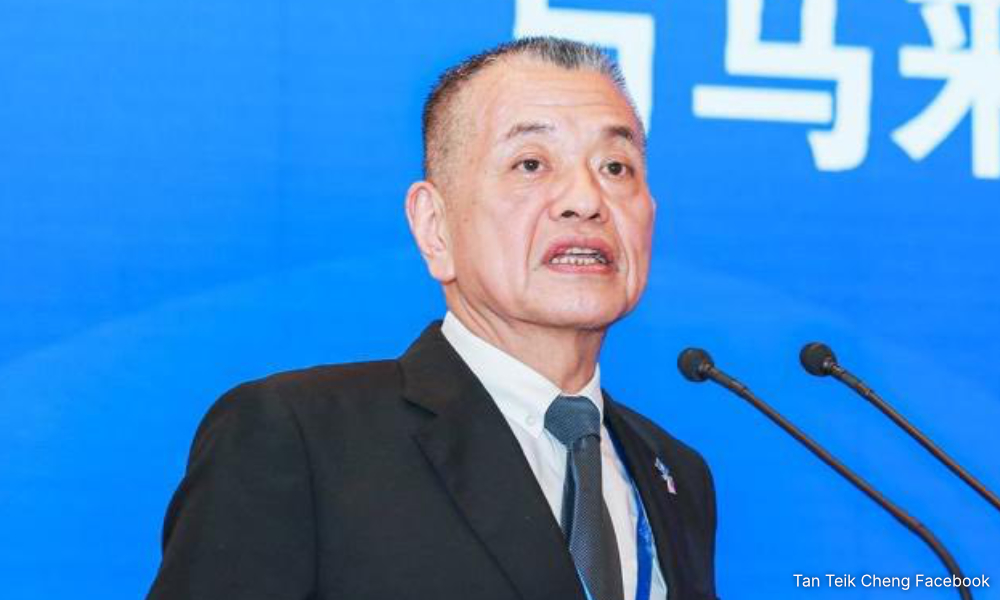
Tan pointed out that many Chinese primary and national-type secondary schools often rent out their school halls to private parties for wedding banquets, alumni dinners, charity shows, or fundraising events.
The rental fees are often a major source of operational and maintenance funds for these schools.
“Now with just one directive from the government banning events that ‘involve alcohol’, it’s equivalent to cutting off a crucial source of income for schools - without taking into account their financial difficulties,” he said in a statement.
“This is a very real livelihood issue. Many Chinese schools depend on such activities to maintain basic operations.
“If the government abruptly bans them, who will cover the losses? Will the Education Ministry take responsibility? Will the Finance Ministry allocate funds?” Tan asked.
After schools, what’s next?
Tan further criticised the policy as a government overreach into the non-Muslim domain, saying it imposes religious standards to regulate the social behaviour of all citizens.
“The so-called Madani government (civilisational government) keeps preaching about moderation and diversity, but in practice, it’s doing the opposite - pushing the country toward a homogeneous, religion-dominated path,” he said.
“Today, they ban alcohol in schools; tomorrow, will it be associations? Shopping malls? Or even private banquets? Once the government starts intervening in public affairs on religious grounds, there’s no turning back.
“Gradually, not only schools but also our way of life, cultural practices, and personal freedoms will be restricted bit by bit. In the end, how can we still talk about being a pluralistic nation?” Tan added.