



'Paralysed education system' to blame for hike in bullying, sexual crimes: MP
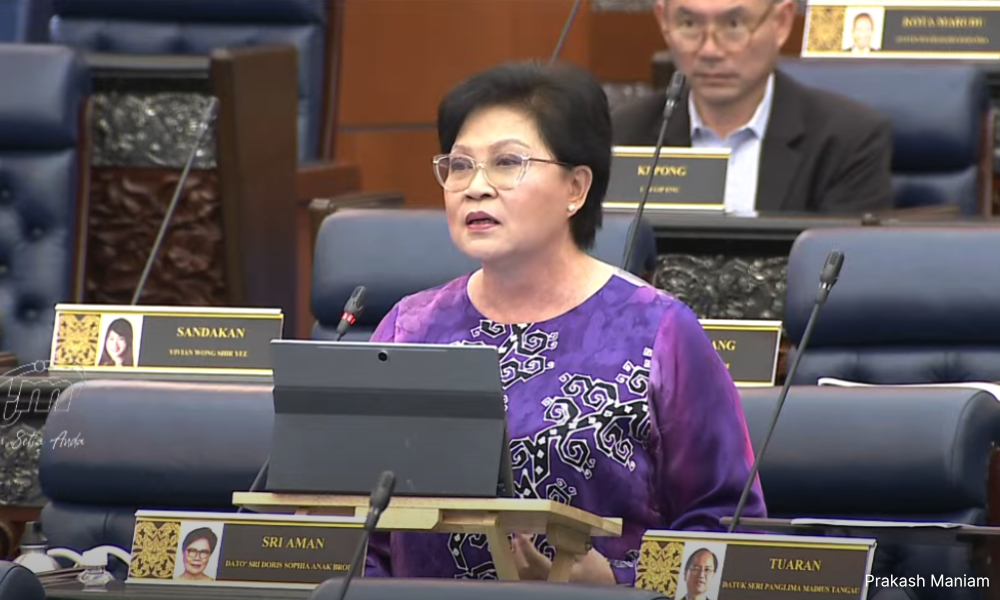
PARLIAMENT | A government MP has urged Putrajaya to reform the country’s education system, citing extreme concerns over the rising number of bullying and sexual offence cases involving students and teenagers.
Doris Sophia Brodi (GPS-Sri Aman) said the current system has produced a “fragile generation” as teachers can no longer mete out disciplinary actions against students.
PARLIAMENT | A government MP has urged Putrajaya to reform the country’s education system, citing extreme concerns over the rising number of bullying and sexual offence cases involving students and teenagers.
Doris Sophia Brodi (GPS-Sri Aman) said the current system has produced a “fragile generation” as teachers can no longer mete out disciplinary actions against students.
“Discipline used to be the foundation of building a person. When I was in school back in the 70s, even small mistakes like not wearing socks, failing to complete homework, or slightly torn books would be met with punishment.
“It wasn’t because the teachers were being cruel, but because they were instilling a sense of responsibility, respect, and self-worth.
“But today, in the name of (protecting students’) emotion and well-being, everyone wants students to be treated with utmost gentleness. As a result, we have produced a fragile generation that is easily hurt, quick to give up.
“Teachers today are afraid to act, while schools are afraid of being blamed. The system has been paralysed, and it is our children who are paying the price,” she said when debating the 2026 Supply Bill at the Dewan Rakyat this afternoon.
Doris pointed to police statistics that recorded over 3,000 bullying cases between 2022 and 2024, from which 60 percent reportedly occurred at school, while 400 rape and molestation cases involving underage victims were reported last year alone.

She also cited this morning’s case at a secondary school in Bandar Utama, Petaling Jaya, where a Form 4 female student was fatally stabbed by a younger male schoolmate, saying the incident was “really heartbreaking and concerning”.
“What is happening to our teenagers and schools?” she asked.
Doris called on the Education Ministry to utilise its RM66.2 billion allocation for next year to “restore the soul of the education system”, and not only for constructing new buildings and laboratories.
She proposed a slew of reforms to the ministry, including introducing a module on empathy and compassion at school, increasing the number of school counsellors to a ratio of one counsellor for every 200 students, and for every bullying and sexual harassment case to be analysed according to the type of school, location, age, and gender of those involved.
Further, Doris also suggested training for teachers and school administrators so they can detect the early signs of bullying, methods to handle cases proactively, and basic psychology counselling.
Reporting by Qistina Nadia Dzulqarnain, Hariz Mohd, Dania Kamal Aryf, Haspaizi Zain







It is not the lack of punishment and a more humanistic approach in education that is the cause of disciplinary problems and crime in schools. There are so many other factors today that was non existent in the 70’s, internet for instance. Those days your world was a nutshell limited to only a few opinions, your parents, relatives, teachers, school mates, newspapers, radio and television where the narrative is seldom open to debate as far as being a school student is concerned. There were serious disciplinary problems then too. Along the years changes in the school system have not been yielding positive results, producing “A’s” using strategies borrowed from the corporate world, seduced by management gurus, where profits are measured by academic results and other indicators like ISO certification, annual awards, while teachers and school heads pursue personal rewards in a more competitive environment. As in any mercenarial (as in mercenaries) environment corruption, hypocrisy and fraudulence quickly develop into a culture. Soon this spreads across all institutions. Surely hypocrites cannot be innocent of hypocrisy. Students today are at the mercy of so much disinformation, too impressionable and thus easily influenced. The culture of hypocrisy must stop before we can think of ways to make our education great again! Schools must remain missionary, not mercenary! Teachers were a rare breed, but anymore!