
'Assembly' under PAA defined contextually - minister
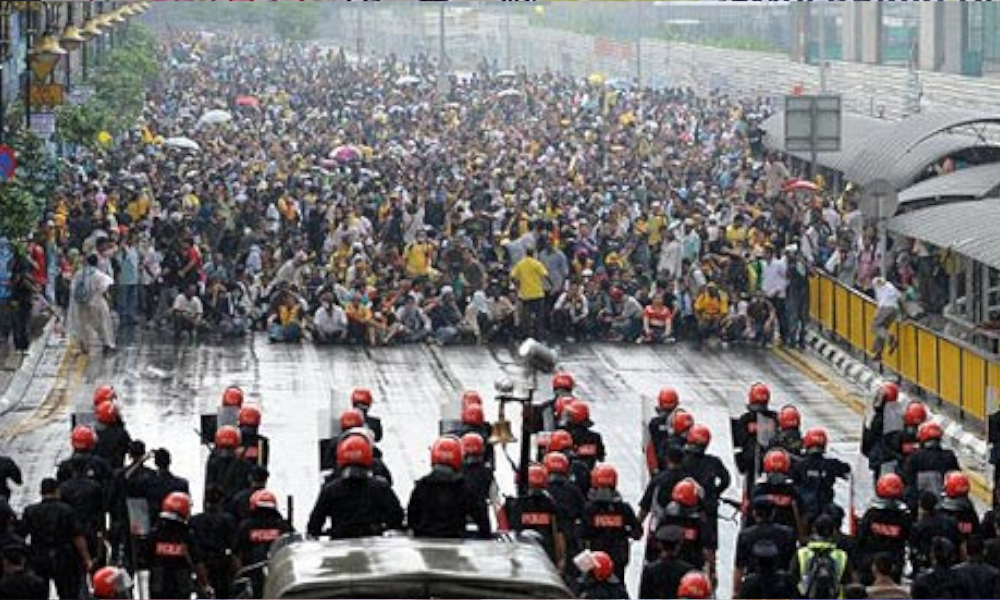
A decision on whether an activity falls under the definition of an "assembly" under the Peaceful Assembly Act 2012 must be assessed contextually, based on its purpose, scale, location, and impact on public order.
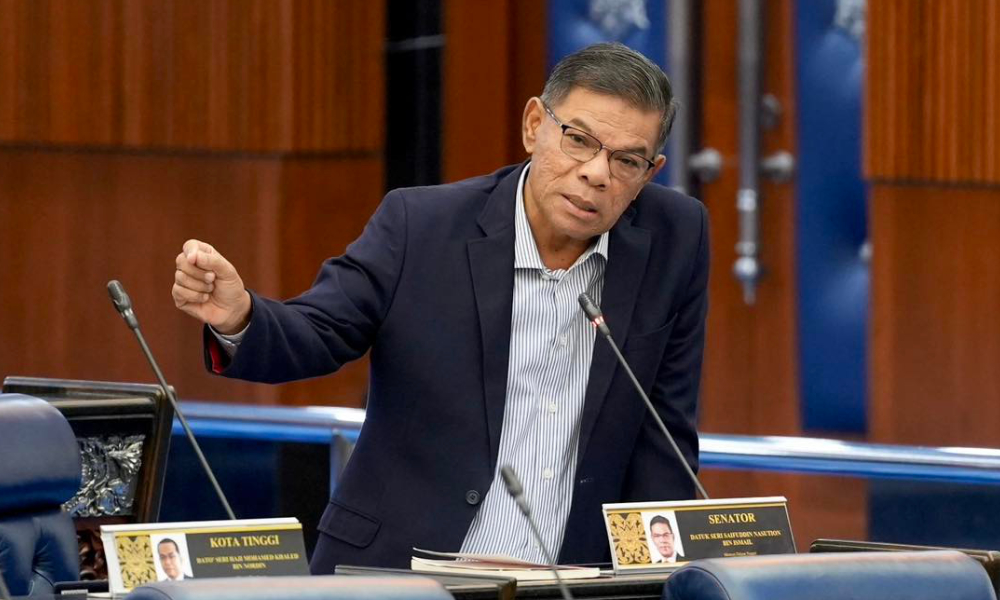
Home Minister Saifuddin Nasution Ismail said Section 9(1) of the Act only applies to gatherings that fit the legal definition of an “assembly” under Section 3 - namely...
A decision on whether an activity falls under the definition of an "assembly" under the Peaceful Assembly Act (PAA) 2012 must be assessed contextually, based on its purpose, scale, location, and impact on public order.
Home Minister Saifuddin Nasution Ismail said Section 9(1) of the Act only applies to gatherings that fit the legal definition of an “assembly” under Section 3 - namely, an intentional and temporary gathering in a public place, whether stationary or moving.
Activities would only be considered assemblies if they were organised and open to public participation, involved a significant number of participants, affected public safety, traffic, or the rights of others, and carried symbolic messaging, statements of position, or elements of protest, he elaborated.
“Therefore, if an activity is carried out casually, orderly, in small groups, without affecting the public or without any intention to make a public statement, it is not subject to the requirement of giving notice under Section 9,” the minister said in a written reply to William Leong (Harapan-Selayang).
Reading in public spaces
Leong had asked Saifuddin to state the definition of an assembly that requires notice under Section 9(1) of the PAA, and whether an activity such as a group of students reading books in a public space falls within that definition.
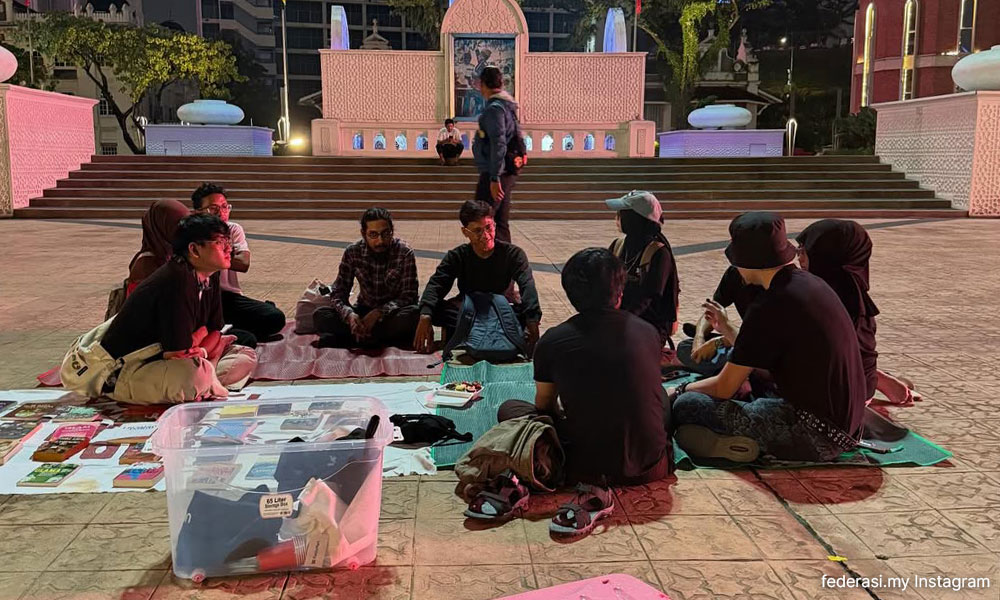
On May 12, the National Youth Federation decried what it described as intimidation after authorities allegedly disrupted their book reading and discussion event at Dataran Merdeka in Kuala Lumpur.
At the time, the youth group said nearly a dozen police officers and Kuala Lumpur City Hall personnel had approached them, demanding they get police permission to hold such activities in public.
Civil society groups have long criticised the PAA as being vague and selectively enforced, with student activists in particular targeted for gatherings deemed political in nature.