



COMMENT | Unprecedented constitutional challenge
COMMENT | A man has sued the prime minister of Malaysia. He is not challenging the election process or the electoral outcomes; his complaint strikes at something far more fundamental.
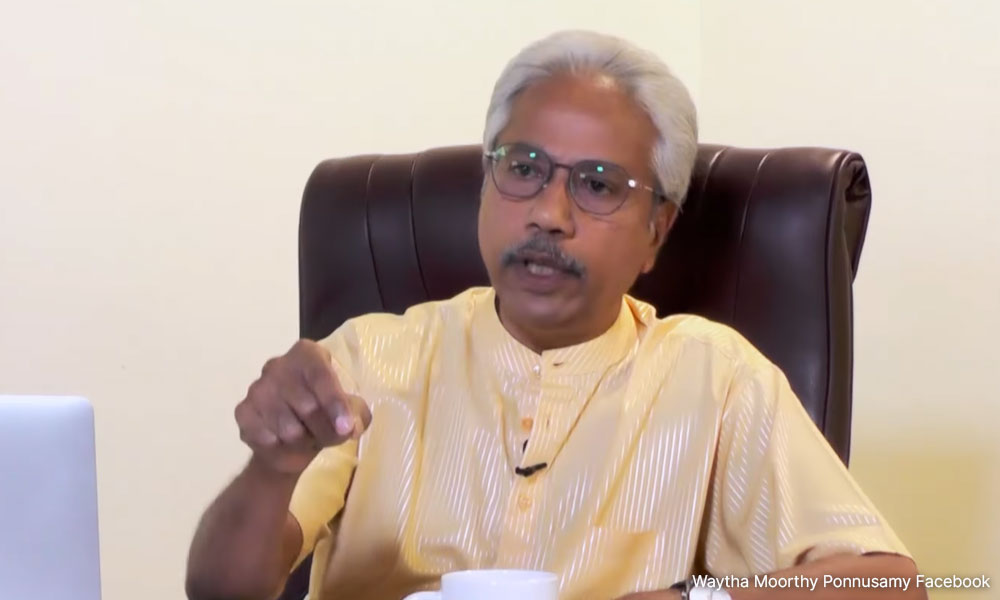
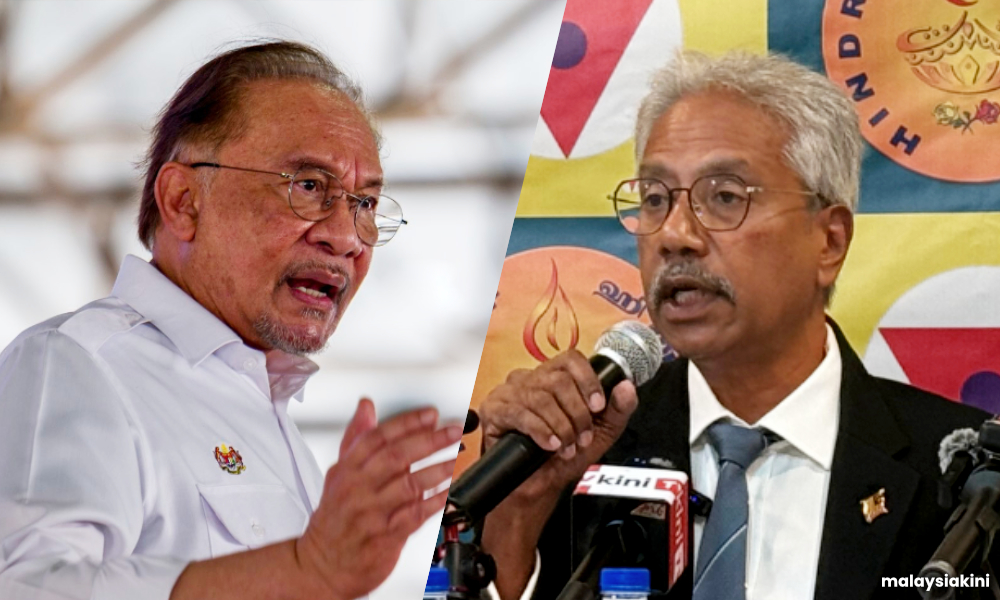
The plaintiff, former minister P Waythamoorthy, asks: “On Nov 19, 2022 (the date of the 15th general election), was Anwar Ibrahim qualified to stand as a candidate for Tambun, Perak?”
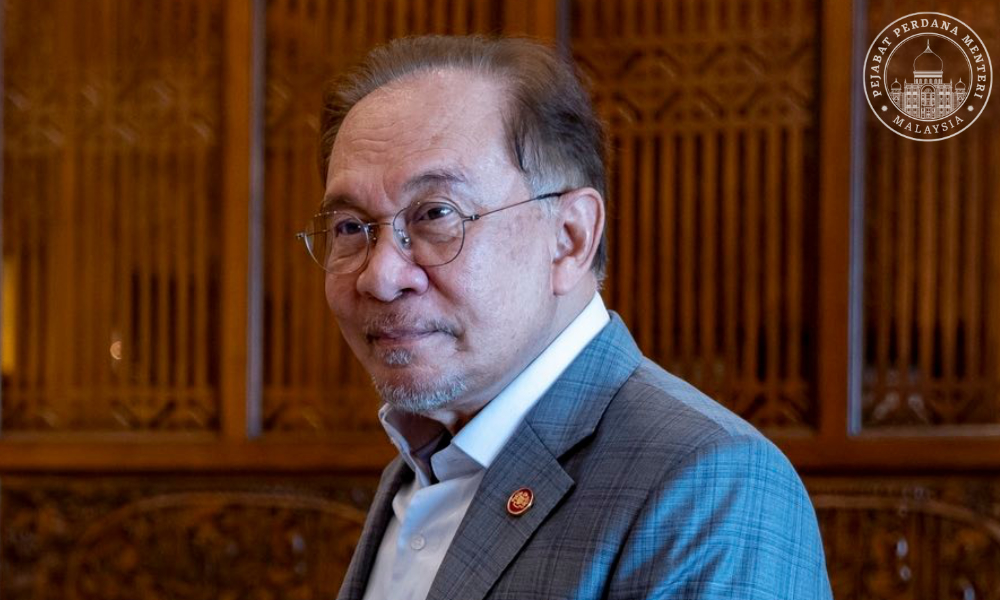
He argues that the answer is “No”, and that Anwar is neither entitled to have been “appointed” prime minister nor to “continue” in that office.
His complaint has thrust the nation into uncharted constitutional waters.
COMMENT | A man has sued the prime minister of Malaysia. He is not challenging the election process or the electoral outcomes; his complaint strikes at something far more fundamental.
The plaintiff, former minister P Waythamoorthy, asks: “On Nov 19, 2022 (the date of the 15th general election), was Anwar Ibrahim qualified to stand as a candidate for Tambun, Perak?”
He argues that the answer is “No”, and that Anwar is neither entitled to have been “appointed” prime minister nor to “continue” in that office.
His complaint has thrust the nation into uncharted constitutional waters.
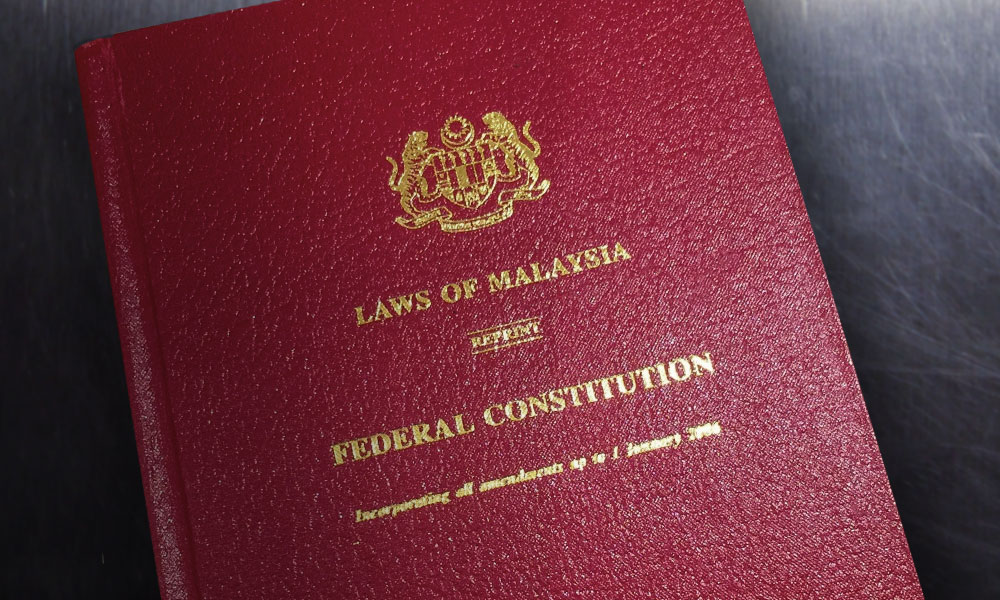
Two seemingly simple clauses in the Federal Constitution are at the heart of this dispute: these concern royal pardons and their effect upon the qualification to electoral candidacy.
Yet within these provisions lies Malaysia’s most sophisticated legal puzzle. It would equally fascinate Westminster counsel and Delhi’s constitutional experts.
The fatal timeline
The chronology is stark and unforgiving.
In 2008, Anwar was charged with a criminal offence. After judicial appeals and reversals, the Federal Court in February 2015 upheld his conviction and imposed a five-year sentence.
On May 16, 2018, His Majesty the king granted him an “unconditional” pardon, and Anwar was released the same day. The constitutional collision occurs here.
When Anwar stood for election on Nov 19, 2022, the critical five-year period from his release would not have expired, not until May 15, 2023.
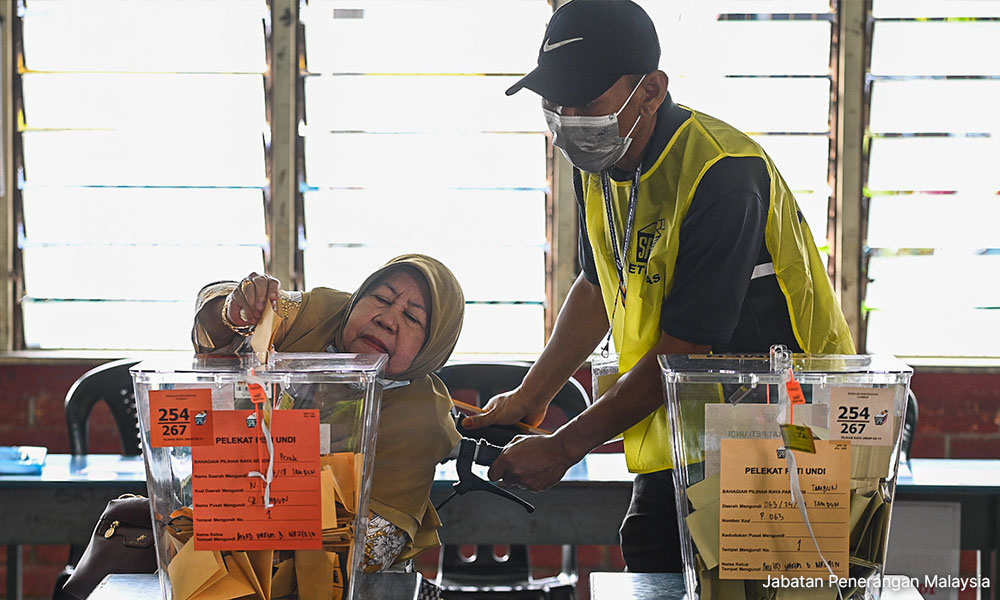
If the plaintiff’s interpretation proves correct, Anwar contested his seat whilst being constitutionally “disqualified”.
This would render his subsequent appointment as prime minister invalid and unconstitutional.
Should the prime minister’s position collapse, the entire cabinet falls with him.
The constitutional riddle
The dispute centres upon the interplay between provisions that appear deceptively straightforward, yet they harbour profound complexity.
Article 48(1)(e) disqualifies from parliamentary membership any person, “convicted of an offence… and sentenced to imprisonment for a term of not less than one year… and [who has] not received a free pardon.”
Article 48(3) provides separately (perhaps independently) that “the disqualification… may be removed by the Yang di-Pertuan Agong.” It adds that disqualification “shall, if not so removed, cease at the end of the period of five years.”
Three pathways to restore electoral candidacy
First, the Pardons Board can grant a “free” pardon.
Second, the king - using the personal discretion granted by the Constitution, may “remove the disqualification.”
Third, the waiting period of five years from release has elapsed.
The haunting question in this case is: do these provisions operate harmoniously? Do they create distinct (or separate) requirements?
When the Yang di-Pertuan Agong grants a pardon under Article 42, does this automatically remove political disqualifications under Article 48?
Or must His Majesty explicitly state: “We have removed any disqualification preventing this person from standing as a candidate”?
When the king grants a pardon - but does not explicitly use the magic words, “free pardon” - then what happens?
Can Article 48(3) be argued as a ‘free-standing’ provision?
What is the consequence of this argument? Then, the Yang di-Pertuan Agong could theoretically do one of three things:
Grant a pardon without removing political disabilities; or
He could also remove disqualifications without granting a pardon; or
He could grant a pardon, whether conditional or unconditional, and still remove the disqualification.
Think about it.
Harmonious construction doctrine
Constitutional interpretation demands that courts resist choosing between conflicting provisions. Instead, they must find ways to give meaning to both. This principle emerges from centuries of English legal tradition.
Parliament, in its wisdom, enacted both articles. If a “free pardon” under Article 48(1)(e) automatically satisfied Article 48(3)’s requirements, why retain the provision in Article 48(3)?
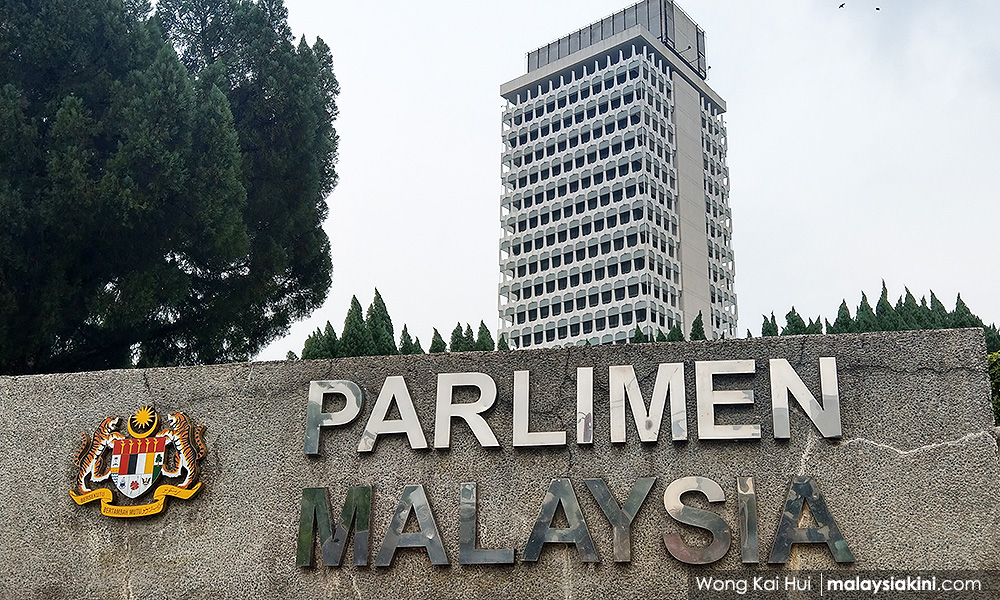
The law abhors redundancy. Both clauses must serve distinct purposes - or risk constitutional meaninglessness.
Commonwealth courts have refined this approach through the “living tree” doctrine. Constitutional provisions must possess “growth and expansion within their natural limits.”
Malaysian courts have explicitly embraced this “purposive” interpretation. They treat the Constitution as “a living document.”
Distinction between ‘express’ and ‘implied’
The current challenge illuminates a crucial legal distinction. Waythamoorthy’s counsel argues that whilst Anwar received a “free pardon” under Article 42, this instrument did not expressly state that his Article 48(1)(e) disqualification “was removed.”
In constitutional law, express requirements typically resist satisfaction through mere implication. They demand explicit compliance with prescribed procedures.
The language in Article 48(3) employs discretionary words.
Under Article 49(3), the disqualification “may be removed” by the king. This discretion is personal to His Majesty. It is not “automatic”.
The king “may act in his discretion… in any other case mentioned in this Constitution”. And the Constitution in Art 48(3) expressly gives the king the discretion to either remove or withhold the disqualification.
Just because the king grants a pardon, it does not mean the recipient automatically becomes eligible to stand for elections. This occurs only if the king explicitly chooses to say so.
His Majesty must exercise a choice. His choice, granted by the Constitution, cannot be implied. The king must speak.
Most significantly, harmonious construction requires giving effect to both Article 42’s pardon power and Article 48(3)’s removal mechanism.
If pardons automatically satisfied Article 48(3)’s requirements, that provision would become constitutionally meaningless.
This is a result that the principle of harmonious construction seeks to avoid.
Counter-argument in Commonwealth legal tradition
In the United States, a “free pardon” traditionally restores the person pardoned to their previous legal position as if the conviction never occurred.

Under this interpretation, a free pardon automatically removes all legal consequences of conviction, including constitutional disqualifications.
The position is different in Malaysia, for we follow the law in the British Commonwealth.
“Free pardon” or “pardon” means that the sentence is completely wiped out (like that of the “free pardon” granted to Anwar on May 10, 2018).
While a pardon removes the punishment, it does not erase the conviction itself. Only a court has the power to quash a conviction.
Odd sentence in Anwar’s pardon
If you study Anwar’s pardon, you will find a surprising sentence that states Anwar is “deemed a person who has committed no wrong”.
With respect, the Pardons Board has no power to change the character of the court sentence. Only a court can do that. So that sentence is without jurisdiction and has no power to bind anyone.
The power to pardon is the power of the government.
You will note that Anwar’s instrument of pardon (at any rate that which was disclosed to the court) was signed by then prime minister Dr Mahathir Mohamad.
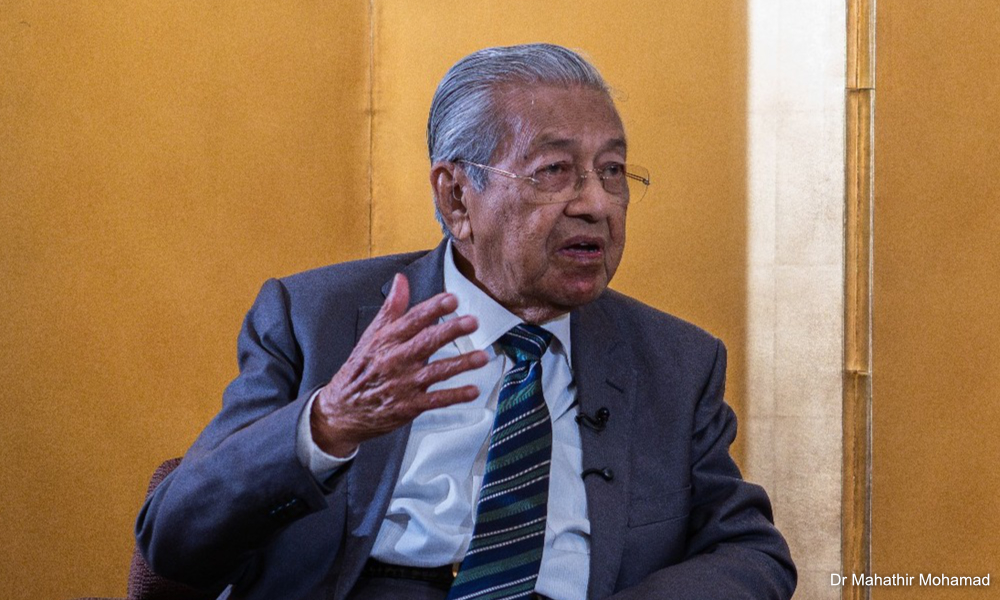
Any errors discernible “on the face of the instrument” are attributable to the government.
Respected scholar’s counter-argument
Professor emeritus Shad Saleem Faruqi champions this “automatic removal” theory, citing the 1969 Bandar Melaka precedent. He argues that requiring “express removal” creates “unnecessary complications”.
However, with respectful deference, this analysis may overlook Malaysia’s constitutional architecture. The Bandar Melaka precedent emerged without judicial scrutiny of Article 48(3)’s specific requirements.
Political acceptance is not the same as, and is fundamentally different from, constitutional compliance.
Commonwealth perspectives
Across the Commonwealth, sophisticated approaches have emerged.
Australia’s High Court consistently applies harmonious construction. It emphasises that “construction should favour coherence in the law.”
India’s approach proves particularly instructive given constitutional similarities. The Indian Supreme Court emphasises that harmonious construction must not destroy constitutional provisions. Rather, it must preserve their essential character.
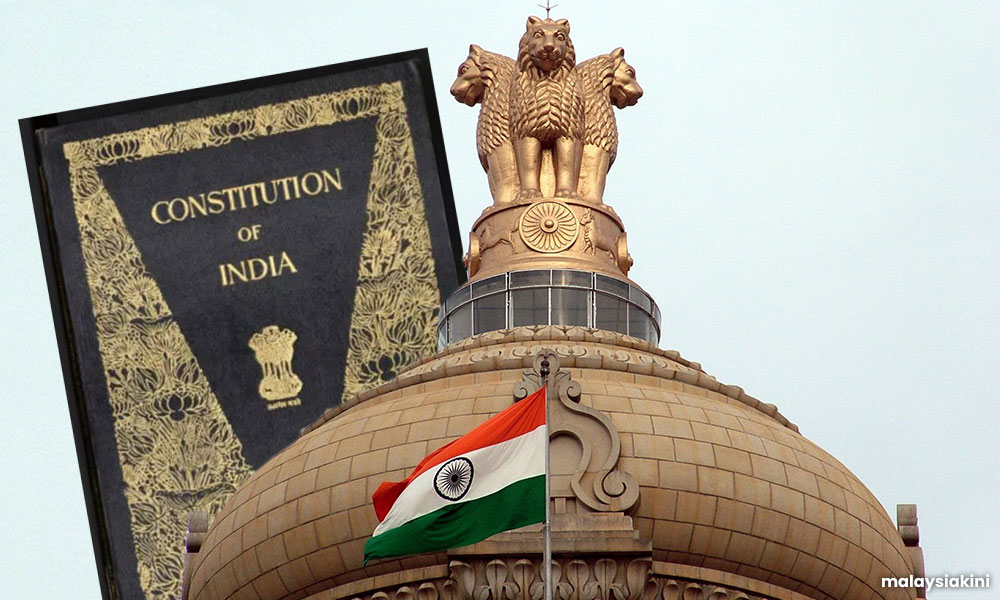
Canada’s Supreme Court offers perhaps the most structured approach. It emphasises that constitutional interpretation must be both “purposive” and “contextual.” This allows courts to reconcile textual conflicts through a broader constitutional understanding.
Possible judicial solutions
Malaysian courts possess several interpretative pathways.
First, they might interpret Article 48(1)(e) broadly to encompass any effective pardon. This would emphasise constitutional unity and serve the underlying purpose of determining rehabilitation through royal clemency.
Alternatively, they might distinguish between Article 42’s power to pardon and Article 48(3)’s removal mechanism, treating them as separate constitutional instruments with distinct and separate requirements.
Electoral candidacy disqualifications would thus require explicit removal through Article 48(3) procedures. This would apply even where Article 42 pardons address criminal penalties.
A third approach would emphasise the “constitutional presumption against disqualification”.
It could be argued that:
Democratic participation represents a fundamental right.
Constitutional disqualifications should be interpreted restrictively.
Ambiguities should be resolved favouring political participation.
Would that be a correct argument?
The deeper stakes
This controversy transcends whether royal mercy can overcome parliamentary disqualification.
It asks how wisely our courts can navigate the complex constitutional architecture defining Malaysian democracy.
Constitutional interpretation in Malaysia demands balancing multiple values. These include royal prerogatives against democratic accountability. Individual rights must be weighed against collective welfare.
These tensions cannot yield to simple textual literalism. They require sophisticated constitutional reasoning. This characterises mature democratic systems.
The constitutional interpretation adopted by our courts will establish important precedents. These transcend this immediate controversy and will influence the broader development of Malaysian constitutional law for generations.
The constitutional dance
This constitutional conundrum strikes at Malaysia’s democratic heart. Here, royal prerogative meets parliamentary sovereignty.
This collision between constitutional values reflects the sophisticated framework our founding fathers bequeathed us.
The wisdom lies not in choosing between competing principles but in finding interpretations that honour both.
Our courts must choose between textual precision and purposive interpretation. This choice will shape the framework for future generations of Malaysian leaders.
The Yang di-Pertuan Agong’s words carry immense constitutional weight. Paradoxically, the absence of certain words may prove equally significant.
These may define the boundaries of democratic participation for decades to come.
The answer will determine not merely one politician’s fate. It will determine the constitutional principles guiding our nation for years to come.
In this delicate constitutional dance, every syllable matters. History awaits the judiciary’s next move.
GK GANESAN is a lawyer and an international commercial arbitrator.
The author thanks Mr UK Menon, Miss KN Geetha, Miss TP Vaani, Miss JN Lheela, and Miss Lydia Jaynthi.
Malaysiakini has obtained permission to republish this article, which first appeared here.
The views expressed here are those of the author/contributor and do not necessarily represent the views of Malaysiakini.


Once again, there is an attempt to block Anwar Ibrahim from continuing as Prime Minister. To borrow Lord Denning’s famous phrase, “The law is an ass” if it is twisted to subvert the rakyat’s clear mandate. The Agong, the Constitution, Parliament, and Judiciary all exist to serve the people — not to thwart them. Twice the rakyat have returned Anwar to Parliament, and that alone makes him fully eligible to hold office. This case deserves swift dismissal as frivolous and vexatious.