
PM consistent on taxing the rich despite complaints: Treasury sec-gen
The Treasury secretary-general has defended the government’s progressive taxation approach, dismissing suggestions that the wealthy aren’t paying their fair share.
Responding to criticisms about tax equity, Johan Mahmood Merican pointed to measures targeting high earners under Prime Minister Anwar Ibrahim's administration.
Summary
Treasury secretary-general Johan Mahmood Merican defends the government’s progressive tax approach, citing measures such as the two percent dividend tax and raising the marginal income tax rate to 30 percent for those earning above RM1 million.
He cites the rationalisation of electricity and diesel subsidies as examples of a progressive approach, saying the vast majority of consumers were unaffected.
He also rules out reintroducing the inheritance tax, arguing that wealthy individuals typically find ways to circumvent such levies through company structures or trusts, leaving the middle class to bear the burden.
The Treasury secretary-general has defended the government’s progressive taxation approach, dismissing suggestions that the wealthy aren’t paying their fair share.
Responding to criticisms about tax equity, Johan Mahmood Merican pointed to measures targeting high earners under Prime Minister Anwar Ibrahim's administration.
He insisted that the government has maintained a consistent stance on progressive taxation, despite facing pushback from affluent circles.
“Actually, this prime minister, who is also our finance minister… Actually, I think he is very consistent in being progressive. So much so that you sometimes get these snide remarks from the wealthy complaining that they feel that they are unduly taxed under this administration,” Johan said during an exclusive interview with Malaysiakini.
He cited multiple examples of targeted measures affecting higher-income brackets, including changes to the sales and service tax (SST) regime covering private education and luxury items such as racing bicycles and high-end financial services.
Dividend tax and income tax hikes
Among the most significant reforms highlighted was the introduction of dividend tax in Budget 2025, specifically designed to impact wealthier investors.
“So, for example, in Budget 2025, one of the measures was a dividend tax, where effectively we’re saying that you will be subject to dividend tax if you have above RM100,000 dividend income. So only a certain level that will get dividend income above RM100,000. Anyone below that wouldn’t be subject to the additional tax.
“This is also the government that, in Budget 2024, also raised the income tax rate for the really high income. I think above RM1 million they increase the marginal tax rate to 30 percent,” Johan said.
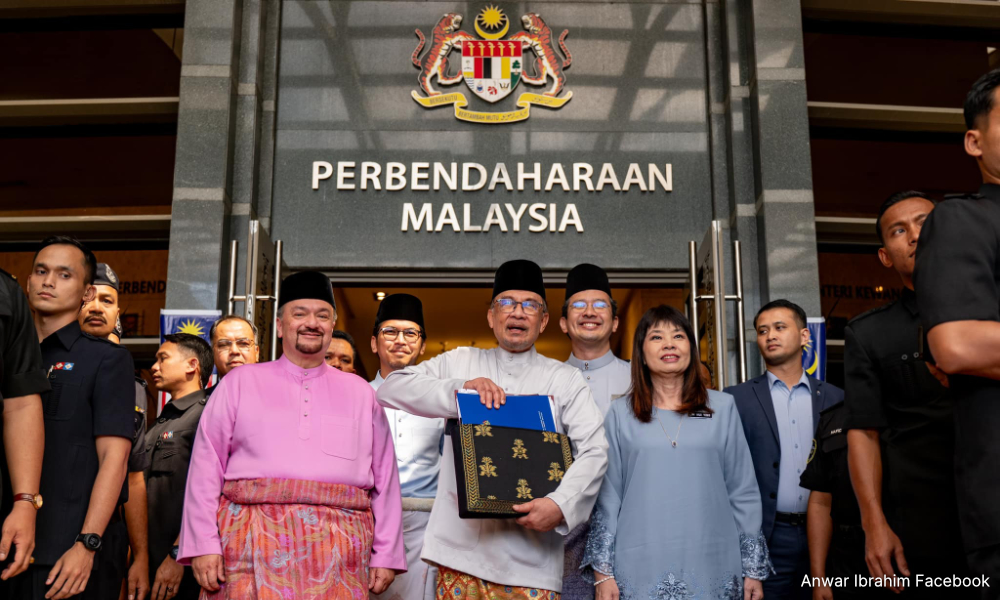
During the tabling of Budget 2025 last year, Anwar announced that the government will introduce a dividend tax aimed at income obtained through dividends by individual shareholders.
He said the tax, set at two percent, will be implemented this year.
The move was to ensure the nation no longer relies on taxes imposed on salary earners alone but expanded to employers and individuals who hold shares worth millions, he explained.
During the presentation of Budget 2020, then finance minister Lim Guan Eng announced the introduction of a new tax bracket for those earning over RM2 million per annum, which would see them taxed at 30 percent - two percentage points higher than the 28 percent rate that applied to those earning over RM1 million.
Progressive subsidy targeting
The secretary-general extended the progressive argument to subsidy reforms, highlighting how recent changes have protected lower-income households whilst reducing support for the affluent.
“So I think if anyone… this government or the prime minister, I think he has been quite consistent in this progressive approach to taxation. In fact, besides taxation, on the subsidy front, we have also embraced this idea of targeted subsidies,” Johan said.
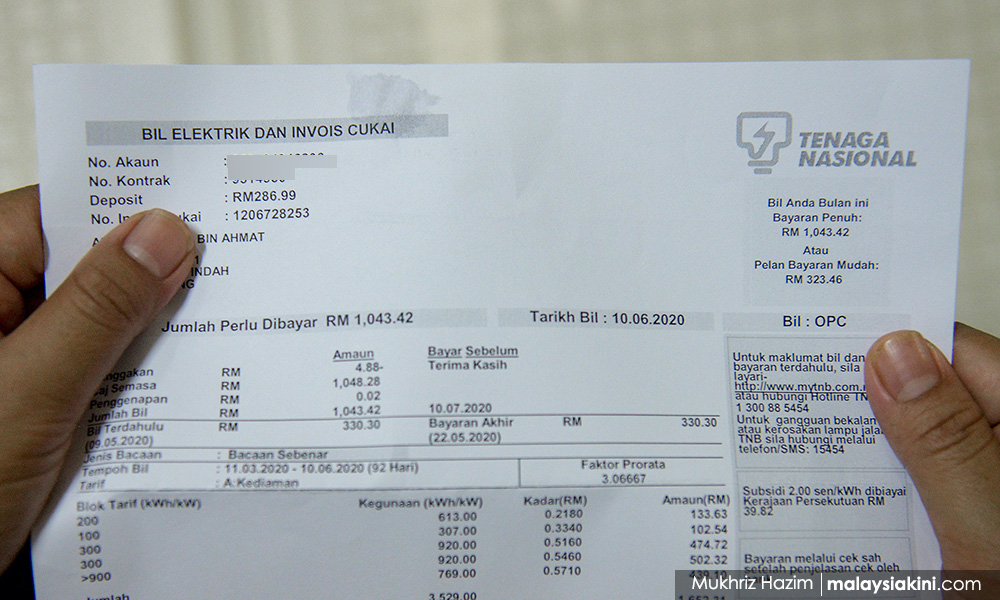
He said that electricity subsidy reforms have maintained lower rates for households consuming below 1,000 kilowatts monthly, whilst those with bills exceeding RM500-RM600 face higher charges.
Similarly, diesel subsidy targeting introduced cash assistance for individuals earning below RM100,000, excluding higher earners and luxury car owners.
Rich will find ways to evade inheritance tax
Johan also definitively ruled out reintroducing the inheritance tax, citing practical complications and concerns about its impact on the middle class.
“I think at the Finance Ministry, we are currently not looking into inheritance tax. You would know that, I guess, the history of it at that time, I think there were complications.
“The inheritance tax, maybe because in other jurisdictions, the extremely wealthy find ways to structure it, to avoid it.
“Either they hold it under companies or trusts to avoid it, and what ends up happening is maybe the middle-class then bear the brunt of it, and then it is further complicated by faraid,” Johan explained, referring to the Islamic inheritance law.
Instead, he said, this was why the government opted for measures like the dividend tax, which is viewed as more difficult to circumvent.

“So I think there were valid reasons at that point in time when it was ceased. It is not currently on our radar.
“But certainly, as you know, I mentioned that dividend tax, that is something certainly that is tilted to be progressive, because that one is harder to avoid, right? They own the shares, they get dividends every year, so they will have to (pay),” Johan added.
The Treasury’s defence comes amid ongoing debates about income inequality and fiscal policy, with the government maintaining that its approach balances revenue generation with social equity concerns.
Malaysia scrapped estate duty in 1991. Before its abolition, the levy only applied to estates exceeding RM2 million in net value.
The tax structure comprised a five percent rate on estates worth up to RM2.4 million, whilst anything beyond that threshold attracted a 10 percent charge.
Before being abolished, Malaysia’s estate duties featured a more graduated approach with multiple tax brackets corresponding to different estate valuations, mirroring the tiered system employed in income taxation.