


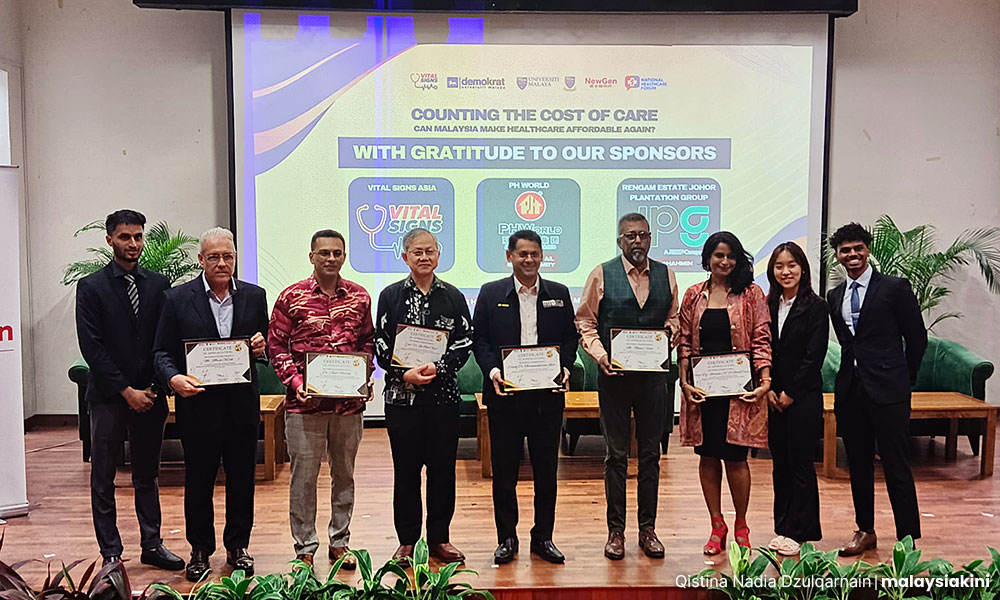

Experts urge reforms in drug pricing, public healthcare governance
IA International Assistance’s Head of Health Dr Aneil Moorthy highlighted that there is still no price ceiling or regulatory framework for the cost of medications sold to patients, and warned that the government’s lax approach will...
Summary:
A healthcare provider raises concerns over the lack of regulation in medication pricing, warning that unchecked markups contribute significantly to medical bills.
Dr Aneil Moorthy also calls on the government to review nominal charges at public healthcare facilities, saying the current structure may encourage waste.
Former health minister Khairy Jamaluddin proposes placing public hospitals under an independent body, arguing that the Health Ministry’s centralised control slows reforms and hampers service delivery.
A healthcare services provider has called for Putrajaya to look into the pricing of medications in Malaysia, stressing that the matter is a critical issue that warrants urgent attention.
IA International Assistance’s Head of Health Dr Aneil Moorthy highlighted that there is still no price ceiling or regulatory framework for the cost of medications sold to patients, and warned that the government’s lax approach will do more harm than good.
“The current lack of oversight has allowed pharmaceutical companies, private hospitals and pharmacies to set their own retail prices.
“This often results in significant markups where, in some instances, medication charges can constitute as much as 20 percent to 25 percent of the total medical bill,” Aneil said in his keynote address at a forum in Universiti Malaya today.
The forum, titled “Counting the Cost of Care: Can Malaysia Make Healthcare Affordable Again?”, was organised by a student-led committee as a sequel to the National Healthcare Forum held earlier this year.
Lower prices through centralised procurement
Aneil added that it is imperative that transparency be practised across the board, including by establishing the manufacturing, distribution, cost and sale prices of medications.
“It is inefficient to simply mandate the display of medication prices in clinics and hospitals.
“Such measures, while seemingly transparent, do little to address the root cause of high medication costs,” he said.

Aneil is understood to be referring to the implementation of the Medicine Price Display Order at private healthcare facilities and pharmacies, which previously courted backlash from certain private medical practitioners (GPs).
On May 6, more than 700 GPs staged a peaceful gathering lasting about two hours near the Perdana Putra building to oppose the application of the Price Control and Anti-Profiteering Act 2011 to the medical profession.
Aneil also said that the government should seriously consider centralising the procurement of medications for all public hospitals and clinics.
Such an initiative, he said, could be executed through a non-profit subsidiary under the Health Ministry or Finance Ministry, with the model extended to the private healthcare sector to allow them access to lower-cost medications, thus reducing retail prices for patients.
Public healthcare underappreciated, unsustainable
On a separate point, he urged the Health Ministry to reevaluate the current structure for services provided at government healthcare facilities to avoid wasting taxpayers’ money.
He noted that at present, specialist clinic consultations are charged at RM5 while emergency and outpatient services are offered at a nominal fee of RM1.
“While this policy aims to ensure healthcare accessibility for all, it may unintentionally lead to a lack of appreciation for these services.
“Speaking from personal experience, I have observed instances where patients return unused medications to the pharmacy - often because the drugs have expired due to poor compliance by the patients themselves,” he said.

However, he asserted that any potential revisions should exempt vulnerable groups, including the elderly, pensioners, persons with disabilities, and those receiving welfare assistance.
The forum also featured discussions and expert contributions from a range of speakers, including former deputy health minister Dr Lee Boon Chye, who said that it would be unsustainable for the government to provide free healthcare for all its citizens.
Arguing that such a move would be “regressive” and unfair to those from lower income brackets, Lee said that free healthcare would be disadvantageous to the poor, as the system would have to cater to the richer population with higher demands.
More autonomy for hospitals
Lee’s fellow panellist, Life Insurance Association of Malaysia CEO Mark O’Dell, admitted that insurance companies need to implement certain improvements to ensure that policyholders properly comprehend changes to premium rates and other related matters.
“In hindsight, we realise now that it’s insufficient for policyholders to just get a letter informing them that their premiums are being raised. The industry has to work harder to improve transparency behind what’s driving things,” O’Dell added.
Former health minister Khairy Jamaluddin also expressed his belief that the most pressing transformation needed in the public healthcare system is to place the regulation of key services, particularly public hospitals, under an independent body.
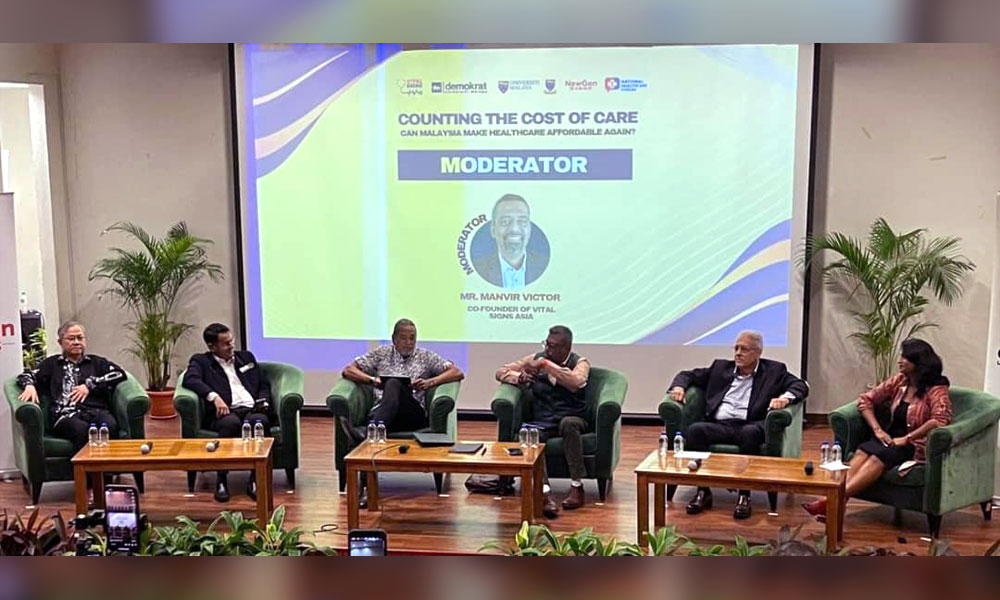
Khairy, who attended the session as a special guest, emphasised that the current system is no longer practical as the Health Ministry is unable to effectively carry out other reforms for the public healthcare sector as it is inhibited by other tasks.
“The ministry serves as the provider, the payer and the sole regulator of public health in Malaysia. This is why decision-making and reforms are slow,” he said.
“Why not place all government hospitals under the leadership of a CEO, with hospital directors also given certain powers, for instance, on appointments and budgeting?
“Issues such as drug pricing and private facility regulation can also come under the purview of this body, (thus) making the public healthcare system in hospitals function more effectively,” he added.
Other panellists at the event were Malaysian Medical Association president-elect Dr Thiryunavakarasu Rajoo, as well as public health physicist and clinical epidemiologist Dr Nirmala Bhoo-Pathy.
The nearly six-hour-long session was moderated by patient advocate and Vital Signs Asia co-founder Manvir Victor.


