



KINIGUIDE | MyKiosk: Hawker reform or costly white elephant?
KINIGUIDE | The government’s MyKiosk initiative has sparked widespread controversy in recent weeks, with certain parties raising concerns over potential procurement irregularities and underutilisation, warning it could become a white elephant project.
MCA and several other quarters have trained their guns on the leader in charge, Housing and Local Government Minister Nga Kor Ming, who has consistently denied accusations of impropriety within the project.
The issue has drawn heightened scrutiny, prompting calls for greater transparency and accountability.
This KiniGuide edition looks at the background behind the project and the nuances shaping current developments.
What is MyKiosk?
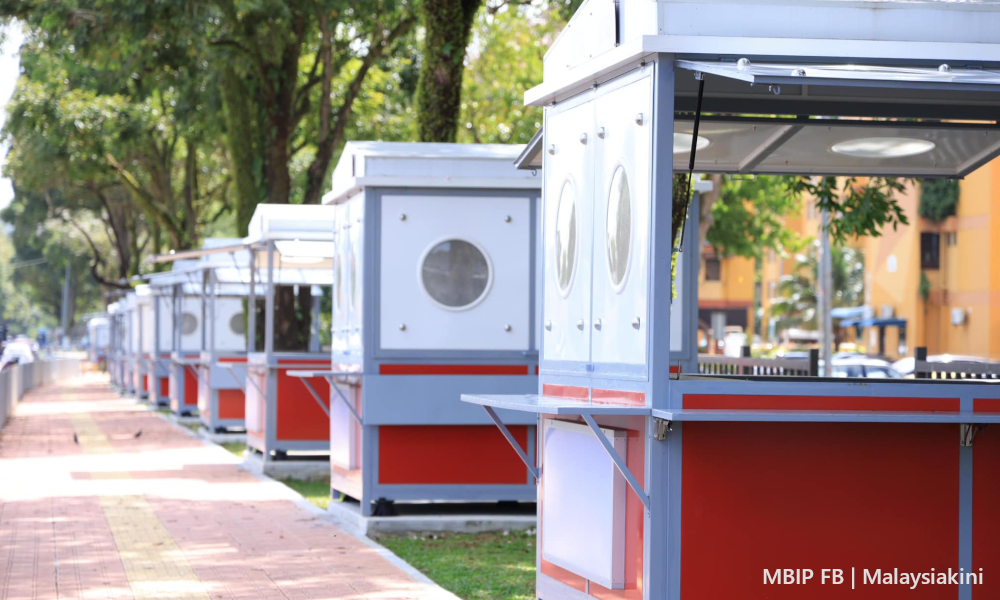
MyKiosks are small cabins that act as shops, introduced as part of the Housing and Local Government Ministry’s plan to modernise the roadside hawker industry, including helping to legalise those who are unlicensed.
The first batch of kiosks - dubbed MyKiosk 1.0 began physical rollout in 2023 with 3,189 kiosks approved.
The second phase of the project in the following year saw the approval of 4,054 kiosks.
How much money did the government spend?
MyKiosk 1.0 received an allocation of RM50 million from the federal government for the construction of the kiosks.
An additional RM100 million was later provided for the second phase, with Nga reportedly noting that a third instalment could be implemented, pending the Finance Ministry’s approval.
The funds are distributed to local authorities which applied to be part of the kiosk initiative.
Subsequently, procurement matters, including quotation processes and contractors’ appointments, are fully under the management of local authorities.
How much does each kiosk cost?
In an FAQ published on its social media and website, the ministry said each kiosk under the first phase of the project cost RM15,000.
However, the figure ballooned to RM25,000 per kiosk for units under the second phase.
Nga had previously cited the higher costs to justify the increased government allocation.
He also said that local councils have the flexibility to choose which type of kiosk they wish to procure.
Why did the price increase? Is it justified?
That’s one of the key criticisms being lobbied against the project.
MCA claims that market surveys and disclosures from local manufacturers indicate that the cost should be less than RM15,000 per unit for the upgraded model.
Bersatu information chief Tun Faisal Ismail Aziz labelled the MyKiosk project as a wasteful and ineffective white elephant, questioning whether the initiative was merely a smokescreen to enrich cronies.
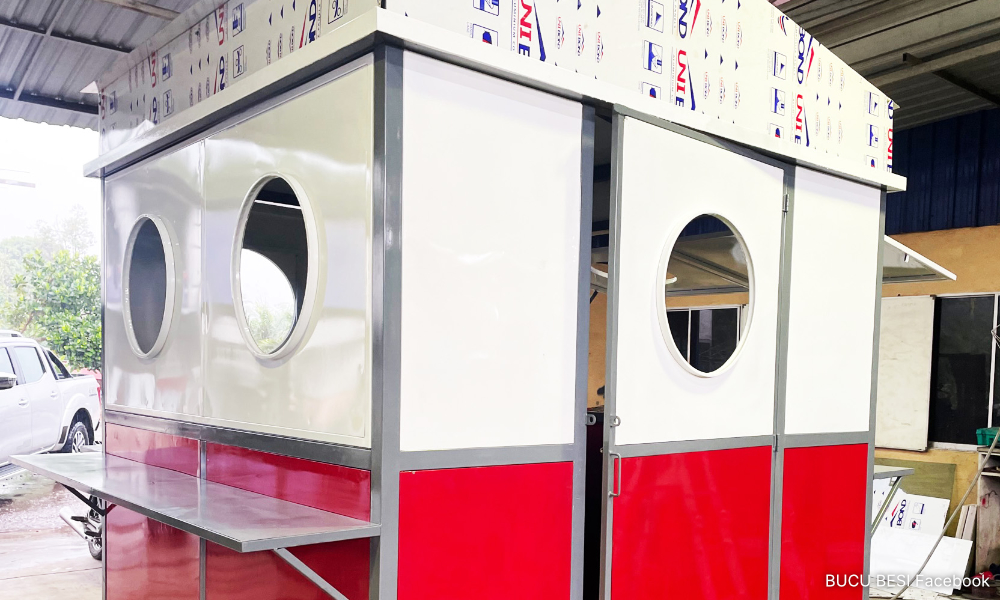
The ministry, however, said that the cost increase is due to improvements made to the units, which were originally a modular, fixed structure equipped with a 300W solar panel system and basic electrical support.
The upgrades, among others, added more user-friendly designs, a 1,000W solar power capacity, better electrical systems for LED lights, improved battery systems, reinforced structures and hydraulic windows.
The ministry noted that the upgrades were implemented based on complaints and feedback received during the MyKiosk 1.0 phase.
I see these kiosks around but why are they empty?
Nga has acknowledged that not all kiosks are occupied and that it has limited appeal in certain localities.
However, he said local councils that have successfully applied and received the kiosks will be held responsible if the units are left empty for extended periods.
MCA vice-president Lawrence Low said the problem is likely the location of the kiosks, saying that traders would naturally be eager to operate in such unity - if they were located in strategic and high-traffic areas that are business-conducive as well as welcoming for both sellers and customers.
Despite the complaints, Nga said that as of May 21, 80 percent of MyKiosks have been occupied.
How much do traders have to pay to use it?
Besides free rental for the first six months, Nga also said the rental rate would be capped at RM10 per day, with his ministry affirming that rental fees would not exceed RM300 a month.
The exact amount traders have to pay for rent is understood to be set by the respective local authorities in each state.
What happens now?
Reacting to Nga’s jibe inviting MACC chief commissioner Azam Baki to “have tea” in the minister’s office to discuss allegations surrounding the MyKiosk project, MCA leaders filed a report with the graftbusters the following day, urging authorities to investigate the project.
Deputy MCA Youth chief Mike Chong denied claims that the party is attempting to destabilise the government by bringing up qualms regarding the initiative, which he admitted has good intentions to aid small traders and tackle licensing issues.
However, he asserted that since the effectiveness of the project has become a matter of public dispute, authorities should look into the matter to determine whether public funds have been misused or if there were deficiencies in its implementation method.
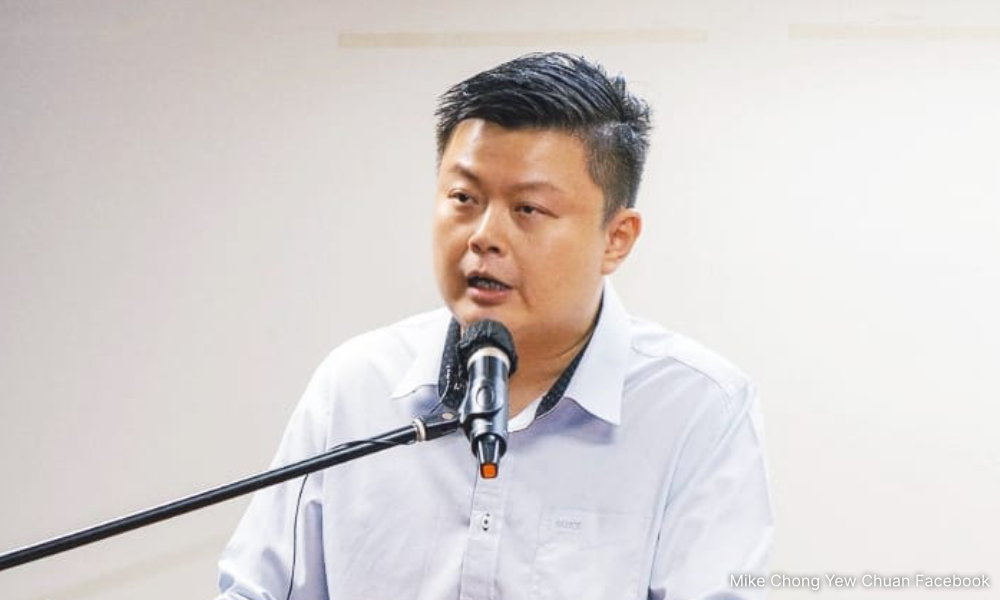
He noted that MCA’s report to the anti-graft agency includes figures collected from “credible sources”, including the ministry’s website, to aid the MACC in its investigations.
While it remains to be seen what actions the MACC will take to look into MCA’s report, Chong cautioned that allowing the issue to persist for much longer could affect public perception of Prime Minister Anwar Ibrahim’s administration.
Nga has said his ministry has been instructed to identify parties spreading false news regarding the project, following which reports will be filed with the police and the MCMC.


