


/file/publisher-c1a3f893382d2b2f8a9aa22a654d9c97/2023/12/f272d5903f9eeee2575d9d16f2b916cd.jpg)

COMMENT | DBKL occupies its own land - at developer's mercy
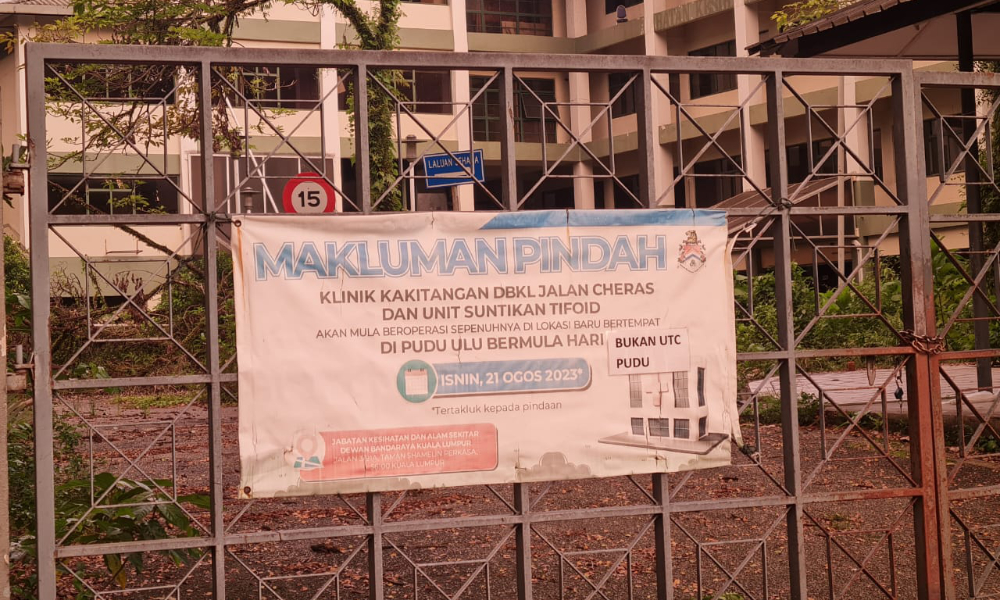
COMMENT | The course of events leading to the sale of a large plot of land, which, among others, housed a health clinic and vaccination centre, was straightforward - a willing seller offering a deal to a selected buyer.
However, behind the legally worded agreement between Kuala Lumpur City Hall (DBKL) and Perano Development Sdn Bhd, an arm of the Jakel group, it appears that proper procedures were followed.
However, the seller has now been placed in a difficult position.
Unable to meet a necessary clause, it is now dependent on the buyer’s goodwill to escape paying millions in compensation.
COMMENT | The course of events leading to the sale of a large plot of land, which, among others, housed a health clinic and vaccination centre, was straightforward - a willing seller offering a deal to a selected buyer.
However, behind the legally worded agreement between Kuala Lumpur City Hall (DBKL) and Perano Development Sdn Bhd, an arm of the Jakel group, it appears that proper procedures were followed.
However, the seller has now been placed in a difficult position.
Unable to meet a necessary clause, it is now dependent on the buyer’s goodwill to escape paying millions in compensation.
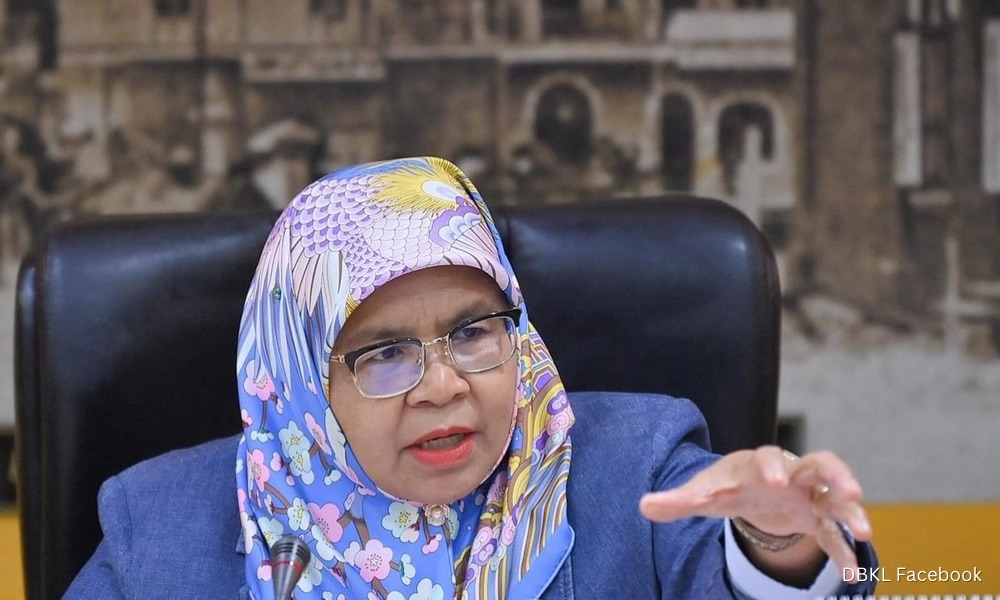
According to DBKL officers and a dialogue with the mayor, Maimunah Shariff, and her team held last Saturday, and a follow-up meeting on Wednesday, this clause stood out among scores of others.
The mayor was open, but the historical baggage she now carries is from her predecessors’ circumvention of laws, regulations, and norms, which has finally caught up with her.
She may not be able to right the many wrongs, some made for political expediency, and others for the enrichment of DBKL coffers, while a few helped line the pockets of a favoured few.
Putting cart before horse
It all started in April 2013 with a letter from then-mayor Ahmad Phesal Talib to Perana offering to sell the land measuring 130,000 sq metres.
Still, there was no mention of the price pending a valuation by the Valuation Department of the Finance Ministry, which in April 2014, valued it at RM2,945 per sqm, which worked out to about RM380 million.
The land was sold to Perano for RM418 million, and an earnest sum of RM40 million was paid to DBKL.
In September of the following year, the sale and purchase agreement was signed; however, a month prior, Perano had already placed a caveat on the land.
Isn’t this irregular, like putting the cart before the horse?
“Anyone can place a caveat on any piece of land to show they have an interest, and no one can prevent this. It is their right,” said a DBKL spokesperson.
This is the problematic part: Under the agreement, DBKL had to hand over vacant possession when the existing facilities are removed or within three years, whichever came earlier.
Three years later, DBKL has not moved as its facilities were not ready. They negotiated for an extension, and it was extended to December this year.
Will the new facilities be ready? The clinic, a fuel station, and its “Flying Squad” team have already moved, leaving a workshop-cum-garage pending the completion of its new facilities in Jinjang.
“Kalau tak siap, kita buat rundingan lagi.” (If not completed, we can negotiate again for an extension.)
Yet, as the owner, DBKL has been paying an annual quit rent of RM92,952 per annum, and is still at the mercy of Perano.
Unless vacant possession is handed over, DBKL legally and technically owns the land and is therefore liable for it.
It works out to more than RM1 million since the agreement was signed.
Why is it that way?
Ironic? Yes, but the question is: Why was it a hurry to sell the land when the new facilities were not ready? Were they facing financial problems, or would the extra money be used to reduce the yearly assessments? Or was it a ministerial order?
The law empowers DBKL to sell land with the consent of the federal territories minister, which serves as a check and balance.
But what if it is the other way round, if the minister gives a directive to sell?
And what if the minister wants the land to be sold to a specific party and at a particular price?
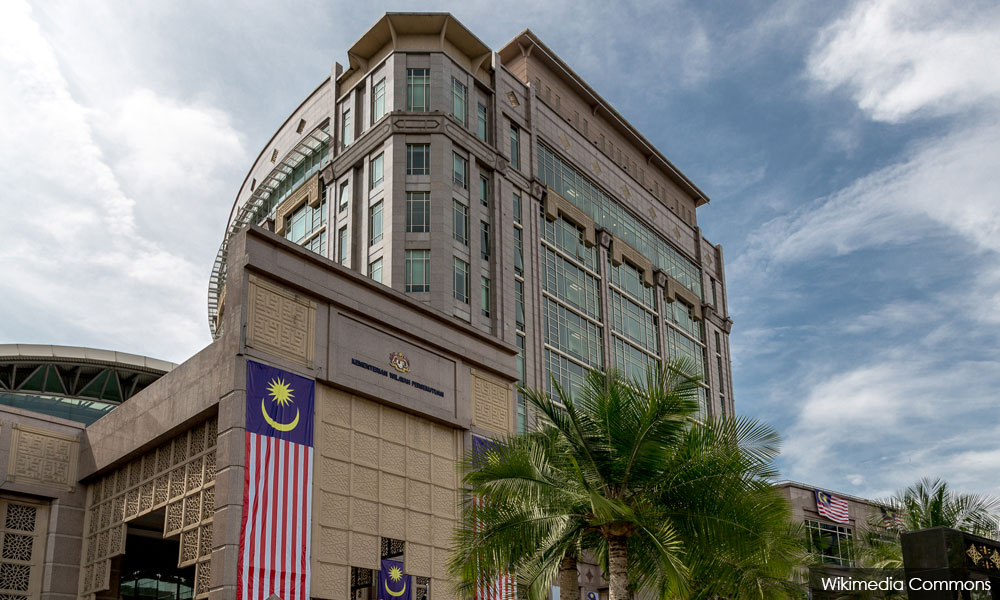
Can DBKL refuse? Would it not be insubordination? The sale of the Taman Rimba land in Taman Tun Dr Ismail, Kuala Lumpur, is an example.
This is the dilemma that DBKL faced, and still faces. How do you revoke agreements and the deals of the past without having to pay compensation or go through costly court action?
In 2019, the Public Accounts Committee (PAC) in its probe into 97 dubious land transactions involving DBKL.
Besides DBKL officials, it also called former Petaling Jaya councillor Derek Fernandez, who had alleged misappropriation in land deals.
Fernandez previously claimed that the gazetted Kuala Lumpur City Plan 2020 included 273 approvals that were not contained in the original draft plan.
Like worms emerging from the woodwork, details of dubious deals are surfacing from time to time.
To its credit, DBKL maintains records, including meeting minutes. At any time, it can retrieve information on the numerous transactions it has been involved in.
However, they remain unseen and inaccessible to interested parties.
‘Historical baggage’
But why did it spend hundreds of thousands of ratepayers’ money on legal fees to defend the sale of the Taman Rimba land, which went up to the Federal Court to defend its past actions?
A ministerial directive? DBKL is tight-lipped, but Maimunah agreed to the suggestion that it carries “historical baggage.”
There must be enough information to identify and hold accountable those involved - the buyers, the intermediaries, and the wheeler-dealers.
Malaysians got a vantage view at the trial of former federal territories minister Tengku Adnan Mansor, who was subsequently acquitted on corruption charges.
Then came the mother of all tell-tales in the case of the People v DBKL and others regarding Taman Rimba.
This case may not have been on the sale of land but the court unanimously denied the appeal from DBKL, Yayasan Wilayah Persekutuan, Memang Perkasa Sdn Bhd and an association representing longhouse residents in Taman Rimba Kiara, and upheld a 2021 Court of Appeal ruling that permitted 12 Taman Tun Dr Ismail (TTDI) residents to set aside the development order.
There were many unseen fingerprints in the whole exercise, and it appears that DBKL was compelled to resist and restrain residents from having a say on what happens in their neighbourhood.
The judgment in the case was a critique of the methods and tactics employed by DBKL to justify its decision to alienate land for development.
It also gave a resounding endorsement to the people’s right to be involved in the city’s affairs.
So, will DBKL listen to ratepayers regarding their needs and expectations before selling land or entering joint ventures with developers?
Since such deals are private, how do we know that they are fair to all parties and conducted transparently?
As Cheras MP Tan Kok Wai claimed, since the agreement terms were confidential, construction costs are often escalated.
Without transparency, there will be no fair deal, as “interested” parties may be encouraged to make side deals or fudge figures.
Maimunah, who took office last August, is willing to open the files and offer clarity, a saving grace for the years of secret transactions and side deals of the past.
R NADESWARAN is a veteran journalist who tries to live up to the ethos of civil rights leader John Lewis: “When you see something that is not right, not fair, not just, you have to speak up. You have to say something; you have to do something.” Comments: citizen.nades22@gmail.com
The views expressed here are those of the author/contributor and do not necessarily represent the views of Malaysiakini.
/file/publisher-c1a3f893382d2b2f8a9aa22a654d9c97/2023/12/f272d5903f9eeee2575d9d16f2b916cd.jpg)
/file/publisher-c1a3f893382d2b2f8a9aa22a654d9c97/2025/04/12750cc6c3b083455c588cb0ccbaf495.jpg)


