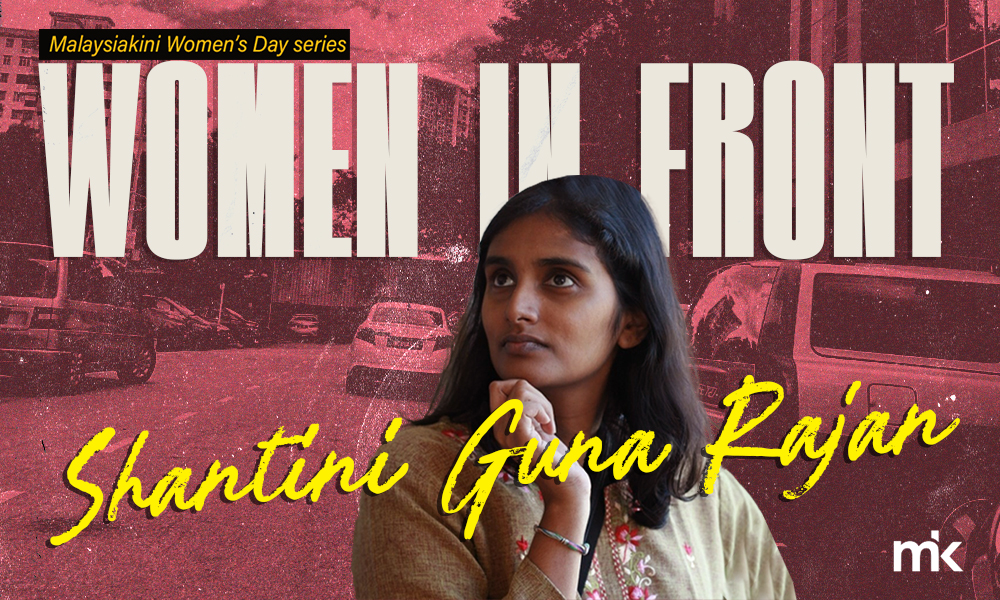

Blind environmentalist lives out passion to protect nature
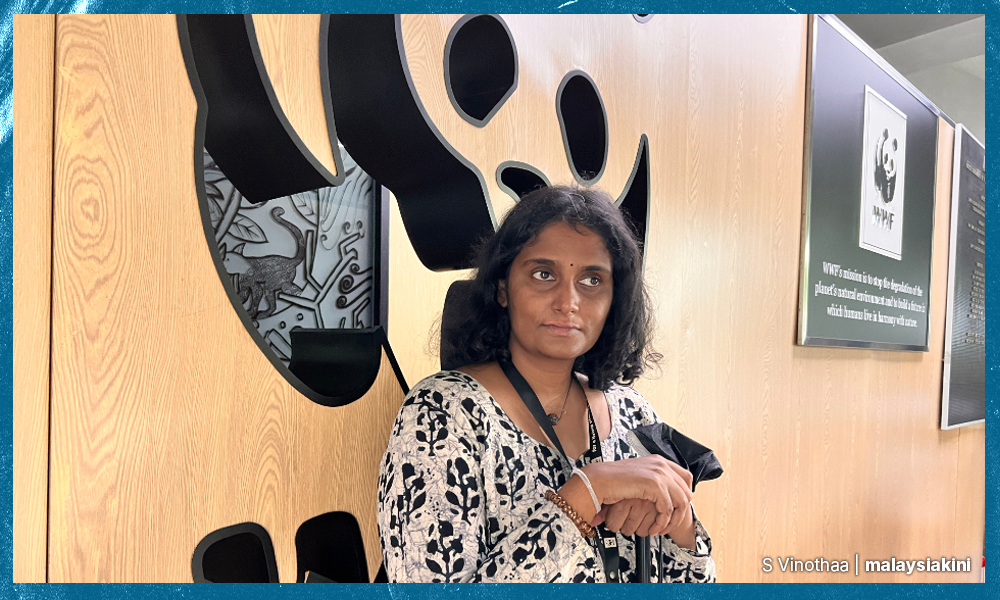
MALAYSIANSKINI | As a child, Shantini Guna Rajan would sit for hours, obsessing over National Geographic, dreaming of being a wildlife photographer.
But before she could even master shutter speed, her vision blurred so fast that the class monitor went from sitting in the back of the class to the front row within a week.
“I was born perfectly sighted but, at the age of eight and a half, my vision just dropped,” said Shantini, now WWF-Malaysia’s national policy lead.
Diagnosed with a genetic eye disease, Shantini, 40, still faces uncertainty about the exact cause for the rapid deterioration of her vision, even decades later, with various possible diagnoses presented over the years.
“I was sitting in the first row and could read the board. Then, even from the front row, I couldn’t see the board.
“It’s an accelerated rate of...
Summary
Shantini Guna Rajan once dreamt of being a National Geographic photographer but plans quickly changed when her eyesight rapidly degenerated when she was eight due to a genetic eye disease.
Trained as a lawyer, she is now living out her passion for the natural world as WWF-Malaysia’s national policy lead.
Being legally blind doesn’t stop her from being at the top of her game, advocating for a wide range of environmental issues, locally and on the global stage.
MALAYSIANSKINI | As a child, Shantini Guna Rajan would sit for hours, obsessing over National Geographic, dreaming of being a wildlife photographer.
But before she could even master shutter speed, her vision blurred so fast that the class monitor went from sitting in the back of the class to the front row within a week.
“I was born perfectly sighted but, at the age of eight and a half, my vision just dropped,” said Shantini, now WWF-Malaysia’s national policy lead.
Diagnosed with a genetic eye disease, Shantini, 40, still faces uncertainty about the exact cause for the rapid deterioration of her vision, even decades later, with various possible diagnoses presented over the years.
“I was sitting in the first row and could read the board. Then, even from the front row, I couldn’t see the board.
“It’s an accelerated rate of degeneration that happens suddenly, with no explanation,” she said, remembering her school days at Canossian Convent School in Kluang, Johor.
Yet in the midst of this rapid and overwhelming change, one thing stayed constant - the National Geographic magazines.
Magnifying glass in hand, Shantini continued to pore over magazines letter by letter, enraptured by the storytelling and arresting images of nature.
It was then that a seed was planted. It was the idea that she could be something larger, and with it, a desire to explore and understand the natural world.
“I devoured those magazines whenever I could. Since I could still read, I lived vicariously through them - the articles, the exploration, the adventure they promised, and the sheer sense of wonder they sparked.
“The photos, the narration, the infographics - all of it brought the world to life. And whenever I had the chance, I’d catch nature shows on TV too,” she reminisced.
For Shantini, the idea of working for such a publication was captivating, especially with nature being such a central focus - not just wildlife, but the broader environment and its preservation.
Over the moon
Her journey towards a career in environment conservation, however, took a more circuitous route, first through a law degree which she pursued with a National Education Department scholarship.
From there, returning to her calling in life, she specialised in environmental law through a master’s degree at the University of Nottingham, UK. And then the stars aligned.
“When the opportunity came with WWF, it was a natural fit because it involves nature, wildlife, and communities, all of which I deeply care about,” she said.
“When I received a call for an interview, I can't lie, I was definitely over the moon. But, I was very clear that my vision was a degenerative condition,” she said, recalling her interview in 2014 for the Marine Policy Manager role.
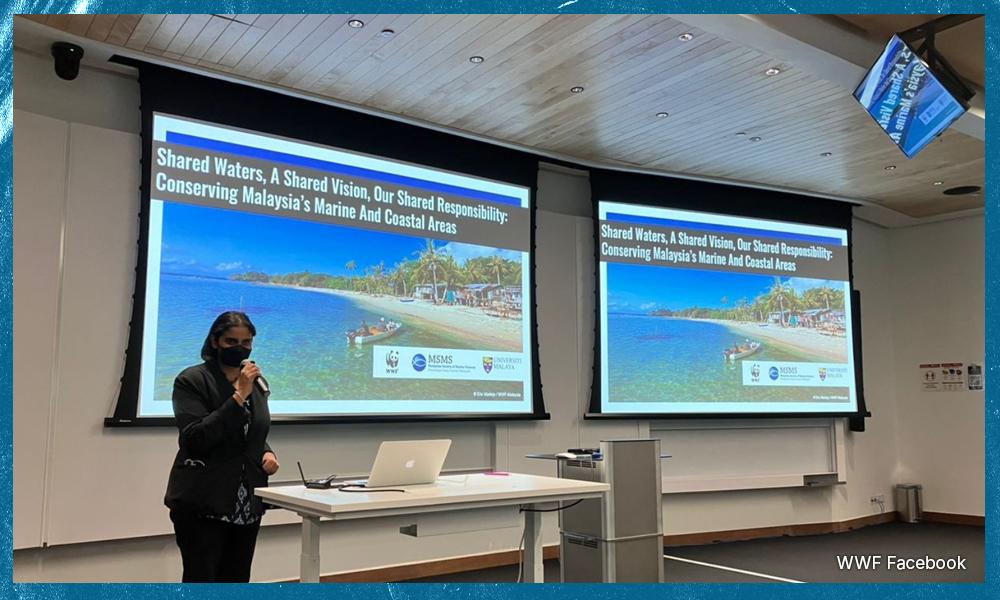
Proving that her disability was no barrier, she took to the role with gusto, travelling by boat to field trips and excelling in melding her expertise and passions together.
As a testament to this, more than a decade on, she now leads WWF-Malaysia on policy matters, moving beyond her specialisation in marine conservation.
In this role, she travels the world, attending regional and global forums, conferences, dialogues and negotiations on conservation issues.
It’s not quite the life of the wildlife photographer Little Shantini had envisioned for herself, but not far from what the little girl reading nature magazines with a magnifying glass had dreamed of.
In her job, her condition is rarely something discussed, unless she brings it up first, she said.
Shantini does not appear like the typical visually impaired person. She does not wear sunglasses and her cane is often mistaken as a trekking pole. Most times, she said, most people don’t realise she is legally blind.
But when they find out, most have been accommodating, she said.
When she travels for work, many hosts will assign venue guides to help her navigate venues or introduce or seek people she needs to speak to in her work.
Space to thrive
Yet, beyond these moments of support, there is a deeper, often unspoken reality.
There’s often an assumption that perseverance will always prevail, but what happens when repeated rejection outweighs determination, she questions.
“While some individuals possess the aptitude to overcome obstacles, constant rejection can have a profound psychological effect.
“Sometimes, yes, they have the aptitude to defeat that ‘no’ and rise to the occasion,” she acknowledges.
“But is there no tipping point? After telling someone ‘no’ so many times, will they not feel defeated and give up? That’s a risk.” she explained, her experience speaking to the balance between resilience and the exhaustion of proving oneself.
While she has found support in many spaces, the weight of navigating a world built for the sighted remains a constant challenge.
Discussions about inclusivity and diversity often focus on making space for marginalised groups.
However, she argued that true inclusivity goes beyond just creating opportunities.
It’s about integrating different needs into the existing ecosystem.
“In a world that champions inclusivity and diversity, it’s not just about making space for people.
“It’s about integrating the needs of everybody within an ecosystem,” she said.
The challenge, she explained, isn’t just about access but about ensuring that visually impaired individuals can thrive within these spaces.
Without proper training, workplace adaptations, and broader societal awareness, inclusivity risks becoming a symbolic gesture rather than a functional reality.
“The opportunities are increasing for the visually impaired,” she acknowledges.
“But are there sufficient opportunities for them to develop their skills to meet the needs of the present workforce?
“To contribute or participate fully - not just in the workspace, but socially as well?” she asked.
Dark night and bright stars
As policy lead for her organisation since 2023, Shantini tackles a wide portfolio, ranging from marine conservation and forestry to the use of plastics, and economic and development policies.
It requires her to work within different intersectionalities - tackling issues involving not just the environment but also economics and law, working across various jurisdictions from the local to the global stage.
This requires constant engagement and adaptation, to different contexts and stakeholders, she says. It’s no easy task.
But she downplays any notion of specialness, looking again to nature to describe herself as “the dark night”.
“I’m akin to the dark night. My entire batch of colleagues are the stars.
“My job is to be the dark night, so their work can shine. My role is to provide the landscape for their work to shine,” said Shantini, who trained at Skrine Advocates and Solicitors before joining WWF.
Inspired by nature’s recalibrating
It is this perfect balance of nature that inspires her in life.
For instance, her work in climate change and conservation has shown her that even with major disruptions, nature will always try to reset and seek that perfect equilibrium.
“I always saw nature as a perfect system. It knows no wastage. It knows no greed. It only takes what it needs and gives more than it takes.
“It’s a self-sustaining system and if left alone, it maintains itself. It’s interdependent, but as a system, it’s a closed loop,” she said.
Humans, she says, are the external forces which have disrupted this harmony, taking from nature resources without giving back.
“Hence, we have all these calamities until that balance is restored,” she said, referring to climate change-related disasters which have forced constant adaptation to survive.
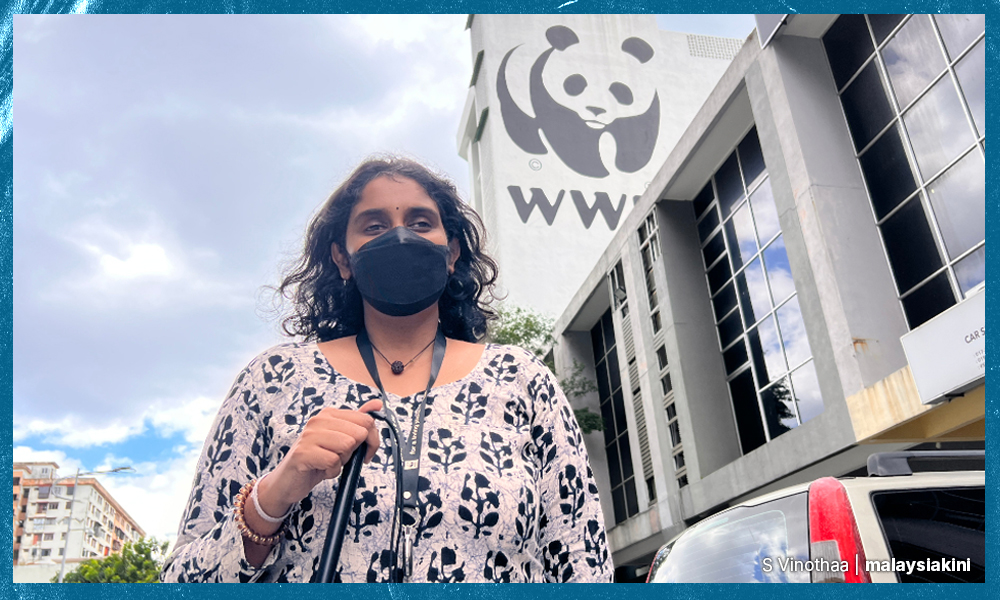
Similarly, for Shantini, living with a degenerative visual condition means constantly adjusting to an ever-changing reality.
“What I could see yesterday, I may not see tomorrow.”
“It’s not about going totally blind overnight. My vision is continually degrading so, whenever it stabilises, it’s great,” she said.
Shantini describes this ongoing process as neither active anticipation nor fear but rather an acceptance of change as it comes.
“If I sit and dwell on it, I waste time. I’d rather embrace the moment and adapt when needed.
“But when there’s a drop, I have to adapt. I have to find a new equilibrium,” she said.
Eloquently, she references the famous poem by Welsh poet Dylan Thomas, “Do Not Go Gentle Into That Good Night” to describe her approach to the blindness closing in.
Instead of passively giving up in the face of almost certain defeat, in the poem Thomas calls to readers to put up a fight, to “rage against the dying of the light”.
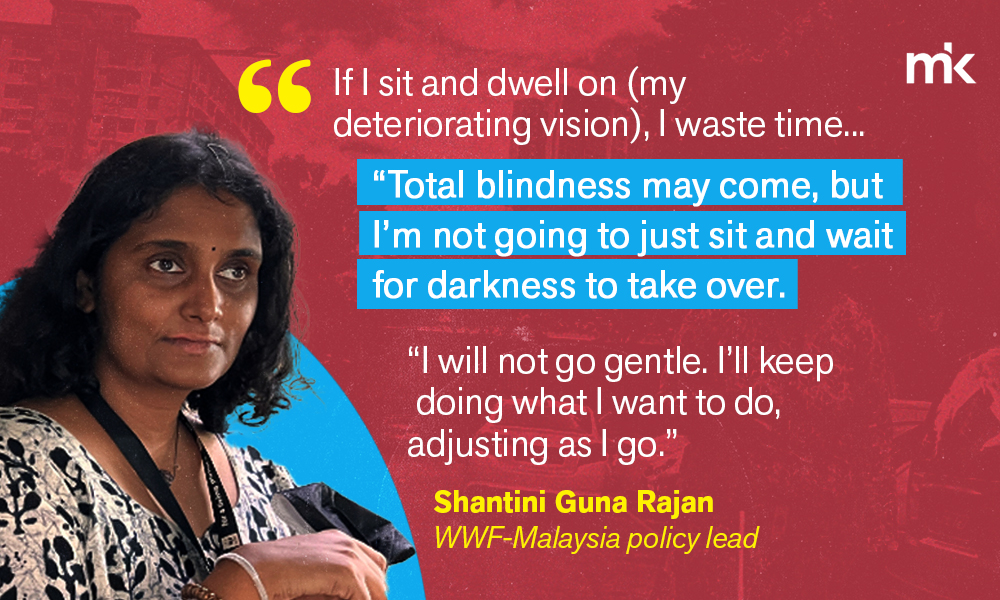
“Total blindness may come, but I’m not going to just sit and wait for darkness to take over.
“I will not go gentle. I’ll keep doing what I want to do, adjusting as I go,” Shantini said.
Equilibrium in an unexpected form
Shantini credits part of this outlook to having her sister share the experience of losing vision at such a young age.
Only two years older than Shantini, her sister, too, experienced rapidly deteriorating vision at the age of eight.
“I have never been the only person who’s visually impaired.
“Having a sister who’s also visually impaired is probably why I’m not fearful or frightened,” she shared.
Even so, learning to cope with society’s reactions to their condition has not always been easy.
The sisters didn’t go to a special school or learn braille.
As their vision deteriorated, their mother would photocopy textbooks to magnify them into larger sizes so her daughters could read.
But in class, Shantini said, the person who sat next to her would be tasked to assist her by reading out things she could not see.
The process of finding a classroom deskmate often felt dehumanising, she recalled.
“It’s almost like an auction when the teacher puts you in front and says, ‘Okay, so who wants to sit with Shantini and help?’
“I guess that was a mechanism put in place, but it always made me feel like I was up for auction,” she said.
This arrangement also led to moments of self-doubt.
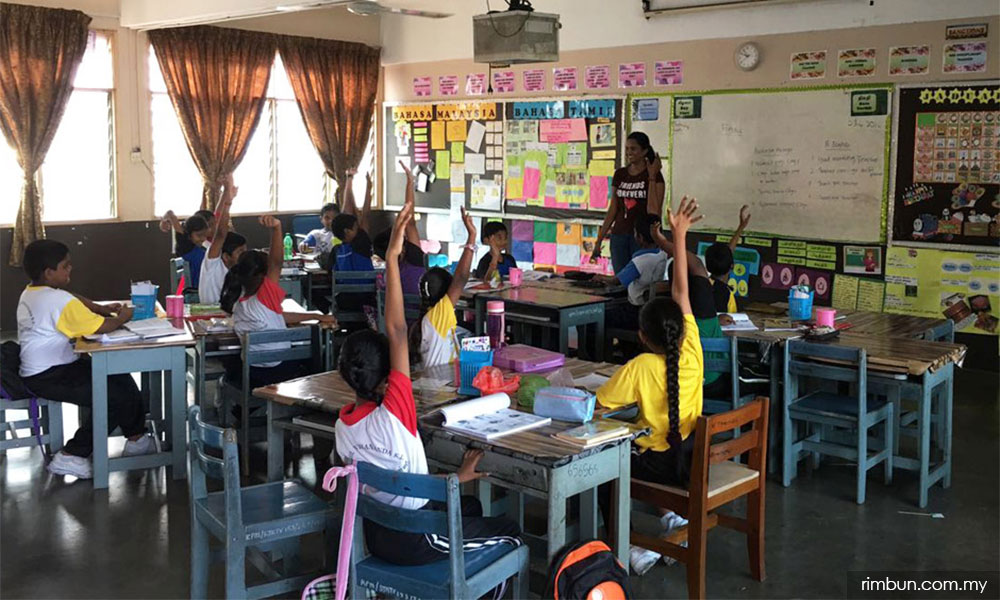
She was acutely aware of how her need for assistance was sometimes framed as a burden on other students.
“At that point, I became very self-conscious. It added some level of anxiety for me.
“Then, equilibrium arrived in an unexpected form - a new classmate she named only as Norashikin.
Unlike others, Norashikin, or Nora as Shantini called her, was carefree and unfazed by her new deskmate’s medical condition or what others said. This attitude rubbed off.
“She was a creature of interest to me - just so casual about everything. Nothing seemed to bother her.
“That was a dawning moment of realisation: there is another way of being. I’m here to gain an education. Some doors may be shut, but many doors open,” she said.
Nora volunteered effortlessly, without making a big deal out of it, sitting next to Shantini in class for the next few years and assisting her without pity or drama - just as a friend.
“She just said, ‘Yeah, I’ll sit with you and read stuff out,’ and that was it,” she said.
“She paved her own path, did her own thing, and that gave me a new sense of grounding.
“Embrace me for me, and just do what needs to be done,” she said, recalling how this friendship, which has lasted to this day, provided an anchor in a period in her life when her condition progressed very rapidly.
The universe’s kindness
Each time her vision degenerates, she says, her world “gets slightly off tangent” and “skews”, and each time she needs to recalibrate and find her centre.
And through each shift, she continues to be grateful for what she views as the kindness of the universe.
“I have a nice family, friends, and ecosystem, and I was born in a country I love.
“So, these outweigh most of the challenges presented before me.”
MALAYSIANSKINI is a series on Malaysians you should know. For the month of March, we are featuring notable Malaysian women as part of the Women In Front series for International Women’s Day.
Last week: Sarawakian musician on mission to revive fading ethnic sounds