
KINIGUIDE | What is the Urban Renewal Act?
Editor’s note: This KiniGuide has been updated following the tabling of the Urban Renewal Bill on Aug 21.
KINIGUIDE | Putrajaya’s proposal to introduce an Urban Renewal Act (URA) has continued to receive fierce pushback from opposition leaders and civil society groups.
Critics argue that the law will marginalise certain communities, especially those from the lower-income groups, while benefiting developers.
This KiniGuide lists what we know so far about the URA.
What is the URA?
It is a new law that is still in the pipeline. The Housing and Local Government Ministry has tabled the bill for its first reading in the Dewan Rakyat on Aug 21.
Housing and Local Government Minister Nga Kor Ming later brought the bill for its second reading on Aug 28. However, its debates and voting process have been postponed to the next Dewan Rakyat meeting.
This bill seeks to give a federal executive committee and state-level executive committees the power to redevelop and revitalise buildings or land parcels, or carry out regeneration projects on abandoned buildings, without having to get 100 percent approval from owners.
At present, Section 57 of the Strata Titles Act 1985 requires a “unanimous resolution” from owners of a building or land parcel before a management corporation can take over as a trustee to execute urban renewal works.
Through the proposed URA, the government is seeking to lower the threshold of consent required from owners or occupiers of a lot.
Why is the government introducing the URA?
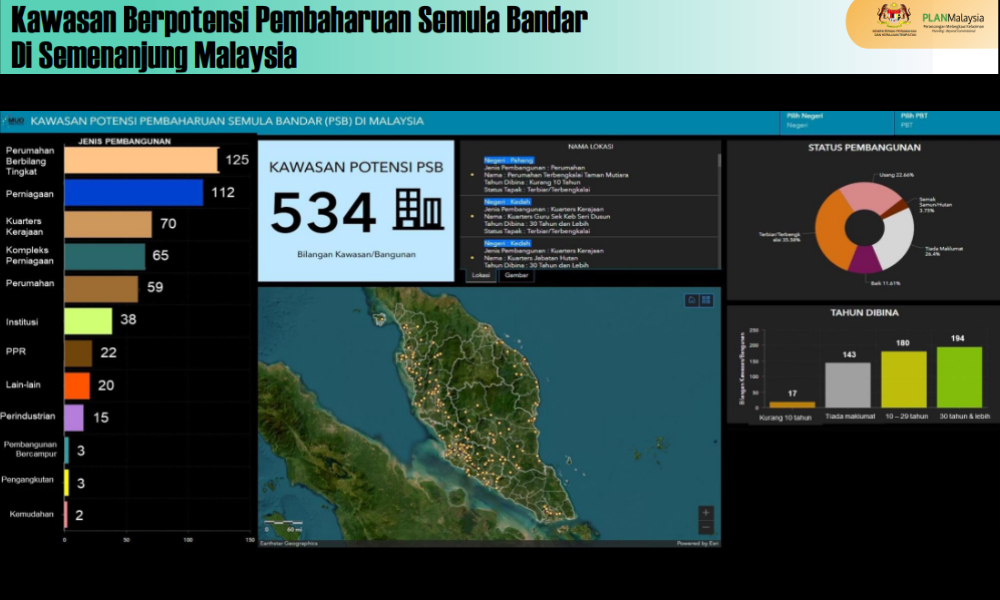
The Town and Country Planning Department (PlanMalaysia) said they have identified 534 areas in the peninsula that have the potential for urban renewal.
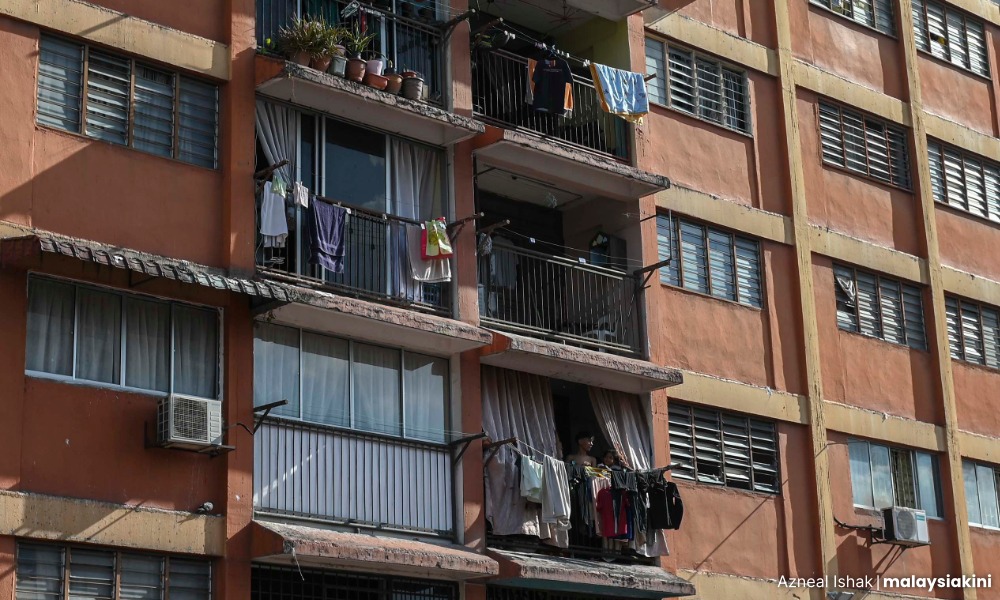
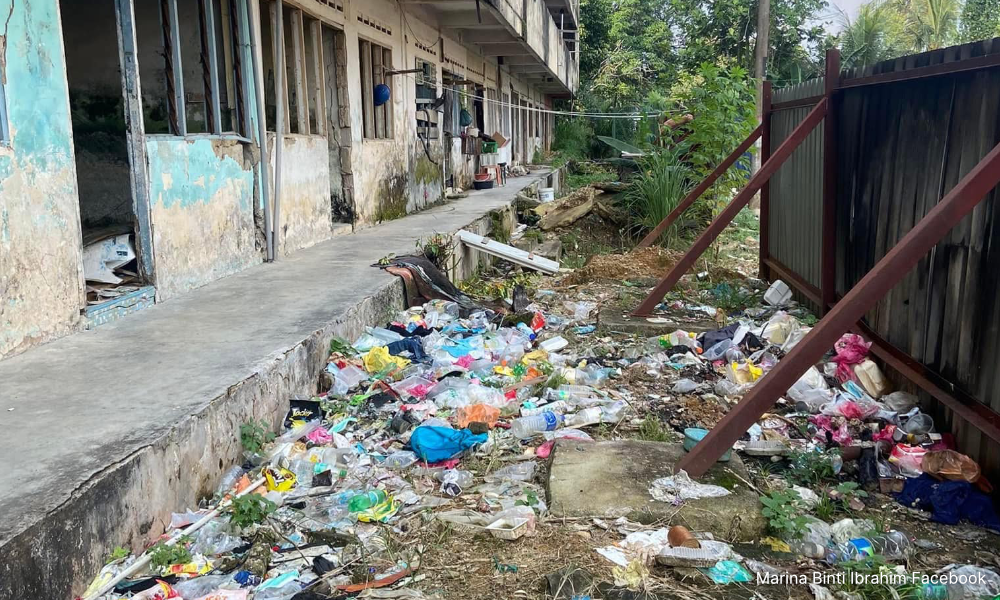
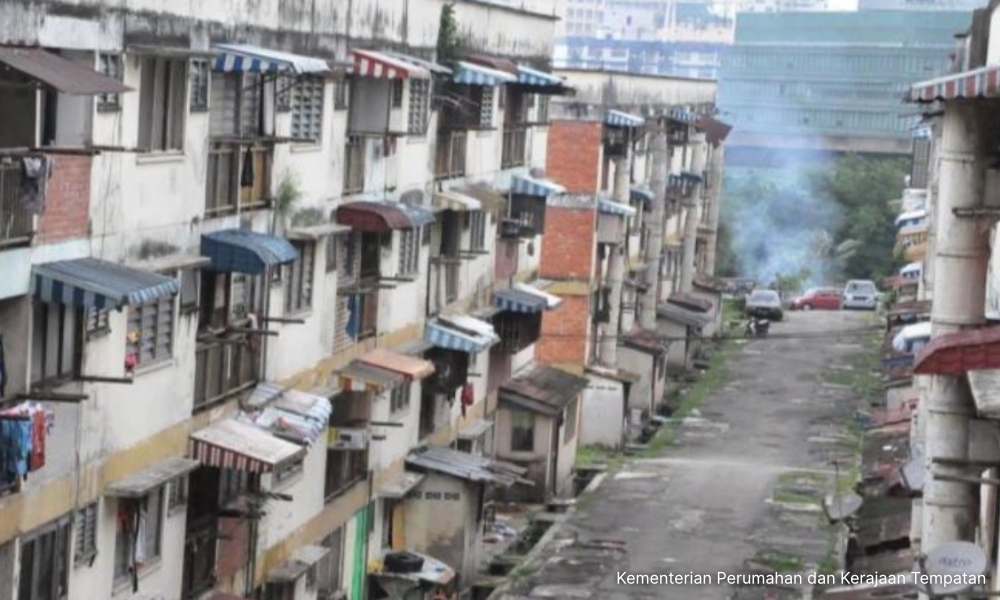
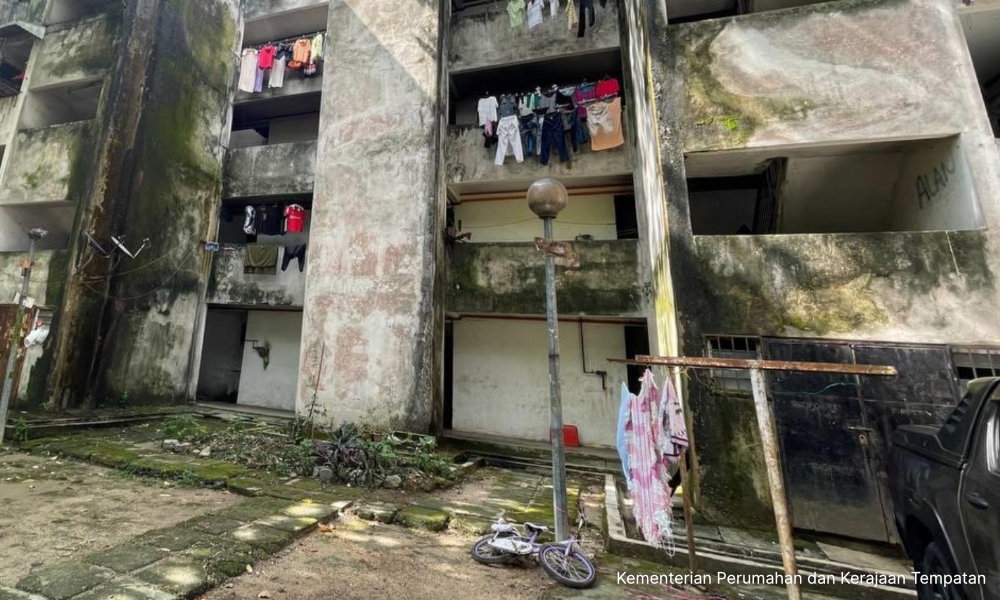
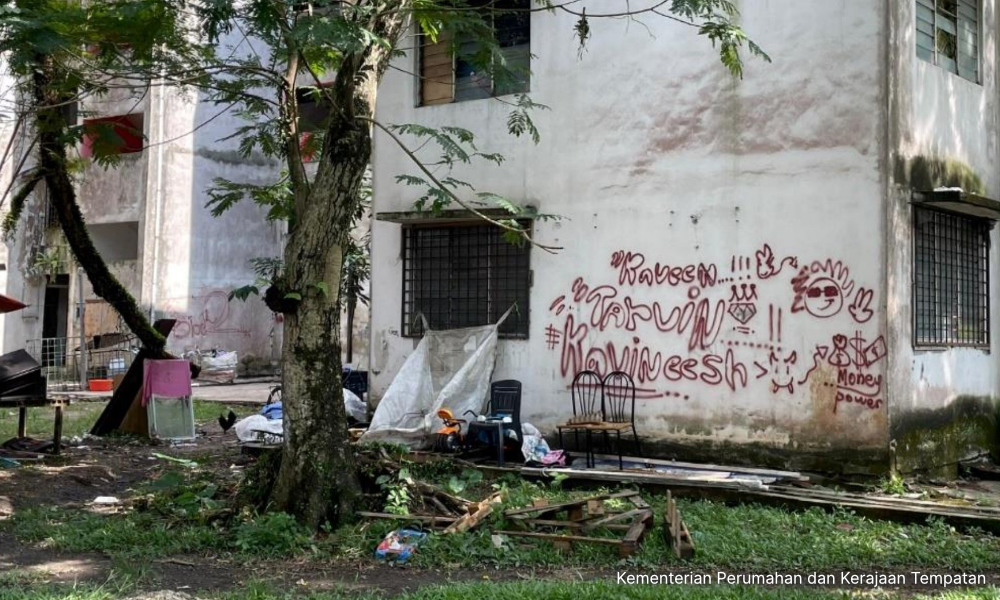
Of the 534 areas, 139 are located in Kuala Lumpur, including old and dilapidated flats that are deemed unsafe for occupants.
Housing and Local Government Minister Nga Kor Ming cited in Parliament that the Public Works Department recommends that every building is “only safe to be occupied for a period of 70 to 80 years”.
He also said previously that the URA will create abundant investment opportunities to change the city skyline and generate hundreds of billions in gross development value.
According to Prime Minister Anwar Ibrahim, the existing legal provision that requires 100 percent approval from owners has hindered plans to redevelop buildings including those that are no longer fit.
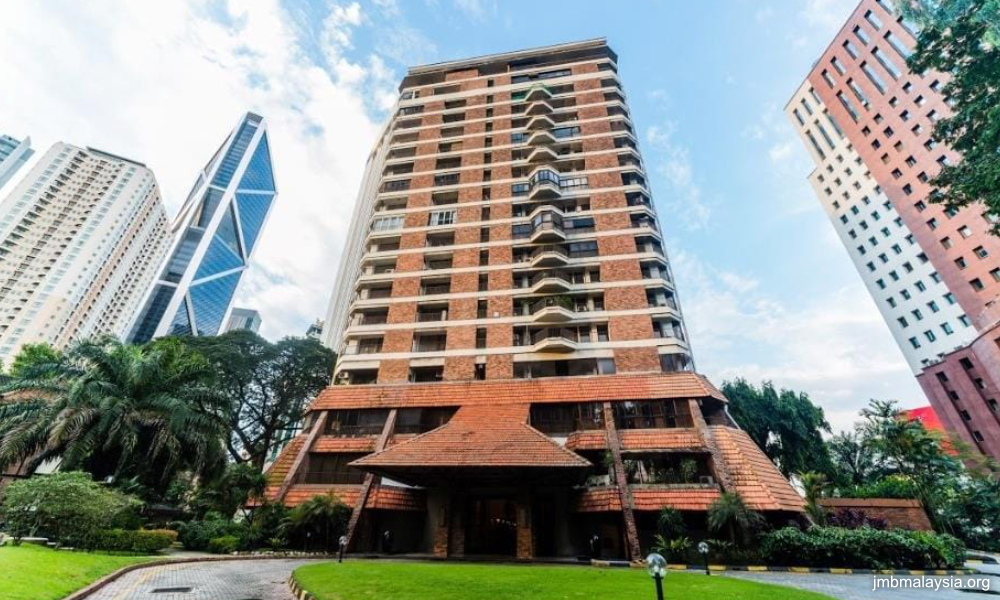
As an example, Anwar pointed to the Desa Kudalari Apartment in Kuala Lumpur, where an urban renewal plan for the area could not be executed due to the objection of one unit owner.
“Only because one person disagreed with the plan, the outdated and dilapidated apartment building still exists in the middle of this big city until today,” he said.
How does the URA work?
According to the tabled bill, the law would only apply to Peninsular Malaysia and the Federal Territory of Labuan.
It divides urban renewal projects into two main components, namely urban redevelopment and urban regeneration, while there is also a third category called urban revitalisation that deals with beautification.
Under redevelopment, projects would involve changing the physical structure of an existing building or site, including demolishing, clearing of an existing site, constructing buildings, as well as upgrading infrastructure and facilities.
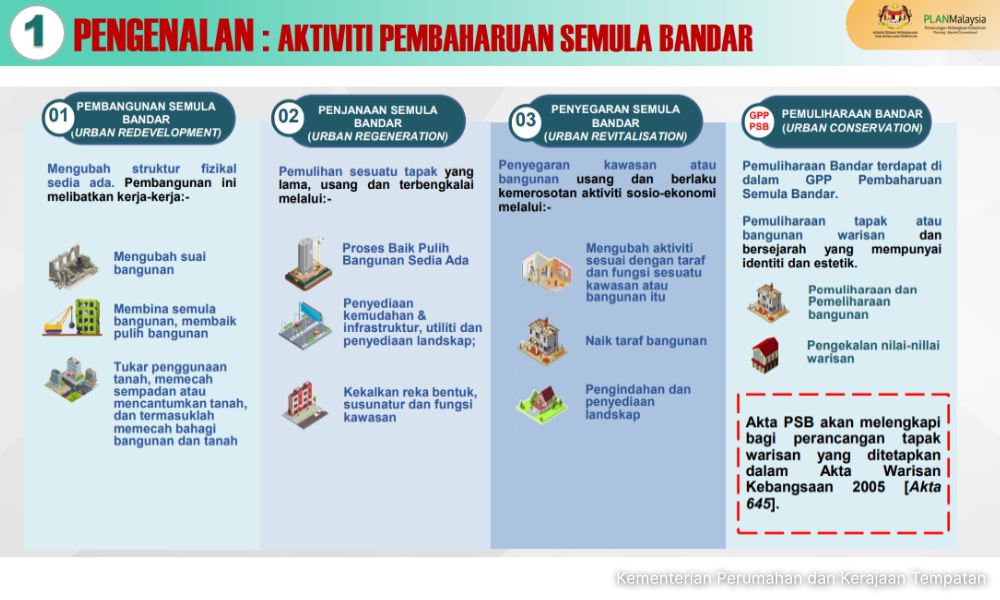
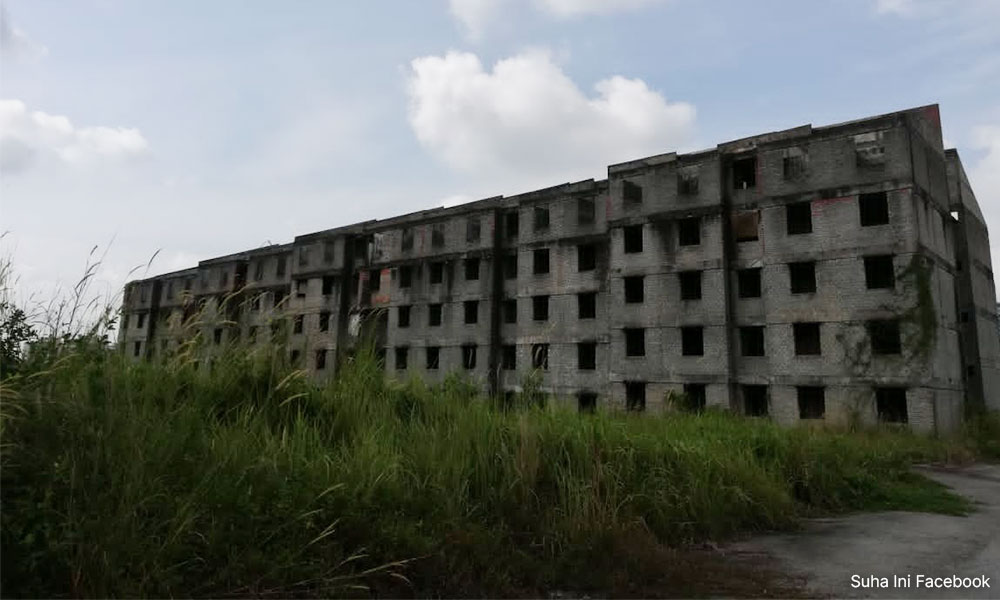
Regeneration is aimed at abandoned buildings that are neglected or dilapidated by repairing the existing building, upgrading the infrastructure or facilities, and landscaping.
Revitalisation targets areas that suffer socio-economic decline due to neglected buildings or land parcels. It is aimed at improving an identified area or building by “upgrading, beautifying, or landscaping, or changing the functions of the area or building”.
If the bill becomes law, it will allow a federal or state executive committee to identify a lot for an urban renewal project (redevelopment or regeneration), after which, its secretary will prepare a proposal for the committee’s consideration and approval.
Once a project has been approved, the committee will task a developer to carry out a consultation with the owners or occupants of an identified lot and obtain their consent.
The approved developer is also responsible for obtaining a visual inspection report and conducting checks to identify the extent of a building’s deterioration.
What’s the proposed threshold of consent?
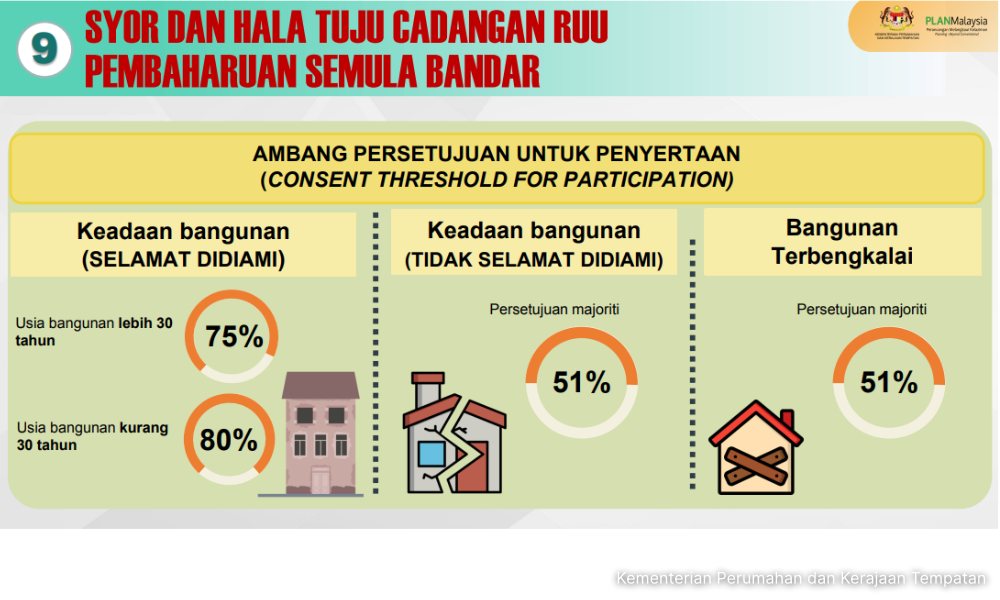
In the case of buildings still deemed safe for occupation, the bill proposes setting the approval threshold at 80 percent for those aged below 30 years, while older premises only require the agreement of at least 75 percent of owners.
For unsafe or abandoned premises, the URA seeks a simple majority of 51 percent.
In the case where owners of a building or area voluntarily apply to either the federal or state executive committee to carry out an urban renewal project, the URA requires unanimous consent from all proprietors.
Once the consent threshold is met, a notification will be made through a federal or state gazette to declare the lot or building as an urban renewal area.
The approved developer would then have 24 months after the declaration date to commence the project, but can apply for an extension of up to another 24 months.
The bill states that only urban redevelopment and urban regeneration projects require a consent threshold and involvement of a developer.
Urban revitalisation, meanwhile, only involves the area's local authority, which is empowered to serve a notice to any owner or occupant that it deems "expedient" before carrying out the revitalisation project.
What would owners get from the URA?
The government promised that owners stand to gain from urban renewal projects, where their properties would purportedly increase in value.
According to the bill, the authorities in charge of urban renewal projects have to ensure the owner or occupier, who has agreed to the project, receives "an offer of not less favourable" than what they already have before the project.
The prime minister said one of the conditions under the URA is that owners cannot get a unit that is in any way less than what they already own.
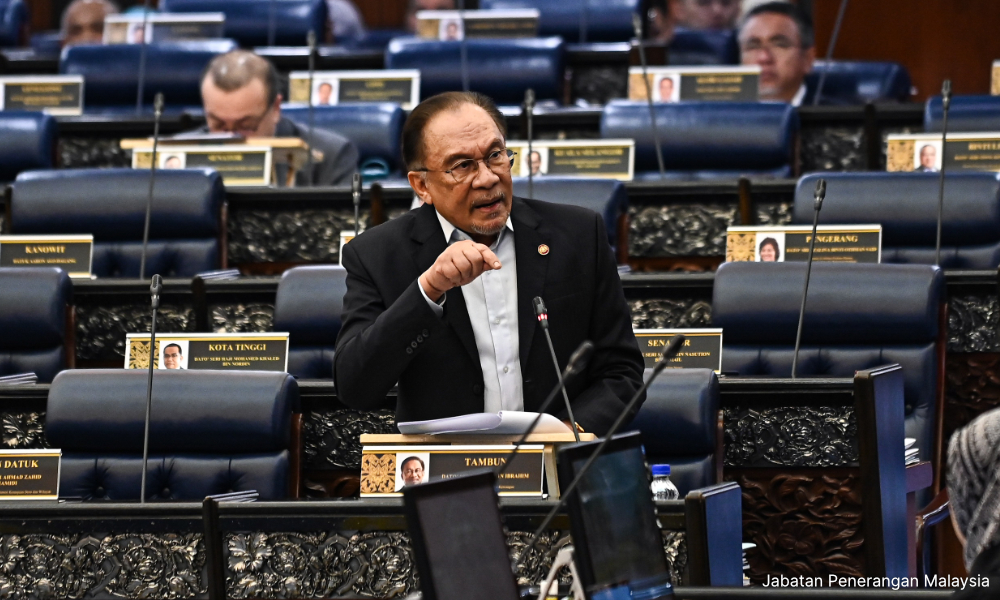
"It cannot be cheaper than the old unit, it cannot be smaller. These are the principles that we are using and going to implement," he said during a Prime Minister’s Question Time session in Parliament.
"If now (their house) has one bedroom, (they will get a new unit) with at least three bedrooms. That is the condition," Anwar added.
According to PlanMalaysia, owners or occupants will be relocated to a "temporary settlement that is conducive" pending completion of the project.
The proposed law is silent on whether there is any monetary incentive for the owner or occupier who has agreed to the project.
However, it states that a state executive committee can propose to its ruler or governor that incentives be granted to an owner or occupier. The same goes for the federal executive committee, whose proposal would be submitted to the minister in charge of the federal territories.
There is also a clause that provides the Housing and Local Government Minister the power to "prescribe any matter relating to incentives".
On top of this, the bill also proposes that an "urban renewal mediation committee" be set up at the federal and state levels to protect the interests of owners.
This committee is responsible for handling mediation, and must consist of two members of the Board of Town Planners and at least three others "who have knowledge and experience in the field relating to law, project management, sociology, or economy".
Who will pay for the projects?
It has not been spelt out who will bear the expenses for the urban renewal projects.
However, based on Section 23(5) of the bill, the cost of an urban revitalisation project has to be agreed between the local authority and the affected property owners.
Objections and allegations against the URA
Perikatan Nasional and its leaders claimed that the law would upset the racial balance in urban areas, with Malays becoming more marginalised.
It has among others claimed that the additional affordable housing created under the redevelopment project will be snapped up by non-Malays.
They also claim that Malays who do stay will have to deal with a higher cost of living after the neighbourhood they live in becomes gentrified.
Several Umno leaders have also voiced similar concerns.
The government has refuted such allegations, with Prime Minister Anwar Ibrahim insisting that Malays will benefit from the Act.
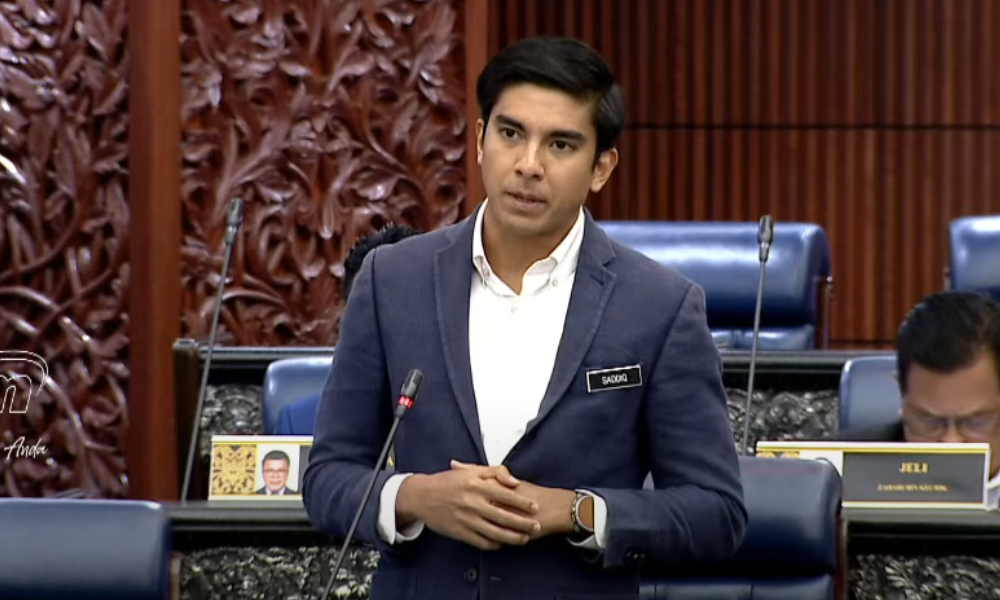
Muar MP Syed Saddiq Syed Abdul Rahman from Muda has branded the bill as a "house-grabbing act", warning that it could disproportionately benefit developers at the expense of lower-income groups.
After the bill was tabled for the first reading, several PKR lawmakers also spoke up against the URA, saying the proposed consent thresholds were too low.
MCA has also voiced concerns about the consent threshold, as well as the possible inverse economic impact on low- and middle-income households.
Government response
Following heavy criticism and concerns raised by many parties, Nga announced during the bill's second reading on Aug 28 that they would make changes to Clauses 18 and 19 of the proposed law.
According to him, the amendment to Clause 18 is aimed at addressing concerns regarding the impact of urban renewal projects on the demographic composition of affected areas.
"The ministry is aware of the concerns raised by many parties regarding the demographic composition of areas involved in urban renewal projects.
"Hence, the ministry will amend this clause accordingly to guarantee the demographic (composition) of the affected areas, subject to details that will be discussed with the Attorney-General's Chambers," he said.
Clause 19, meanwhile, deals with the consent threshold required from the owners or occupiers of a lot before an urban renewal project can be carried out.
Nga said they will improve the provision by standardising all consent thresholds at 80 percent regardless of the building's age.
"This increase from 75 percent is still reasonable to provide sufficient consideration in implementing urban renewal projects with integrity and fairness to all parties involved," he said.