
KINIGUIDE | Six takeaways on Najib's house arrest bid
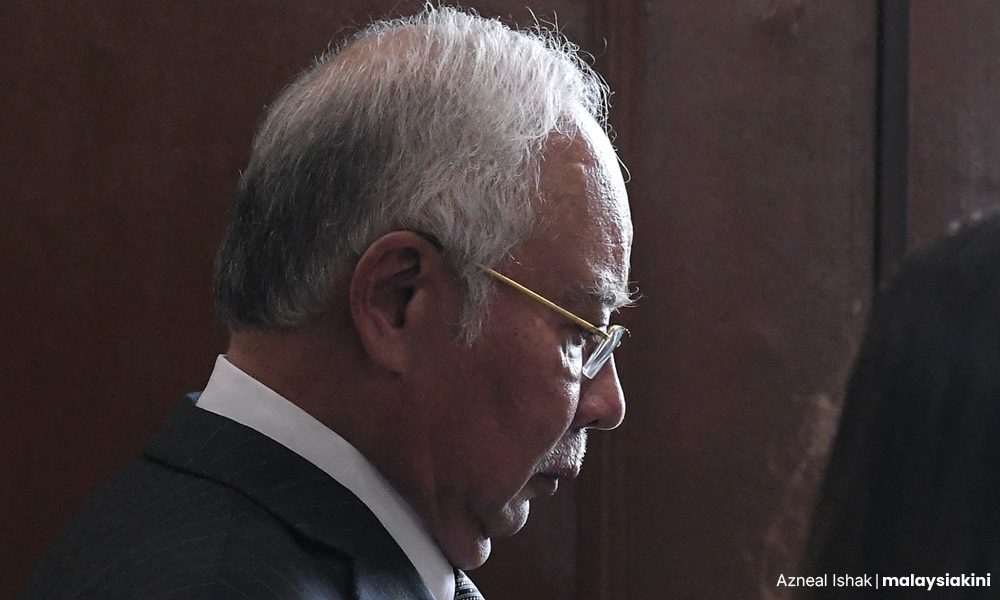
KINIGUIDE | Following a split 2-1 decision by the Court of Appeal today, former prime minister Najib Abdul Razak is now one step closer to serving the remainder of his jail sentence as house arrest.
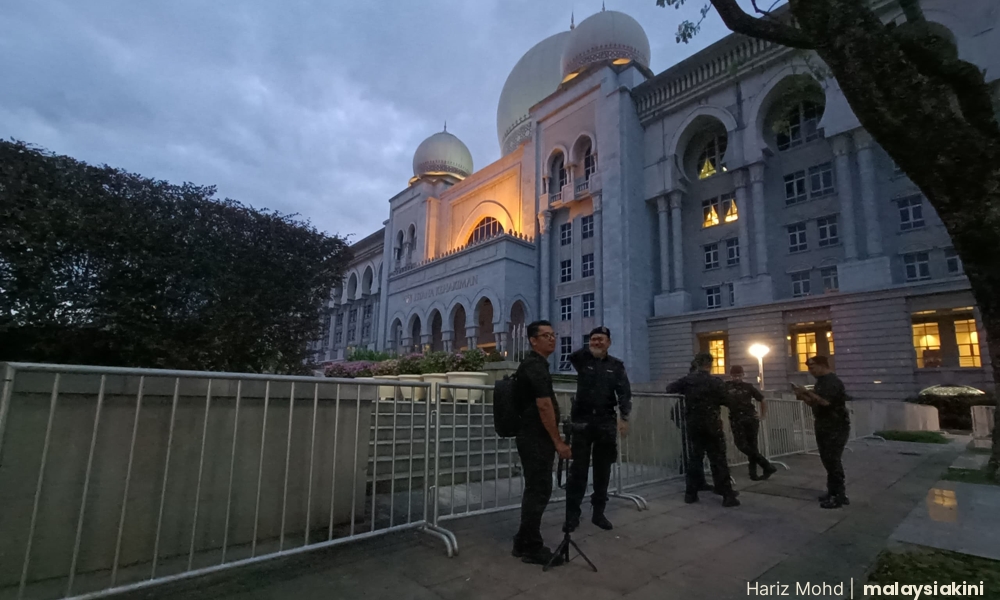
This edition of KiniGuide explains what transpired in court today.
What happened in court today?
The Court of Appeal has overturned an earlier High Court decision denying leave for a judicial review, in which Najib sought to compel the government to enforce a purported decree by the previous Yang di-Pertuan Agong allowing Najib to serve the remainder of his jail sentence under house arrest.
However, this does not mean Najib can immediately go home to serve his sentence there.
Instead, the ruling means the court has agreed to hear the merits of Najib’s case and will adjudicate the matter accordingly.
This means Najib still has one more hurdle to clear.

On July 3 last year, the Kuala Lumpur High Court dismissed Najib’s application for leave (ie permission) to proceed with the judicial review.
The Court of Appeal today ordered the matter be reverted to the high court for a hearing of the merits of the judicial review.
Why did the judges make this ruling?
The three-person appellate bench chaired by judge Azizah Nawawi ruled in Najib’s favour in a split 2-1 decision.
Azizah delivered the dissenting ruling denying the appeal, while the majority ruling was by fellow appellate panel judges Azhahari Kamal Ramli and Mohd Firuz Jaffril.
In reading out the majority ruling, Firuz said that the home minister, the government, and several other respondents did not challenge the existence or the authenticity of the royal addendum.
He stated that a leave application only needs to show there is an arguable case in order to proceed.
Therefore, the Court of Appeal decided that Najib’s judicial review should be judged on its merits at the high court.
What else did the judges say?
Firuz said he was “very disturbed” by the government and other respondents as they never denied the addendum’s existence outright in their written submissions.
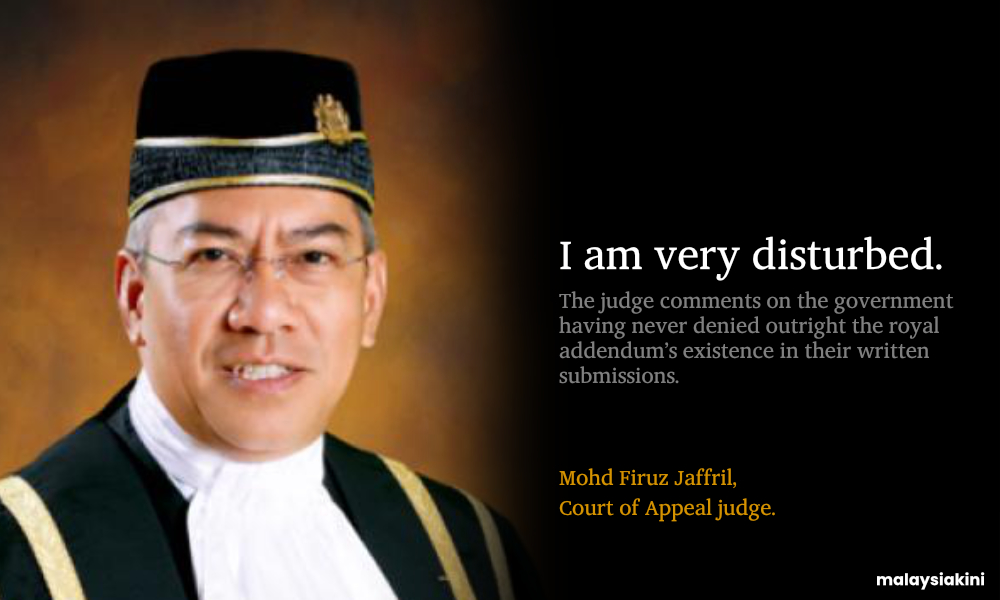
The judge pointed out that the arguments by the legal representatives of the home minister, the government, and others were focused on legal technicalities rather than denying the existence of the addendum.
Meanwhile, in her dissenting ruling, Azizah agreed with the lower court ruling that denied Najib judicial review leave, pointing out that multiple affidavits supporting the appellant's royal addendum claim is hearsay.
What exactly is the royal addendum about?
The royal addendum at the centre of today’s court hearing was allegedly issued by the previous Yang di-Pertuan Agong - Pahang’s Sultan Abdullah Sultan Ahmad Shah - on Jan 29 last year.
The addendum was in addition to the Pardons Board decision that reduced Najib’s 12-year jail sentence and RM210 million fine to a six-year custodial term and RM50 million fine.
The sentence was related to the abuse of power, criminal breach of trust and money laundering case involving RM42 million from SRC International - a former subsidiary of sovereign wealth fund 1MDB.

The government has so far refused to confirm whether the addendum exists.
During the court hearing today, a letter from the Pahang palace was submitted, confirming that Sultan Abdullah issued a supplementary order for Najib to serve the remainder of his jail term under house arrest.
However, senior federal counsel Shamsul Bolhassan said that the Pardons Board meeting on Jan 29 last year did not deal with any alleged royal addendum for Najib.
Instead, the board only dealt with royal advice regarding a potential reduction of Najib’s jail sentence and fine.
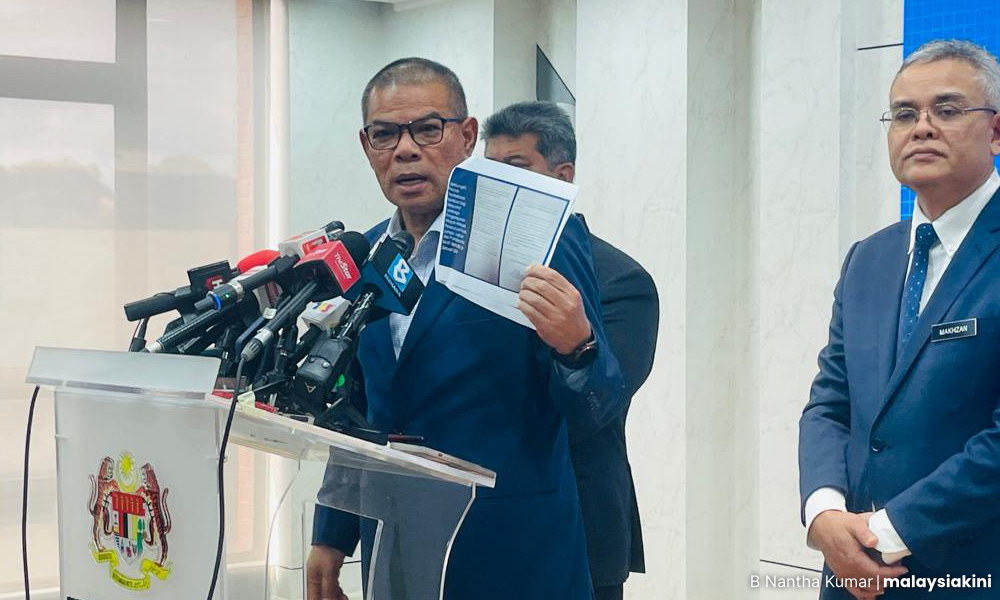
In a press conference this afternoon, Home Minister Saifuddin Nasution Ismail confirmed the Prison Department only received instructions on Najib’s sentence being commuted, and never received the royal addendum granting Najib house arrest.
What’s next?
The Kuala Lumpur High Court will fix a date to hear the merits of the judicial review sought by Najib.
If the High Court eventually rules in Najib’s favour, he could serve the remaining custodial sentence in his house. Otherwise, he will need to continue serving his prison term in jail.
READ MORE: KINIGUIDE | 'House arrest': Is there such a thing?
It should be noted that Najib is also facing a separate criminal case involving four abuse of power and 21 money laundering charges linked to RM2.27 billion from 1MDB. The case is currently being heard at the Kuala Lumpur High Court.
What else is happening?
Commenting on today’s appellate court decision, Umno president and Deputy Prime Minister Ahmad Zahid Hamidi urged the current Yang di-Pertuan Agong, Sultan Ibrahim Sultan Iskandar, to grant a full pardon to Najib.
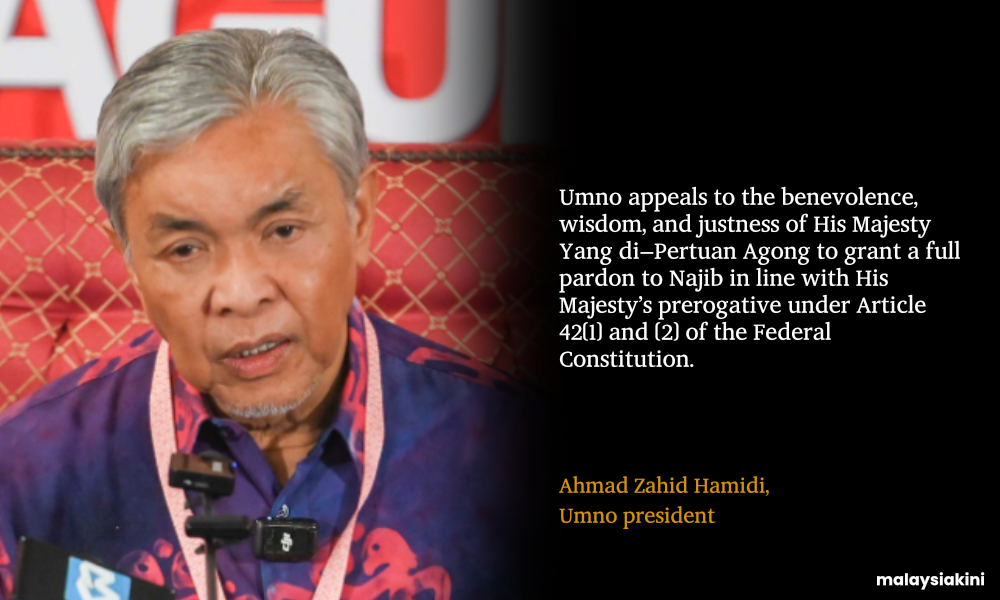
However, on Jan 3, Istana Negara stated that if anyone is seeking clemency for any prisoner, the convicted person must submit the relevant application for consideration at the next Pardons Board meeting that will be chaired by the Yang di-Pertuan Agong.