
KINIGUIDE | The new laws on internet and media regulation
Summary
Parliament debated four key bills, passing the Online Safety Bill and amendments to the Communications and Multimedia Act (CMA), while the MCMC Amendment Bill was referred to committees.
The CMA amendments raise penalties and expand enforcement powers, while the Online Safety Bill grants the MCMC broader oversight to regulate harmful content, raising concerns over free speech.
Rights groups and MPs criticised the bills, citing risks to freedom of expression and excessive government control, particularly in the CMA and Online Safety Bill.
KINIGUIDE | The recently concluded Dewan Rakyat sitting introduced a slew of bills related to various aspects of the media and the internet.
These were:
Communications and Multimedia (Amendment) Bill 2024
Malaysian Communications and Multimedia Commission (MCMC) (Amendment) Bill 2024
Online Safety Bill 2024
Media Council Bill 2024
The first two are amendments to existing laws while the last pair are new pieces of legislation.
There were also plans to table a bill to amend the Printing Presses and Publications Act 1984, but they were deferred to prioritise the Communications and Multimedia Act (CMA) amendments and allow more time for consultation.

So far, the Online Safety Bill and CMA Bill have been passed at the final reading, while the Media Council Bill has only passed its first reading. The MCMC Bill, however, has been referred to two parliamentary special select committees (PSSCs).
Opponents have pointed to the Pakatan Harapan manifesto for the 15th general election, in which the coalition promised to repeal draconian acts, including the CMA.
However, the federal government, which comprises Harapan and their former rival BN, has instead passed more laws.
But what do these laws mean? How do they affect the media and freedom of expression on the internet?
CMA amendments
Activists have mocked the CMA as the “Akta Sakit Hati” (Hurt Feelings Act) for being too ambiguous and for being abused to target those with dissenting opinions.
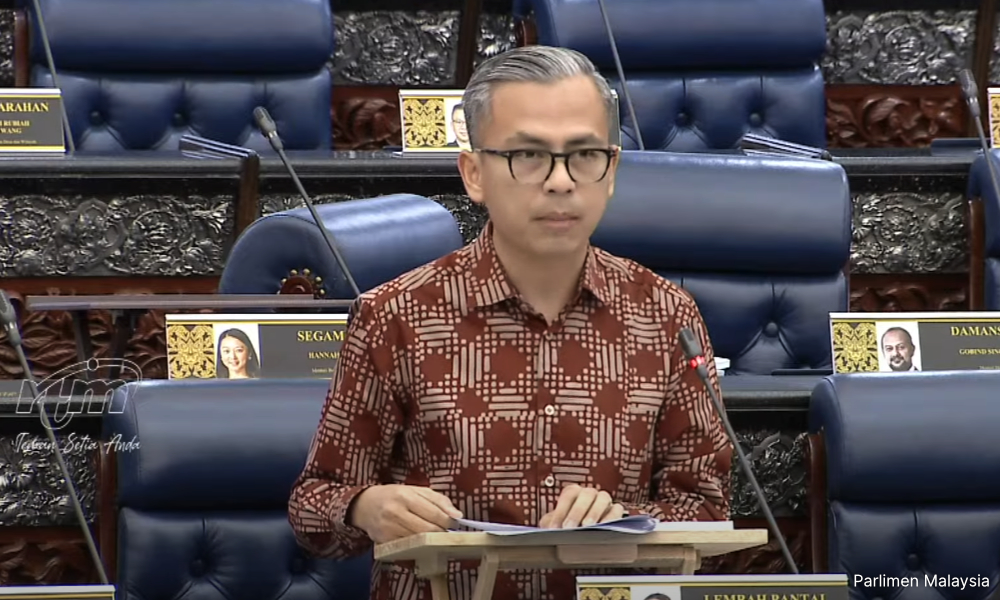
The Communications Ministry, headed by Fahmi Fadzil, tabled several amendments to the Act, most notably to Section 233 on the abuse of network facilities.
Of the various ways one could run afoul of this provision, merely posting “offensive” content is insufficient. Instead, the threshold is raised to “grossly offensive” for something to be considered a violation of Section 233.
The amendment also adds explanatory notes on each of the terms used in Section 233 to guide the interpretation of the law, including obscene, indecent, false, and menacing.
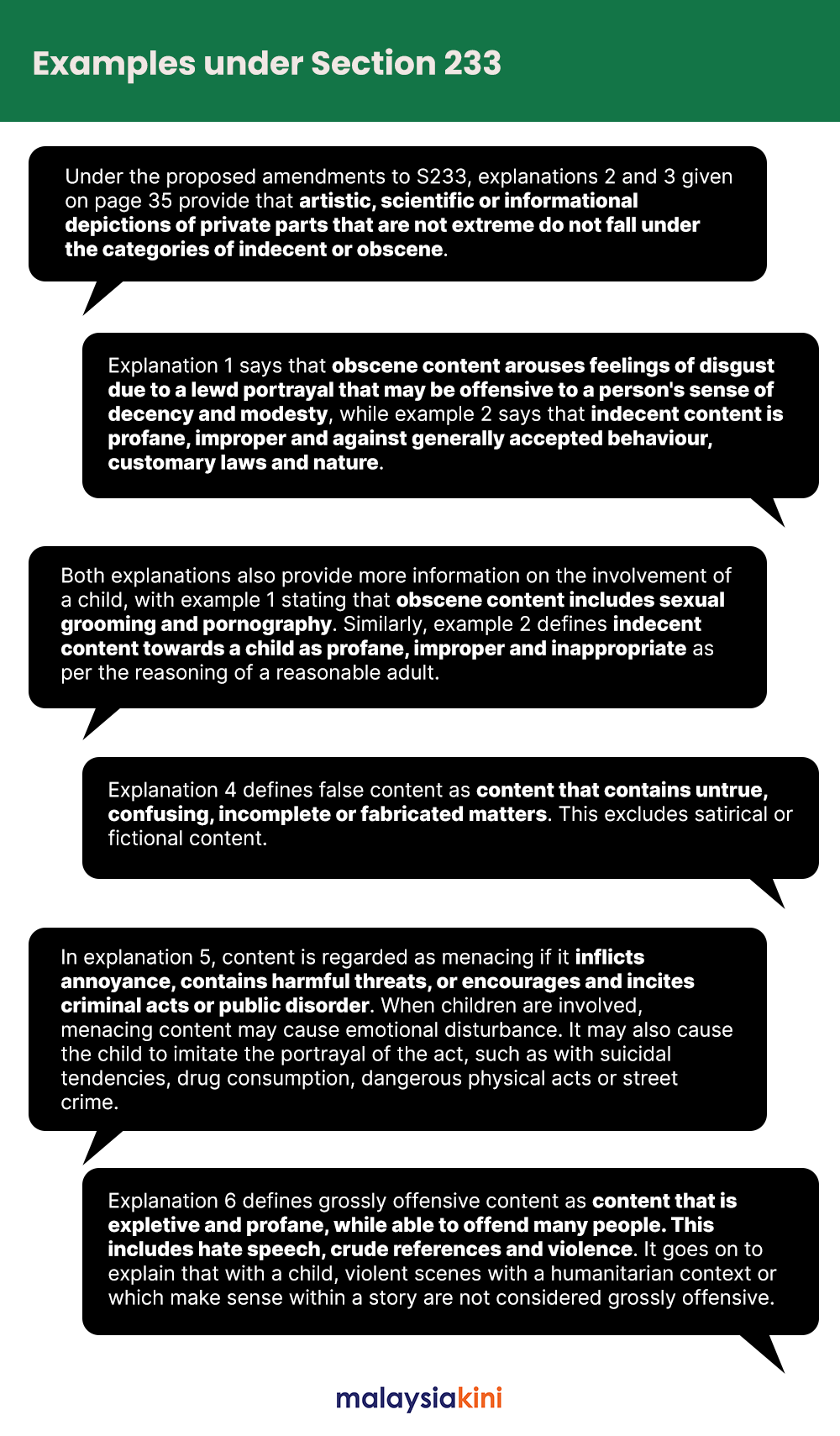
Another addition to Section 233 is a new type of offence - the use of network facilities to commission fraud or dishonesty.
All of these can be punished with a fine of RM500,000 – a tenfold increase from the previous RM50,000.
The maximum prison term was doubled as well, from one year to two, while the fine for each day the offence continues after conviction was raised from RM1,000 to RM5,000.
The penalty is even higher when the victim is a child - imprisonment for up to five years, a fine of up to RM500,000, and RM5,000 per day for continuing the offence after conviction.
Aside from that, a new Section 16(1)(ha) gives powers to the Communications Ministry to regulate procedures related to unsolicited commercial electronic communications.
Further, Section 248 has been changed to allow an authorised officer to enter premises without a warrant while Section 248A allows for a warrant to be valid even if it is defective.
New Sections 252A and 252B also allow authorised officers to compel the preservation and disclosure of a user’s communications data.
The bill was passed in Parliament on Dec 9, despite MPs from both sides raising concerns that several parts of the proposal could cause a higher risk of abuse to trample freedom of speech.
It came to a bloc vote with 59 MPs for and 40 against. One abstained, while 122 were absent.
In his winding-up speech, Fahmi defended the amendments, saying they were aimed at addressing online crimes including scams, pornography, and paedophilia.
Online Safety Bill
The Online Safety Bill is a new piece of legislation that passed on Dec 11 through another bloc vote.
Some 77 MPs voted for the bill, 55 voted against it, and 90 were absent.

The bill imposed legal responsibilities for applications service providers (ASP), content applications service providers (Casp), and network service providers (NSP) to control the content being channelled through their services.
It also gives the MCMC additional powers to regulate online content, particularly “harmful content” such as those that promote violence or cause harassment, and “priority harmful content” such as child sexual abuse material and financial fraud.
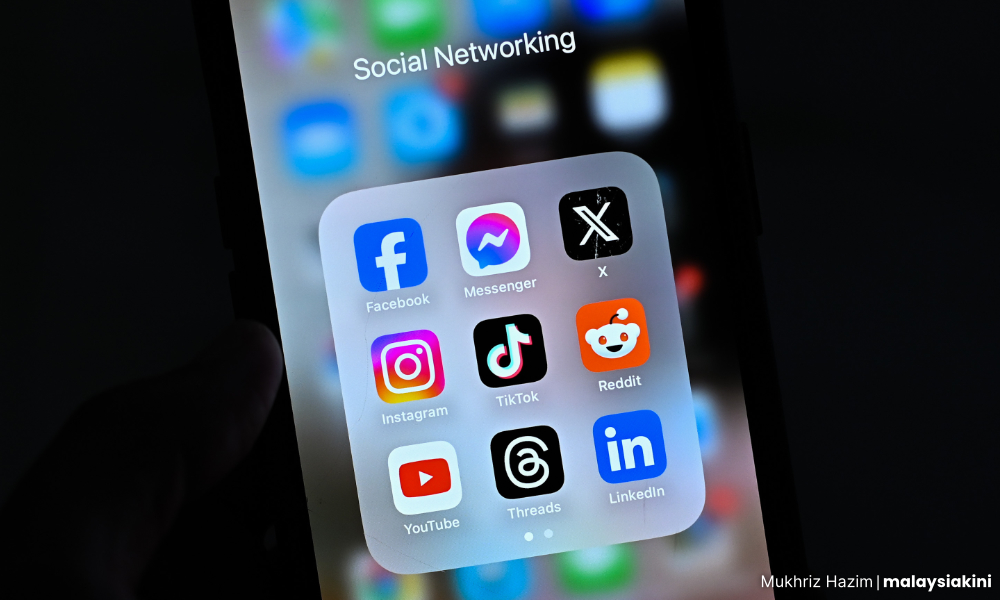
Licensed ASPs are a broad category that includes internet access providers, and will include social media platforms once a licensing scheme is enforced beginning Jan 1.
Licensed Casps generally cover TV and radio broadcasters, and electronic billboards. Online media are considered Casps too but do not require a licence.
The additional responsibilities being imposed on them include:
Section 13 - the duty to users in implementing measures to mitigate the risk of exposure to harmful content
Section 14 - the duty to issue guidelines to users
Section 15 - the duty to enable users to manage their online safety
Section 18 - the duty to protect the online safety of child users
Section 20 - the duty to prepare and publish an online safety plan explaining how they will comply with the above requirements
Those who fail to carry out these responsibilities will be liable to a financial penalty of up to RM10 million as per Section 39.
Licensed ASPs and Casps must also create mechanisms for users to complain about harmful content and resolve it within a prescribed timeframe. The MCMC may also receive such complaints and act accordingly.
The MCMC would also be given powers to order licensed ASPs and Casps to remove harmful content, or in the case of non-licensed service providers, order NSPs to make the offending service inaccessible.
An Online Safety Committee would be established under the new law to advise the MCMC on matters related to online safety such as ways to mitigate the risks of harmful content.
Its members would be drawn from various ministries, the police, the National Security Council, Suhakam, one representative each from licensed ASP, CASPs, and NSP, people with disabilities, and no more than five experts.
An Online Safety Appeal Tribunal will be established to hear appeals against the MCMC’s decisions in relation to the Online Safety Bill.
The tribunal shall comprise a High Court judge appointed by the minister to serve as its chairperson, and at least two other members with relevant experience.
MCMC Bill
The MCMC Bill underwent its second reading on Dec 10, but it was deferred for further scrutiny by the PSSC on Infrastructure, Transport, and Communications, as well as the PSSC on Human Rights, Electoral, and Institutional Reform.
The bill seeks to amend the MCMC Act 1998, which outlines the communication regulator’s organisation, function, and powers.
It expands the scope of the MCMC’s powers through the addition of Section 16(ia) to (id):
(ia) - to develop and regulate standards on infrastructure and platforms
(ib) - develop and regulate standards on safety, security protection, integrity, and reliability of information assets, communications networks, and services
(ic) - review or audit any of the information which someone relevant is required to furnish to the MCMC
(id) - audit activities of any relevant party providing communication services determined by the MCMC
It also expands the communications minister’s powers over MCMC through the amendment of Section 18 by adding four new subsections regarding the minister’s directions to the commission.
Further, Section 45 increases the commission’s limitation on contracts.
In the current law, the MCMC is not allowed to enter contracts involving more than RM5 million unless approved by the communications minister and finance minister. This will be increased to RM10 million if the bill is passed.
Another new addition is Section 51A, which protects the MCMC and its personnel from being sued or prosecuted for their actions, as long as they were done in good faith when carrying out their duties.
Media Council Bill
Civil society groups and the news industry have been lobbying for decades for self-regulation through a media council, to replace repressive laws being used to control the media.
The Media Council Bill seeks to make the first half of that - self-regulation - a reality.
The bill passed the first of its three readings in the Dewan Rakyat on Dec 12, after it was tabled by Deputy Communications Minister Teo Nie Ching.
The council’s functions set out in Section 5(1) include:
To establish standards and a code of conduct for all media practitioners
To regulate the ethics and professional conduct of media practitioners
To recommend reforms to laws connected to media independence
To facilitate training, capacity building, and professional development of journalists and media organisations
To determine grievance mechanisms and disciplinary proceedings against members of the council
Another function is to establish and maintain a database containing information on media practitioners to collect data and statistics.
Currently, registration applications for media passes by journalists are handled by the Information Department.
The council must also establish a “Malaysian Media Council Fund” for its administration and control as per Section 17(1).
The fund will consist of sums provided by Parliament, money earned from projects, and money received through grants and lawful donations, among others. It is to be used for promoting awareness and providing education about the media industry.
However, it is barred from receiving foreign funds except with the communication minister’s approval.
Section 9(2) of the bill stipulates that the chairperson must not be an MP or assemblyperson, political party member, or civil servant.
Critics pounced on Section 8(1)(b) of the bill, which necessitates the appointment two government representatives to the council’s board. These representatives may vote in the 21-member board, but have no veto powers.
Both officials are to be nominated by the communications minister and they are meant to represent the government’s interests, which critics argued could compromise the council’s independence.
The bill’s second reading is expected to take place in the next parliamentary sitting in February.
What were the reactions to the bills?
The passing of the CMA Bill without any changes was greeted with dismay by the rights group Article 19.
The group called the amendments a “regression” which restricts individual freedom while silencing dissent.
Before that, Article 19 and the Centre for Independent Journalism (CIJ) issued a joint statement calling for the bill to be delayed, voicing concerns that the amendments would grant greater powers to the communications minister and the MCMC without adequate oversight.
Both groups issued statements for the Online Safety Bill as well, saying it has the strong potential to undermine freedom of expression in Malaysia.
With this bill, they had concerns over the MCMC being granted excessively broad powers while also lacking independence from the government.
Before that, the Online Safety Advocacy Group expressed concerns about the bill, warning that laws must balance the need for protection with the fundamental right to freedom of expression.
Meanwhile, during parliamentary debates on the Online Safety Bill, opposition MPs recommended it to be withdrawn and referred to the relevant PSSC.
As for the MCMC Bill, while referring it to the PSSCs, Fahmi noted that many of the issues raised by MPs about the bill had not been addressed by relevant stakeholders at MCMC’s engagement sessions.
And finally, with the Media Council Bill, several civil society organisations urged for the removal of government representatives from the proposed council, and to only require notifying the minister when receiving foreign funding.
Nevertheless, the groups praised some other provisions of the Media Council Bill, such as provisions to ensure the chairperson’s independence, and for setting up a mechanism to handle complaints against the media.