
COMMENT | Is RCI's recommendation to prosecute Dr M justified?
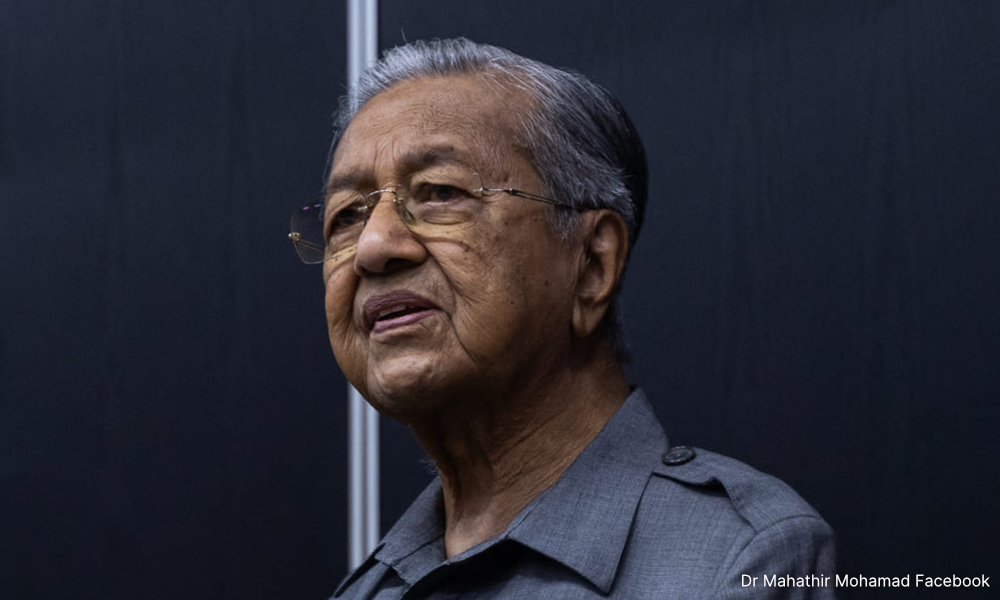
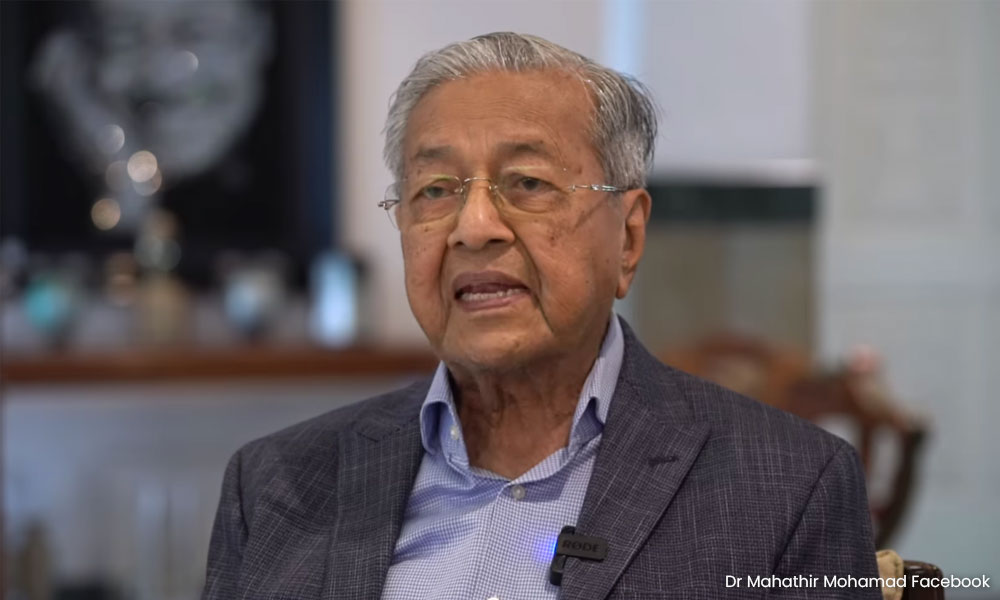
COMMENT | The Royal Commission of Inquiry (RCI) on Batu Puteh, Middle Rocks, and South Ledge recently recommended that a criminal investigation be launched against former prime minister Dr Mahathir Mohamad.
Politically speaking and with the greatest respect, this would be perceived by many political players as nothing more than a political vendetta against him.
Perhaps it would be fair to characterise it as an erroneous perception. The only problem is perception matters in politics. Ignoring it is at your own peril.
Anyway, the RCI has recommended an investigation under section 415(b) of the Penal Code, which covers the offence of cheating.
Frankly speaking, I am not really interested in commenting on this issue from the political spectrum. Au contraire, I intend to touch on the issue from a legal point of view only.
COMMENT | The Royal Commission of Inquiry (RCI) on Batu Puteh, Middle Rocks, and South Ledge recently recommended that a criminal investigation be launched against former prime minister Dr Mahathir Mohamad.
Politically speaking and with the greatest respect, this would be perceived by many political players as nothing more than a political vendetta against him.
Perhaps it would be fair to characterise it as an erroneous perception. The only problem is that perception matters in politics. Ignoring it is at your own peril.
Anyway, the RCI has recommended an investigation under section 415(b) of the Penal Code, which covers the offence of cheating.
Frankly speaking, I am not really interested in commenting on this issue from the political spectrum. Au contraire, I intend to touch on the issue from a legal point of view only.
In its report, declassified in Parliament yesterday, the RCI accused Mahathir of deceiving the cabinet in 2018 into withdrawing Malaysia’s review of the International Court of Justice (ICJ) decision to award sovereignty over Batu Puteh to Singapore.
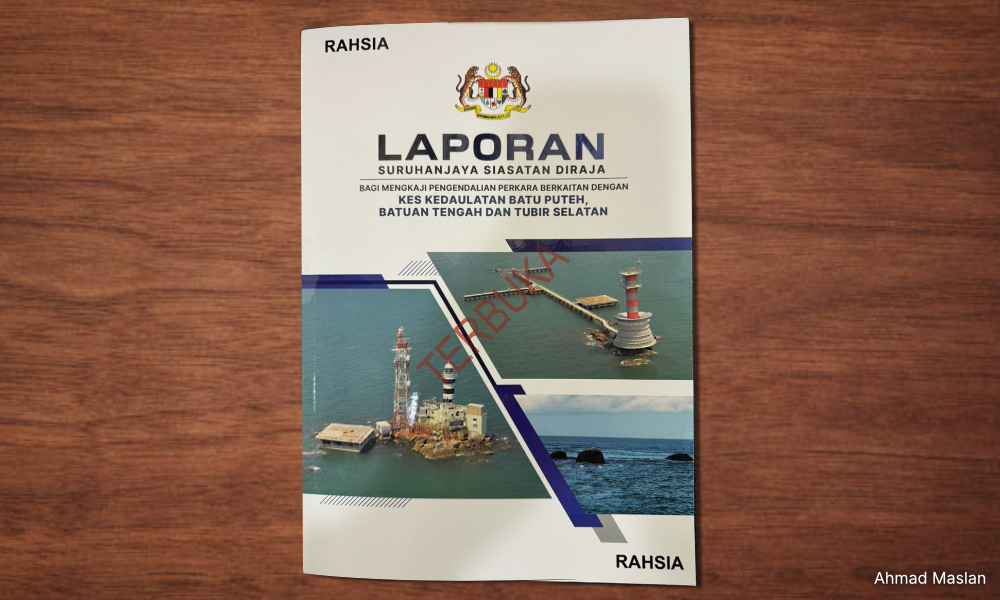
It also said Mahathir had already made a unilateral decision to drop the review without the cabinet and had merely briefed cabinet members on why he had done so.
As expected, Mahathir flatly denied such a serious allegation. He maintained that his decision to withdraw Malaysia’s review application was only carried out after extensive consultation.
Since this issue may entail the discussion of every nook and cranny of international law, I am a little reluctant to dwell on it though I am a lawyer and a student of international law.
Of course, I am not an expert. Hence, my comment may suffer from infirmities too. I have read the full judgement of the ICJ (possibly more than once) on this issue, and when I did my Master of Laws (LLM) in International Law, we also discussed this issue in our class.
Minimal chance of success
In my view, the decision by the ICJ was exceptionally strong, hence the prospect of having it reviewed is almost minimal - at least in my view.
Let us begin our discussion by ventilating the rudimentary principle of international law. Under international law, the jurisdiction of the ICJ would only be triggered through the consent of the parties - either through submission of the dispute to the court or because the parties have agreed to jurisdiction in advance, often through a treaty that provides that the ICJ has jurisdiction to resolve disputes under that treaty.
By virtue of such a trite principle, one may ask this pertinent question: Was Malaysia obligated to refer to the ICJ in resolving its legal dispute on the status of the sovereignty of Pulau Batu Puteh or Pedra Branca?
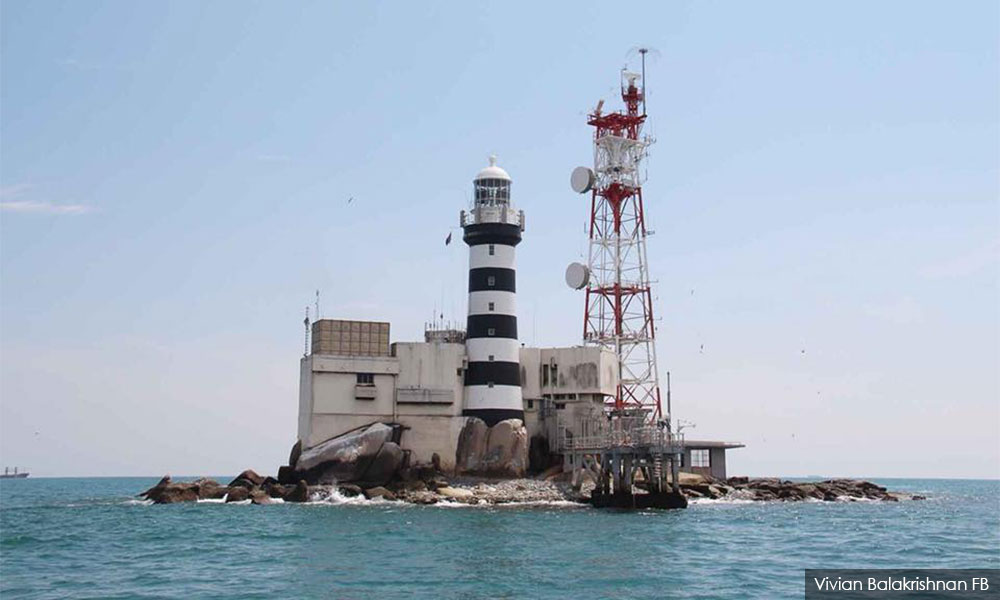
The answer is definitely no. Many legal analysts believe Malaysia was overly confident to refer the dispute to the ICJ, having won its earlier legal battle in the world court over the legal dispute on Pulau Sipadan.
Unfortunately, the factual matrix of these two cases was poles apart. No doubt Malaysia had an airtight case on Pulau Sipadan.
Nonetheless, Malaysia and Singapore agreed to submit the dispute to the ICJ under the terms of Article 36 (1) of its Statute, whereby the court was requested to determine whether sovereignty over (a) Pedra Branca/Pulau Batu Puteh; (b) Middle Rocks; (c) South Ledge, belonged to Malaysia or the Republic of Singapore.
Since both parties had agreed to refer the matter to the ICJ, they also agreed the decision by the world court would be binding on the parties.
Haphazard decision unlikely
Unlike ordinary courts where parties may appeal against the decision of a trial court, under international law, the decision by the ICJ is not appealable (see Article 60 of the ICJ statute).
Nevertheless, the parties may apply for a revision on the condition upon the discovery of some fact of such a nature as to be a decisive factor, which was, when the judgment was given, unknown to the Court and also to the party claiming revision, always provided that such ignorance was not due to negligence (see Article 61 of the ICJ statute).
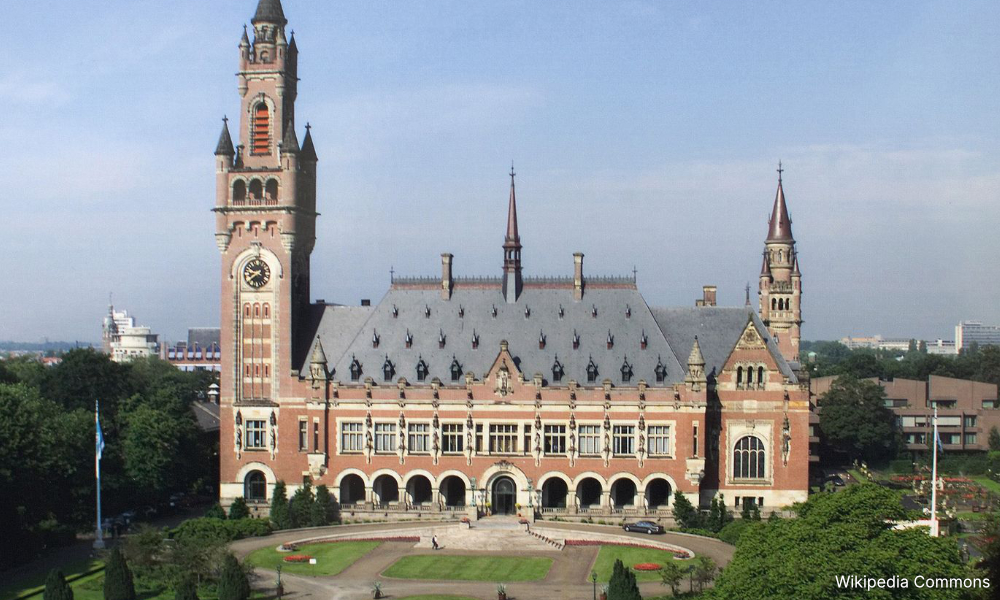
By virtue of the aforementioned Article 61, it seems to me the threshold to review the ICJ’s decision is relatively high, thus it would be highly risky to venture into that option unless it is highly necessary and unless Malaysia was armed with relatively new solid evidence of such a nature as to be a decisive factor.
Sentiment, however strong, shall never substitute evidence, as we know litigation by its very nature is a hefty business, let alone international litigation.
Be that as it may, Mahathir may have seriously factored in such consideration in deciding whether it would be prudent for the government to file a revision against the ICJ’s decision when the likelihood of getting it reversed may not be compelling enough, in his estimation at least.
It would be best if the present government could reveal the total cost Malaysia had incurred in filing this suit and the anticipatory cost it may possibly incur should the revision fail.
As we are fully aware, when Pakatan Harapan was in power, it inherited unprecedented colossal debts due to corrupt practices and abuse of power, thanks to Najib Abdul Razak and his 1MDB saga!
Under such circumstances, Mahathir may have seriously pondered this mind-boggling issue before he finally decided to withdraw the application for revision. Being the prime minister then, he may have thought it was the best for the nation.
Like it or not, it was an extremely difficult decision but certainly, it was not haphazardly made.
Apandi’s credibility questionable
Former attorney-general Mohamed Apandi Ali was reported to have stated that Malaysia was not interested in Pulau Batu Puteh. He also claimed that Malaysia did not raise the issue of the authority of the acting state secretary of Johor and that Malaysia lost the case because of this reason.
But the Attorney General’s Chambers (AGC) disputed his allegation. The record showed that Apandi’s statement was not true. The Malaysian delegation had in fact submitted at length on that issue before the ICJ despite the fact that the ICJ did not rule in favour of this issue.

The ICJ in its judgment, nevertheless concluded, amongst others, that it did not consider the 1953 letter as having a constitutive character in the sense that it had a conclusive legal effect on Johor, i.e. Pulau Batu Puteh, but rather it is a response to an enquiry seeking information.
Ergo, to claim that Malaysia was unsuccessful because Malaysia did not raise the issue of the authority of the then-acting state secretary of Johor was simply unfounded.
Apandi also alleged that the ICJ had not made any decision on South Ledge. Upon scrutinising the ICJ’s judgement, once again his allegation, with due respect, was flawed.
In actual fact, the ICJ determined that sovereignty over the territory as a low tide elevation belongs to the state in the territorial waters in which it is located. By virtue of the decision, Malaysia and Singapore established a Joint Technical Committee tasked to implement the 2008 judgment.
Mahathir may have his justification for disregarding Apandi’s view as the latter’s conduct in handling the issue of 1MDB left much to be desired.
After all, if one reads the judgment of the trial court involving Najib and SRC International, the court categorically held that despite Apandi’s decision to prematurely “terminate” the 1MDB investigation, dedicated MACC officers ignored him and continued pursuing the case.
Assuming there was no change of government, the corruption involving Najib and 1MDB would have never been unravelled.
In addition to that, the central bank’s former governor Zeti Akhtar Aziz testified in court that Apandi had binned a recommendation by Bank Negara Malaysia to initiate criminal prosecution of 1MDB’s senior officers.
She also maintained that despite all the damning evidence gathered and recorded by BNM in the investigation papers on 1MDB which were submitted to the AGC, Apandi had on Sept 11, 2015, decided that the case was to be classified as NFA (no further action) for unknown reasons.
Having said the above, I firmly believe the recommendation by the RCI for a criminal investigation to be launched against Mahathir, with the greatest respect, is uncalled for.
In my view, such a recommendation is bereft of merits.
MOHAMED HANIPA MAIDIN is a former deputy minister of law.
The views expressed here are those of the author/contributor and do not necessarily represent the views of Malaysiakini.