
KINIGUIDE | Whistleblower Protection Act 2010: What does it cover?
KINIGUIDE | A business contractor's recent revelation over alleged bribery involving Sabah state assemblypersons has sparked arguments over the issue of protection for whistleblowers.
This comes as MACC chief commissioner Azam Baki had urged the individual to lodge a formal complaint with the anti-graft agency to enable the process of protection under the Whistleblower Protection Act (WPA) 2010, but declined to commit on whether he will indeed receive any protection from investigation and prosecution.
On top of this, Prime Minister Anwar Ibrahim had also indicated that no protection is guaranteed for the whistleblower, who has since admitted that he was the bribe giver, and said the individual should also be investigated.
This Kiniguide seeks to explain WPA and what it covers, as well as several issues that have been raised over the current version of the Act.
What is the Whistleblower Protection Act?
The Whistleblower Protection Act was enacted in 2010 as a law to combat corruption and wrongdoings by encouraging individuals with information on offences to lodge reports with authorities.
It aims to facilitate disclosures of improper conduct in both the public and private sectors by providing certain types of protection to those who are willing to come forward.
Such protection is also extended to those related to the whistleblower, who may become subject to retaliation from the disclosure.
Who are considered as whistleblowers?
According to the Act, a whistleblower is defined as any person who discloses improper conduct to any enforcement agency based on his belief that any person has engaged in improper conduct or going to commit any offence under the law.
The agencies include the police, MACC, Immigration Department, or any other body that is established by a federal or state law with investigation and enforcement functions.
What are the processes that WPA requires of a whistleblower?
Any individual who wants to report improper conduct under the Act needs to provide the disclosure to an enforcement agency either orally or in writing.
It is not necessary for a whistleblower to be able to identify a particular person in relation to the disclosure.
What wrongdoings can be disclosed under WPA?
The Act covers all kinds of improper conduct which constitutes a disciplinary offence or criminal offence if proven.
This includes bribery, abuse of power, misappropriation of funds, breach of company laws, and activities that can harm public safety, among others.
What are the forms of protection provided by the Act?
Under WPA, a whistleblower will be conferred three forms of protection:
i. Confidentiality
The Act prohibits anyone involved in the disclosure process from revealing any information that can lead to the discovery of the whistleblower's identity.
This provision under Section 8 of WPA also covers entries that name a whistleblower or can lead to his identification, in any document that is in evidence or liable for inspection in any court or tribunal, or by any authority.
If any document has such information that can lead to a whistleblower's identity being uncovered, WPA says such passages have to either be concealed from view or obliterated.
ii. Immunity from civil and criminal action
A whistleblower protected under WPA shall not be subjected to any civil or criminal liability for disclosing improper conduct.
This provision under Section 9 of the Act also covers the protected whistleblower from any liability arising from administrative process such as disciplinary action, or from any action, claim or demand for making a disclosure.
iii. Protection from retaliation
According to WPA, no one can take any detrimental action or make threats against a whistleblower for disclosing improper conduct.
The same protection also goes to anyone related to or associated with the whistleblower.
They include any retaliation by way of terminating the whistleblower's contract, withholding a payment that is due under a contract, or refusing to enter into a subsequent contract.
A whistleblower can lodge a report with the authority if such retaliation occurs to him, which the authority is obliged to investigate.
Anyone found guilty of taking detrimental action against a whistleblower can be punished with a fine of a maximum of RM100,000, imprisonment for a maximum of 15 years, or both.

A company director became the first to be charged under WPA for detrimental action against a whistleblower in 2020.
Wafiy Abd Aziz, a former deputy CEO of Education Malaysia Global Services, was accused of retaliating against whistleblower Shahinuddin Shariff who had reported misconduct to MACC.
Wafiy was acquitted in 2022 after the Kuala Lumpur Sessions Court found that the prosecution had failed to establish a prima facie case against the accused at the end of its case.
What else does the Act provide to protect whistleblowers?
On top of the three forms of protection stated above, WPA gives a certain amount of power to the court to take action against anyone who commits detrimental action against a whistleblower, including by issuing a restraining injunction and ordering the offender to pay compensation.
In cases where retaliation against a whistleblower occurs at work, either through disciplinary or personnel actions like being transferred or denied a deserved promotion, the court is also empowered to order such punishment to be rescinded and for reinstatement of all deserved benefits.
If a whistleblower or any person related to him fears detrimental action at work, he can request the enforcement agency to apply for relocation from his place of employment.
Does WPA provide automatic protection to every whistleblower?
In short, no.
In the case of the disclosure against Sabah state assemblypersons, Azam had stated that protection for a whistleblower could be revoked if the individual was found to be involved in the offence.
This was based on Section 11(1)(a) of WPA, which stipulates that an enforcement agency shall revoke protection for a whistleblower if it finds that the individual has participated in the improper conduct that he discloses.
A whistleblower who shares the disclosed information with outside parties, such as the media, also risks revocation for violating Section 8(1), which prohibits this action.
While WPA was enacted in the spirit of encouraging disclosure of improper conduct, it has a clause in Section 6(1) that excludes disclosure of matters which have been specifically prohibited by any written law.
This means an individual who discloses information that is protected under laws such as the Official Secrets Act (OSA) will not come under the coverage of WPA.
What are the issues surrounding WPA’s current version?
Since its enactment in 2010, the act has been criticised over several alleged shortcomings.
One major flaw, as pointed out by lawyer Syahredzan Johan in an article in 2013, was the prohibition against disclosing matters that are covered under other laws like the OSA and the Banking and Financial Institutions Act (Bafia).
This flaw had led to Pandan MP Rafizi Ramli, now a federal minister, being charged and initially convicted under Bafia in 2013 for disclosing confidential details relating to the National Feedlot Corporation Sdn Bhd (NFC) scandal.
Another issue was with the limiting of disclosure channels to only law enforcement agencies, which some argued may discourage some whistleblowers due to lack of trust in the agencies, and for leaving out disciplinary bodies that do not have investigation and enforcement powers like the Malaysian Medical Council and Bar Council.
There were also calls for protection to be extended to whistleblowers who disclose to the media and civil society organisations.
Is there any effort to improve WPA?
Yes. The government had indicated in March that a proposal to amend the Act would be tabled in the Parliament by this year.
Deputy Minister in the Prime Minister’s Department (Law and Institutional Reform) M Kulasegaran had said that chief among them would be a proposal for a centralised mechanism for receiving complaints from whistleblowers.
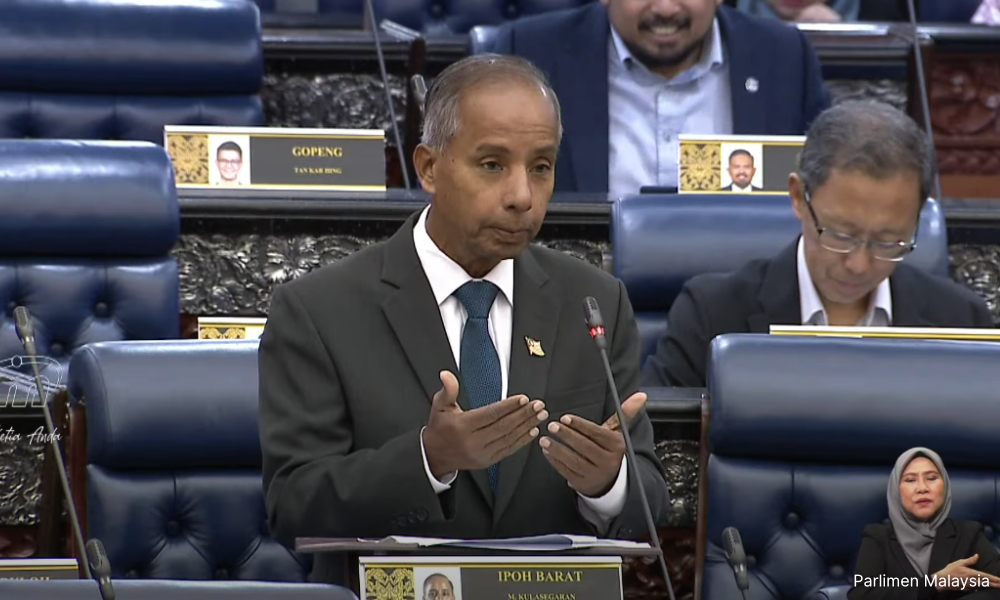
"The proposed amendment to improve Act 711 will allow whistleblower protection to be implemented in an exclusive, effective manner, and subsequently, able to reflect a neutral atmosphere, more transparency and impartiality in the handling of all complaints of inappropriate behaviour from whistleblowers," he reportedly told the Dewan Rakyat.
According to Kulasegaran, there are also proposals for major amendments to provisions in Sections 2, 3, 5, 6, 9, 11, 12, 13, 14 and 26 of the Act, as well as other sections in general.
Whistleblower's latest: 'Sakit hati' over RM70m deal, 'broke' finance minister
Bribery whistleblower: Why go to media instead of MACC, GRS asks
Don't reject whistleblower's immunity request outright - Warisan
'No elements of graft', Sabah rep says after being implicated in video
Claims against Hajiji are 'slander', says NGO after lodging police report
PSM explores 'Yang Berhormat v Yang Berasuah' scandal in parallel universe