
COMMENT | Thorough policies needed for data centre investments
COMMENT | The data centre boom in Johor and the Klang Valley over the past three years has been nothing short of astounding and has led to many international headlines for Malaysia.
However, to fully capture the positive economic spillover and multiplier effects from these data centre investments, we need more comprehensive digital economy and infrastructure-related policies that are better coordinated across the various government ministries and agencies.
I disagree with the general viewpoint that data centres will provide only limited upside in terms of job creation and will only use up much-needed and scarce energy and water resources in the country.
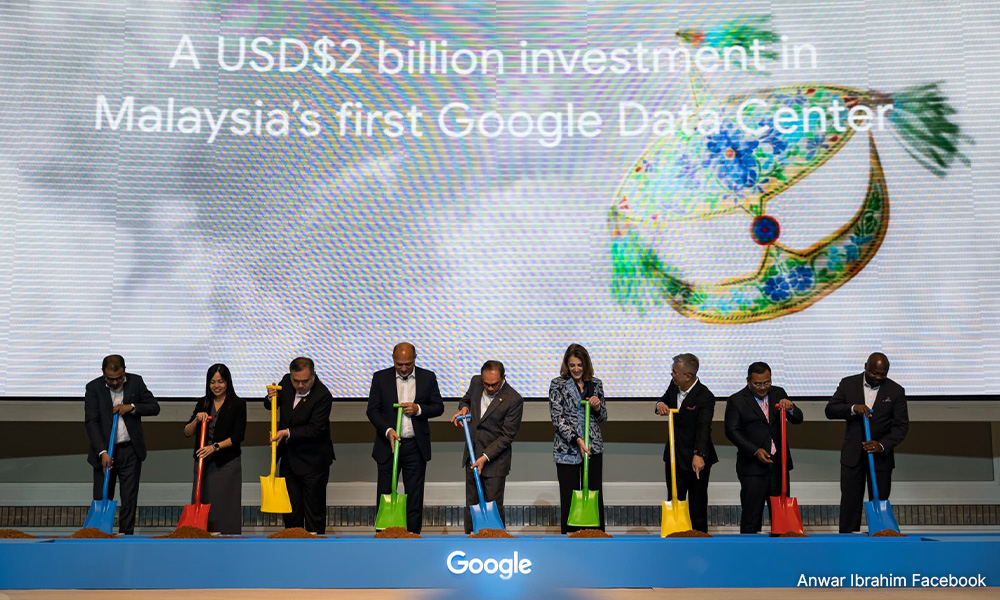
For many of the hyperscalers such as Alphabet (Google), AWS, Microsoft, and Meta (Facebook, Instagram), their data centre investments in Malaysia are part of a larger strategy to increase their workforce and digital economy activities in the country, especially in the cloud and generative artificial intelligence (AI) ecosystem.
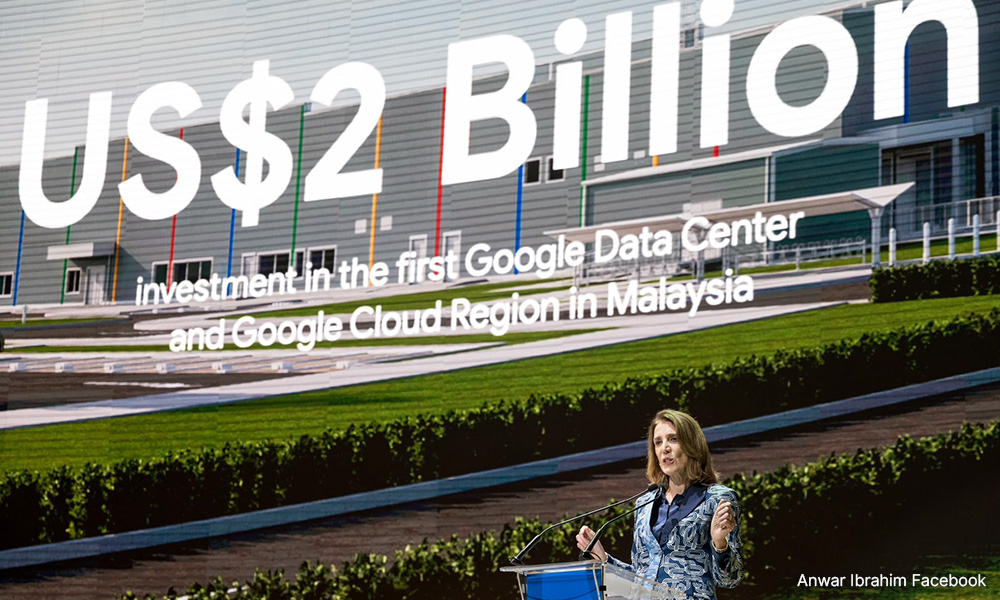
These large-scale investments also present an opportunity to “pitch” Malaysia to the senior leadership team of these global giants, including Satya Nadella (Microsoft CEO), Ruth Porat (Alphabet chief investment officer), and Jensen Huang (Nvidia CEO) during their visits here.
COMMENT | The data centre boom in Johor and the Klang Valley over the past three years has been nothing short of astounding and has led to many international headlines for Malaysia.
However, to fully capture the positive economic spillover and multiplier effects from these data centre investments, we need more comprehensive digital economy and infrastructure-related policies that are better coordinated across the various government ministries and agencies.
I disagree with the general viewpoint that data centres will provide only limited upside in terms of job creation and will only use up much-needed and scarce energy and water resources in the country.
For many of the hyperscalers such as Alphabet (Google), AWS, Microsoft, and Meta (Facebook, Instagram), their data centre investments in Malaysia are part of a larger strategy to increase their workforce and digital economy activities in the country, especially in the cloud and generative artificial intelligence (AI) ecosystem.
These large-scale investments also present an opportunity to “pitch” Malaysia to the senior leadership team of these global giants, including Satya Nadella (Microsoft CEO), Ruth Porat (Alphabet chief investment officer), and Jensen Huang (Nvidia CEO) during their visits here.
In addition, the entry of regional players such as Japan’s NTT, China’s GDS, Australia’s Airtrunk, Singapore’s Singtel (in partnership with Telekom Malaysia), and global co-location players such as Equinix provide opportunities to expose the customers of these companies to the Malaysian digital economy landscape.
We must also not forget opportunities for Malaysian players such as AIMS, VADS, Pi Data Center, YTL, and K2 to expand their footprint in Malaysia and beyond.
Faster domestic policies rollout
Our domestic policies are slowly being rolled out and aligned to capture more of the value-added economic activities in the data centre ecosystem. But the process should be quickened and better coordinated.
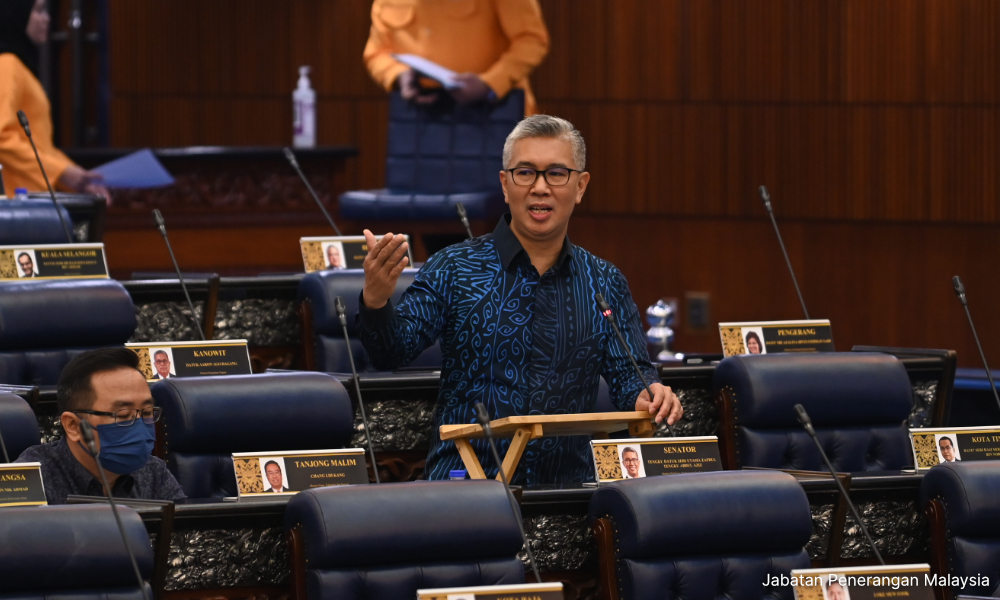
For example, the updated incentives for data centres, which include guidelines on energy and water usage, as announced by Investment, Trade and Industry Minister Tengku Zafrul Abdul Aziz in October 2024, have been submitted to the Finance Ministry by the Malaysian Investment Development Berhad (Mida) but has yet to be finalised and announced.
It would be a good signal if incentives for investments to decrease the usage of water or to increase the usage of recycled water were to be included in the current Green Investment Tax Allowance (GITA), which is focused primarily on renewable energy investments.
Further incentives for domestic content and for the involvement of local players such as Gamuda, IJM, and Sunway in the construction process would also increase the domestic spillover of data centre construction.
However, the policy space should be expanded beyond financial incentives to include policy updates and innovations that will increase other value-added economic activities.
While it is commendable that both Plan Malaysia (under the Housing and Local Government Ministry) and the Malaysian Communications and Multimedia Commission (MCMC, under the Communications Ministry) have come up with their own guidelines on data centres, these are mostly technical documents which do not particularly innovative.
An example of policy innovation is the effort by the National Water Services Commission to work with some of the state water providers, including Air Selangor, to amend existing regulations to allow for smaller modular water processing plants specifically for data centre usage as long as the water processed is for self-consumption.

This will not only speed up private sector investment in the water sector but also spur the development of the private sector water services industry in the country, with the potential to build capabilities to expand abroad.
Such modular treatment plants are cheaper and faster to roll out and can even use recycled wastewater to cool the data centres, thereby saving current potable water capacity for residential and commercial use.
Thinking more ambitiously, the Energy Transition and Water Transformation Ministry, together with the Natural Resources and Environmental Sustainability Ministry, should take proactive steps to evaluate the potential of small modular nuclear reactors to power data centres.
These SMRs can also be seen as part of the solution to move away from coal power plants. Data centres need reliable power, which small nuclear reactors can provide. Battery storage technology, although vastly improved, is still not at the stage where it can solve the energy intermittency problem from renewable energy sources, for now at least.
The reopening of the Three Mile Island nuclear plant in the United States by Microsoft to create a gigantic 853 MW power source for data centres is an indicator of future trends.
Policy gaps
Perhaps the biggest policy gap in the data centre space has to do with the deployment of the processing power and the growth of the services sector in the cloud and generative AI ecosystem that is powered by data centres, especially the top-tier ones.

Contrary to recent news reports, there is no comprehensive National Cloud Policy in Malaysia which outlines specific details on how to grow the larger cloud service ecosystem.
For example, there is no clear roadmap and timeline for different government services to be put on the cloud and for these contracts to be awarded publicly and transparently.
Having this policy will allow for the incorporation of conditions and incentives for the local deployment of data centre processing power to enhance the cloud service ecosystem in Malaysia, including the incorporation of generative AI capabilities in the service provision.
In other words, Google Cloud or AWS (together with some of its local vendor partners), for example, would be incentivised to deploy some of the processing power from its data centres in Malaysia to power specific government services on the cloud (via commercial terms) with the requirement that a large percentage of the workforce deploying these services be based in the country.
Right now, under the National Digital Department (NDD, formerly Mampu), we only have an outdated public procurement policy for government agencies to procure services from approved cloud service providers (CSPs) and a hodgepodge of very general guidelines on the digitalisation of various government services and the digital infrastructure ecosystem.
Many of these policies are not even available in English, which is needed if we want to bring in serious cloud service providers at the international, regional, and local levels.
The timing is ripe for the newly created Digital Ministry to drive the growth of this cloud and generative AI ecosystem via the recent data centre investments with policy alignment and expertise coming from MDEC and supported by NDD as well as Mida and the Finance Ministry.
Without a well-coordinated approach to policy innovation across the relevant ministries and agencies, the likelihood of economic spillovers and value-added activities being somewhat limited while our energy and water resources are being used in great quantities will give more ammunition to the data centre naysayers.
One practical way in which the data centre players can provide valuable inputs in a coordinated manner to the government of Malaysia is to create a data centre operators association, as suggested recently by Liew Chin Tong, the deputy investment, trade and industry minister.
ONG KIANG MING is former deputy international trade and industry minister and former Bangi MP.
The views expressed here are those of the author/contributor and do not necessarily represent the views of Malaysiakini.