


/file/publisher-c1a3f893382d2b2f8a9aa22a654d9c97/2024/10/713befae69e374ce81e0ca5e6e9f5de1.jpg)

Worker and employer groups welcome new RM1.7k minimum wage
The Malaysian Trades Union Congress (MTUC) and the Malaysian Employers Federation (MEF) in separate statements thanked Prime Minister Anwar Ibrahim, as well as Human Resources Minister Steven Sim, for the announcement in Budget 2025, which was tabled in the Dewan Rakyat yesterday.
MTUC president Mohd Effendy Abdul Ghani said Anwar’s announcement was a sign of...
BUDGET 2025 | The two largest groups representing workers and employers in Malaysia have welcomed the government’s move to raise the minimum wage from RM1,500 to RM1,700 beginning in February.
The Malaysian Trades Union Congress (MTUC) and the Malaysian Employers Federation (MEF) in separate statements thanked Prime Minister Anwar Ibrahim, as well as Human Resources Minister Steven Sim, for the announcement in Budget 2025, which was tabled in the Dewan Rakyat yesterday.
MTUC president Mohd Effendy Abdul Ghani said Anwar’s announcement was a sign of the government’s commitment to protect the welfare of workers, particularly those from low-income groups.
“The minimum wage increase is an important move that can help ease the burden of rising costs of living due to inflation and global economic pressure.
“This is also in line with the government’s intention to promote a fairer economy and ensure that no worker is left behind in the overall development,” said Effendy (above).
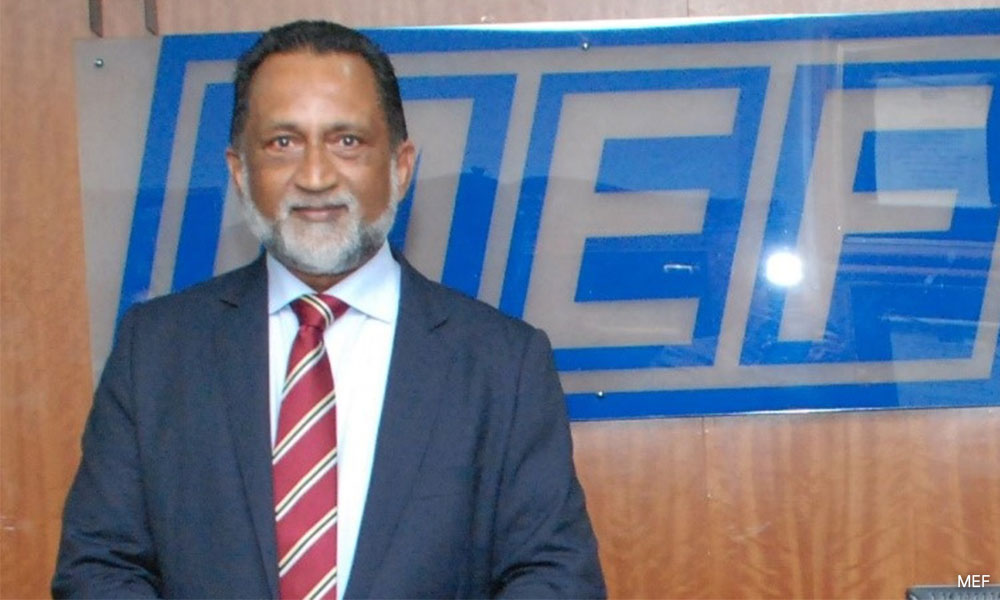
Separately, MEF president Syed Hussain Syed Husman thanked Anwar for the additional announcement that the new minimum wage will be delayed for six months for employers with fewer than five employees, taking effect from Aug 1, 2025.
“The MEF is thankful to the prime minister and government that understands and takes into account the challenges faced by MSMEs in determining the new minimum wage rate of RM1,700 and giving a reasonable grace period for employers,” he said.
Additionally, Syed Hussain credited Sim for prior engagements on challenges faced, involving both employers and workers.
“MEF also thanks the National Wages Consultative Council (NWCC) for facilitating the meetings for members of NWCC to discuss and deliberate on these issues before unanimously reaching a common position.
“The NWCC had submitted its recommendations to the government on the review of the minimum wage rate,” he said.
Higher salary honours workers, boosts economy
Meanwhile, MTUC called for stringent enforcement of the new minimum wage.
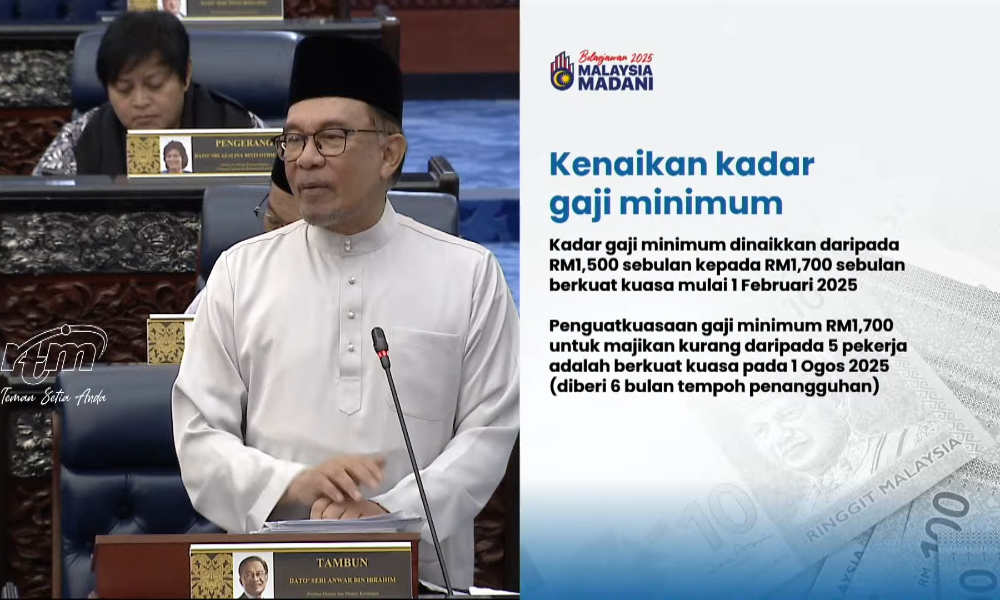
It also called on employers with sufficient financial capability to offer higher salaries to proactively honour the contributions of their workers.
“MTUC believes that the increase will not only uplift workers’ standard of living but also contribute to economic growth through increasing the people’s buying power.
“This will benefit the country’s overall economy, given that an increased domestic consumption will boost local businesses and contribute to an overall more inclusive economic growth,” said Effendy.
Meanwhile, Syed Hussain said MEF is of the view that “most employers” are already paying above minimum wage, and that employers who could afford paying higher salaries should be encouraged to do so.
“No one should use minimum wage as an excuse to pay based on the minimum wage.
“It is only ethical and a good practice for employers to remunerate their employees based on their employees’ and their businesses’ performances,” he said.
Syed Hussain added that paying minimum wage has never been an issue with multi-national companies, GLCs, GLICs, and large local companies, but the challenge is with micro-small-medium-enterprises.
Risk of substantial job loss
Elaborating, Small and Medium Enterprises Association Malaysia (Samenta) president William Ng said smaller companies will be “badly affected” by the announced increase.
“Samenta agrees that the wages in Malaysia are too low, and more must be done to lift the wages of Malaysians.
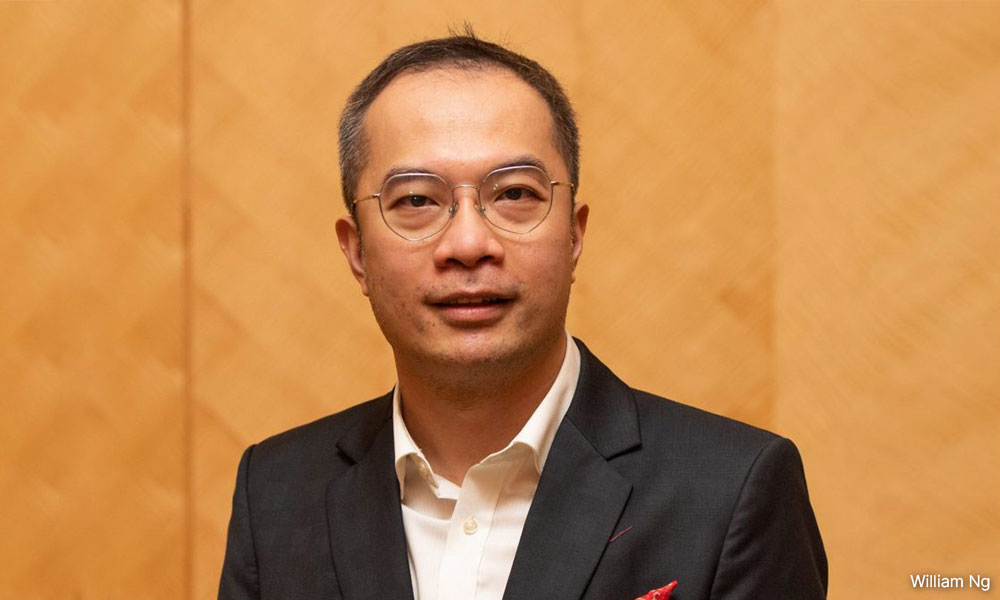
“However, the minimum wage is coming at a time of compressed margin for SMEs and will be disruptive to the operations of SMEs,” he said.
Ng noted that SMEs in Sabah and Sarawak in particular will find it difficult to implement the minimum wage, with a risk of “substantial job loss” for low-income workers reliant on semi-skilled work.
“We urge the government to refine the minimum wage to allow for less-developed states to maintain the current minimum wage, or to do away with the minimum wage altogether,” he said.
“In urban centres, such as the Klang Valley, southern Johor, and Penang, median wages are already far higher than even the RM1,700 announced.
“Beyond job loss, we will see further wage compression among the M40, with foreign workers being the biggest beneficiary of the revised minimum wage,” he argued.
‘Automation not the answer’
Further, Ng said a move towards automation is not always a viable option for SMEs already facing “severe margin compression”.
He said many multinational enterprises typically outsource their most labour-intensive work to SMEs, including tasks like cleaning, maintenance, packing, and logistics, all areas not replaceable by automation.
This is on top of over 80 percent of our SMEs being in the services sector, including the retail and food and beverage industries, he added.
The current minimum wage of RM1,500 has been enforced since July 1, 2023, increased from the previous rate of RM1,200.
/file/publisher-c1a3f893382d2b2f8a9aa22a654d9c97/2024/10/8d84a7da07ff2d4c845ce0ca3c9abe2f.jpg)
/file/publisher-c1a3f893382d2b2f8a9aa22a654d9c97/2024/10/ec99cd23341d4a427b826f9a20eb4d82.jpg)
/file/publisher-c1a3f893382d2b2f8a9aa22a654d9c97/2024/10/bf195c841bf3824a768c95ab318c6a72.jpg)
/file/publisher-c1a3f893382d2b2f8a9aa22a654d9c97/2024/09/91723b54cfae7975bb312899e3671b06.jpg)


