


/file/publisher-c1a3f893382d2b2f8a9aa22a654d9c97/2020/01/333159734b9efe54647e10eb75f5a77f.jpg)

COMMENT | Denying bail to Yusoff Rawther sends wrong message
COMMENT | Almost all major media in Malaysia reported the news on the arrest of a former aide to Prime Minister Anwar Ibrahim, Muhammed Yusoff Rawther, who is facing a drug trafficking charge.
Some people even believe there is a strong likelihood that the arrest might be politically motivated. The belief is based, inter alia, on the fact that Yusuf has filed a sexual assault lawsuit against Anwar.
Yusuf is not only arrested. He is also being denied bail. Therefore, he has to languish in prison until his case is finally decided.
COMMENT | Almost all major media reported the news on the arrest of a former aide to Prime Minister Anwar Ibrahim, Muhammed Yusoff Rawther, who is facing a drug trafficking charge.
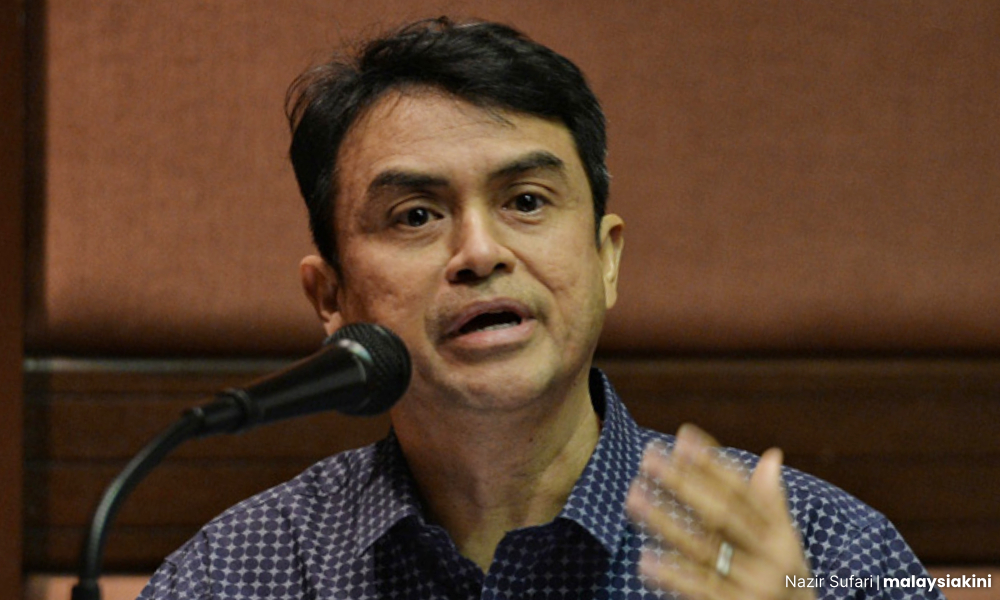
Some people even believe there is a strong likelihood that the arrest might be politically motivated. The belief is based, inter alia, on the fact that Yusoff (above) had filed a sexual assault lawsuit against Anwar.
Yusoff was not only arrested. He was also denied bail. Therefore, he has to languish in prison until his case is finally decided.
Legally speaking, the court has the power under Section 41B of the Dangerous Drugs Act (DDA) not to grant him bail. He is now challenging the constitutionality of the provision.
In addition to the challenge, Yusoff wants Section 388 of the Criminal Procedure Code (CPC) to be applied.
Overriding principles
Let us dive into the law on bail. Procedurally speaking, all criminal offences are generally regulated under the CPC. Being the law governing the procedural aspects of criminal justice, the CPC is a law of general application.
Yes, there are provisions therein dealing with bail applications, such as Sections 29, 387 and 388 of the CPC. However, when an accused person is being indicted under the DDA, the application of bail is governed by this particular law.
Thus the legal principle embodied in the following legal maxim, namely “Generalibus Specialia Derogant” (literally “special things taken from the general”) would necessarily trigger.
According to several decisions given by the courts, such a principle denotes that “where a written law has specifically provided for a matter, that will override the general provisions respecting it”.
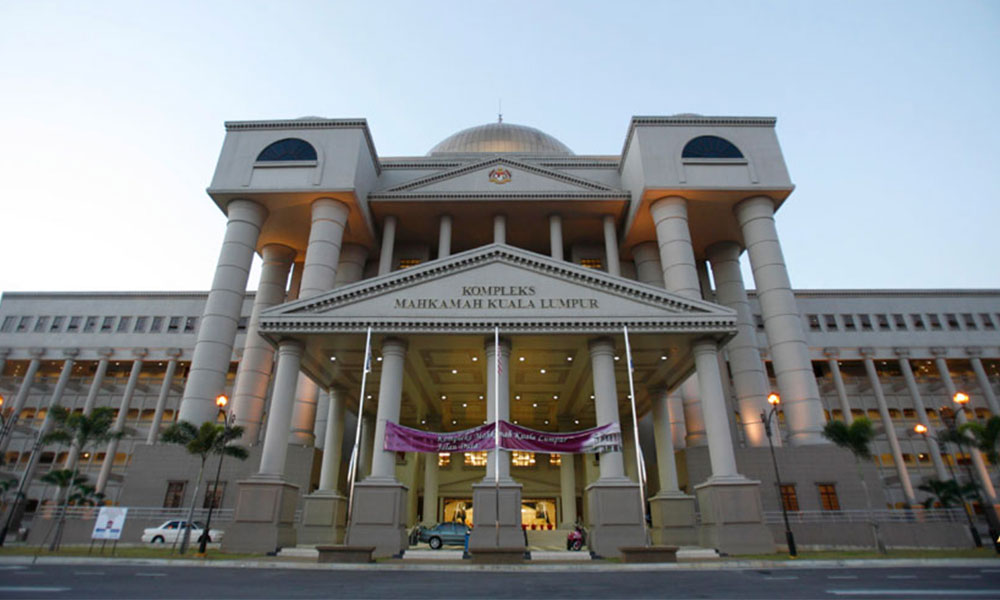
In Loy Chin Hei v Public Prosecutor [1982] 1 MLJ 31, for instance, his Lordship Wan Yahya J held that the restriction on bail under Section 41B of the DDA is absolute and neither the court below nor the High Court has the power to admit to bail any person charged thereunder with any offence punishable with death or more than five years’ imprisonment or even for lesser terms when the public prosecutor certifies that “it is against the public interest to allow bail”.
Thus, we may safely conclude that a specific clause prevents the application of the general rule when a particular provision is included in a particular statute.
Ergo, with respect to bail, if a specific statute bars bail from being granted, the accused person would ipso facto not be allowed to assert the right to bail under the general application of the law.
That is, in essence, the position of law on bail, as far as I know.
Political implications
Doubtless, Yusoff has every right to challenge the legality or constitutionality of Section 41B of the DDA. And under the cardinal principle of criminal law, he is presumed innocent until proven otherwise, and his lawyer is equally entitled to mount vigorous defences in defending him.
Politically speaking, however, many believe there have been many instances depicting “the ugly picture” of the bail application as far as criminal justice in the country is concerned.
When I was an MP, I raised the apparent “discriminatory practice” involving bail application. For instance, I questioned the decision of our court then in freeing Abdul Razak Baginda on a RM1 million bond with two sureties without security, though he was charged with a very serious crime of abetting in the murder of Mongolian Altantuya Shaariibuu.
In fact, such a decision was subject to a slew of critical opprobrium by many quarters. They argued the decision had certainly raised many questions on the alleged non-discriminatory role of the judiciary.
They, therefore, asked this question: “What is so special about Razak that he can be freed on a bond?”
Under the law, those who post bail will have to deposit a sum of money as stipulated by the court, whereas, in the case of a bond, the accused does not even have to cough up the money.
“Bronchitis” and “asthma” were said to be the basis for Razak’s bond. Dissatisfied with such flimsy grounds, some people argued those were not ailments for which a prison or a common hospital cannot provide adequate treatment and do not necessitate a person’s evacuation from prison.
When Munawwar A Anees - Anwar’s former speech writer - was arrested and subjected to 126-day confinement with alleged police torture resulting in a heart attack, he was then kept round-the-clock handcuffed to his hospital bed with prison guards keeping a non-stop watch upon him.
There were other people who contended that though Razak may have been sick, he could always be taken to the hospital under the watchful eyes of the police or the prison authorities.
In fact, if one goes to the third-class ward of the Kuala Lumpur Hospital, one can see many prisoners being warded there with their hands handcuffed to the bed.
In contrast to Razak, in his first criminal case, Anwar failed to receive bail, much less a bond, despite the fact the offences for which he was charged were bailable.
Though the court is entitled to exercise its discretionary power in denying bail to Yusoff, such a denial may, however, elicit adverse inference against or send an unfavourable signal to the prime minister or his government.
MOHAMED HANIPA MAIDIN is former Sepang MP and former deputy minister in the Prime Minister’s Department (Legal Affairs).
The views expressed here are those of the author/contributor and do not necessarily represent the views of Malaysiakini.
/file/publisher-c1a3f893382d2b2f8a9aa22a654d9c97/2024/07/faee2e5025618367f2d61ef8a28d197b.jpg)
/file/publisher-c1a3f893382d2b2f8a9aa22a654d9c97/2020/01/075b3fd95a5409bc61e5248f6bb208ea.jpg)
/file/publisher-c1a3f893382d2b2f8a9aa22a654d9c97/2019/12/03e3a7fcaef9af1a3e4e8fa277d2b9d5.jpg)
/file/publisher-c1a3f893382d2b2f8a9aa22a654d9c97/2020/01/333159734b9efe54647e10eb75f5a77f.jpg)
/file/publisher-c1a3f893382d2b2f8a9aa22a654d9c97/2019/12/0bf5430cb7f2acc10350aa05e9e73de0.jpg)


