
COMMENT | Calls for transparency on Sarawak coal mining plans
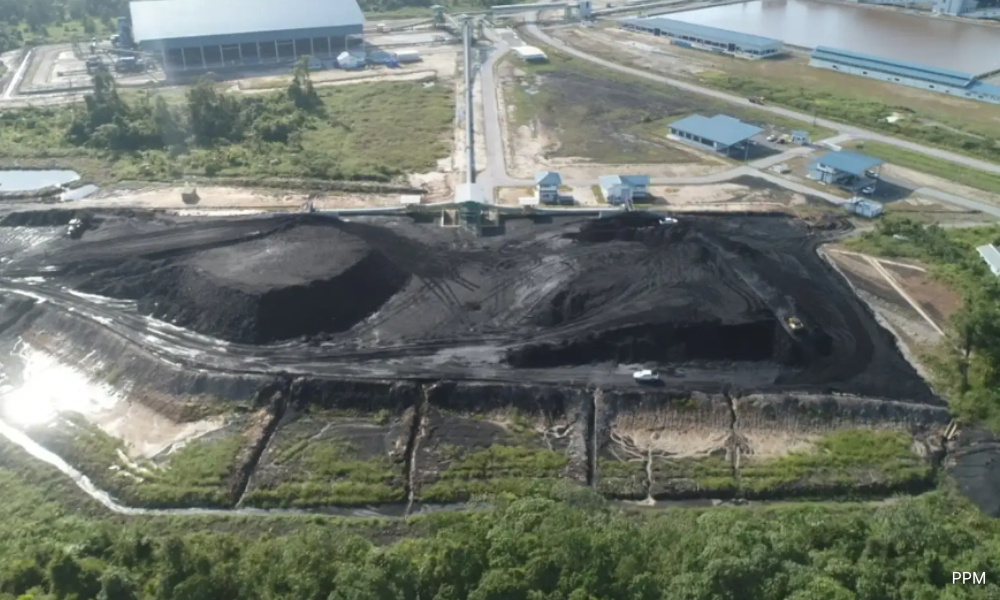
COMMENT | The Balingian coal field is an area of 41,000ha located near the Mukah and Balingian rivers in Sarawak, east of Sibu, Sarawak.
In 2017, it was reported that Sarawak held 1.5 billion tonnes of coal resources and Sarawak Energy Berhad (SEB) was awarded three prospecting licenses for the Balingian deposits, which would supply coal for Sarawak’s “low-emission coal-fired power plants” for 25 years.
According to reports, the Balingian coal mine began operation in 2017, supplying 1.6 million tonnes of coal annually for domestic energy consumption in Sarawak.
Today, the Balingian coal mine is operated by Balingian Energy Minerals, with SEB controlling its majority ownership.
COMMENT | The Balingian coal field is an area of 41,000ha located near the Mukah and Balingian rivers in Sarawak, east of Sibu, Sarawak.
In 2017, it was reported that Sarawak held 1.5 billion tonnes of coal resources and Sarawak Energy Berhad (SEB) was awarded three prospecting licenses for the Balingian deposits, which would supply coal for Sarawak’s “low-emission coal-fired power plants” for 25 years.
According to reports, the Balingian coal mine began operation in 2017, supplying 1.6 million tonnes of coal annually for domestic energy consumption in Sarawak.
Today, the Balingian coal mine is operated by Balingian Energy Minerals, with SEB controlling its majority ownership.
In 2023, the National Energy Transition Roadmap was published, which included targets for ending the construction of new coal-fired power plants and phasing out existing coal power plants by 2045.
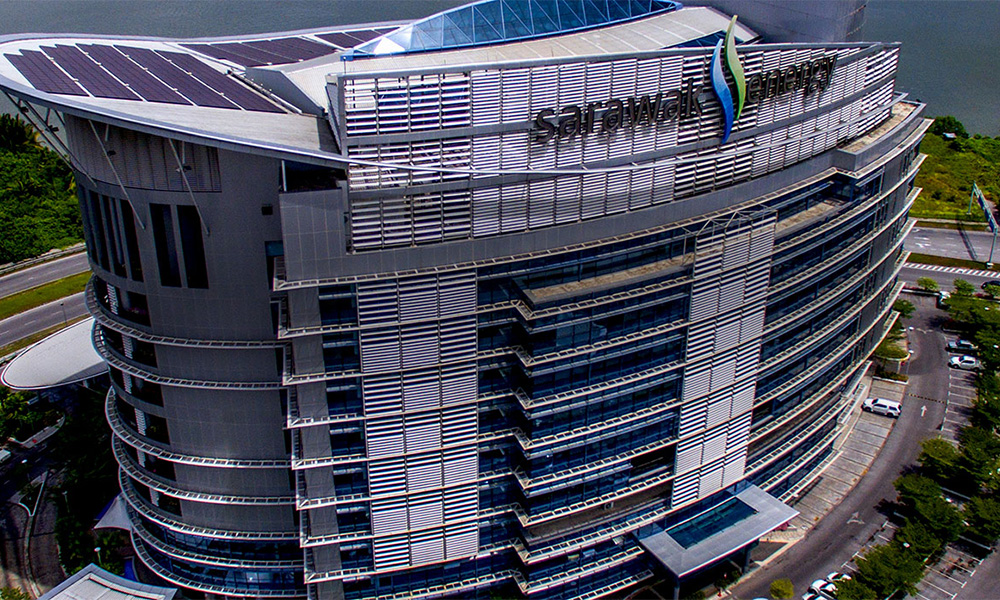
By 2024, Sarawak made a state-level commitment not to construct new coal-fired plants and announced plans to transition the fuel source for the Sejingkat and Balingian coal-fired plants to biomass wood pellets.
Further, as part of its Green Economy aspirations, in 2024 Sarawak also published its own energy transition roadmap, and SEB’s net-zero transition plan was validated by the Science Based Target initiative.
Tenders and regulatory developments
In 2022, SEB published a tender for mining operators to “mine and extract the Target Coal in accordance with the Mine Schedule and as directed by the Principal’s Representative from time to time at a nominal rate of 1.6 million metric tonne per annum", whereby the “estimated total coal reserves are 550 million tonnes”.
That same year, the state government published amendments to the State Sales Tax Ordinance 1998, adding two sections on “time for sale of coal” and “determination of sale value of coal”, defining the conditions by which the export and delivery of coal can occur. It must be noted that before these amendments, the original 1998 ordinance did not have any provisions for the regulation of coal or coal exports.
Despite the national and state-level energy transition plans, in July 2024, another tender was published, calling for a study to propose short-, medium-, and long-term geotechnical measures for the operations of the mine.
Carbon lock-in
According to data from RimbaWatch’s Future Emissions Database, the annual mining of 1.6 million tonnes of coal would result in 10,568,888 (10.5 million) tonnes of CO2e in annual emissions.
If this is mined for 25 years as planned in 2017, this would result in 190,239,984 (190 million) tonnes CO2e of cumulative carbon lock-in from 2024 onwards. In comparison, 10.5 million tonnes of annual emissions are equivalent to the annual emissions from the use of 2.3 million passenger vehicles. Meanwhile, 190 million tonnes of carbon lock-in is higher than the 2022 emissions of petrostates such as Kuwait, Venezuela and Qatar.
The mortality cost of carbon metric, developed by Bressler (2021), is a tool to visualise the social impacts of additional GHG emissions in the atmosphere, approximating the number of excess deaths by 2100 that will be caused by the climate impacts, such as heatwaves, droughts and flooding, associated with the emissions of one additional metric ton of CO2.
Using this metric, we estimate that the Balingian mine’s annual emissions will cause the death of 2,383 people, and the cumulative emissions will cause the death of 42,904 people, from climate-related impacts by 2100.
Further, there is a general consensus across all published studies that developing any new fossil fuel fields is “incompatible” with a 1.5°C target. Notably, the Intergovernmental Panel on Climate Change projects that if existing climate policies do not change to reflect the urgency of this threat, including policies related to oil and gas extraction, such activities put us on a trajectory for 3.2°C warming by 2100, which is more than double the 1.5°C target.
This will result in irreversible climate disasters at an unprecedented scale, including uninhabitable temperatures, major cities underwater, widespread water shortages and the extinction of a million species of plants and animals.
The need for atmospheric viability test
An atmospheric viability test considers whether a particular fossil fuel reserve can be combusted under a carbon budget that is consistent with a Paris-aligned climate scenario. In this case, it is unclear how the planned 190 million tonnes of carbon lock-in from the Balingian mine is aligned with Malaysia’s emissions pathway to achieve net zero by 2050.
Already, Malaysia’s current activities are expected to double the country’s emissions by 2050, and Malaysia would need to halve its emissions by 2035 to be aligned to a 2050 net-zero pathway.
Accordingly, the Sarawak government, SEB or the federal government have not provided any evidence that the development of the Balingian field would be consistent with Malaysia’s target to achieve net zero by 2050.
Loss of biodiversity
Beyond its direct impacts on the global atmosphere, the Balingian mine will also impact biodiversity. According to data from the RimbaWatch Forest Tracker, the mine involves 2,595ha of land, which is located almost entirely on peat swamp forests.
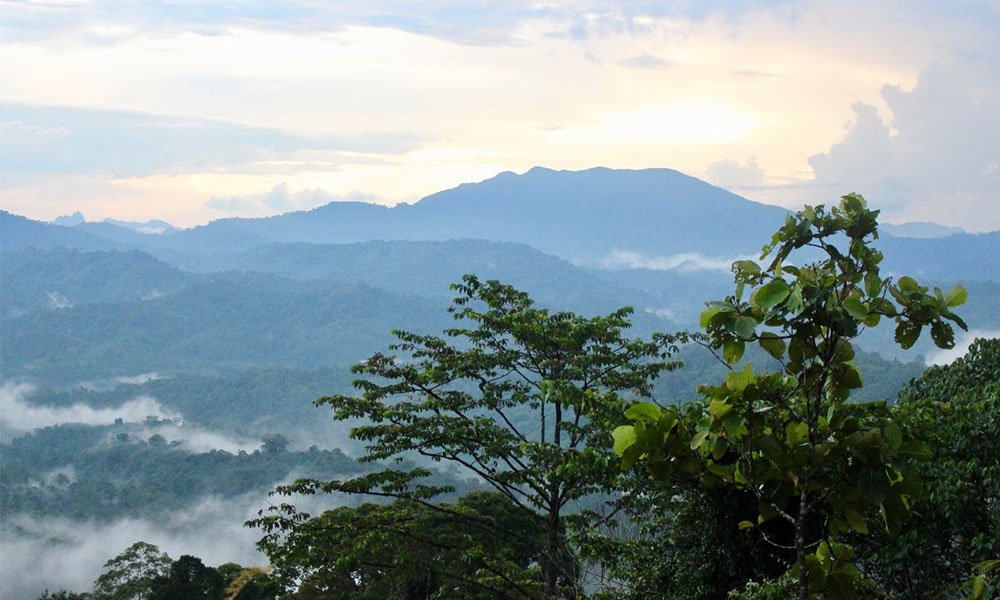
Based on our analysis, these mining plans would result in the loss of 2,073ha of peat swamp forests. Peat swamp forests are one of the most carbon-intensive ecosystems in the world, storing significantly more carbon than other terrestrial forests, making it a high-carbon stock forest. Our analysis finds that 144,857 tonnes of carbon will be released if this area is deforested for the mine.
Transparency concerns
The Environmental Quality Act (EQA) 2015 applies to both Peninsular and East Malaysia. The Environment Department’s Environmental Impact Assessment Guidelines for Quarry and Mining requires “mining of minerals in new areas involving large scale operation” to have a second schedule environmental impact assessment (EIA), which entails a public consultation process.
To date, no recent EIA for coal mining activities in Balingian is listed on the Department of Environment’s online EIA database. Further, the Natural Resources and Environment Board of Sarawak does not make its EIA data publicly available, and it is therefore not possible to check if a state-level EIA for the mine had been prepared.
The NETR and Sarawak’s energy transition initiatives only target a phase-out of coal consumption in the power generation sector. However, there are no targets for a transition away from coal mining activities in themselves. The consistency in the publication of tenders illustrates a potential commitment from SEB to continue the operations of the mine in the “near, medium and short-term”.
Further, the amendment of the State Sales Tax Ordinance in 2022 to include provisions on exporting coal is a concerning development. Given these trends, it remains possible that Sarawakian coal mining will not be halted in conjunction with a phase-out of domestic coal consumption, and that Balingian coal could be exported instead.
Recommendations
The following recommendations highlight specific actions that should be taken by the relevant authorities to address the climate and biodiversity risks of the Balingian coal mine:
● The Environment Department and Natural Resources and Environment Board to provide clarity on the status of the mine’s EIA, and publish the EIA in full.
● For the Sarawak state government and SEB to disclose current coal mining plans, including any plans to export coal, and to continue extraction despite the planned phase-out of existing coal-fired power plants.
● The federal government and Sarawak state government align the energy sector with Malaysia’s net-zero ambitions by committing to a phase-out in fossil fuel exploration and mining activities.
The views expressed here are those of the author/contributor and do not necessarily represent the views of Malaysiakini.