
COMMENT | Are we serious about improving English proficiency?
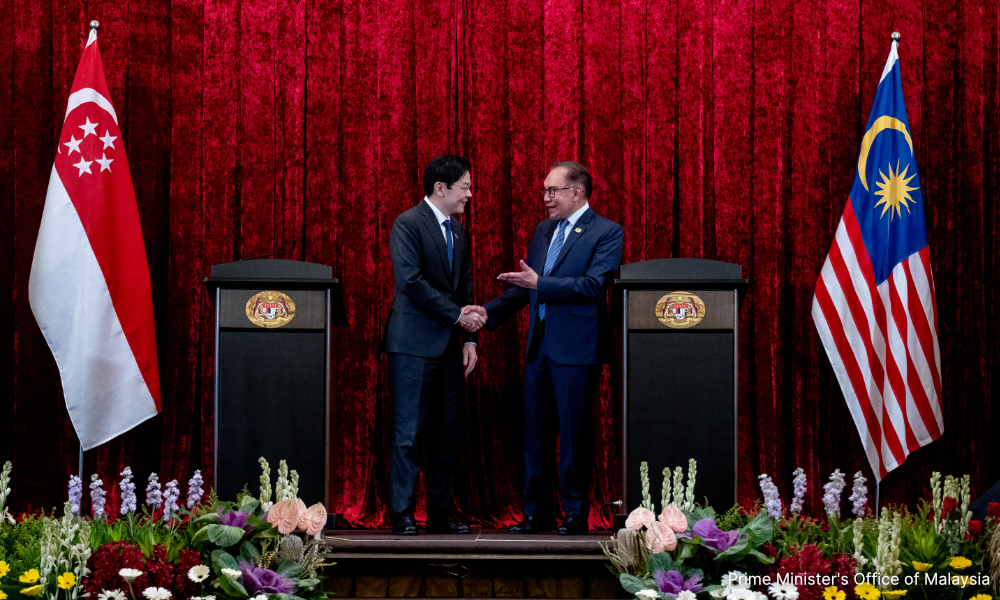
COMMENT | While speaking at a Madani event last Friday, Prime Minister Anwar Ibrahim clarified that he had broached the possibility of Singapore “volunteers” teaching English in urban poor areas and the interior of Sabah and Sarawak to his Singapore counterpart Lawrence Wong.
This is an honest admission that there is an urgent need to improve the proficiency of English in the country. This is commendable.
English is the international language and its importance to the sciences, commerce and technology hardly needs any emphasis. To progress, we need a good command of English. This is the undeniable truth.
It is a wonder why the government, which has a huge majority in Parliament, does not land hard on those narrow-minded politicians who oppose any attempt to improve the standard of English and who have become an obstacle to our progress.
COMMENT | While speaking at a Madani event last Friday, Prime Minister Anwar Ibrahim clarified that he had broached the possibility of Singapore “volunteers” teaching English in urban poor areas and the interior of Sabah and Sarawak to his Singapore counterpart Lawrence Wong.
This is an honest admission that there is an urgent need to improve the proficiency of English in the country. This is commendable.
English is the international language and its importance to the sciences, commerce and technology hardly needs any emphasis. To progress, we need a good command of English. This is the undeniable truth.
It is a wonder why the government, which has a huge majority in Parliament, does not land hard on those narrow-minded politicians who oppose any attempt to improve the standard of English and who have become an obstacle to our progress.
Anwar is an enigma to most people in this matter. He understands the need for English proficiency, yet he is contradictory. Many were bewildered when he recently ordered the civil service not to entertain any correspondence in English.

Why did Anwar embark on this policy? Was it because the civil service was being flooded with correspondences in English? Or was it because the civil servants’ English is so poor they cannot respond in English?
Did correspondences to the civil service departments cause any problems with their service delivery? Tell us what the problem behind the change of policy was.
For those who have gone through the national schools, they have no problem in corresponding in the national language. In fact, many do that.
But there are a depleting number of older people in their late 70s and 80s who had their education in English and sat for the Senior Cambridge exams. It is this diminishing, small number who have difficulty corresponding in the national language. It is these poor folks who are hard hit.
There was no sympathy for or understanding of their plight. We hope Anwar will not dismiss these older people and ignore their dilemma. We pray he will be more humane than political.
Dual language programme
This brings us to another related topic - the teaching of maths and science in English. This was allowed through the dual language programme (DLP) that was in place.
But suddenly, the education minister recently wanted at least one class for maths and science to be taught in Malay, claiming that some students in schools that implemented the DLP are not mastering basic Malay or their mother tongues.
In the secondary Chinese schools, Malay is the medium of instruction. We are not sure what kind of survey was conducted to conclude that the students are not mastering basic Malay. How do they sit for the SPM exams and hope to pass? Their future depends on this.
Is it any wonder if students in Chinese secondary schools all opted for the DLP for maths and science? It is a natural choice for students and parents, and schools should not be punished if there is no class for maths and science to be taught in Malay. The schools cannot compel students to opt for such a class.
Obviously, it was not well thought through - before suddenly introducing this policy to compel schools to have at least one class where maths and science will be taught in Malay. When there are no takers, what do schools do? It is a dilemma for them; they are in a fix.
No takers
Unsurprisingly, on June 6, representatives of 11 Chinese secondary schools in Penang opposed the new directive. The group said they objected to it as there were no takers for the minimum one non-DLP class. The problem faced by schools had to be highlighted to find a solution. That is what they did.
But this was opposed and objected to by narrow-minded ethnic Malay politicians. They claimed there was no respect and support for the Malay language and took very strong objection to the stand taken by the representatives of these Chinese schools.
The politicians’ stand was not based on any education principles but solely to win Malay votes in the next election.
When education is politicised, it is the country that suffers in the long run. Leaders like Anwar should not give in to these politicians. Instead, they should stand up for the good of the country and stick to policies that will help the country and the people.
With his majority support in Parliament, will Anwar be brave enough to support policies that will bring progress to the country?
This article was originally published on Aliran.
The views expressed here are those of the author/contributor and do not necessarily represent the views of Malaysiakini.