
KINIGUIDE | Sabah's legal battle for its tax revenue
KINIGUIDE | Since 2022, the Sabah Law Society (SLS) - later joined by the Sabah government - has embarked on a legal battle to claim money from the federal government that they deemed was the state’s constitutional right.
However, this journey through the legal system presented its own twists and turns, prompting the Sabah government to take damage control measures that included terminating the services of its counsel and repudiating its arguments in court.
For this instalment of KiniGuide, we look at what is at stake in this case, and how things are playing out.
What is this case about?
At the heart of the dispute are provisions under Article 112C(1)(a) of the Federal Constitution, read together with Part IV of the Tenth Schedule of the Constitution.
Among other things, it says the federal government shall provide Sabah with an annual grant equivalent to “two-fifths of the amount by which the net revenue derived by the federation from Sabah exceeds the net revenue which would have been so derived in the year”.
The grant is subject to periodic review under Article 112D. If the federal and state governments agree, this clause allows them to alter or abolish these grants, or make a new one as a substitute for the grant stated in the Constitution.
Article 112D also lays out various factors that should be considered in the review, namely the federal government’s financial position, the needs of the state government, and ensuring that the latter has enough revenue to meet the cost of its services.
The grant is part of the concessions given to Sabah for joining Malaya and Sarawak to form the Federation of Malaysia in 1963.
How much is being paid out?
According to news reports, following the first review under Article 112D in 1969, the two governments agreed on the following amounts in lieu of the grants for Sabah under Article 112C(1)(a): RM20 million in 1969, RM21.5 million in 1970, RM23.1 million in 1971, RM24.8 million in 1972, and RM26.7 million in 1973.
A second review is supposed to have taken place in 1974 but purportedly did not materialise.
Instead, according to a parliamentary reply on March 6 last year, Sabah has been paid RM26.7 million for each subsequent year until a review took place in 2022.
The new arrangement after the 2022 review is as follows, according to the Federal Gazette in April 2022: RM125.6 million in 2022, RM129.7 million in 2023, RM133.8 million in 2024, RM138.1 million in 2025, and RM142.6 million in 2026.
The total comes to RM669.8 million over five years.
Finance Minister Anwar Ibrahim told Parliament in his written reply to Keningau MP Jeffrey G Kitingan that this is pending negotiations for a new formula.
Once an agreement is reached, it will be in force from 2022.
Subsequently, after a review in June last year, the 2022 arrangement was scrapped in favour of a new deal gazetted on Nov 22, 2023.
The federal government would pay Sabah RM125.6 million in 2022, RM300 million in 2023, RM306 million in 2024, RM312 million in 2025, RM318 million in 2026, and RM325 million in 2027.
That is RM1.687 billion over six years.
These payments are being made as substitutes to grants stipulated under Article 112C(1)(a), but Pakatan Harapan had promised in its 2022 election manifesto to restore it to its “original formula”.
The current Sabah state administration under Gabungan Rakyat Sabah’s Hajiji Noor has also indicated that he will insist on Sabah’s entitlement to 40 percent of federal revenue derived from the state.

Why is there a dispute?
The SLS, which filed the suit, took issue with Putrajaya’s supposed failure to hold a review of the payments in 1974 and is seeking a court declaration that this amounts to a breach of its constitutional duty under Article 112D.
“The 40 percent entitlement remains due and payable by the respondent to the state government of Sabah for each consecutive financial year for the period from the year 1974 to the year 2021,” it added.
“Failure to pay the 40 percent entitlement by the respondent to the state government of Sabah for each consecutive financial year for the period from the year 1974 to the year 2021 is a breach of the fundamental right to property of the State Government of Sabah and ultimately of the people of Sabah as enshrined under Article 13 of the Federal Constitution,” Malay Mail quoted it as saying in a 2022 article.
SLS also wants the court to quash the 2022 gazette by claiming it is not done in accordance with the Constitution and wants a court order directing the federal government to conduct another review.
The gap between 1974 to 2021 would come to be referred to as the “lost years” by the SLS, where Sabah was alleged to have been deprived of its 40 percent revenue entitlement.
READ MORE: COMMENT | 40pct revenue: Why Sabah Law Society suing federal govt?
Apart from the SLS, there was also a similar lawsuit filed by a group of 12 Sabah Harapan MPs just days before the SLS lawsuit was filed.
However, the group withdrew the suit last year, saying it was untenable to continue the suit since some of the plaintiffs now hold positions in the federal and state governments.
They also cited good progress on the issue through a technical committee for the Malaysia Agreement 1963 Implementation Action Council.
What is the status of the lawsuit?
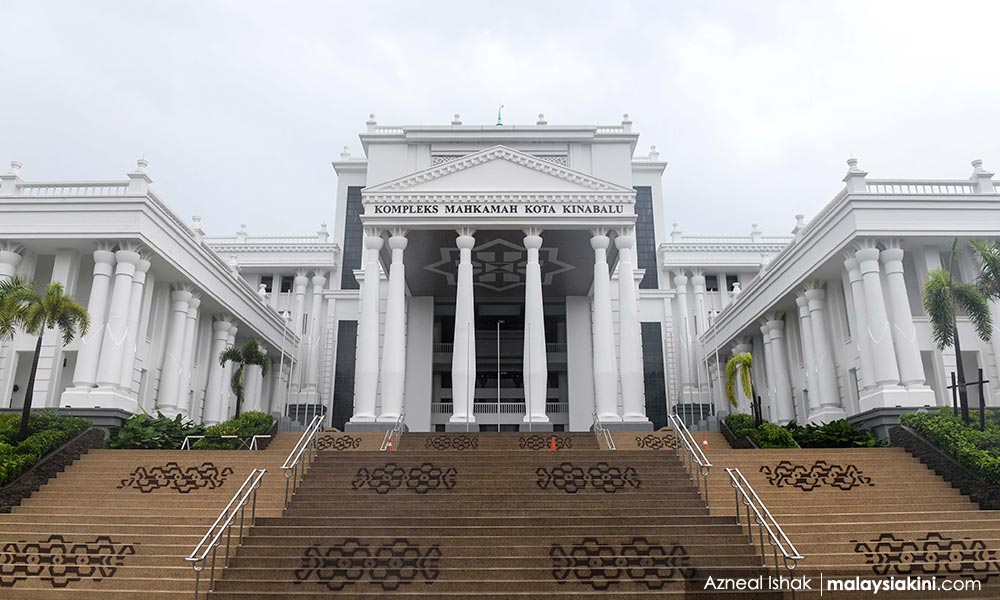
The SLS filed the suit at the Kota Kinabalu High Court on June 9, 2022, seeking a judicial review of the 2022 gazette.
It named the attorney-general of Malaysia as the respondent.
As a matter of procedure, the courts must grant leave (permission) before any judicial review can proceed to argue the merits of the case.
This stage has yet to be reached.
The Kota Kinabalu High Court had granted leave for the case to proceed on Nov 11, 2022, but the federal Attorney-General’s Chambers (AGC) appealed the case to the Court of Appeal.
The AGC reportedly argued that constitutional provisions under Articles 112C and 112D are not open to a court challenge because they concern non-justiciable financial and political considerations.
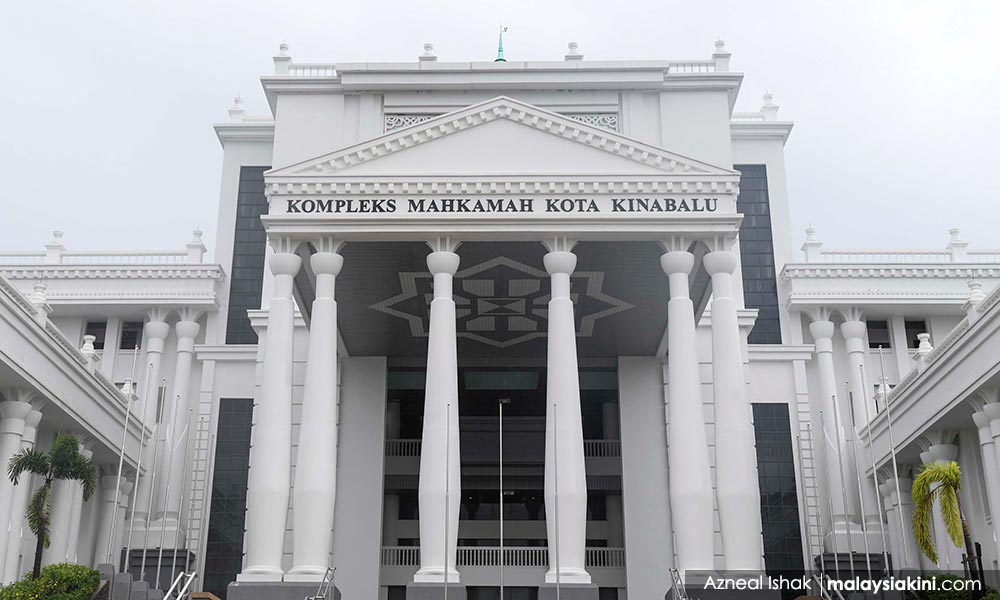
During proceedings at the Court of Appeal on May 16, the court also allowed the Sabah government - represented by law firm Messrs FT Ahmad & Co - to intervene in the case.
Bizarrely, the firm’s lawyer Tengku Fuad Tengku Ahmad argued that SLS has no locus standi in the judicial review, and there is no need for the judicial review because the Sabah government and federal government are already reviewing the grant.
He also reportedly argued that Articles 112C and 112D of the Federal Constitution are an “aspiration” and are not a mandatory or absolute right of Sabah.
His controversial assertions reverberated back home, as Sabah politicians demanded state attorney-general Nor Asiah Mohd Yusof’s resignation for Fuad’s statements that contradicted the state government’s official position.
During case management on June 18, Nor Asiah herself appeared on behalf of the Sabah government to inform that Messrs FT Ahmad & Co’s services have been terminated and her chambers would be handling the case for the Sabah government.
She also clarified that the state government is not appealing against the Kota Kinabalu High Court’s decision to grant leave for the case to proceed.
In addition, she said the state government retracted all submissions Fuad had made regarding SLS’s locus standi, and the submissions referring to Articles 112C and 112D as being “an aspirational” rather than an absolute right.
Court of Appeal judges Ravinthran N Paramaguru, Mohd Nazlan Mohd Ghazali, and Choo Kah Sing have fixed June 18 for the decision of the federal government’s appeal.