
KINIGUIDE | Parallel pathway - what is it and why is it an issue?
Editor’s Note: Updated to reflect the UK General Medical Council’s position on the FRSC Ed and the number of cardiothoracic surgery specialists in Malaysia.
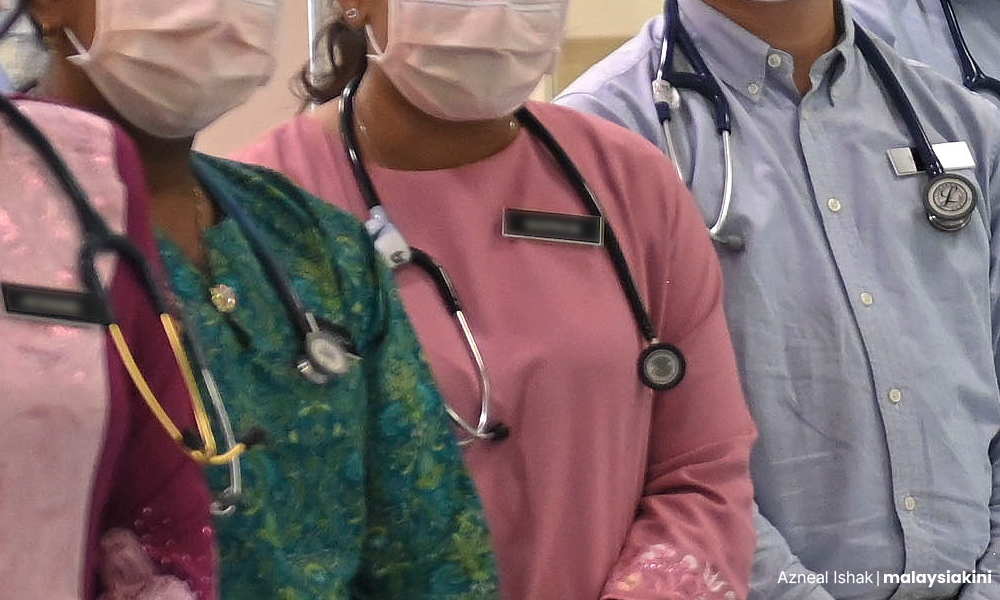
KINIGUIDE | Over the past weeks, various quarters have locked horns about the issue of parallel pathways for medical specialist training.
This is after the government said it is looking to amend the Medical Act 1971 to accommodate such pathways.
This Kiniguide explores what it’s about, how it cropped up and why some are objecting to the law change.
What is a parallel pathway programme?
This programme allows Malaysian healthcare professionals to seek specialist training for selected postgraduate qualifications abroad, to mitigate the shortage of specialists in the country.
Why are parallel pathway programmes important?
Malaysia has a severe shortage of specialists but not enough local programmes for specialist training.
According to the Malaysian Medical Association, Malaysia’s population-to-specialist ratio is 10,000 to four, much lower than the Organisation for Economic Cooperation Development’s (OECD) average of 10,000: 14.3.
“There are fewer than 13,000 medical specialists in the public and private healthcare sectors. Around 9,000 medical specialists serve in the ministry’s facilities,” MMA president Dr Azizan Abdul Aziz was reported by The Star as saying.
The only specialist training programme for cardiothoracic surgery in Malaysia is a joint venture by Universiti Teknologi Mara (UiTM) and Institut Jantung Negara, but UiTM is only open to bumiputera.
However, the current conundrum has prompted UiTM to temporarily open up its cardiothoracic surgery programme to non-bumiputera trainees, until a similar programme can be set up at Universiti Malaya.
According to the National Specialist Registry, there are 88 specialists nationwide who list cardiothoracic surgery as their first or second speciality.
This includes those practising in both private and public healthcare systems.
Why is this issue hitting headlines?
On March 20, four graduates of a parallel pathway training with the Royal College of Surgeons Edinburgh in cardiothoracic surgery filed a joint judicial review application in the Kuala Lumpur High Court.
Cardiothoracic surgery generally refers to surgery for the heart, lung, oesophagus and other related organs in the chest.
The judicial review was to contest the Malaysian Medical Council’s decision on Dec 21 last year to reject the graduates’ application to register themselves on the National Specialist Register (NSR).
The MMC reportedly refused the registration because it said the council does not recognise the Fellowship of the Royal College of Surgeons of Edinburgh in Cardiothoracic Surgery (FRCS Ed) qualification.
Why did MMC make this decision?
In a letter to the graduates on Dec 21, 2023, MMC chief executive Dr Mohamed Anas Mohamed Hussain cited Section 14B of the Medical Act.
The section states only practitioners with recognised specialised qualifications may be registered as specialists, health news website CodeBlue reported.
He also referred to a list of recognised postgraduate qualifications endorsed by the MMC in 2017, which does not include the FRCS Ed for cardiothoracic surgery.

In a press statement on March 25, health director-general Dr Muhammad Radzi Abu Hassan also said the FRCS Ed for cardiothoracic surgery was never among postgraduate qualifications endorsed by the government.
Who are the four graduates seeking judicial review?
They are Dr Nur Aziah Ismail, Dr Syed Nasir Syed Hassan, Dr Chong Kee Soon and Dr Lok Yuh Ing.
Aziah and Chong are employed at the National Heart Institute (IJN) while Syed Nasir and Lok are serving in the Health Ministry.
Are they the only health professionals mounting a suit?
No, according to CodeBlue, this is the third known lawsuit on this issue.
The other two are a lawsuit by a neurosurgeon with the FRCS Ireland qualification in neurosurgery and six pathology graduates in medical genetics from Universiti Sains Malaysia.
The High Court has granted leave for both of these judicial review applications.

Why did the four pursue ‘unrecognised’ qualifications?
In their court filing, they submitted that the MMC had repeatedly signalled that parallel pathway for surgery and the FRCS Ed is recognised.
This included a Nov 26, 2019 email by then MMC’s Medical Education Committee (MEC) chairperson Dr Victor Lim.
In his email to the Malaysian Association of Thoracic and Cardiovascular Surgery (MATCVS), he said the FRCS Ed qualification “is a recognised postgraduate qualification for registration with the NSR.”
The graduates also said the MMC had published a list of recognised postgraduate qualifications which included the FRCS Ed on the NSR website.
This information was also circulated in two attachments in an email to stakeholders on May 9, 2023, and both attachments showed the FRCS Ed as a recognised qualification for NSR registration, they said as reported by CodeBlue.
However, in a letter to the health news website, an anonymous former MMC member said the Royal College of Surgeons of Edinburgh’s Cardiothoracic Surgery parallel training programme was “started without due process” by the MATCVS without seeking clarification from the MMC until 2022.
“It is not the duty of the MMC to tell programmes that they are not recognised. It is the duty of the organisers,” said the former member, who declined to be named following verbal attacks against colleagues who stated their views against the parallel pathway programme.
Meanwhile, Radzi, in a statement said the MMC denied that it had ever recognised FRCS Ed in cardiothoracic surgery.
What is FRCS Ed, is it granted by a credible organisation?
According to the British Council, FRCS is a professional qualification required to practise as a surgeon in the UK and the Republic of Ireland.
“Exams (written, oral and clinical) play a crucial part in the maintenance of standards.”
The FRCS Ed refers to the certification granted by the Royal College of Surgeons of Edinburgh, a professional organisation of surgeons.
RSC Edinburgh is the oldest surgical college in the world and was founded in 1505 by Royal Charter, according to its website.
Other FRCS qualifications are the FRCS Eng, FRCS Glasg and the FRCSI from the Royal College of Surgeons of England, the Royal College of Surgeons of Glasgow and the Royal College of Surgeons of Ireland respectively.
Does the UK medical regulator recognise the FRSC Ed?
Yes. According to the British High Commissioner to Malaysia, Ailsa Terry, the UK General Medical Council (GMC) recognises the qualification and others issued by “prestigious Royal Colleges”, contradicting a news report which quoted the GMC saying the qualification is insufficient to register as a specialist.
In sharing this, Health Minister Dzulkefly Ahmad also accused health news website CodeBlue of spreading misinformation on the issue.
In an article on May 13, Codeblue reported the UK GMC saying the cardiothoracic surgery qualification from Malaysia’s parallel pathway programme with the Royal College of Surgeons of Edinburgh was insufficient for specialist registration in the UK.
“The FRCS Edinburgh in Cardiothoracic Surgery does not lead to the award of a CCT (Certificate of Completion of Training) and therefore does not entitle an individual to specialist registration,” a UK GMC spokesperson based in London told CodeBlue.
“The qualification is recognised as an acceptable postgraduate qualification for the purpose of applying for full registration and a licence to practise with the GMC provided it was following examination, but not specialist registration.
“It’s also important to highlight that the qualification approved by the GMC for the purpose of speciality training in the UK – that leads to the award of a CCT and subsequent recognition onto the specialist register – is the Intercollegiate Specialty Fellowship Examination (ISFE). Not the FRCS.”
Codeblue said it stands by the decision to publish the letter and said the UK GMC has not contacted it demanding a retraction.
Are all parallel pathway training affected?
According to the MMC, it is not against parallel pathways for training and will not discontinue such avenues.
“MMC’s interest is in ensuring that the training programmes conducted in the country fulfil the relevant legal and statutory requirements.
“In fact, there are several programmes in the parallel pathway which have been recognised by the MMC, while in the case of those still not yet recognised, the relevant bodies have been informed to take steps to fulfil the relevant legal requirements for accreditation and recognition,” Radzi said.
What is the government doing about this?
The Health Ministry has set up a task force to study the issue.
The ministry also discussed the matter with the Higher Education Ministry, MMC and the Malaysian Qualifications Agency to find a joint solution to ensure graduates from parallel pathways meet prescribed standards to practise in Malaysia.
“The Higher Education Ministry is of the view that these students and graduates should not become victims of any technical issues that can be resolved,” Higher Education Minister Zambry Abdul Kadir said.

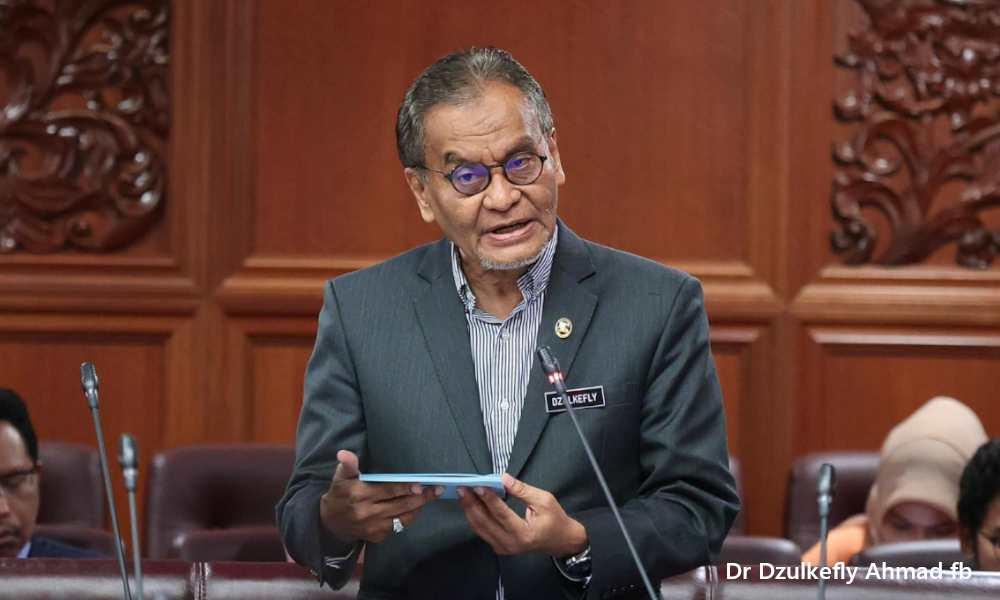
Health Minister Dzulkefly Ahmad also said the ministry is proposing amendments to the Medical Act to support parallel pathway trainees to be registered as specialists, pending cabinet approval and presentation in Parliament in June.
However, this has been met with objections from various parties.
Who is objecting to the amendment and why?
Several quarters, including those within the medical field, have objected to the proposal to change the law to facilitate parallel pathways for specialist training.
Among them is paediatric surgeon Dr Dayang Anita Abdul Aziz who said parallel pathway training is not equivalent to local university training.
“In the end, are we really producing safe specialists? We amend the law to let them in,” she said in an interview with CodeBlue.
One concern, she said, is that the training is run by “societies - which are not legally registered as higher education providers, but conducted through a memorandum of understanding with international colleges.”
As such, they are not equivalent to accredited local postgraduate courses, she said.
Malay Consultation Council education bureau chairperson Ibrahim Abu Shah also held a press conference to say “There is no need for such haram (illegal) programmes to be accredited.”
Ibrahim, who was vice-chancellor of Universiti Teknologi Mara, also claimed the FRCS Ed qualification “is not recognised by their own university”, but it is unclear which university he is referring to.
He alleged that the ministry had been “misled” about the FRCS Ed or did not have all the facts leading it to propose amending the law, Utusan Malaysia reported.
Ibrahim claimed Singapore and Australia do not practise parallel pathways for medical specialist qualification but this is not entirely true.
Australia provides a pathway for medical specialists who have overseas qualifications and want to practise in Australia, which outlines ways for which an overseas qualified specialist is assessed and can be registered to practise in the country.
Likewise, parallel pathway programmes for specialists are recognised by regulators in Singapore.
Who supports parallel pathways?
Among vocal medical professionals speaking in favour of allowing parallel pathways for specialist training is Health Ministry nephrologist Dr Rafidah Abdullah, who noted that all her specialist training was conducted abroad.
Four senior specialists - Dr Musa Nordin, Dr Zulkifli Ismail, Dr Erwin J Khoo and Dr Timothy Cheng - in a statement noted that despite the various specialist postgraduate degree programmes, “at the present production rate, only 19 percent of the total doctors in the public sector are specialists instead of the targeted 30 percent.”
The specialists said the national postgraduate medical curriculum launched in 2021 can be used to provide a unified structure for specialist training through postgraduate degrees or through parallel specialist training pathways.
They also stressed that the issue with the surgical parallel pathways for training arose due to “two to three surgical-based pathway programmes poorly managed by the MMC” and does not apply to other specialities.
For example, they said, the UK Royal College of Paediatrics and Child Health formalised its work-based assessment in 2005, while Malaysia’s paediatrics parallel pathway followed suit five years later.
“Virtually all the other programmes had consolidated their curriculum training, postings, work-based assessments and exit criteria, among others, since 2014,” they said.
Meanwhile, the MATCVS claimed the MMC made a crucial decision not to recognise parallel pathways for cardiothoracic surgery “without a single cardiothoracic surgeon being present during the deliberation.”
Bagan MP Lim Guan Eng supports the MATCVS’ position arguing that the Royal College of Surgeons of Ediburgh’s pedigree is “unquestioned” in the medical field.
“Graduates of the parallel pathway programme are now serving in the best hospitals in the world, but face the risk of being disqualified as not good enough to serve at our local hospitals.
“What will happen then to all the patients at government hospitals awaiting life-saving surgery? Let us not sacrifice excellence and meritocracy for mindless bureaucracy.”