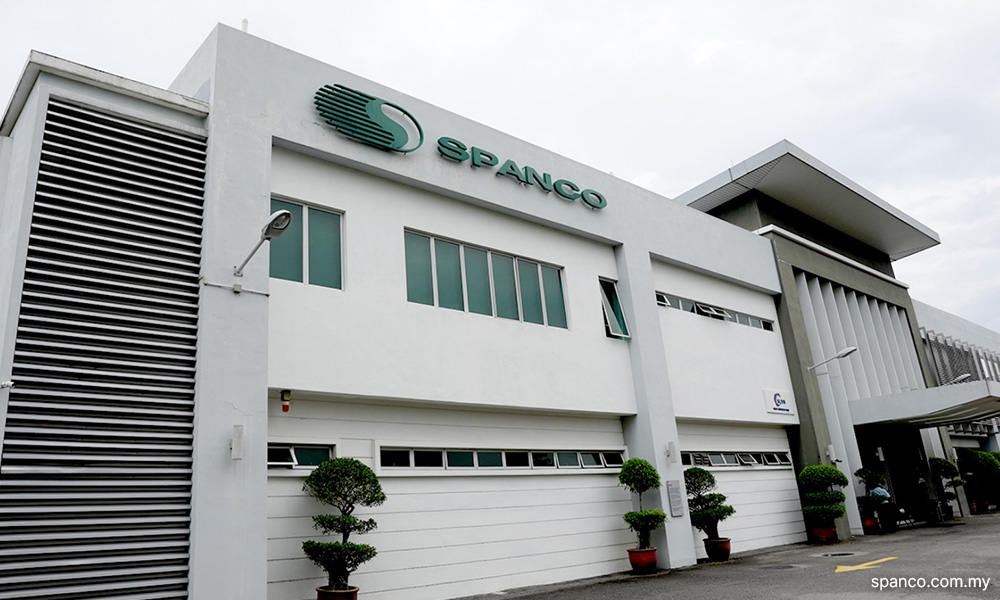

KINIGUIDE | What is Spanco and what do they do?
KINIGUIDE | For decades, the vehicle fleet management company Spanco Sdn Bhd held a lucrative contract to be the exclusive provider of saloon vehicles for the federal government.
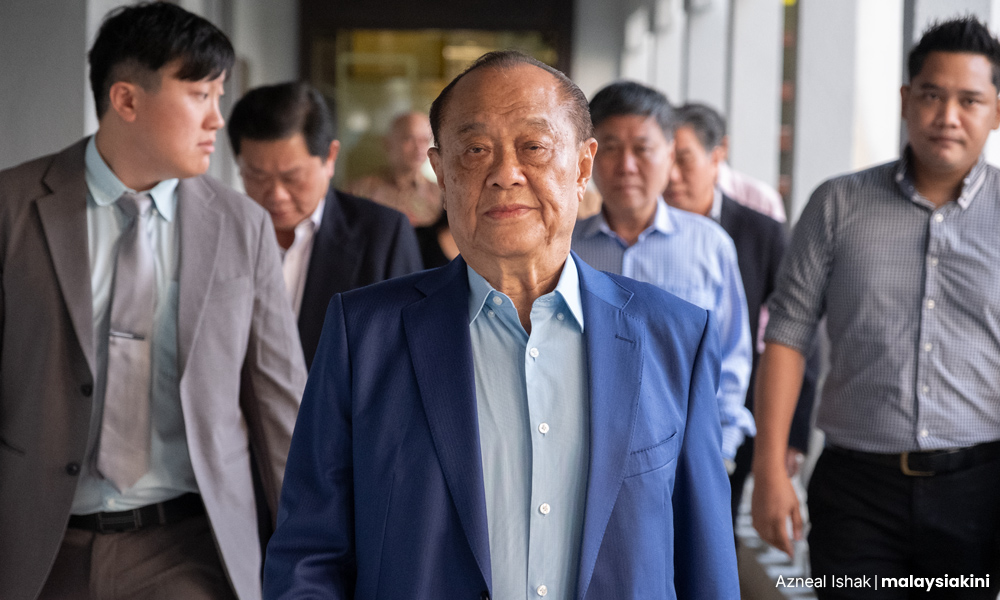
On April 3, however, its executive director and chairperson Robert Tan Hua Choon was charged with allegedly cheating the government when the contract expired and a new concession was offered via open tender.
Tan has claimed trial to the charges, but while the trial is pending, this KiniGuide will dwell on what the company is about.
Who owns Spanco?
According to the Companies Commission’s records based on filings made in September last year, Spanco’s shareholders are Jati Rata Sdn Bhd (46 percent), Tan (24.65 percent), his children Tan Han Chuan (14.67 percent) and Tan Ching Ching (9.68 percent) and Minhat Mion.
In turn, the holding company Jati Rata is owned by Cayaria Sdn Bhd (45 percent), Mohtar Abdullah (27.5 percent) and Shahrin Osman (27.5 percent), based on documents filed in February this year.
Azman Idris, Peter Lim, Md Raus Sharif, Shahrin and Han Chuan are listed as Spanco’s directors.
The record states that Spanco was incorporated on Aug 16, 1988, and has never undergone a name change, though a New Straits Times article from April 1998 refers to it as “Sistem Pengurusan Angkutan Nasional Company Sdn Bhd”.
What does Spanco do?
Since January 1994, Spanco held an exclusive 25-year concession agreement with the government to provide vehicles ranging from official cars for cabinet members, cars for the motor pools of government departments, and even police patrol cars.
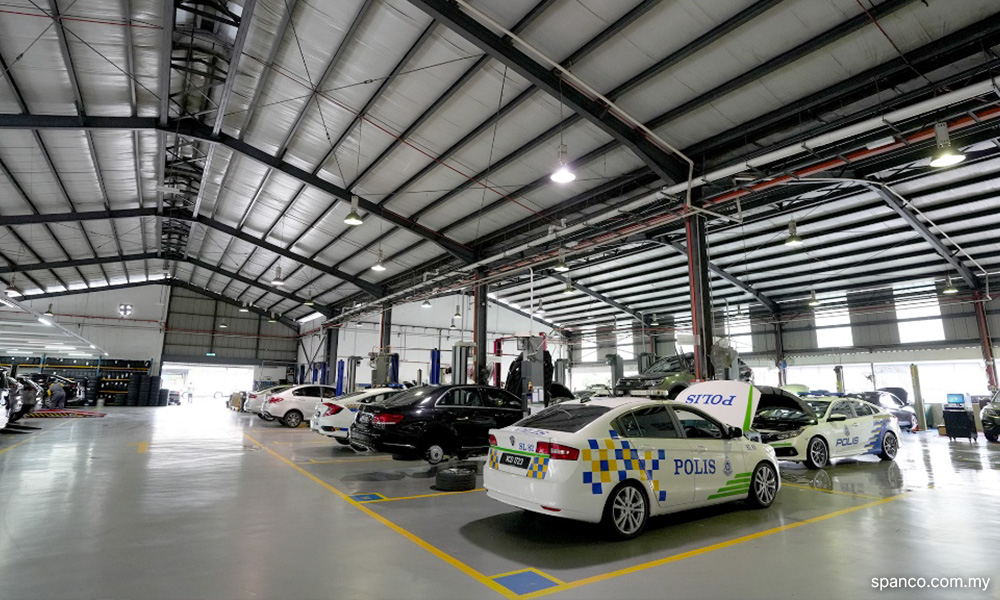
It is responsible for acquiring the vehicles and replacing them every four or five years, maintenance and repairs (including breakdowns and emergencies), and dealing with road tax, insurance, and summon records.
Its website claims to have a fleet of over 13,000 concession vehicles and a network of more than 400 service centres.
In 2015, it was reported that the government - Spanco’s only customer - is paying RM221.66 million a year to rent 10,963 Proton cars. They comprise seven different models ranging from RM973.84 per month to RM3,288.84 per month.
What about the contract?
The first concession agreement came about amidst the government’s privatisation drive in the 1990s. This entailed the government selling its fleet of 40,000 vehicles to Spanco, which would maintain it and lease it back to the government.
In April 1994, the de facto law minister at the time Syed Hamid Albar reportedly justified the move as being cheaper than the previous system for leasing vehicles.

He said it would only cost the government RM5,000 a month to lease a Mercedes Benz that would be returned and replaced with a new one every four years, compared to RM17,000 to RM21,000 to lease it from another company.
During his first stint as finance minister in the 1990s, Anwar Ibrahim reportedly told Parliament that while the monthly rates paid to Spanco were high, a study by an independent consultant found it offered various benefits.
“He (Anwar) said daily government tasks were carried out with greater efficiency for the benefit of national development.
“He added that the government was provided with four or five new cars a year, thus reducing maintenance problems and saving costs,” read a New Straits Times report on April 9, 1998.
The contract reportedly came with a clause stipulating that the government has to pay RM400 million if it terminates the contract before it expires, according to a Malay Mail report.
The contract expired at the end of Dec 31, 2018, prompting competition to bid for a new contract.
What about the new contract?
The new contract is for 15 years involving about 12,500 vehicles estimated to be worth RM300 million annually starting from the fifth year, according to a Malay Mail report in 2019.
Eight companies made submissions in response to the government’s request for proposals for the concession agreement, while Spanco’s first contract was pending the outcome of the open tender.
Bidders for the new contract included Spanco, a partnership between DRB-Hicom Bhd and Sime Darby Bhd, a partnership between Berjaya Group and Naza Group, Samling Group, Comos, and Go Auto.
Spanco ultimately won the contract in 2021 but events took an unexpected turn last year when Berjaya’s founder Vincent Tan took Spanco and the government to court, claiming that the tender rules were not being followed.
He claimed that the Berjaya-Naza consortium Cekap Urus Sdn Bhd was initially awarded the contract and was issued a letter of intent (LOI) by the Finance Ministry in 2018 because it was the lowest bidder.
The consortium is reportedly 51 percent owned by Berjaya, 29 percent owned by Naza, and 20 percent owned by Tunku Tun Aminah Maimunah Iskandariah Ibrahim – daughter of the current Yang di-Pertuan Agong.
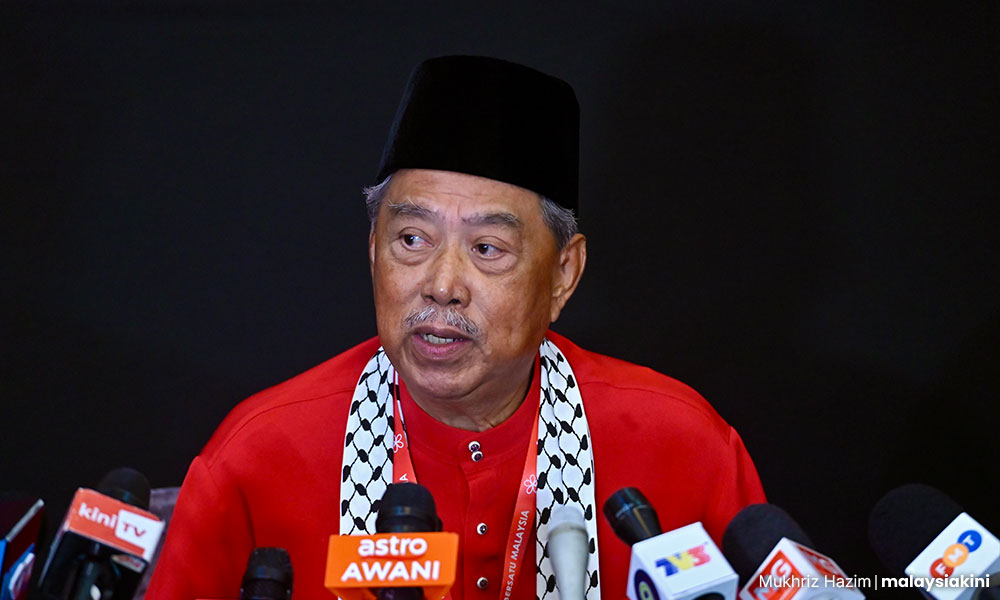
However, after Muhyiddin Yassin became prime minister following the events of the Sheraton Move, the LOI was terminated and the tender was awarded to Spanco instead for RM700 million more.
The revelation has prompted calls for an investigation.
The court proceedings between Cekap Urus, the government, and Spanco are still ongoing at the pre-trial stage after the Kuala Lumpur High Court granted leave for the judicial review on Aug 23 last year.
Meanwhile, in March last year, then-deputy finance minister Ahmad Maslan told Parliament he was informed that the contract was not awarded to the lowest bidder because it could not provide sufficient workshops and repair services.
“Based on that, it was given to Spanco because they have hundreds of workshops throughout Malaysia that could help with that. That’s as far as I’ve been briefed about the Spanco tender,” he said, according to the Parliament Hansard.
What are the charges against Robert Tan?
The charges against Tan pertain to a different aspect of the bidding process for the new contract.
According to the charge sheet against him, he had cheated the government by claiming in the tender documents that at least 30 percent of Spanco shares are bumiputera-owned. This supposedly took place between Feb 27 and Feb 28, 2019, in the Finance Ministry’s tender room.
The move supposedly prompted the Finance Ministry to award a RM3,966,386,628 contract to Spanco where it otherwise wouldn’t have done so.
The charge is framed under Section 420 of the Penal Code. It is punishable with between one and 10 years imprisonment, whipping, and a fine.
Tan has claimed trial to the charges.