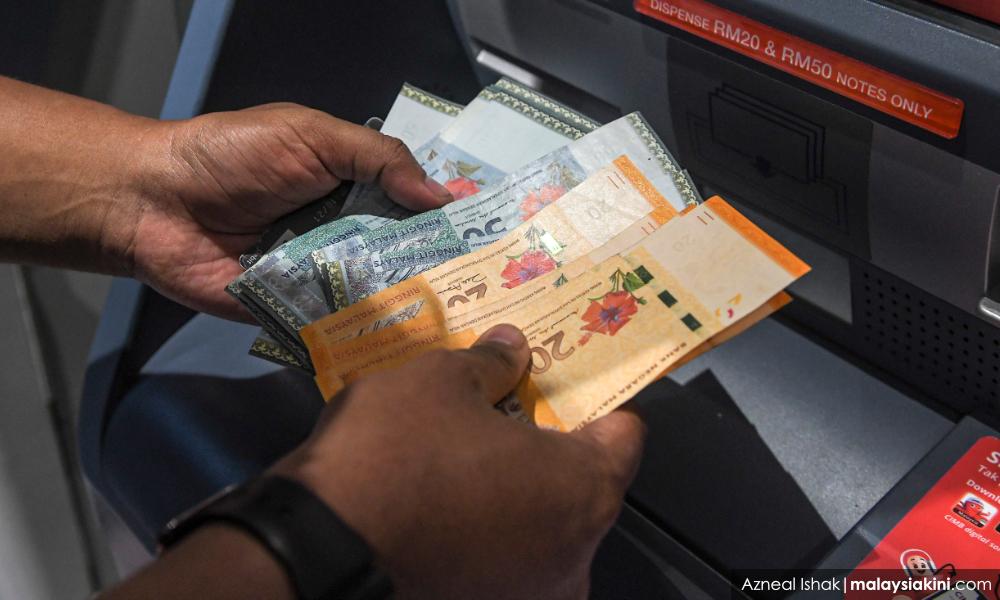

KINIGUIDE | The service tax changes starting today
KINIGUIDE | As announced under Budget 2024 last year, the service tax rate for a range of goods and services will be increased from six percent to eight percent starting today.
In addition, some goods and services not previously subject to service tax are now being taxed.
There are also exceptions to the increases to help cushion the impact of the revised tax scheme on the most vulnerable.
In this instalment of KiniGuide, we take a quick look at what’s changing, what’s staying, and why are these changes being made.
What is service tax?
Service tax is a tax collected on behalf of the government by businesses for a range of goods and services prescribed under the Service Tax Act 2018, especially (but not limited to) those listed under the Service Tax Regulations 2018 and subsequent amendments to those regulations.
It is not to be confused with the “service charge” imposed by some businesses - particularly restaurants - which is unrelated and does not go to the government.
The Royal Customs Department is responsible for enforcing service tax, including registering businesses required to impose service tax.
Before today’s changes, the service tax rate was six percent except for credit card fees. The latter is an RM25 flat rate per card per year.
What is changing?
Broadly speaking, anything that was already subject to the six percent service tax will be raised to eight percent - with some exceptions.
This includes services provided by hotels, nightclubs, massage parlours, private clubs, golf courses, casinos, digital services such as software and media streaming subscriptions, and domestic electricity usage except for the first 600kWh per month.
The exceptions that get to maintain the old six percent rate cover restaurants, bars, coffee shops and other food and beverage services, telecommunications services, and parking spaces.

Meanwhile, certain businesses that previously did not collect service tax are now required to do so, namely karaoke centres, repair and corrective maintenance services (apart from repair of residential buildings), and brokering and underwriting services (apart from those for medical or life insurance/takaful). The service tax rate for these services is eight percent.
In addition, a six percent service tax is imposed on logistics services with some exemptions. Notably, the delivery of documents, packages, and goods is subject to tax, but the delivery of food and beverages provided by eateries is not.
Traditional and complementary medicine (TCM) practitioners were originally required to collect eight percent service tax, but after some lobbying, they are no longer required to impose the tax at all starting today.
This covers the practitioners of the following services who are registered under the Traditional and Complementary Medicine Act 2016: Malay Traditional Medicine, Chinese Traditional Medicine, Indian Traditional Medicine, Homeopathy, Chiropractic, Osteopathy, and Islamic Medical Practices.
There is no change to service tax for credit card fees.
Why are things changing?
The newly revised service tax scheme is part of a broader move by the government to broaden its tax base (which ensures a stable source of government revenue) while rationalising its subsidy programme by ensuring only those who truly need help will receive it.
According to a list of frequently asked questions issued by the Finance Ministry, tax reforms are necessary to improve its services and welfare to the people.
“The change in service tax rate from six percent to eight percent does not involve services that are basic necessities or part of the lifestyle of people in this country.
“For example, frequently used services such as food and beverages, telecommunications, and vehicle parking maintain the six percent service tax rate. This includes the new service (taxable under service tax) namely logistics, which is subject to six percent service tax rate,” it added.
The audit firm Deloitte Malaysia predicted last year that the service tax changes would net the government an additional RM900 million this year.
Apart from the revised service tax, other tax measures under Budget 2024 include a high-value goods tax at a rate of five to 10 percent for goods such as cars, jewellery, and watches above a certain value.
It is expected to come into effect on May 1 and bring in RM700 million a year for the government.
What do critics have to say?
The Malaysian Physiotherapy Association and Private Practitioners Physiotherapy Association have jointly urged the government to exempt their services from service tax as it imposes an unnecessary financial burden on those seeking healthcare treatment.
This is especially the case for patients such as those with cerebral palsy, who would require lifelong treatment, Bernama quoted them as saying.
Meanwhile, the New Straits Times reported that restaurant owners are finding that the tax imposed on commissions for each sale via food delivery platforms is being increased to eight percent.
“The announcement (from the food delivery platform) took us by surprise […] We cannot change our pricing as we are already seeing a downturn in business in the last quarter of 2023,” an unnamed Kuala Lumpur restaurant owner reportedly told the NST.