
Ringgit to keep strengthening, trading at RM4.50 vs dollar year-end: MOF
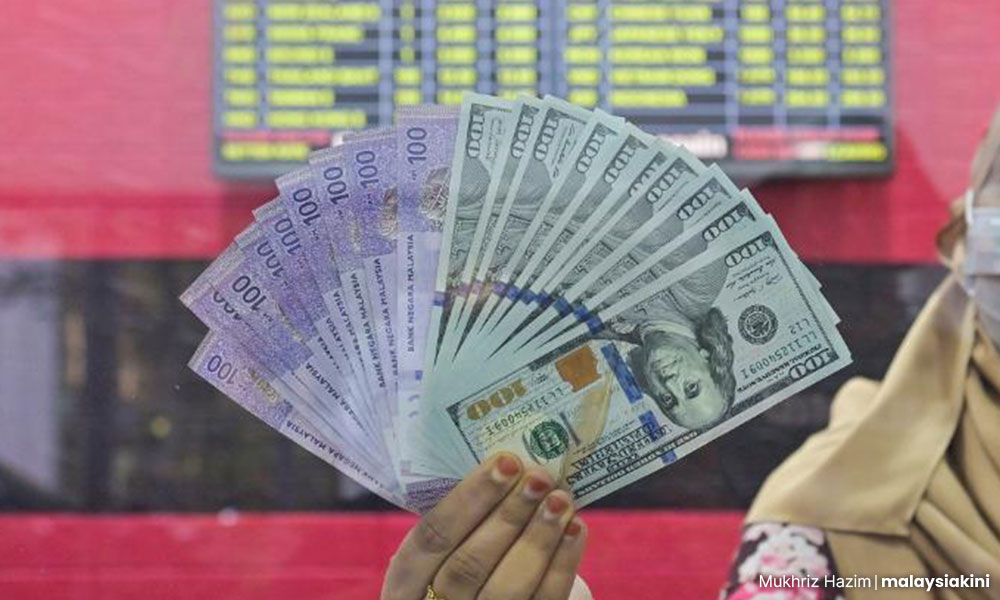
PARLIAMENT | The ringgit is expected to continue to strengthen this year, trading at RM4.50 against the US dollar by year-end, driven by the country’s positive economic performance, said Finance Minister II Amir Hamzah Azizan.
He said coordination between the Finance Ministry and Bank Negara Malaysia (BNM), as well as joint efforts between government-linked investment companies and government-linked companies will help to increase inflows into the foreign exchange market to strengthen the value of the ringgit.
PARLIAMENT | The ringgit is expected to continue to strengthen this year, trading at RM4.50 against the US dollar by year-end, driven by the country’s positive economic performance, said Finance Minister II Amir Hamzah Azizan.
He said coordination between the Finance Ministry and Bank Negara Malaysia (BNM), as well as joint efforts between government-linked investment companies and government-linked companies will help to increase inflows into the foreign exchange market to strengthen the value of the ringgit.
According to Bernama, he said BNM is also always ready to intervene in the foreign exchange market to curb currency movements that are considered excessive.
“For example, BNM will sell US dollars from its reserves to curb the excessive weakness of the ringgit.
“The efforts made by the government are effective and there is no need to use instruments such as pegging the ringgit or shutting down the ringgit exchange as was done during the Asian financial crisis,” Amir said during the question and answer session in the Dewan Rakyat today.
He said this in reply to a supplementary question from Lim Guan Eng (Harapan-Bagan) who wanted to know the government’s projection on the local note’s recovery and the steps taken by BNM to strengthen the value of the ringgit.
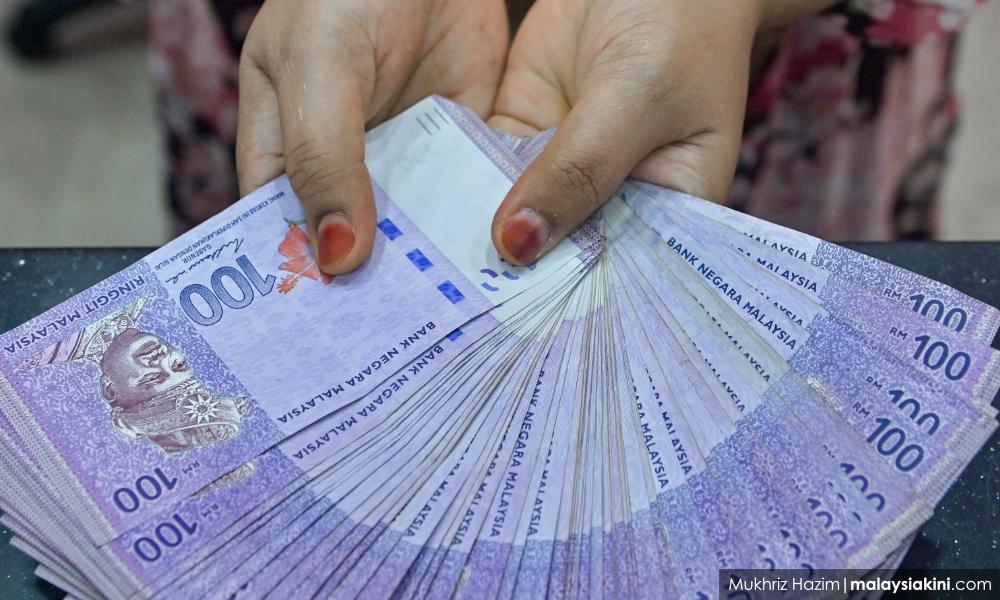
Amir said the ringgit’s movement is influenced by various factors, and the current depreciation is largely driven by the strengthening of the US dollar and the uncertainty of China’s economic growth, which has also affected other regional currencies.
As of Feb 28, the value of the ringgit has depreciated by 3.5 percent against the US dollar, in tandem with regional currencies such as the Japanese yen (-6.3 percent), the Thai baht (-4.7 percent) and the Korean won (-3.3 percent).
According to analysts, the ringgit’s value is currently between 8.0-10 percent lower than what it should be right now, he said.
Amir said BNM will continue to monitor the financial market and take necessary measures, including intervention in the foreign exchange market to curb excessive currency movements.
The central bank also monitors the conversion of export proceeds into ringgit by exporting companies, in addition to continuing efforts to encourage the use of the local currency for export settlements to reduce dependence on the movement of the US dollar.
“The government also controls overseas investments by private companies to reduce pressure on the ringgit, including encouraging them to prioritise domestic investments as well as delaying new overseas investments.
“Foreign investments implemented also need to be managed prudently, such as hedging foreign currency exposure and bringing back proceeds from overseas investments to reduce the high pressure on the ringgit," he said.
Low OPR factor
Amir said the low level of the overnight policy rate (OPR) is also a main reason for the declining ringgit.
According to him, the country’s OPR increase is lower compared to countries like the US, Thailand, the Philippines, Indonesia, South Korea, and India.
“Since March 2022, the US central bank raised interest rates sharply and aggressively. What was initially in the range of 0-0.25 percent was increased by 525 basis points to the range of 5.25-5.50 percent within 16 months.
“At the same time, the key policy rates of regional countries such as Thailand, the Philippines, Indonesia, Korea, and India also saw an increase of 200 to 450 basis points. The increase in Malaysia’s OPR was only 125 basis points from 1.75 percent to 3.00 percent for the same period.
“The lower OPR increase compared to other countries can be said to be the main reason for the ringgit’s decline compared to those countries,” he said during the ministerial question time.
He said the significant difference in interest rates with the US, which is as much as 250 points, for example, encourages foreign investors to move capital out of the domestic market to a market that provides higher returns.
At the same time, hiking the OPR will also affect the economy by burdening consumers with higher repayments, he added.