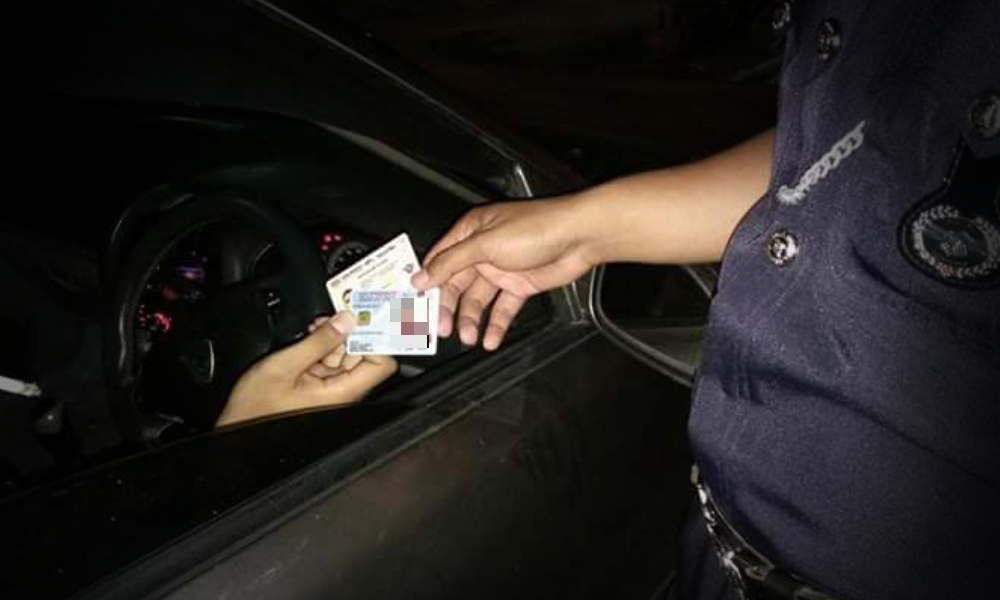

Fact-check: Can the cops search your phone?
In a recent incident, a man claimed to have been stopped and searched by the police while on his way to his car.
When the search uncovered copies of his customers’ identity cards on his phone, he was allegedly accused of being a loan shark and subsequently extorted for RM10,000.
In a recent incident, a man claimed to have been stopped and searched by the police while on his way to his car.
When the search uncovered copies of his customers’ identity cards on his phone, he was allegedly accused of being a loan shark and subsequently extorted for RM10,000.
While the purported extortion was clearly illegal and an investigation is underway, was it within the police’s powers to search his phone? And if so, what are the limits of those powers?
The police’s power to search and seize items - whether a phone, a pencil case, or an entire building - is governed by the Criminal Procedure Code.
Depending on the nature of the suspected offence, other laws such as the Security Offences (Special Measures) Act 2012 and the Communications and Multimedia Act 1998 may also be applicable.
For instance, Section 116B of the Criminal Procedure Code and Section 249 of the Communications and Multimedia Act stipulates that a police officer ranked inspector or higher, or another authorised officer, “shall be given access to computerised data whether stored in a computer or otherwise” during a search.
This does not just mean simply turning over your phone but also passwords, encryption keys, and whatever else necessary to make the data readable.

Refusing to comply with police instructions may be seen as “obstruction”. If charged and found guilty, this is punishable by a fine up to RM20,000, up to six months imprisonment, or both.
Section 248 of the Communications and Multimedia Act further stipulates that the search and seizure may be conducted without a warrant if an officer ranked inspector or higher believes the delay in seeking a warrant could jeopardise an investigation (eg if there could be tampering or destruction of evidence of a crime).
Must be part of probe
Of course, this does not mean the police and other enforcement agencies can search people’s phones on a whim, as a search must be part of an investigation.
As noted above, the police officer conducting the search must be ranked inspector or above.
The Bar Council’s Red Book, which is a pamphlet providing a quick guide on a person’s legal rights during a police search or arrest, says the police may search your phone only if they suspect you have done something illegal, you are being investigated for a crime, or you have been arrested on suspicion of committing a crime.
During the search, it advises that you take note of several things such as their name, rank, and service ID, and ask for the reason for wanting to check your phone.
If you are unsure, the Bar Council says you may call a lawyer for advice, or ask to be taken to the nearest police station for the search to be conducted there.
In 2019, then deputy home minister Mohd Azis Jamman similarly advised members of the public to ask for the police officer’s identification in the event of such a search in case of any breach of standard operating procedures.
He said complaints about breaches in procedure may be directed to the nearest police station or at Bukit Aman.
Apart from the police itself, the Independent Police Conduct Commission (IPCC) also has powers to receive complaints, investigate and act against police misconduct.
However, as of the time of writing, the commission has yet to be set up despite having taken over the Enforcement Agency Integrity Commission’s oversight of the police.
On Nov 17 last year, Deputy Home Minister Shamsul Anuar Nasarah said the IPCC is expected to be fully operational early this year.