
March 31 deadline for employers to complete migrant workers' legalisation
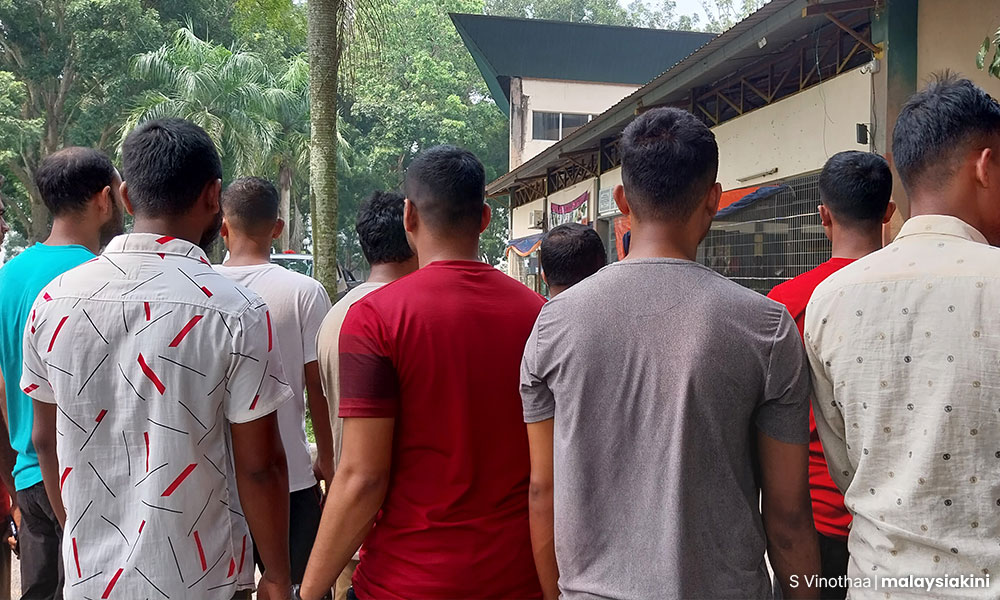
Employers who have applied to legalise their migrant workers under the Labour Recalibration Programme 2.0 have until March 31 to complete the remaining process for permit approvals.
Home Minister Saifuddin Nasution Ismail today said since the online application phase ended last Dec 31, employers have been notified to be present for verification and screening of their workers.
“After the online phase closed...
Employers who have applied to legalise their migrant workers under the Labour Recalibration Programme 2.0 have until March 31 to complete the remaining process for permit approvals.
Home Minister Saifuddin Nasution Ismail today said since the online application phase ended last Dec 31, employers have been notified to go to the Immigration Department for verification and screening of their workers.
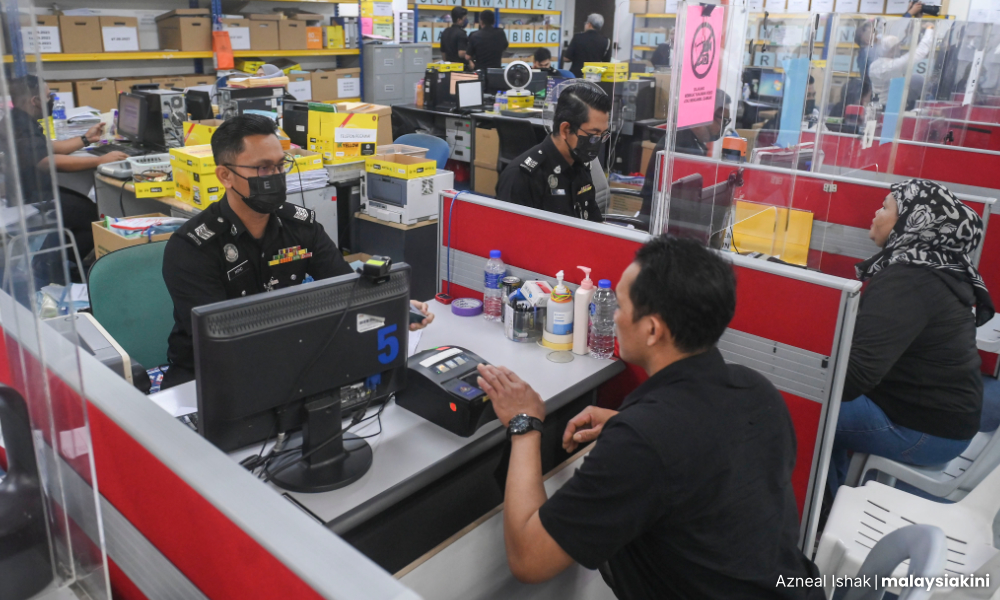
“After the online phase closed, the Immigration Department must screen the employers for valid company records.
“They also need to bring along their workers for biometric verification," he said during a press conference after a visit to the Selangor Immigration Department headquarters in Shah Alam.
Employers who fail to respond to the notifications and legalise their workers will be subject to action under the Immigration Act 1959/63, including possible jail term and a compound of up to RM50,000 per worker, he warned.

"I feel that (action) is reasonable after one year of registration, followed by three months of notifications.
“After that time if the employer does not come forward, it means they are not interested in hiring migrant workers,” Saifuddin said.
Overall, employers had applied to legalise some 1.1 million workers throughout the registration period last year, contributing to a threshold of 2.4 million migrant workers, the minister added.
The Selangor Immigration Department is located on two floors of the decades-old state government complex, with one large room allocated for hundreds of workers sitting in rows waiting for their employers’ numbers to be called.
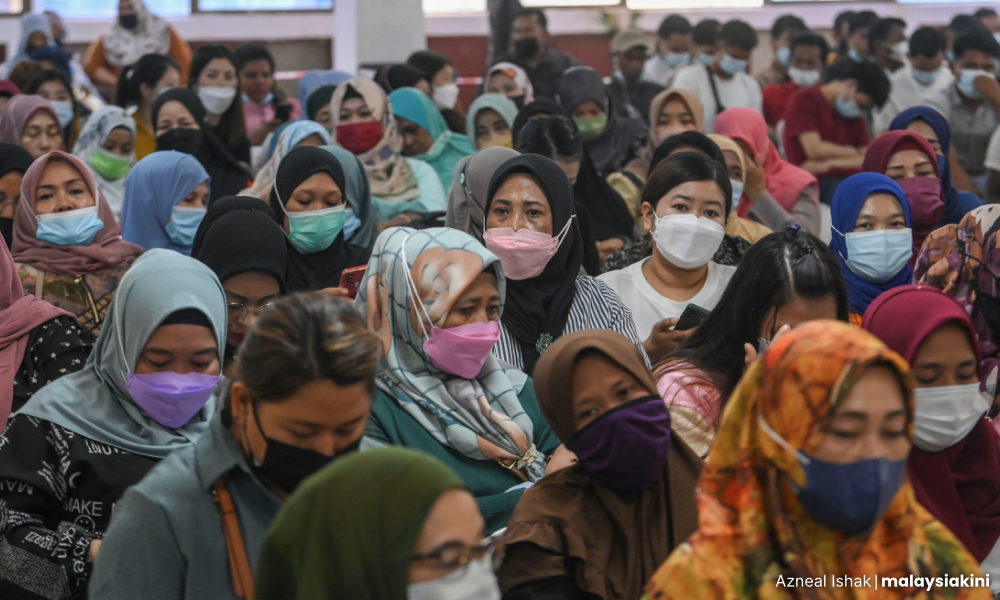
Saifuddin said during the visit he received feedback on the ongoing process, including necessary improvements to the infrastructure.
'Ongoing operations’
At the same time, Saifuddin said the Immigration Department will continue to crack down on undocumented migrants, with 168 operations carried out so far this year and 776 migrants arrested, as well as eight employers.

"Immigration through its profiling has identified hotspots (for undocumented migrants),” he added.
Saifuddin, however, declined comments on a rising trend of civilians taking matters into their own hands, including conducting inspections of businesses suspected to be run by foreign workers.