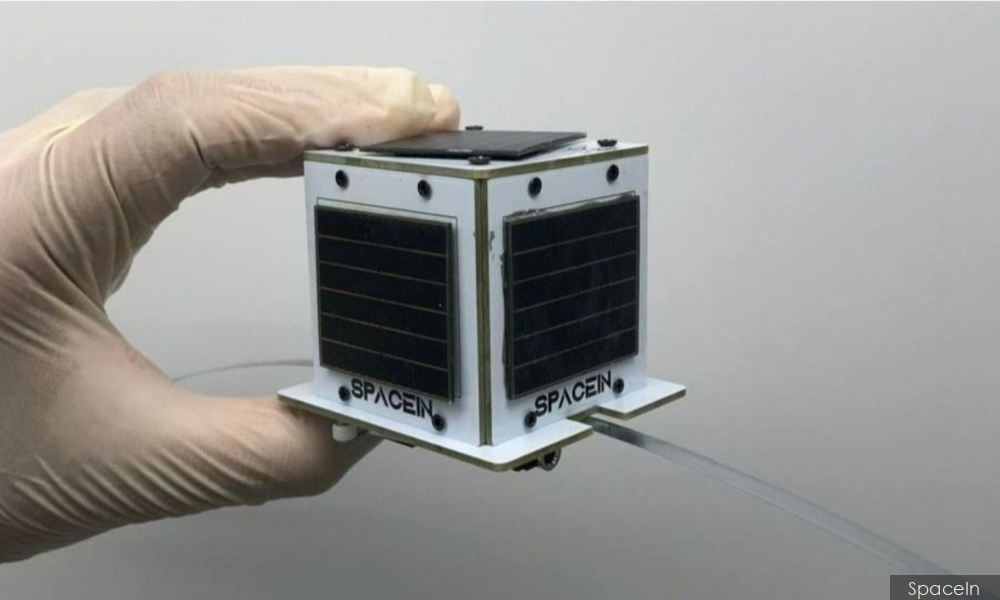

USM sends Malaysia's first picosatellite aboard SpaceX
Universiti Sains Malaysia (USM) and SpaceIn Sdn Bhd, a USM spin-off company involved in small satellites and Internet of Things (IoT) services, have launched the country’s first picosatellite, SpaceANT-D yesterday.
The satellite was onboard a SpaceX Falcon 9 rocket that took off from Vandenberg Space Force Base, California at 2.47am local time, the university said in a statement.
Universiti Sains Malaysia (USM) and SpaceIn Sdn Bhd, a USM spin-off company involved in small satellites and Internet of Things (IoT) services, have launched the country’s first picosatellite, SpaceANT-D, yesterday.
The satellite was onboard a SpaceX Falcon 9 rocket that took off from Vandenberg Space Force Base, California at 2.47am local time, the university said in a statement.
"SpaceANT-D will be deployed by Alba Orbital in seven to 10 days and the first signals will be beamed to an earthbound station. The 5 cubic cm SpaceANT-D, weighing less than 250g, will demonstrate storing and transmitting of data for IoT applications,” USM said.
The mission was a joint venture between USM, SpaceIn, and the Malaysian Amateur Radio Transmitters’ Society (Marts) and is an important achievement in the country’s efforts to achieve the Malaysia Space Exploration 2030 goals.
SpaceIn chief executive officer Norilmi Amilia Ismail believes that there will be cost reductions in the use of small satellites and will offer better opportunities for everyone to use space technology to solve various industrial and daily problems.
"SpaceIn is focusing on the agricultural, forestry and oil and gas industries as potential areas where SpaceANT-D can be used,” she said.
SpaceIn is a winner of the Superb accelerator programme run by Teraju and has used the grant it won to finance the development of SpaceANT-D.
The company has also received funds from Cradlefund to develop a satellite data centre in USM.
- Bernama