
Abang Jo repeats 'control crocodiles' claim in seeming push for Baram dam
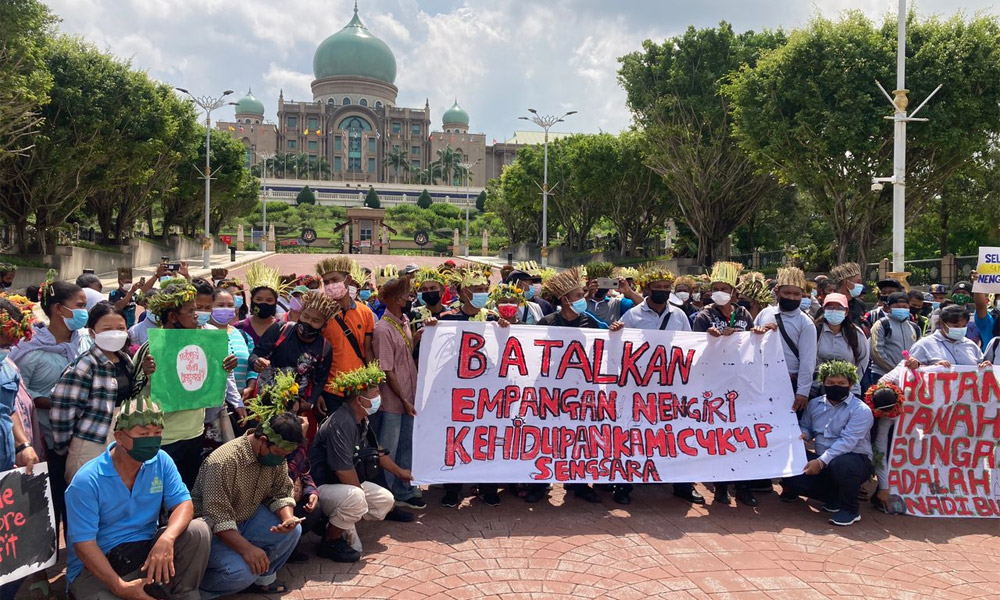
This has prompted concern among local groups, who see his repeated claims to be an attempt to push for the Baram dam project, which was shelved in 2015 by then-chief minister Adenan Satem following protests.
At the Parti Pesaka Bumiputera Bersatu (PBB) convention in Sibu yesterday, Abang Johari repeated his controversial claim that dams could drive away crocodiles and help the natives.
Repeating his claim of "increasing human-crocodile conflicts", he said building cascading dams with...
Sarawak Premier Abang Johari Openg has repeated his argument that building dams in rural settlements, including in Baram, could help reduce crocodile infestation and attacks.
This has prompted concern among local groups, who see his repeated claims to be an attempt to push for the Baram dam project, which was shelved in 2015 by then-chief minister Adenan Satem following protests.
At the Parti Pesaka Bumiputera Bersatu (PBB) convention in Sibu yesterday, Abang Johari repeated his controversial claim that dams could drive away crocodiles and help the natives.
Repeating his claim of "increasing human-crocodile conflicts", he said building cascading dams with waterfalls "will make the rivers less ideal for crocodiles to breed".
"At the same time, we can allow our fish like semah, tengadak and empurau to breed - people can generate income when we have a lot of fish," he was quoted as saying by Borneo Post yesterday.
He also claimed there have been requests for such dams to be built in Nanga Gaat in Kapit and Sungai Tutoh in Baram.
'Natives didn't ask for dam'
However, in a letter to Abang Johari (above) on Oct 6, the Save Rivers Network urged the premier to provide data and scientific evidence that crocodiles will be deterred from breeding in dams.
The group, which works with indigenous communities in the Baram region, also sought data to prove that human-crocodile conflict was on the rise.
Its manager Celine Lim added that former CEO of Sarawak Energy Torstein Dale Sjoveit was also reported to have said that cascading dams are impractical for Sarawak.

Lim said, Save Rivers has yet to receive a response to the letter - which was also copied to Natural Resources, Environment and Climate Change Minister Nik Nazmi Nik Ahmad.
Baram community elder Willie Kajan, on Oct 29, also told The Vibes that Abang Johari's claim that natives had asked for a dam to be constructed in Baram was untrue.
He added that Sungai Tutoh is also linked to the Mulu National Park, a Unesco World Heritage Site, and a dam would impact the park.
'Do you want crocodiles or electricity?'
Earlier, Abang Johari claimed the same Baram community which opposed the dam there in 2015, is now asking for a dam.
While officiating the Baram Regatta on Sept 30, he also said the people need to decide between crocodiles or electricity.
"You want crocodiles or electricity, it is up to you to decide. We don't force people.
"However, we must use logic so that it benefits the people without hurting the people and the environment," he was quoted by the New Sarawak Tribune as saying.
The planned Baram Dam was part of the Sarawak Corridor of Renewable Energy - aimed at supporting a 1,200-megawatt power station.
If built, it would be 162 metres tall with a reservoir covering an area of 389 kilometres.
Environment watchdog International Rivers estimated that at least 20,000 people from 25 Kenyah, Kayan and Penan longhouses would be displaced, but the Miri Residents Office estimates the number to be 6,000 to 8,000 people from 32 longhouses.

After protests, blockades and related campaigns by affected groups, then-chief minister, the late Adenan Satem announced "temporary" halting of the project.
Not so renewable?
Sarawak is gunning to be the leading supplier of renewable energy in the region, and is currently supplying electricity to Sabah and parts of Kalimantan in Indonesia.
There are also plans for Sarawak to sell electricity to Singapore, but the discussions are still in the early stages and would require laying underwater cables between Borneo and Singapore.
However, environmental groups say large hydroelectric dams are environmentally damaging, and electricity generated through them does not count as renewable energy in many jurisdictions of the world.