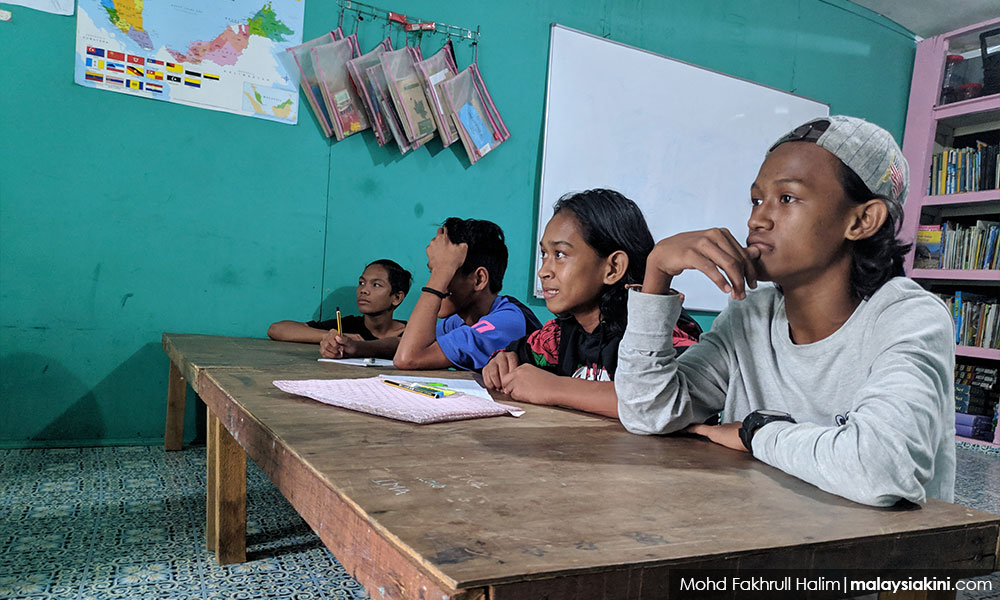

KINIGUIDE | How could constitutional changes make more people stateless?
Editor's note: This Kiniguide has been updated to reflect the latest developments as of Oct 15, 2024.
KINIGUIDE | The government has greenlit plans to amend citizenship laws enshrined in the Federal Constitution.
While it is being pitched as a progressive development, stakeholders and critics argue that most of the amendments are regressive and may worsen statelessness.
But what are these amendments, why are they deemed harmful by some, and in what way? This Kiniguide explores.
What are these proposed amendments to the Federal Constitution?
Before we go into the details, it should be noted that these proposed amendments have not been published by the government.
By convention, draft bills are not published until they are tabled to Parliament.
However, the government has conducted engagement sessions with some members of the civil society.
From that, the Malaysian Citizenship Rights Alliance (MCRA) has published a briefing document about the proposed amendments.
Suhakam also produced a statement on March 14, 2023 which detailed the latest draft of the amendments based on presentations by the Home Ministry to it, along with other civil society organisations and NGOs.
According to these documents, the government is proposing seven changes to the Federal Constitution meant to address various issues related to citizenship.
These include two amendments which give Malaysian mothers the equal right to confer automatic citizenship on children born overseas.
These amendments are to Article 14(1)(b), Sections 1(b) and 1(c) of Part II of the Second Schedule.
At present, those sections only allow automatic citizenship to those born overseas to a Malaysian father after Sept 16, 1963 (Malaysia Day), and not if only the mother is Malaysian.
The amendment is to replace the words "whose father" with "at least one of the parents", to grant women equal rights to pass down citizenship to children born abroad.
These amendments are largely supported, and came about after a sustained campaign by civil society.
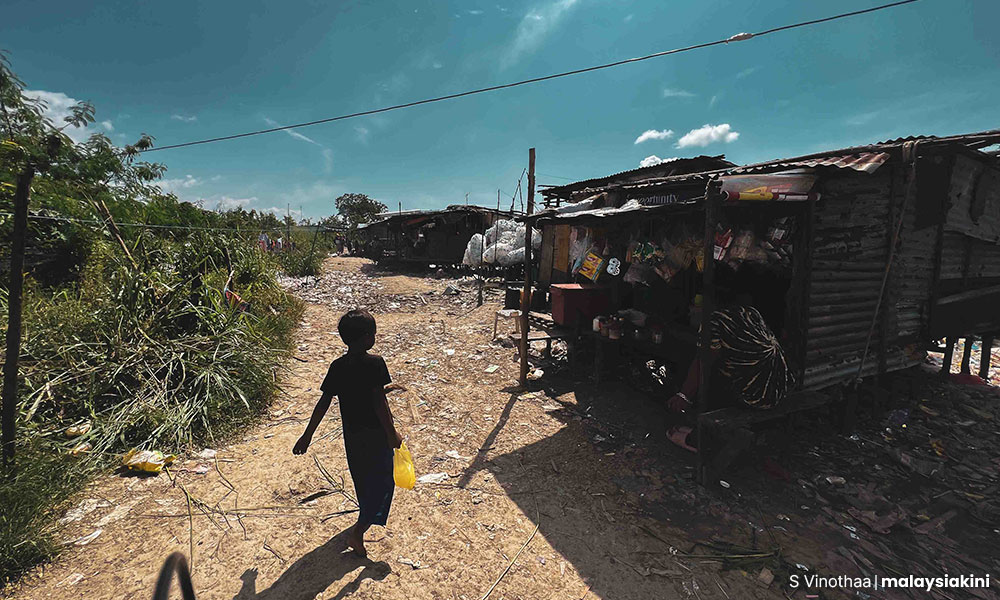
However, a limit of one generation has been imposed on the acquisition of citizenship by children of Malaysian women through force of law, Suhakam said. The following generations will have to register for citizenship.
The other five proposed amendments, however, are strenuously opposed by various quarters including those working with marginalised groups and stateless communities.
On March 22, 2024, it was announced that the government had dropped one of the five proposed amendments, specifically on citizenship for foundlings.
What are the five controversial proposed amendments?
These are the alleged proposed amendments, according to the MCRA and Suhakam.
1. Amending Section 19B, Part III of the Second Schedule: Foundlings
Currently, the section states that a "newborn child found exposed in any place", or a foundling, is assumed to have been born to a mother who is Malaysian or a permanent resident and is therefore automatically Malaysian.
The amendment seeks to change this from citizenship by operation of law to citizenship by registration.
This means abandoned children must register to obtain citizenship.
2. Second Schedule Part II, Article 14(1)(b) Section 1(a): Children of those "permanently resident"
Currently, the section states anyone born in Malaysia to at least one parent who is a citizen or someone "permanently resident" in Malaysia is automatically granted citizenship.
The amendment seeks to remove the words "permanently resident", so those born under those circumstances would have to register for citizenship.
According to Suhakam, this would affect communities such as the Orang Asal in rural Sabah who, despite being indigenous, do not have proper documentation.
3. Second Schedule Part II, Article 14(1)(b), Section 1(e) and Section (2)(3): Born in Malaysia, not citizen of other country
Currently, these sections state that anyone born in Malaysia, and is not born a citizen of any other country, is deemed a Malaysian.
The amendment seeks to remove this completely, removing pathways for those born in those circumstances to seek citizenship.
4. Article 26(2) as it relates to Article 15(1): Citizenship for foreign wives
Currently, Article 15(1) states that a non-Malaysian woman can apply to be a citizen as long as she is married to a Malaysian, subject to a list of criteria.
Article 26(2) states the government can reject this application if it is found the marriage is dissolved within two years of the "date of the marriage".
The amendment seeks to change the words "date of the marriage" to "date of obtaining citizenship".
This means the government seeks to revoke citizenship granted to a foreign wife, if her marriage ends within two years of her receiving Malaysian citizenship.
According to the Suhakam statement, any non-Malaysian woman who marries a Malaysian citizen, as well as the resulting offspring, will also have to demonstrate basic knowledge of Bahasa Malaysia as part of the condition for citizenship if the amendments are passed.
5. Articles 15(2), 15A, 19(1), 19(2), 23(1) and 23(3): Age limit for obtaining citizenship
The articles refer to the age limit for application of citizenship or for the government to approve the application, if the person meets a set criteria.
The amendment seeks to reduce this age limit from 21 to 18.
Why are these five amendments controversial?
In general, those opposing the proposed amendments argue they will worsen conditions for these groups.
They believe it could render more people stateless or place individuals in precarious positions.
The amendments related to foundlings, for example, would mean abandoned children will have to register for citizenship instead of being assumed to be Malaysian.
In reality, registering for citizenship is onerous and requires going through various bureaucratic procedures, resulting in long waits of many years.
Those against this proposed amendment say this would just render many foundlings and abandoned children stateless, barring them from accessing basic facilities like schooling and healthcare.
This is also the case for the third amendment, which takes away the pathway now used by marginalised groups to seek citizenship.
By removing this pathway, they can no longer seek citizenship by 'operation of law' but will need need to apply to be Malaysian, placing them in the bureaucratic labyrinth.
At the same time, the amendment to limit the age for seeking citizenship from 21 to 18 may lock out many current child applications, MCRA said.
"Currently, the time taken to process citizenship applications is fraught with bureaucratic delays, and one application cycle can take up to or longer than five years before it is typically rejected (without grounds), and the applicant must resubmit the application.
"The amendment will have the effect of shortening the time available for process and appeals, shutting the path to citizenship," the MRCA said.
Similarly, removing the words "permanently resident" from the related articles would mean children of permanent residents are no longer automatically granted citizenship at birth.
This would also apply to many indigenous people, who are "permanently residents" of Malaysia but are undocumented because they live in remote areas without access to registration facilities.
"Children born to Malaysian permanent residents who are stateless will no longer have access to citizenship by 'operation of law', thus passing on statelessness to a second generation and creating a new class of statelessness," the MCRA said.

The amendments which would allow the government to revoke citizenship of foreign wives, if marriages end within two years of obtaining citizenship, also remove safeguards for women, it said.
A foreign wife would have to renounce her citizenship to become Malaysian, and if her marriage ends before two years, she would be rendered stateless.
"The amendment may have the effect of trapping a previously foreign wife in a potentially violent marriage," MRCA said.
If they have such a dire impact, why is the government proposing such amendments?
The government has never published the proposed amendments, and as such has not had to explain its motivations to the public.
However, Home Minister Saifuddin Nasution Ismail in a media interview last June gave some clues.
He said through the amendments, the government seeks to end the practice of automatically granting citizenship to foreigners who reside in the country for a specific period.
"Previously, Sabah, through a decision by the National Security Council, allowed those who had resided for more than 30 years to be granted citizenship. But this was under (former prime minister) Dr Mahathir (Mohamad).
"Following this, individuals who have resided (in the country) between 15 and 30 years can be given permanent resident (status) and children born from these parents can be given citizenship.
"This has contributed to Sabah's population and we are facing difficulties until now. There are too many people so we want such practices to be stopped," he was reported as saying.
The reduction of the age limit for registering for citizenship from 21 to 18 appears to be addressed to Malaysian children who are granted foreign citizenship at birth through one parent.
"The government also wants to include that by age 18, a child who is given (Malaysian) citizenship and has foreign citizenship has to only choose.
"This is because we do not recognise dual citizenship and there is no need to wait until they turn 21."
It is unclear why the proposed amendments for foundlings were made, while the MCRA said the proposed amendments on foreign wives were made to curb "marriages of convenience".
The government has not addressed any of the concerns raised by civil society that the amendments could render many stateless.
What do law experts say?
Constitutional law expert Shad Saleem Faruqi in an opinion editorial in June said the amendments removing gender discrimination from laws for citizenship should be lauded.
However, the other amendments violate Malaysia's obligations under the UN Convention for the Rights of the Child and "may create a large new class of stateless persons".
"There are structural issues that prevent poor or uneducated families from meeting their kids’ registration requirements," he said.
He urged the amendments be published as a White Paper for public scrutiny before it is tabled in Parliament.
Other experts, like Maha Balakrishnan told the New Naratif, the amendments should be separated into two bills - the first to allow Malaysian mothers to confer citizenship on overseas-born children and the second for the remaining, more controversial amendments.
What do those campaigning against the five proposed amendments want?
They want the proposed amendments affecting foundlings (Section 19B, Part III of the Second Schedule), and the pathway for citizenship for marginalised groups (Second Schedule Part II, Article 14(1)(b), Section 1(e) and Section (2)(3)) to be revoked completely.
The other three proposed amendments relating to foreign wives, the "permanently resident" and reducing the age limit from 21 to 18, should be deferred until further engagements and studies can be done to understand their impact, the MCRA said.
The MCRA includes groups like Yayasan Chow Kit, Voice of Children, Family Frontiers and DHRRA Malaysia.
What happens now?
The government is pushing ahead to place the proposals in front of the Conference of Malay Rulers who are currently convening for three days ending today, Malaysia Now reported.
Under the Federal Constitution, the proposals must receive royal assent before they can be tabled in Parliament.
The amendments were tabled for a first reading in the March 2024 session of the Dewan Rakyat and will proceed for a second reading and debates in the 35-day sitting beginning Oct 14, 2024.
In the meantime, civil society groups opposing most of five the amendments have launched a #100 campaign, to mobilise 100 people from different groups in Malaysia, against the amendments.
They are urging those who identify as academics, professionals, youth leaders, child protectors, activists, religious leaders, Malaysian mothers, Malaysian fathers, NGOs and politicians, and who similarly oppose the amendments, sign the online petition for their specific groups.
On Oct 11, 2024, Home Minister Saifuddin Nasution Ismail during a media briefing expressed disappointment against critics who he claimed made sweeping statements, despite prior consultations.
In Parliament, activists had lobbied MPs including from Sabah and Sarawak to vote against the amendments.
Additional reporting by Zarrah Morden.