


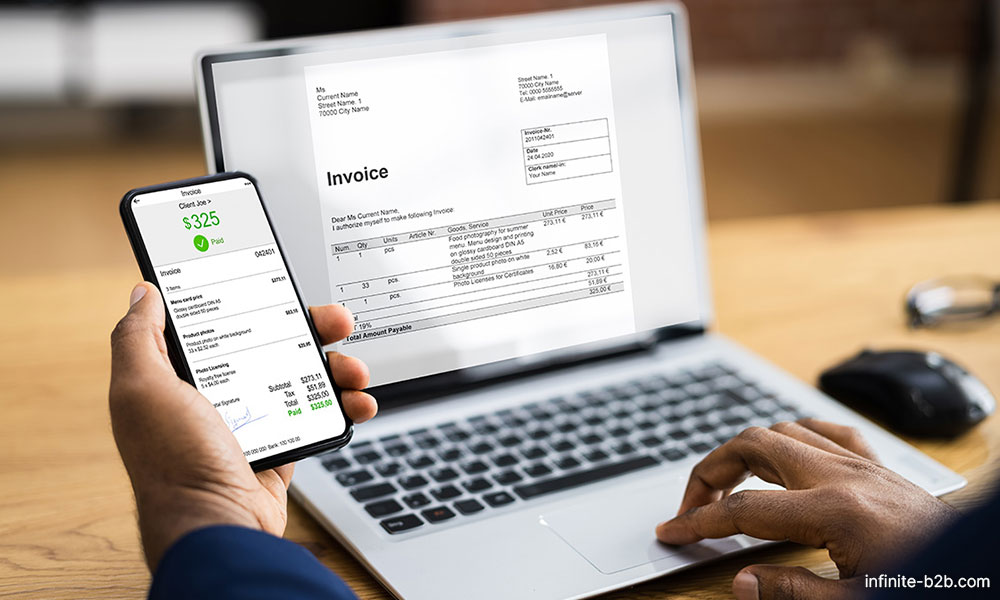

Implementing e-invoice good for potential GST, reaching govt tax target, says IRB
The implementation of the electronic invoicing system (e-invoicing) will bode well should the government opt to reinstate the goods and services tax (GST).
It could also assist the government in achieving its goal for the 2024 tax collection target of RM185 billion, said Inland Revenue Board (IRB) chief executive officer Mohd Nizom Sairi...
The implementation of the electronic invoicing system (e-invoicing) will bode well should the government opt to reinstate the goods and services tax (GST).
It could also assist the government in achieving its goal for the 2024 tax collection target of RM185 billion, said Inland Revenue Board (IRB) chief executive officer Mohd Nizom Sairi.
He emphasised that e-invoicing was designed to accommodate the GST mechanism and that the adoption of this system would certainly push the cash economy while disclosing the financial transactions of the shadow economy.
"The people are really talking about the reintroduction of GST, and if it happens, you don’t have to do anything further. It (e-invoicing) actually caters for the GST system," he told reporters on the sidelines of the Grant Thornton Malaysia seminar on “Budget 2024 - Budget Highlights and Recent Tax Developments" today.
Nizom further elaborated that, based on country case studies, the application of e-invoicing would require businesses to maintain a comprehensive record of their transactions and completely report it to the IRB.
"There are a lot of activities under the radar that will be forced to come forward and operate above the board," he said.
It was reported that Malaysia’s shadow economy currently accounts for 21 percent of the gross domestic product (GDP) or an estimated RM330 billion.
On the cost of e-invoicing implementation, Nizom acknowledged that there will be costs involved in the adoption of e-invoicing, particularly in amending the taxation system to suit the requirements of the e-invoice system.
"Definitely there will be some costs to it, (in making) some amendments to suit the requirements of the e-invoice, but it will be minimal... it is not like when you have to actually build a system that fits the requirements of the GST, or you can use a third party to provide an application programming interface to connect between your system and invoice data,” Nizom explained.
“In the case of micro, small and medium businesses, we are developing a solution," he added.
The IRB had announced that Malaysia will gradually implement e-invoicing from next year, with the phased mandatory implementation to begin with selected businesses in June 2024 and will cover all companies by 2027.
Tax revenue
Meanwhile, the federal government’s revenue collection in 2024 is envisaged to record a marginal growth of 1.5 percent to RM307.6 billion or 15.6 percent of GDP, driven by higher tax collection.
Tax revenue continues to be the major contributor and is expected to grow by 6.4 percent to RM243.6 billion, which constitutes 79.2 percent of total revenue or 12.3 percent of GDP.
By 2024, the Finance Ministry estimates the collection from direct tax to increase by 6.9 percent to RM185 billion or 75.9 percent of total tax revenue.
The government has revised upwards its revenue projection for 2023 by four percent or RM11.7 billion to RM303.2 billion, or 16.4 percent of GDP, compared with the initial estimates of RM291.5 billion.
- Bernama


