


/file/publisher-c1a3f893382d2b2f8a9aa22a654d9c97/2023/10/d194a8596b1137822df3a8b92fa46231.jpg)

Long-awaited foreign worker management report declassified
A confidential report regarding the Management of Foreign Workers, prepared by an independent committee and initially withheld from public access in early 2019, has now surfaced on the Human Resources Ministry’s website without any formal declaration of its declassification.
Sources in the ministry revealed that 'The Report of the Independent Committee on the Management of Foreign Workers' was published on Oct 13 with the government appearing to have yielded to repeated calls for its declassification over the years.
The latest and most significant call to declassify the report came this May, from the members of the committee itself who pointed out that the problems and issues identified by...
A confidential report regarding the Management of Foreign Workers, prepared by an independent committee and initially withheld from public access in early 2019, has now surfaced on the Human Resources Ministry’s website without any formal declaration of its declassification.
Sources in the ministry revealed that 'The Report of the Independent Committee on the Management of Foreign Workers' was published on Oct 13 with the government appearing to have yielded to repeated calls for its declassification over the years.
The latest and most significant call to declassify the report came this May, from the members of the committee itself who pointed out that the problems and issues identified by them seemed to continue unabated.
The 11-member committee set up in 2018 under the first Pakatan Harapan cabinet was led by former Court of Appeals judge Mohd Hishamuddin Yunus.
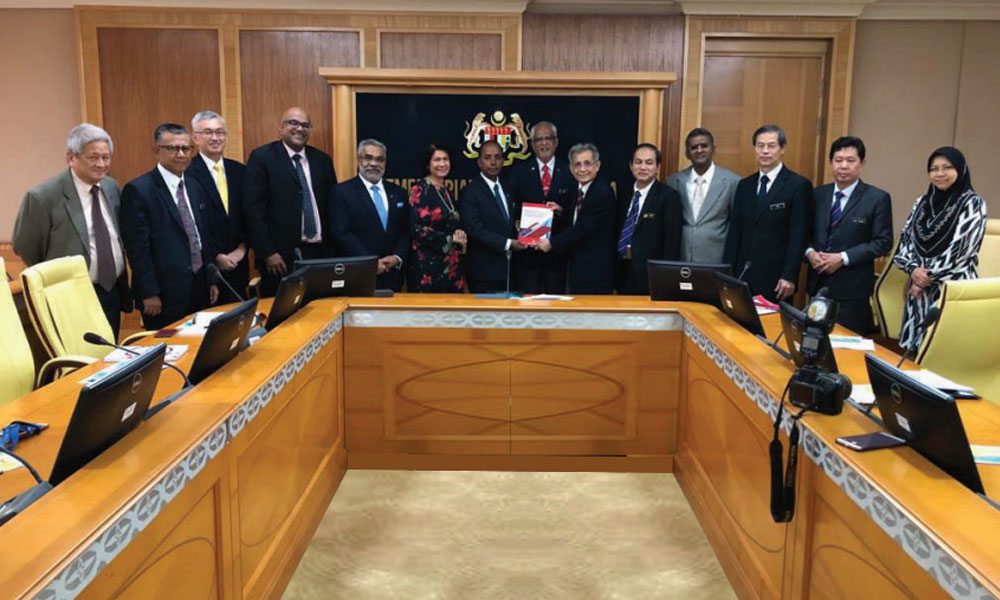
It was reported that the committee’s preliminary finding was handed over to the then-home minister Muhyiddin Yassin and later the full report was submitted to the Cabinet in May 2019.
Overt and blatant dishonesty
One of the report’s most glaring revelations pertains to the unequivocal identification of corrupt practices which it described as “overt and blatant”.
“The most absurd of these corrupt practices must be the questionable and non-transparent appointments of recruitment agencies or outsourcing entities for sourcing foreign workers.
“Many of these entities had been established specifically to undertake the activities granted even though it is obvious they do not have previous experience and track record in such a business.
“These firms are purportedly associated with politicians, serving members of the legislature or other branches of government or their family members, former government officials, and other proxies of these groups,” reads the report.

Yesterday, Home Minister Saifuddin Nasution Ismail revealed that the country had an oversupply of 120,000 foreign workers in the service sector and 147,213 workers manufacturing sector.
Saifuddin admitted to elements of work permit abuse with the highest rate (of non-compliance) in the service sector.
The report was concerned that such corrupt practices that led to the escalation of costs and had adverse effects on workers, were the foundation and principal cause that kept them bound to continuously trying to settle their accumulated debt.
It points out that forced labour conditions provide the trigger for foreign workers to escape their predicament and inadvertently become undocumented individuals.
Corruption hiding in plain sight
Although the report does not name entities or individuals, it points out that there was a layer of corruption hiding behind seemingly legitimate business practices.
It revealed the practice of non-transparent outsourcing of public sector functions to preferential companies for jobs like providing biometric information, renewal of employment passes, and periodical health screening.
These were jobs previously undertaken by the Home Ministry, the Human Resources Ministry, and other relevant government agencies.
Significant structural change
The report boldly uncovers the gaps in the current system and identifies policy recommendations to the government, from recruitment and repatriation to foreign workers’ rights to redress.
However, its recommendation for the Human Resources Ministry to be the single authority to formulate and implement policies that govern the management of foreign workers in the country could prove to be the most significant structural change if implemented.
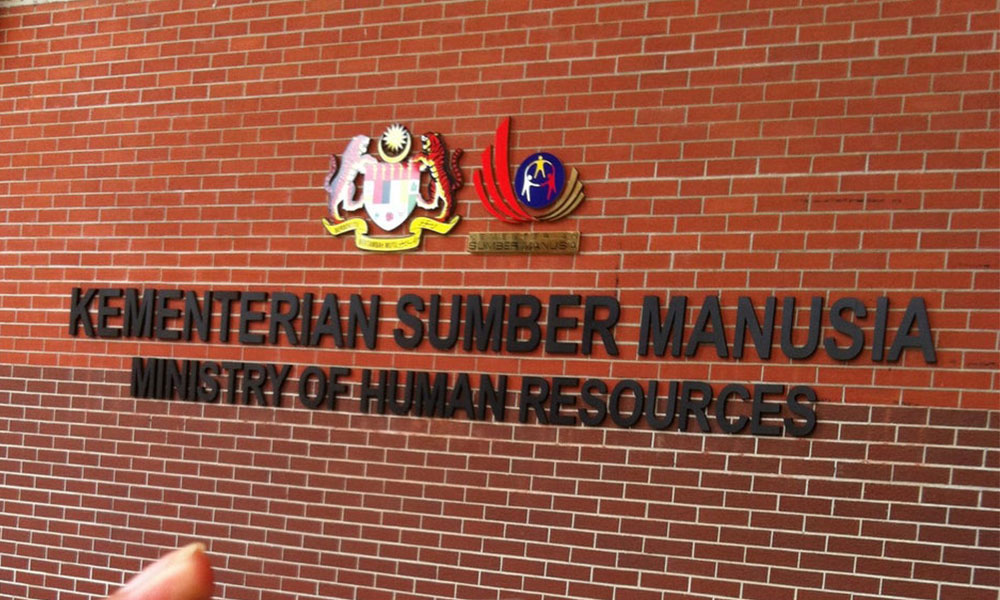
“The Human Resources Ministry is best placed to take on this role as its mandate already involves expediting the labour market needs of the economy and oversight of industry’s compliance,” the report reads.
To bring about this change, the government would need to review and repeal, among other policies, a cabinet committee decision on foreign workers and illegal immigrants from 2005 when the final authority was handed to the Home Ministry.
Through a National Foreign Workers Management System (NFWMS), the committee recommended that the ministry would be able to develop an integrated end-to-end single online system to administer all aspects of foreign workers management.
“This NFWCMS will remove the inefficiencies and unnecessary processes stemming from the current mix of manual, face-to-face, multiple electronic, and discretionary procedures.
“More importantly, the integration and digitalisation of currently outsourced processes and procedures will remove all forms of corruption, rent-seeking, monopoly, and market capture from the preferential appointment of service providers,” it said.
/file/publisher-c1a3f893382d2b2f8a9aa22a654d9c97/2023/07/de077626ab79614ed70e522df0dd37c7.jpg)
/file/publisher-c1a3f893382d2b2f8a9aa22a654d9c97/2023/01/885723b0ae85030e139542c164f43ee2.jpg)
/file/publisher-c1a3f893382d2b2f8a9aa22a654d9c97/2022/03/505bdd130f465a9b18fdf3d626a6f4d9.jpg)
/file/publisher-c1a3f893382d2b2f8a9aa22a654d9c97/2023/05/a93c311a052d285e10a457cb9eccccf3.jpg)


