
Thomas’ lawsuit to be heard as defamation action
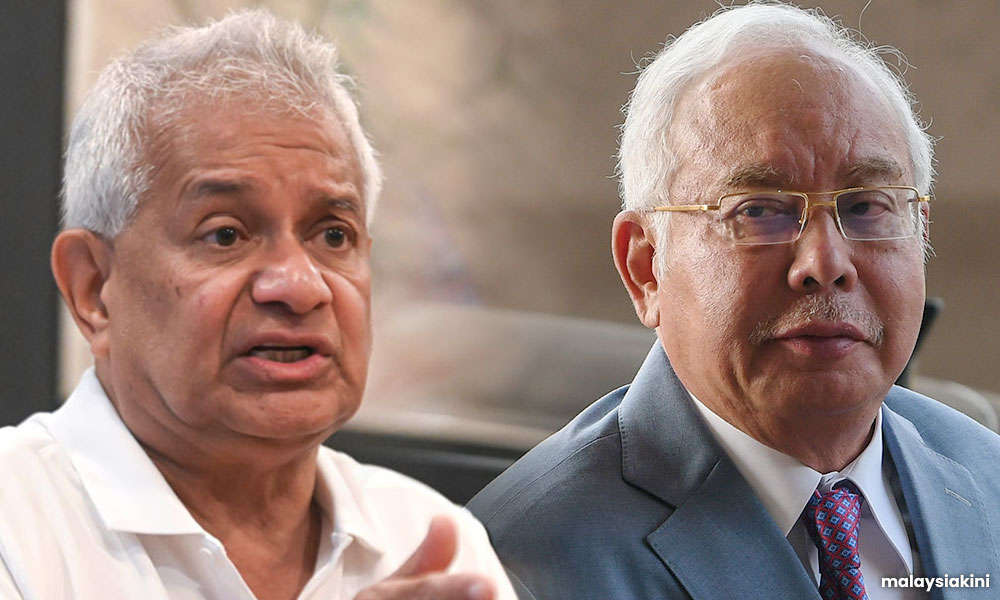
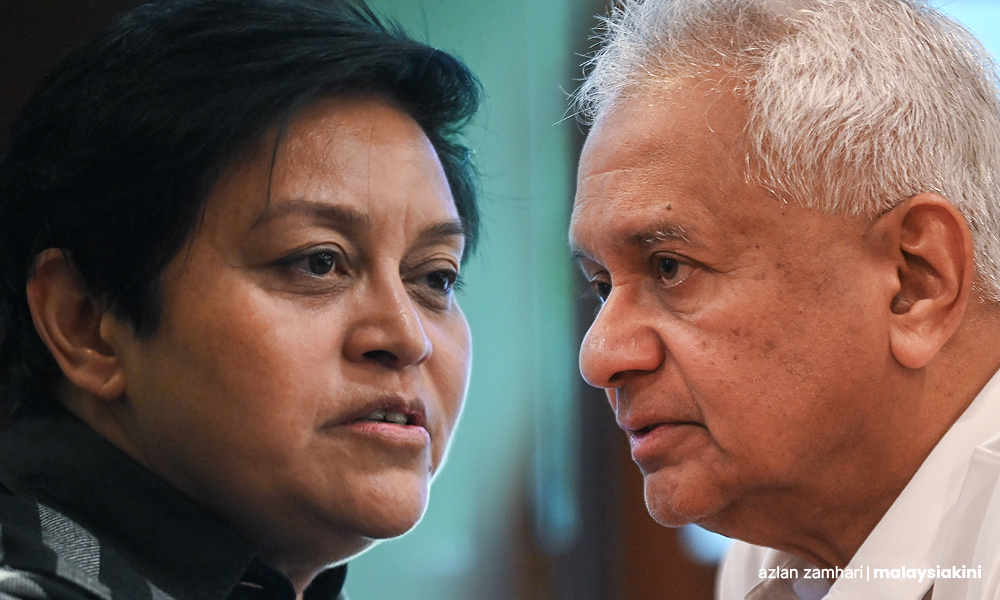
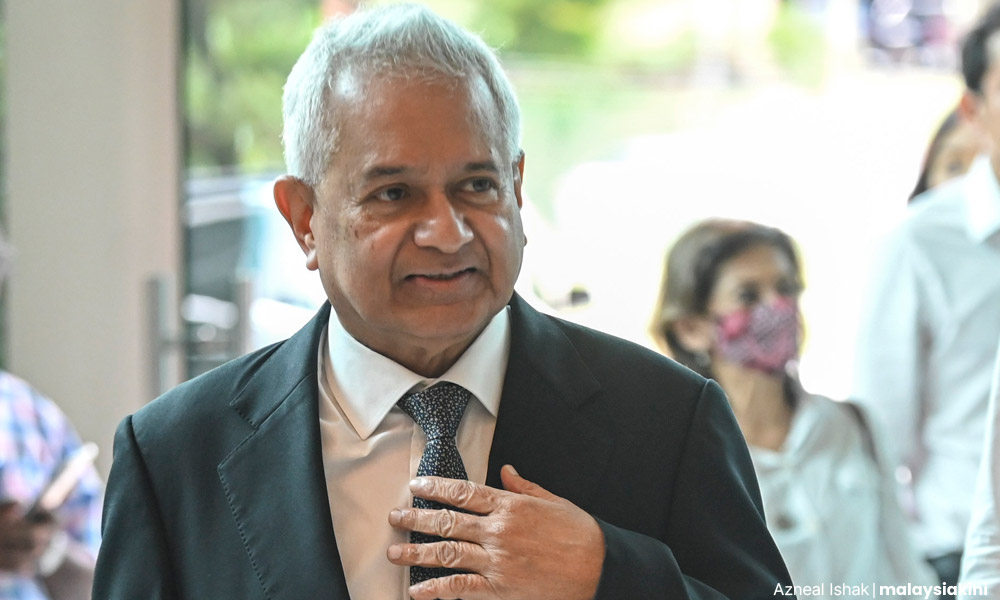
The Kuala Lumpur High Court has directed former attorney-general Tommy Thomas’ lawsuit to be heard as a defamation action.
Judge Wan Ahmad Farid Wan Salleh made the ruling this afternoon in relation to the striking out application by the government and a special task force against Thomas’ originating summons over the special task force report into his memoir ‘My Story: Justice in the Wilderness’.
The special task force report was...
The Kuala Lumpur High Court has directed former attorney-general Tommy Thomas’ lawsuit to be heard as a defamation action.
Judge Wan Ahmad Farid Wan Salleh made the ruling this afternoon in relation to the striking out application by the government and a special task force against Thomas’ originating summons over the special task force report into his memoir ‘My Story: Justice in the Wilderness’.
The special task force report was made available to the public through the Prime Minister’s Department Legal Affairs Division on Oct 21 last year, following then-caretaker prime minister Ismail Sabri Yaakob's announcing its declassification after a decision made by the cabinet earlier on Sept 30 last year.
Among the report’s key recommendations was for the separation of the office of attorney-general and public prosecutor over “selective prosecution”.
However, the report gave no example of “selective prosecution” on Thomas’ part, who held office from June 4, 2018, to Feb 28, 2020.
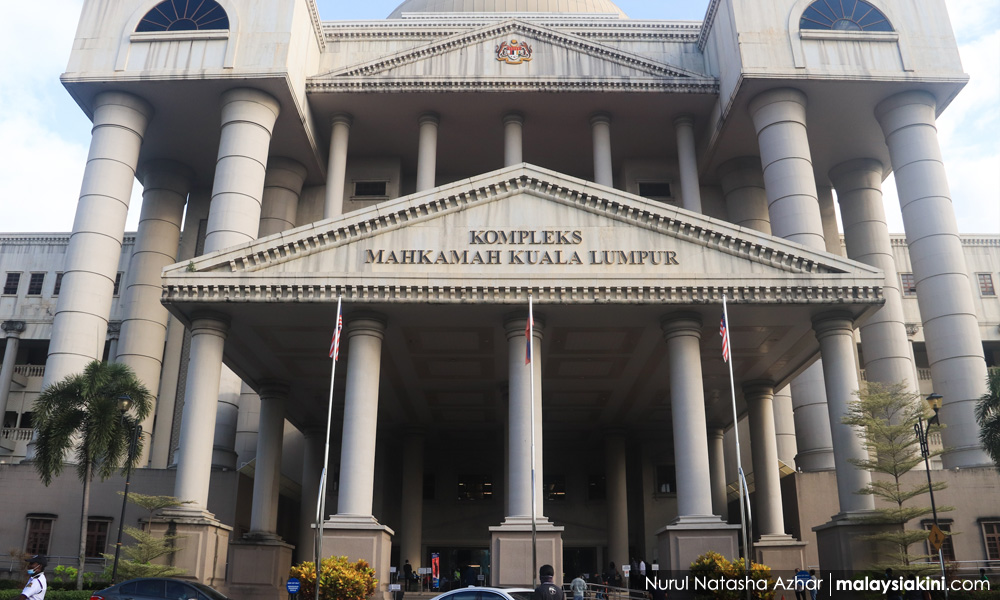
During online proceedings today, Wan Farid said that he would not order for the originating summons to be struck out, but that the action be converted into a writ of summons suitable for full trial of a defamation suit.
Wan Farid, who presides over the appellate and special powers court division, ruled that Thomas' legal action should have been filed from the onset as a writ of summons rather than originating summons.
In ordering the matter be transferred to the civil court division that handles defamation matters, Wan Farid said an originating summons is not a suitable mode for defamation matters as it only involves an exchange of affidavits rather than an actual full trial involving witness testimonies.
Alleged tarnishing of reputation
The judge noted that the crux of Thomas' grievance was over alleged tarnishing of his reputation from the special task force report, which involved significant disputes of fact that can only be resolved via full trial involving witnesses and documentation.
(Unlike an originating summons, a civil court presiding over a full trial of a writ of summons for defamation would see both plaintiff and defendant call their respective witnesses to the witness stand, and where the opposing side can cross-examine the witnesses to attack their credibility, with the court deciding after all witnesses have testified).
"The long and short of it is that this is a claim for loss of reputation, which is a claim for defamation.
"A claim of this nature cannot be resolved via mere exchange of affidavit evidence (in matters involving originating summons) as there is substantial dispute of facts.
"I direct this OS (originating summons) to be heard via civil determination, and I will not determine the legality of the special task force," the judge said, adding that he made no order as to costs.
With today's ruling, a civil division of the courts (that presides over the writ of summons) would be set to preside over the full trial of Thomas' legal action.
Striking out application
Previously via filing of affidavits, the legal team representing the government and special task force contended that Thomas' originating summons ought to be struck out as it should have been filed as a writ of summons from the onset.

Back on Oct 27 last year, Thomas filed the originating summons that targeted nine defendants, namely task force chairperson J C Fong, its members Hashim Paijan, Junaidah Kamarruddin, Jagjit Singh Bant Singh, Shaharudin Ali, K Balaguru, Farah Adura Hamidi, and Najib Surip, as well as the government.
According to a copy of the affidavit in support, the plaintiff claimed that the special task force formed in October last year was an illegal body.
Thomas alleged that this is because the special task force’s chairperson and its members were not appointed under any written law.
The plaintiff contended that the task force is unlike a Royal Commission of Inquiry (RCI), whereby the latter is provided for under the Commission of Inquiry Act 1950 by appointment of the Yang di-Pertuan Agong to enquire into the conduct of federal officers such as an AG.
Thomas pointed out that, unlike the present task force, an RCI is an open and transparent enquiry process where a person subjected to the enquiry is entitled to be present and represented by a lawyer.
The former government's top lawyer asserted that any resulting action done by them, including the preparation of the report containing the various allegations, was unsupported by any written law and therefore illegal and void.
The plaintiff contended that among these claims are “allegations against the judiciary, revealing government information and secrets, unlawful actions, abuse of power, professional negligence, and seditious statements”.
Thomas claimed that after the task force presented the report to Ismail Sabri, the then-caretaker prime minister had ordered enforcement agencies to carry out further probes against the plaintiff for “possible wrongdoings”.
‘Political bullets’
Thomas also claimed that the report was published by the defendants, with urging by Ismail Sabri for it to be used as “political bullets”.
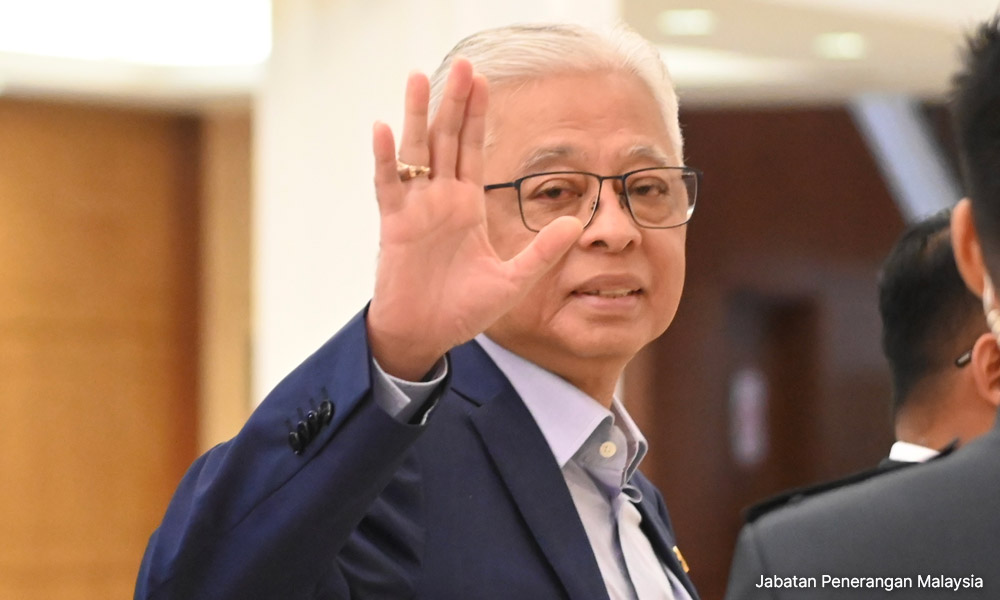
During a BN political rally at Bagan Datuk on Oct 17 last year, Ismail Sabri allegedly admitted that he declassified the report so it could be used as political “bullets” to attack Pakatan Harapan.
Thomas alleged that the report was published with the intent to harm his reputation with false and baseless allegations to annoy, abuse, threaten, or harass him.
The plaintiff was seeking several reliefs, among them declarations that the task force is an unlawful body with no authority in law and that the report is an illegal document unauthorised by law and in violation of Sections 499 and 500 of the Penal Code and/or Section 233 of the Communications and Multimedia Act 1998.
Thomas was seeking a declaration that the publication of the report violated his right to the protection of his reputation per Article 5(1) and/or Article 13(1) of the Federal Constitution.
He was seeking for the nine defendants to pay compensation for the violation of his constitutional rights, as well as for the first eight defendants (excluding the government) to pay aggravated and exemplary damages without recourse to public funds.
Thomas was also seeking for the first eight defendants to bear costs without recourse to public funds.
The plaintiff is represented by counsel Mervyn Lai Wei Shiung and Haikaldin Mahyidin.