
KINIGUIDE | Could small nuclear reactors power Malaysia’s future?
KINIGUIDE | On Aug 29, the government launched the second of its two-part National Energy Transition Roadmap (NETR), which chart’s Malaysia’s path forward up to 2050 to decarbonise its energy supply.
While neither document mentions the word “nuclear” even once, both Economy Minister Mohd Rafizi Ramli and Natural Resources, Environment and Climate Change Minister Nik Nazmi Nik Ahmad have made clear that the “nuclear option” is still on the cards.
While emphasizing there will be stringent safety and security requirements to be met, both ministers argued at the Energy Transition Conference that the future potential of small modular reactors (SMR) cannot be ignored and should at least be considered.
Can a fleet of smaller, more flexible nuclear reactors be part of the solution to Malaysia’s energy puzzle? This edition of KiniGuide explores the promise and potential pitfalls of the nuclear industry’s next big thing.
What is an SMR?
Small modular reactors (not to be confused with small and medium-sized reactors, which are also abbreviated as “SMR” in the industry) are nuclear reactors that are defined by their small size and modular construction.
They are generally understood to be less than 300MW in electrical capacity and can be built-in modules based on a standardised design in a factory.
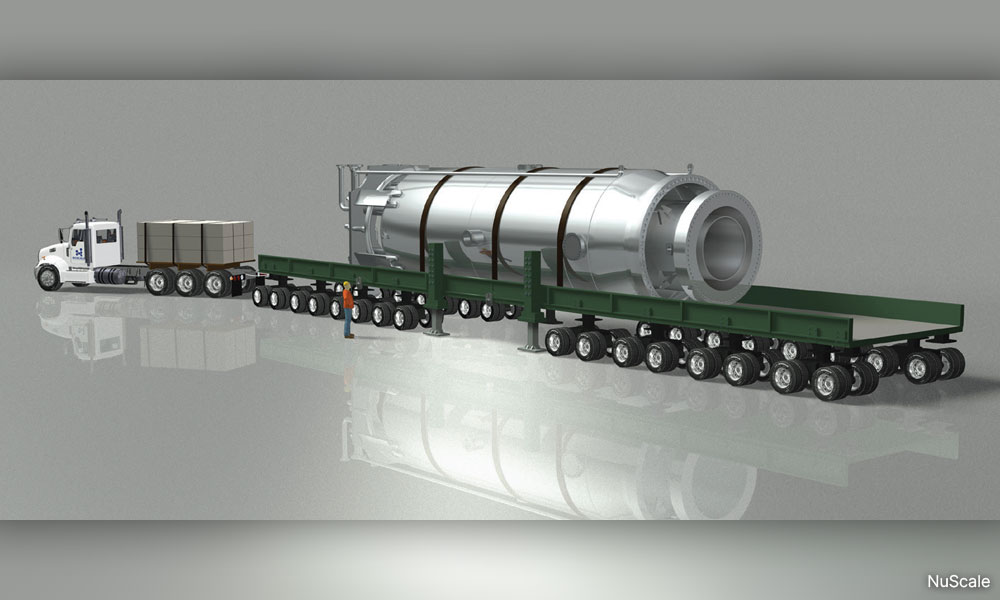
They can then be shipped from the factory to the construction site by road, rail, or barge; whether as a complete unit or in modules that can be assembled relatively easily on-site.
This contrasts with conventional reactors which are often bespoke solutions built almost entirely on-site and could generate more than triple the amount of electricity.
You might think of it as being analogous to buying flatpack furniture and having it shipped to your home, instead of hiring a team of designers and woodworkers to build it on-site.
For context, 300MW would be enough to power more than 150,000 Malaysian households if it were run continuously without being shut for maintenance. In Sarawak, just one of Bakun Dam’s eight water turbines can produce as much power.
There is also a subset of SMRs called microreactors, with capacities up to 10MW. These are intended for niche purposes such as powering remote off-grid locations, restoring power to essential services following a disaster, and water desalination.
For example, a 77MW reactor design proposed by the company NuScale measures about 23m tall and 4.6m in diameter.
This is about the size of two buses stacked together and the entire unit can be hauled overland by a large lorry. Some publications reported that 100 of these would fit inside the containment vessel of a large conventional reactor.
Microreactors, meanwhile, are generally small enough to fit inside a standard shipping container.
What sets SMRs apart from conventional reactors?
In the effort to decarbonise the world’s energy supply, there is renewed interest in nuclear energy despite the spectre of dramatic accidents like those in Chernobyl and Fukushima, and the seemingly intractable problem of dealing with nuclear waste.
This is because nuclear power has very little carbon footprint.
And, unlike wind and solar power that have taken the spotlight, nuclear power can provide a steady supply of energy day or night. They are not subject to the whims of the weather either.
SMRs have several advantages over conventional reactors that - if delivered as promised - can help offset some disadvantages of conventional nuclear power.
Among others, proponents of the SMR concept claim that using a standardised design and building it offsite in a factory environment can help reduce costs through economies of scale, and reduce the risk of costly construction and regulatory delays.
It should be noted that while the cost of renewable energy has plummeted, the cost of conventional nuclear power has increased over the years. SMRs are seen as one way for the nuclear industry to buck this trend.
The modular construction also makes it relatively easy to expand SMR nuclear power plants by simply adding more modules as demand increases.
SMRs are also touted as a way to give old, fossil fuel-burning power plants a new lease of life.
Several construction projects are underway in the US to convert ageing coal power plants into nuclear power plants. This entails retiring the coal burners and harnessing the existing steam turbines and electrical infrastructure to SMRs.
The first of these is expected to be operational in 2028.
Such coal-to-nuclear conversions may become relevant to Malaysia if SMRs prove their worth in these demonstrator projects, as the NETR calls for an “almost complete phase out” of coal-fired power plants by 2045.
READ MORE: Shedding Coal: The Good, The Bad, The Ugly of Malaysia’s Coal Power Industry
Another potential advantage of SMRs is that their smaller size and lower heat production means they can better leverage passive cooling and safety systems, and this simplicity means there are fewer things that could fail and result in a severe accident.
For instance, some designs do not require pumps to keep the reactor cool and can rely on natural convection alone. Thus, such a reactor could feasibly survive a power outage that doomed the Fukushima Daiichi nuclear power plant in 2011.
What are the potential pitfalls?
A major downside of SMRs is that they may be less fuel efficient than their larger cousins and also generate more radioactive waste.
According to a Stanford University study published last year, for a given amount of electricity, SMRs will produce two to 30 times more nuclear waste than larger reactors.
Its analysis also found that SMRs’ smaller size also makes them more susceptible to a phenomenon known as “neutron leakage”, where neutrons exit the reactor core and make the surrounding reactor components radioactive.
“These radioactive materials have to be carefully managed prior to disposal, which will be expensive,” said one of the paper’s authors Rod Ewing.
Groups like the Environmental Working Group (EWG) and the Union of Concerned Scientists are also sceptical about whether SMRs can meet the promised safety standards and cost- effectiveness.
Are they ready for prime time?
According to a report by the international nuclear energy regulator, the International Atomic Energy Agency (IAEA), there are more than 80 SMR reactor designs have been proposed as of last year.
At the time of writing, however, nearly all of these are still in various stages of conceptualisation, design, regulatory review, and construction.
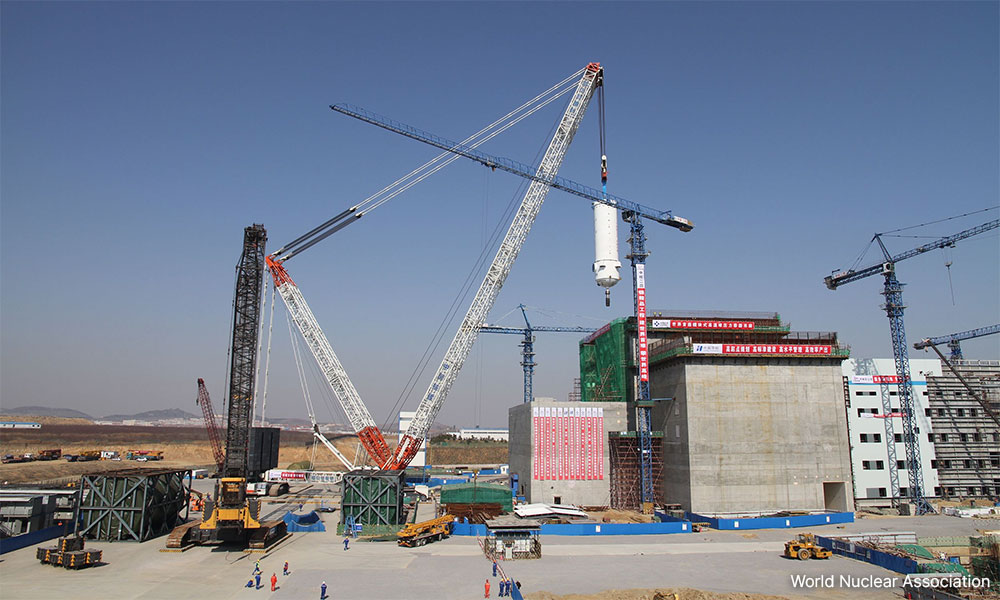
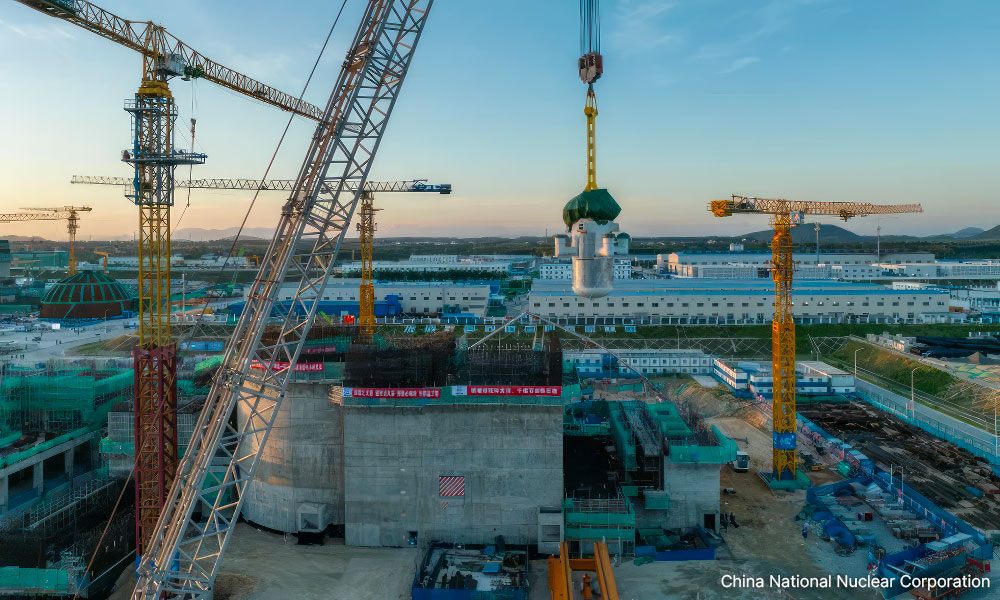
Thus, there are only two power plants in operation that use SMRs – the Akademik Lomonosov floating power station serving a remote Artic community in Russia, and the Tsinghua University’s HTR-PM demonstration plant in China.
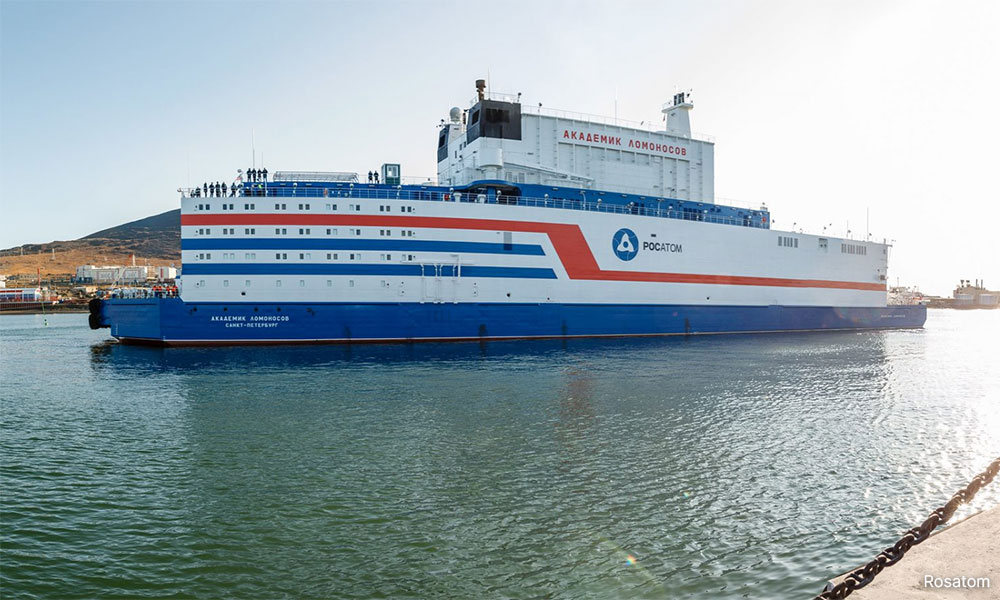
Both became fully operational only in the last two years – in May 2020 and December 2022, respectively.
In other words, the economics and safety of SMRs are still largely unproven and the jury is still out on whether it can deliver on its promises. This is understandable as the concept is still in relatively early stages of development and is just starting to make it out of the drawing board.
However, this also presents a chicken-and-egg dilemma for the nuclear industry.
The EWG notes: “Without the factories (to mass produce SMRs), SMRs can never hope to achieve the theoretical cost reductions that are at the heart of the strategy to compensate for the lack of economies of scale.
“But without the cost reductions, there will not be a large number of orders to stimulate the investments needed to set up the supply chain in the first place.”