
KINIGUIDE | The '40 Hadith' module and its impact on non-Muslims
KINIGUIDE | Prime Minister Anwar Ibrahim’s administration has once again inadvertently stirred controversy after revealing plans to introduce a new module to teach “Imam Al-Nawawi 40 Hadith” in schools.
The government and Education Ministry’s initial lack of clarification on the implementation of the pilot module had caused much confusion over the matter, resulting in a heated debate between Muslim and non-Muslim groups.
In this instalment of KiniGuide, Malaysiakini takes a deep dive into what the “40 Hadith” module is about and the controversy surrounding it.
For the purpose of the Kiniguide, any hadith narrated is based on the English translation as compiled by the Muslim American Society on its website on the 40 hadith.
What is a hadith?
The hadith are sayings of the Prophet Muhammad and his responses to questions from early Muslims, which, together with the Quran, serve as a major source of guidance in Islam.
Unlike the Quran, however, records of the hadith were not written down while the prophet was alive.
Rather, it was recorded as a form of oral history based on what the prophet’s contemporaries heard him say.
Hence, when narrating a hadith, it is always told as “according to such and such the prophet said…”.
Hadith that are narrated by those considered trustworthy companions of Prophet Muhammad or have a trustworthy chain of narrators are considered sahih (authenthic).
So, what is the ‘40 Hadith’ module?
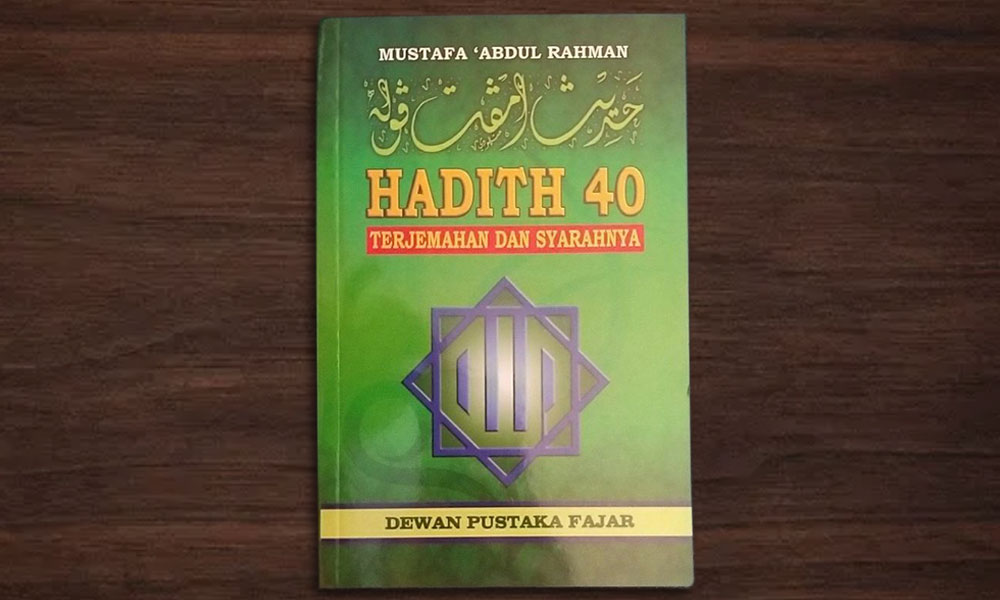
The ‘40 Hadith’ module aims to teach students from a book of 40 hadith - 42 in actuality - compiled and curated by a 13th-century Muslim jurist known as Imam Al-Nawawi - who remains an important scholar and guiding figure in the Syafie school of Sunni Islam.
The Muslim American Society states that Al-Nawawi sought to create a compilation of hadith that was comprehensive and holistic in conveying the essence of Islam.
What do the ‘40 Hadith’ teach?
The hadith in the compilation mostly teach Muslims how to conduct themselves, such as submitting in faith to Allah, doing and eating what has been permitted to them, abstaining from what is forbidden, being charitable, and loving one another.
It also contains anecdotes such as when a man asked the Prophet Muhammad for advice, and is repeatedly told by the prophet, “Do not get angry”.
I heard one hadith encouraged Muslims to fight non-Muslims. Is it true?
One criticism about the 40 hadith compilation, is in regard to Hadith 8, which reads:
“On the authority of Abdullah ibn Umar (may Allah be pleased with him), the Messenger of Allah (peace be upon him) said:
"I have been ordered to fight against the people until they testify that there is none worthy of worship except Allah and that Muhammad is the Messenger of Allah, and until they establish the salah (prayer) and pay the zakah (tithe).
“And if they do so, then they will have gained protection from me for their lives and property, unless [they commit acts that are punishable] in accordance to Islam, and their reckoning will be with Allah the Almighty.”
The Malay translation of the hadith uses the word “memerangi” (wage war) in place of “fight” during the first half of the narration.
This has been interpreted by some as encouraging violence against non-Muslims unless they convert to Islam.
Is that really what Hadith 8 means?
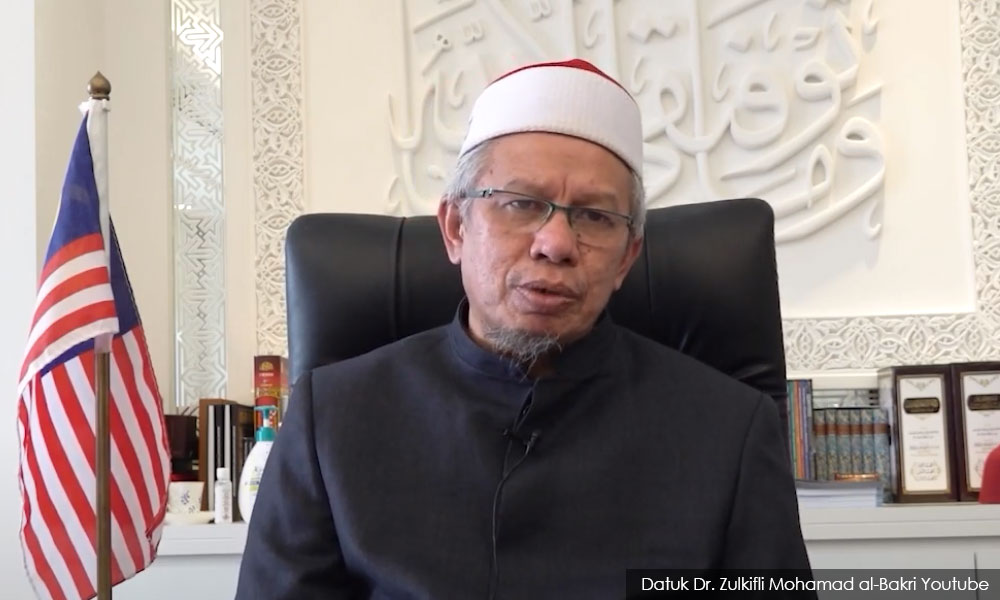
In a commentary on the recent controversy, former religious minister Zulkifli Mohamad Al-Bakri stated that, based on the original Arabic, fighting as mentioned in Hadith 8 does not mean killing.
Further, he states that “the people” (al-nas) mentioned in the hadith refer to non-Muslims who were themselves waging war against Muslims, and not those who are at peace with the Muslims.
Similarly, Penang mufti Wan Salim Wan Mohd Noor told Malaysiakini that Hadith 8 must be understood in its context and that the order to fight is specific against the non-Muslim Quraysh Arabs who were at war with Prophet Muhammad and the early Muslims at the time.
“One of the main principles of Islam is that there is no compulsion in practising Islam as stated clearly in the Quran,” Wan Salim said.
Separately, Negeri Sembilan mufti Mohd Yusof Ahmad told Malaysiakini that “memerangi” can also be understood in the context of opposing something rigorously, such as waging war on corruption, drug abuse and so on.
Zulkifli in his commentary also states that there are many other hadith and verses in the Quran that encourage Muslims to do good towards non-Muslims.
Notably, one hadith in the Al-Nawawi compilation - Hadith 32 - encourages Muslims to do no harm nor to reciprocate with harm.
How did the ‘40 Hadith’ module become a controversy?
News of plans to introduce Imam Al-Nawawi’s ‘40 Hadith’ book as a module in schools came out on Aug 19.

Bernama reported that the Education Ministry Islamic Education Division senior deputy director Omar Salleh said the module was developed upon the recommendation of Anwar who wanted the hadith to be taught in schools.
Omar said it was to ensure that the appreciation of the hadith began at school, foster a spirit of love and deepen religious understanding, especially among Muslim students.
However, the Bernama article did not specify at the time if this module was for Muslim students only.
This in turn caused anxiety among non-Muslim groups who expressed concerns that their children would be made to learn the module.
One of the concerned groups, the Malaysian Consultative Council of Buddhism, Christianity, Hinduism, Sikhism and Taoism (MCCBCHST), stated that compelling non-Muslims to learn the module would go against constitutional protections to freedom of religion.
The non-Muslim backlash in turn prompted Muslim groups to issue retaliatory statements, criticising the critics for interfering with Islamic affairs that were meant for Muslim students only.
So, will it be taught to non-Muslims?
The answer is no.

Following the backlash, the Education Ministry clarified on Aug 24 that the module, which will be introduced in public schools, is for Muslim students only.
The ministry, in a statement on Aug 25, said the implementation of the pilot programme of the appreciation module will also only involve religious secondary schools for now.
On the same day, Anwar also asserted that the module is intended only for Muslim teachers and students.
Further, on Aug 27, Deputy Education Minister Lim Hui Ying said the ministry is ready to meet any party to clear up misunderstandings on the implementation of the module in schools nationwide.
This Kiniguide was compiled by Isabelle Leong, Raveena Nagotra, and Zikri Kamarulzaman.