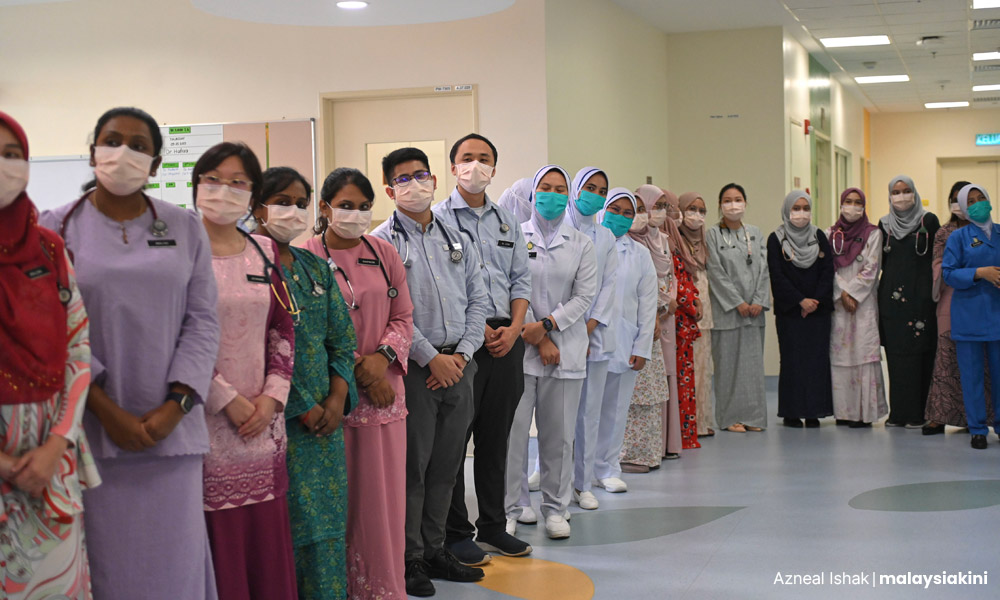

KINIGUIDE | How will the Health White Paper affect you?
KINIGUIDE | The long-awaited Health White Paper was finally tabled by Health Minister Dr Zaliha Mustafa and passed through the Dewan Rakyat.
The Health White Paper provides a comprehensive roadmap to reform the public healthcare system over the next 15 years, focusing on four main areas.
The four tenets of the white paper are to transform healthcare service delivery, enhance health promotion and disease prevention, ensure sustainable and equitable healthcare financing, and strengthen the foundation and governance of the healthcare system.
But what do the reforms mean for the general public seeking healthcare?
In this guide, Malaysiakini takes a look at how the reforms in the Health White Paper will affect the people at large by speaking to public health researcher Mark Cheong for further insight.
What is the point of the white paper?
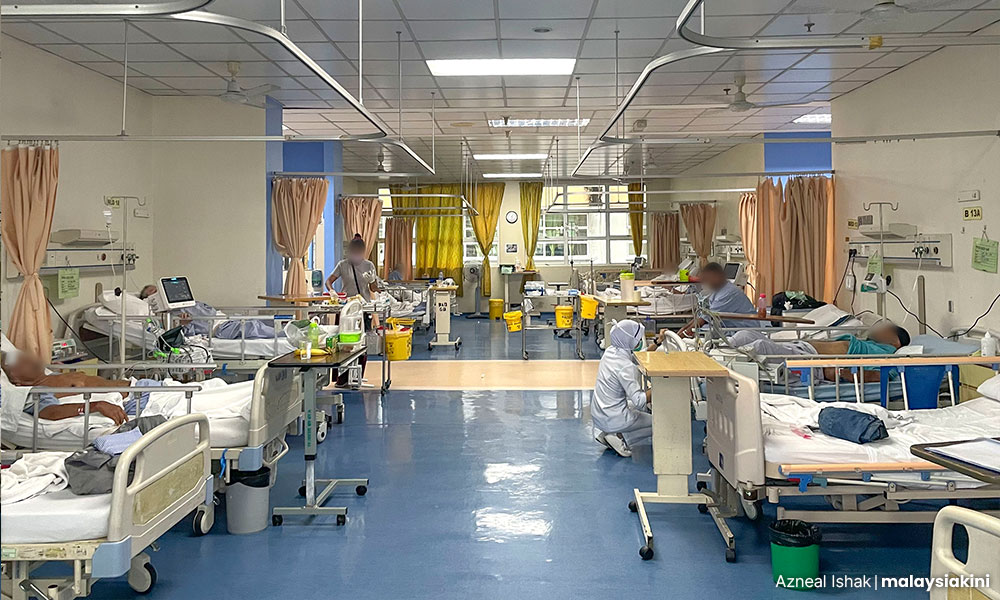
Malaysian public healthcare has faced growing challenges over the years, especially after the Covid-19 pandemic worsened existing flaws in the system.
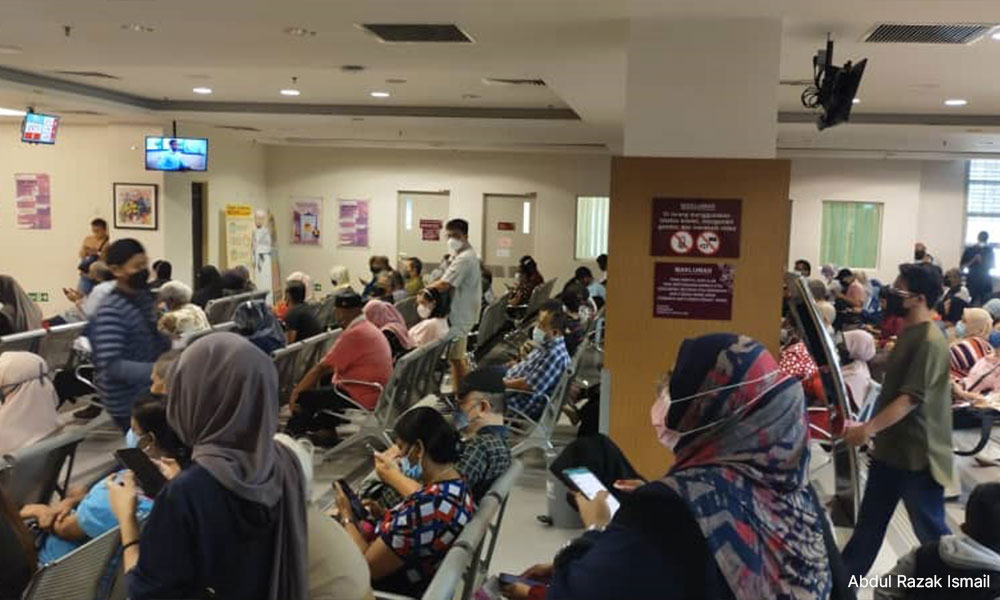
The National Health and Morbidity Survey (NHMS) has also shown an increase in chronic diseases since 2011 among the populace, contributed by unhealthy lifestyles.
Former health minister Khairy Jamaluddin, who started the initiative for a Health White Paper, said it was meant to show the government’s commitment to future-proofing Malaysia’s healthcare system.
He said the healthcare system has not changed much over the past 65 years and is geared towards a curative approach, responding to illness, disease, and infirmity.
As such, he said Malaysia should move away from “sick care” to focus on healthcare and wellness.
To do this, the system needs to not only shift gears in its policies but also review how its resources are allocated and organised.
What are the most important changes?
Cheong believes three major changes will affect the public, the first being the Health Ministry’s role moving forward.
The Health Ministry intends to prioritise its role in administration, governance, and monitoring through regulation, standard setting, and formulating health system policies.
The ministry’s current role in providing and buying health services will eventually be separated, in stages.
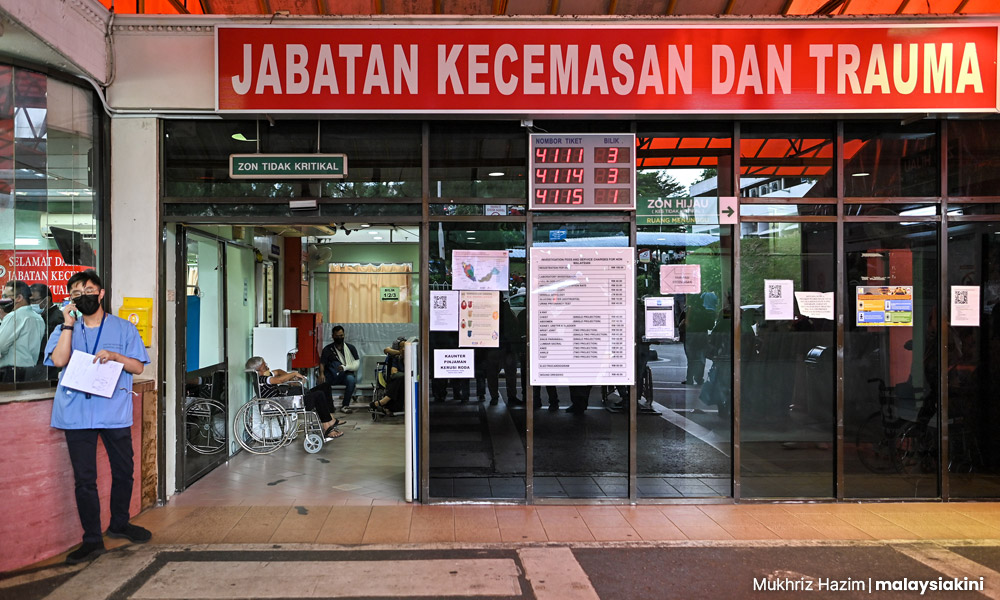
According to the white paper, government medical and health facilities will be given more autonomy in carrying out their role as healthcare providers.
“The separation of functions of providers and buyers of health services at the Health Ministry will create more transparent regulation and better checks and balances,” the white paper read.
Secondly, the White Paper emphasises delivering healthcare at the primary-care level.
Under this new model, each individual will be registered with a nearby primary healthcare (PHC) provider of their choice.
The PHC will provide a comprehensive range of healthcare services and access to services that promote health and prevent illnesses, rehabilitation, and palliative care.
Individuals can also get referrals to hospitals for specialist care and home care with assistance from their PHC, among other services provided.
One other proposed change in the Health White Paper which has received a lot of attention is the proposal on how healthcare services should be funded.
“Essentially, the Health White Paper proposes that healthcare services will be funded through a combination of government funding, contributions from individuals through progressive deduction schemes and employers, and out-of-pocket user fees,” Cheong explained.

The ministry intends to establish a Special Health Fund through government funding that will pay for a predetermined range of healthcare services and treatments for each individual.
“While the bulk of the costs of this healthcare package will be paid for by the Special Health Fund, each individual will be expected to pay some fees out-of-pocket,” Cheong added.
Malaysiakini previously reported that the white paper will moot increasing the fees for public healthcare services for the rich.
The move is aimed at making high-income households pay for the services according to their financial capability.
While minimal fees charged by the government have allowed the public to get affordable and better access to healthcare services, the current structure has led to huge disparity compared to the costs incurred, according to the ministry.
But it assured that the safety net for low-income households will still be maintained.
How will the separation of roles affect the public?
This change could potentially lead to more efficient management of resources, the development of healthcare services that are tailored to local communities and the system becoming more agile in the face of evolving health needs.
As a result, public healthcare facilities with more autonomy may provide higher-quality care to their patients.
However, Cheong said all this would depend on what sort of autonomy is given to these facilities and to what degree.
“Cutting off central support and coordination from healthcare facilities may negatively impact smaller healthcare facilities as well as incite unhealthy competition over resources between healthcare facilities, resulting in poorer care for the affected communities,” he said.

He also warned that if autonomy also means that the facilities must generate enough revenue to sustain themselves, it could lead to unprofitable services or lower-income communities being neglected.
What about the new PHC model?
A focus on providing accessible primary care to the public will make it easier for people to receive the different types of healthcare and therapies they need, Cheong said.
It could also result in people having to spend far less time travelling to and from hospitals as well as shorten their hospital stays.
Cheong noted that the proposals to implement a wide-scale Electronic Medical Record (EMR) and Electronic Lifetime Health Record (ELHR), as well as partnerships with private healthcare providers in primary care will further promote the ease of coordinating care for individuals with complex healthcare needs.
Will we have to pay more?
Cheong believes that most Malaysians will end up having to pay more than the current RM1 and RM5 charges for consultations at public health facilities, though this depends on their income.
“The government will have to work hard to demonstrate to improve the quality of healthcare services so that Malaysians feel that they are getting value for their increased contributions, and to convince Malaysians that their increased contributions will go towards providing healthcare for the lower-income population,” he said.
Currently, Malaysian citizens who seek treatment at government hospitals and clinics only have to pay RM1 for outpatient care and RM5 for specialist outpatient care.
According to the ministry’s website, citizens who receive in-patient treatment at first-class hospital wards are charged RM10 a day, while for second-class wards, RM5. No charge is imposed for Malaysians admitted to third-class wards.