
COMMENT | Is raising employers' EPF contribution the only option?
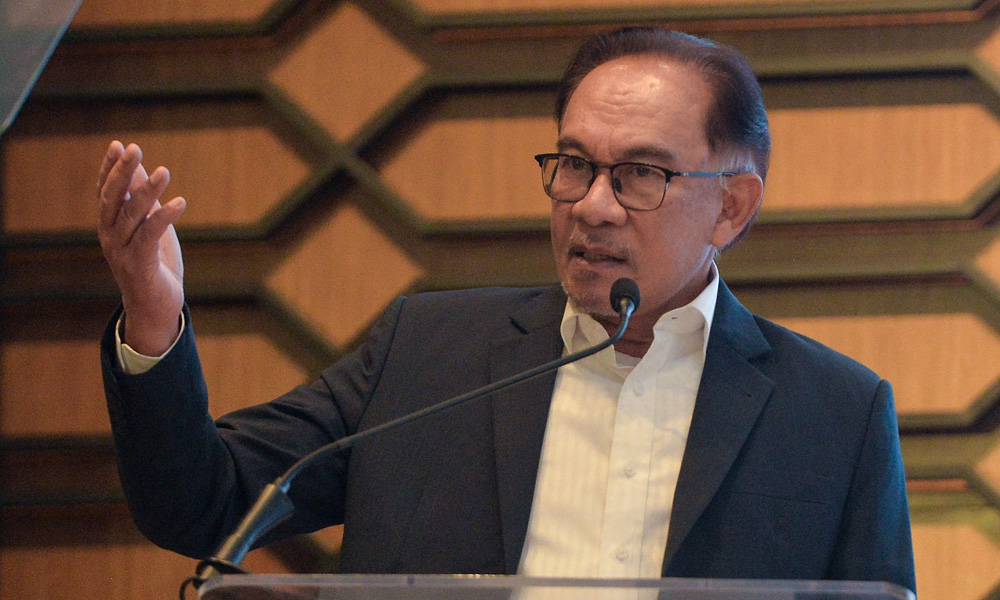
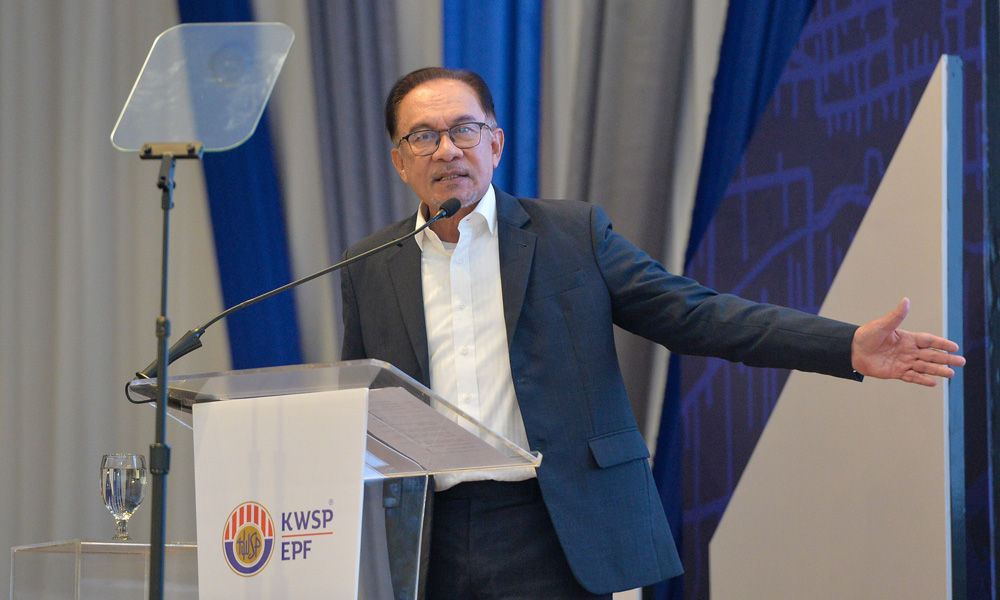
COMMENT | In response to Uni Malaysia Labour Centre (Uni-MLC) who had reportedly urged the government to increase the employers’ EPF contribution to 20 percent from the current 13 percent for those earning RM4,000 and below, Prime Minister Anwar Ibrahim said the government would discuss the proposal and bring the matter to the cabinet.
Since then, the issue had received many comments from various parties including the employers’ side such as the Malaysian International Chamber of Commerce and Industry (MICCI), the Malaysian Employers Federation (MEF), SME Association of Malaysia, as well as others including economists and academics. As usual, there are pros and cons to the suggestions.
Before any decision is made by the government, the lawmakers should look at and tackle the issue diligently by considering the impacts of the decisions (short and long term) on the whole communities (employers, employees, and public) as well as the economy as a whole.
Whatever decisions to be made, to accept or reject the proposal, shall have...
COMMENT | In response to Uni Malaysia Labour Centre (Uni-MLC) who had reportedly urged the government to increase the employers’ EPF contribution to 20 percent from the current 13 percent for those earning RM4,000 and below, Prime Minister Anwar Ibrahim said the government would discuss the proposal and bring the matter to the cabinet.
Since then, the issue had received many comments from various parties including the employers’ side such as the Malaysian International Chamber of Commerce and Industry (MICCI), the Malaysian Employers Federation (MEF), SME Association of Malaysia, as well as others including economists and academics. As usual, there are pros and cons to the suggestions.
Before any decision is made by the government, the lawmakers should look at and tackle the issue diligently by considering the impacts of the decisions (short and long term) on the whole communities (employers, employees, and public) as well as the economy as a whole.
Whatever decisions to be made, to accept or reject the proposal, shall have the chain-effects on the business communities, employees, general public and the country’s economies. Employers and their associations argued that the increase in the EPF contribution shall burden them, especially the SMEs since many of them have yet to recover from the impact of the Covid-19 pandemic.
In addition to that the recent government decision to increase the minimum wage from RM1,200 to RM1,500 had also affected the businesses. If the government insists on the additional EPF contribution, the chances are the costs will be passed to consumers and hence increase the inflation further. This will surely hurt the people and the economy.
From the employees’ perspective, the increase in the employers’ EPF contribution will boost the employees’ retirement funds, as claimed by the UNI-MLC. However, some view that in any case, a higher contribution to the EPF does not resolve the current predicament faced by lower-income workers, especially the B40 group.
The two years of the Covid-19 pandemic forced many from the lower-income groups to exhaust their EPF savings. I am of the opinion that instead of relying on the EPF savings, which is meant for their retirement funds, the employees should have practised some ‘financial disciplines’ from the beginning of their employment or at a young age.
‘Financial disciplines’ here mean that they should learn and exercise financial planning for their lives and should be prepared for the ‘rainy days’. Nevertheless, it is understood that not all people are financially literate and fortunate enough to secure any formal jobs, especially during those years.
Educating public
Of late, there are efforts made by the government, NGOs as well as professional bodies or associations to educate public on the financial planning or financial literacy. At higher learning institutions, for example, the Credit Counselling and Debt Management Agency (AKPK) modules are made compulsory, to educate students to be at least aware and be able to manage their finances.
On the other hand, some economists, such as K Kuperan from Universiti Utara Malaysia (UUM), argued that it is a good idea to increase the employer’s share of EPF contributions since the low savings among the majority of the contributors.
Furthermore, employers can use the increase in EPF contributions to claim tax deductions. From the government’s perspective, they can borrow the additional contributions for development purposes.
In my view, being a government, they need to rationalise and be able to strike a balance between the continuity and survival of businesses, the pressures from unions or employees as well as the country’s economies. There are a few suggestions that may be considered by the government before making its stand on this issue:
First of all, it is better for the government to create more high-value jobs and industries instead of harping on the existing EPF contribution. This way, it will create more employment for the rakyat and further enhance the country’s economy.
Secondly, if it were to increase the EPF contribution by employers, it should not be up to 20 percent since it jumps seven percent from the current contribution; it surely hurts many businesses. The increment can be done at a lower amount and with gradual implementation over a certain number of years. This will enable businesses to adjust and absorb the increment as part of their costs.
Thirdly, encourage and educate Malaysians to better manage their finances and instil some financial disciplines among the public. This initiative could commence as early as during primary school if not at the kindergartens. This long-term initiative would see more resilient populations in the future face any financial challenges.
Lastly, government and the public should think of other ways to overcome the issue of the high cost of living and insufficient funds to survive in the current economy, not to use the EPF savings, unless absolutely necessary.
Looking back at the original intention or objective of contributing to EPF is to prepare and cater for the post-employment (retirement) or contingencies only.
The author is the dean of Uniten Business School. He may be reached at amanuddin@uniten.edu.my
The views expressed here are those of the author/contributor and do not necessarily represent the views of Malaysiakini.