
KINIGUIDE | From total closure to partial closure - Lynas, 11 years on
KINIGUIDE | The government has extended the operating licence for Lynas’ processing plant in Gebeng, Kuantan until March 3, 2026. However, the firm must move the “cracking and leaching” facility abroad before July.
This means the processing plant could face partial closure and would not be allowed to produce radioactive waste in Malaysia.
Since the plant was established in 2012, civil societies have objected to its presence due to the potential hazard it poses to residents.
In this edition of KiniGuide, Malaysiakini revisits the Lynas issue.
Background
Lynas Rare Earth is an Australian mining company. In 2008, the Abdullah Ahmad Badawi administration approved its proposal to establish a rare earth element processing plant in the Gebeng Industrial Estate.
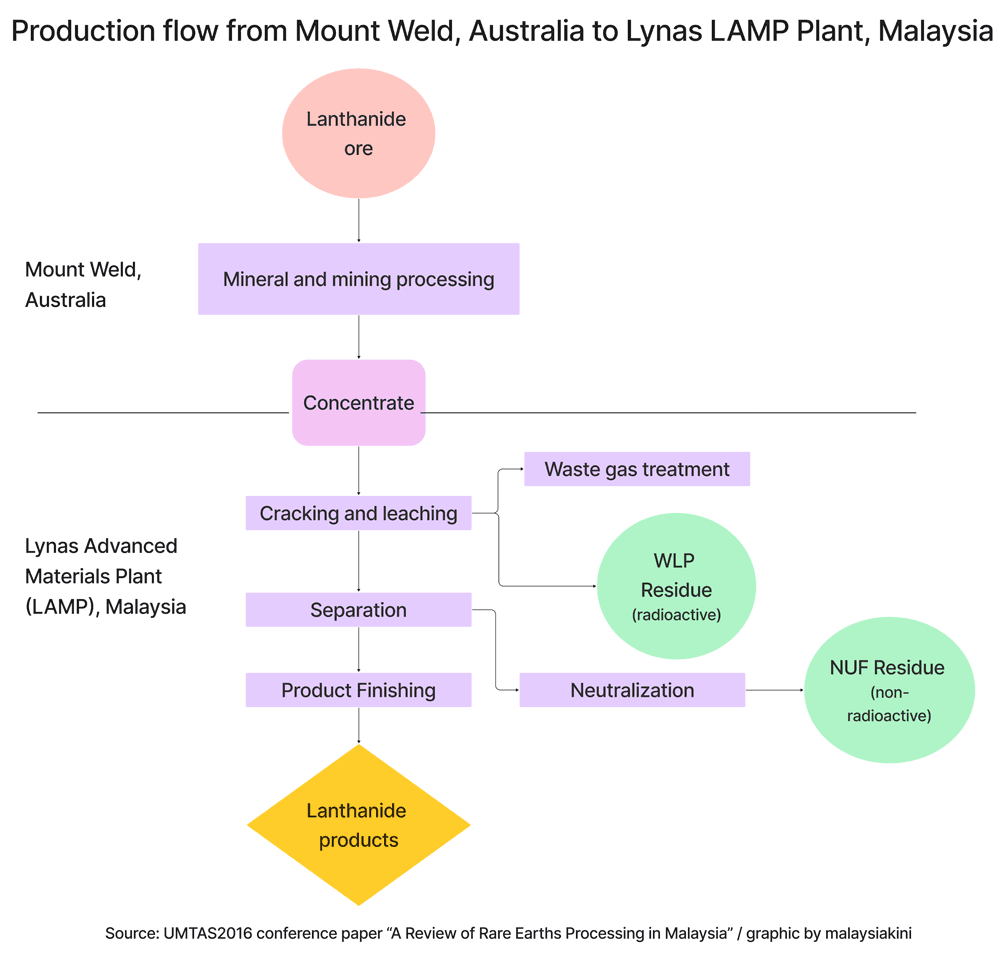
After the lanthanide ore is brought from West Australia to Kuantan, it is processed into lanthanide products.
Lynas’ rare earth products are strategic resources for the US, Australia, and Japan, which are used in the manufacturing of smartphones, electric cars, engines for military jets, and others.
Lynas, whose plant has been operating for the past 11 years, was also given a 12-year tax exemption. In other words, it has not paid a single ringgit in tax for more than a decade.
Why did the anti-Lynas movement start?
After the lanthanide ore is moved to the Gebeng processing plant, it undergoes the important procedure of “cracking and leaching”.
The “cracking” process refers to refining rare earth elements from lanthanide concentration with high-temperature sulphuric acid under high atmospheric pressure. Then, water is leached to produce a lanthanide sulphate solution.
During the process, radioactive water leach purification (WLP) residue is produced.
According to a Radiological Impact Assessment (RIA) report Lynas prepared, WLP residue consists of two unstable radioactive materials, namely thorium (Th) and uranium (U), as well as their progenies.
For instance, the activity concentration for U-238 and Th-232 in WLP residues are 0.33±0.07Bq/g and 6.3±0.4Bq/g respectively.
Based on the Atomic Energy Licensing Board (AELB) and the International Atomic Energy Agency (IAEA) standards, WLP residue is considered radioactive waste because it contains more than 1Bq/g of Th-232.
Environmental groups and civil societies are concerned that radiological contamination might occur in the Kuantan area, potentially harming the health of residents.
For example, the Lynas RIA report found that the underground water near its factory has high radioactivity levels while radioactive elements were discovered in fish from nearby rivers.
READ MORE: Lynas refutes claims of radionuclide contamination in water

However, Lynas and experts insisted that the operation would not harm its workers and residents because “the radioactivity level produced is less than getting an X-ray scan”.
In 2012, it was reported that Lynas agreed to export the radioactive waste elsewhere and this was confirmed by then international trade and industry minister Mustapa Mohamed, then science, technology, and innovation minister Maximus Ongkili, then natural resources and environment minister Douglas Uggah Embas, and then health minister Liow Tiong Lai in a joint media statement.
However, Lynas denied agreeing to such terms.
Who opposed the Lynas processing plant?
Groups such as Save Malaysia, Stop Lynas, and Himpunan Hijau are the prime movers of the anti-Lynas movement.
They organised protests, started a petition to collect one million signatures, made a trip to Australia to stage a protest at the Lynas headquarters, and held a 300km “green march” from Kuantan to the Parliament building in Kuala Lumpur.
When the “green march” participants arrived at Dataran Merdeka, some 20,000 people joined the activists to spend a night in Dataran Merdeka.
Pahang PKR leaders such as senator Fuziah Salleh (former Kuantan MP) and Petaling Jaya MP Lee Chean Chung (former Semambu assemblyperson) as well as Pahang DAP leaders such as former Bentong MP Wong Tack and Bilut assemblyperson Lee Chin Chen (former Ketari assemblyperson) were vocal opponents of the plant.
PKR president Anwar Ibrahim, then DAP secretary-general Lim Guan Eng, Amanah president Mohamad Sabu, and other Pakatan Harapan leaders were involved in the petition demanding the closure of the plant.
In its 2013 “Manifesto Rakyat”, Harapan’s predecessor - Pakatan Rakyat - said it would not allow Lynas to operate in Malaysia if the coalition won the general election.
However, the 2018 “Manifesto Harapan” did not mention Lynas. Instead, the coalition promised that “approved or ongoing controversial projects will be reviewed to ensure they comply with established standards”.
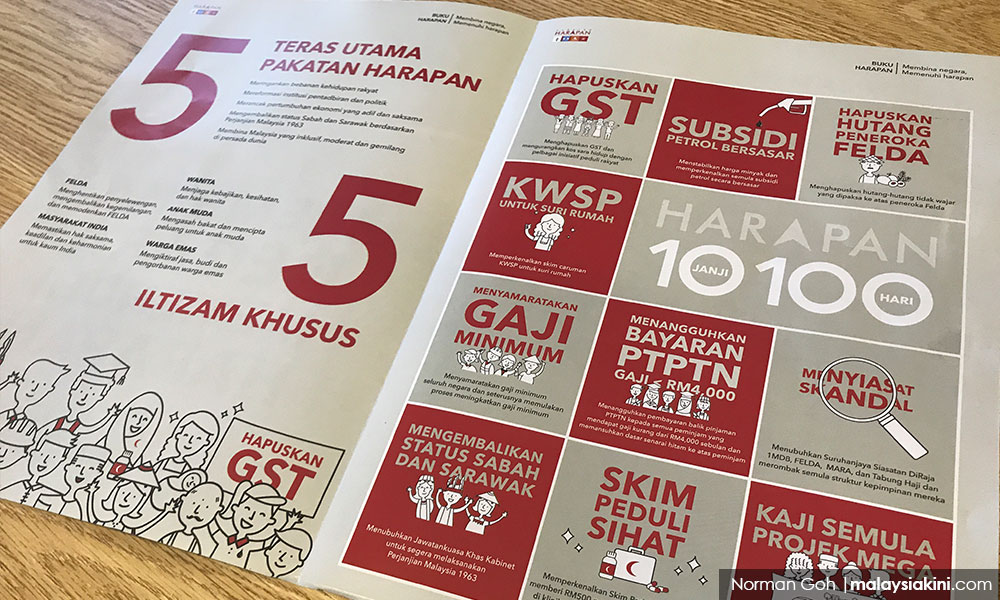
Similarly, the coalition’s manifesto for the 2022 general election did not mention Lynas.
Did Harapan change its stand after coming into power?
Harapan and Lynas’ opponents appear to have shifted their stand from demanding an outright closure of the plant to moving the “cracking and leaching facility” out of Malaysia and for the firm to build a permanent disposal facility (PDF) to store radioactive waste produced since 2012.
READ MORE: Govt expected to renew Lynas’ licence with Harapan-era conditions
Initially, Lynas was required to move the radioactive WLP outside of Malaysia. It was a licence condition set by former energy and environment minister Yeo Bee Yin. She said Lynas had promised to do so when it began operations in 2012.
However, the then prime minister Dr Mahathir Mohamad disagreed, much to Yeo’s frustration, which was later expressed in her memoir titled ‘The Unfinished Business’. She had dedicated an entire chapter to this issue.
Mahathir said if Lynas promised to “clean up” the raw materials before importing them, therefore reducing the radioactivity level, then it could continue its operations in Malaysia.
Since then, Harapan’s stand has gone from “move radioactive waste away” to “move the cracking and leaching facility elsewhere”.
In 2018, the Mahathir-led Harapan administration’s conditions included moving the “cracking and leaching” process from Malaysia starting from July 2023 and building a PDF to store WLP radioactive waste.
Fast forward to 2022, construction work for the PDF in the Gebeng Industrial Estate began.
Pahang Regent Tengku Hassanal Ibrahim Alam Shah is the biggest shareholder in Gading Senggara Sdn Bhd (GSSB), which is the main contractor for the PDF. His father, Sultan Abdullah Sultan Ahmad Shah, is the Yang di-Pertuan Agong.
Lynas’ original plan was to build the PDF in Bukit Ketam, Mukim Kuala Kuantan, but the EIA for this was rejected by the Environment Department in April.
Lynas was the project proponent while GSSB was the contractor for the Bukit Ketam PDF as well.
Meanwhile, Lynas had filed an application with the Science, Technology, and Innovation Ministry to rescind the condition for it to move the “cracking and leaching” facility abroad.
However, much to the firm’s “disappointment”, the government refused to do so.
Given the alleged intense lobbying from foreign powers and other quarters on Lynas’ behalf, it remains to be seen if Anwar and his government would be able to ensure that the condition is met before the deadline.
Starting July this year, Science, Technology, and Innovation Minister Chang Lih Kang said Lynas would not be able to conduct “cracking and leaching” procedures or import lanthanide concentration from Australia.
However, the firm can file an appeal within 30 days.
What are the plans to manage the radioactive waste?
The Australian mining firm had initially planned to commercialise the waste into a fertiliser dubbed “Condisoil”.
However, the research and development plan received public backlash.
Therefore, when the former Pakatan Harapan government renewed its operating licence in 2019, one of the conditions required Lynas to stop all research and development on Condisoil.
Later, the plan for handling radioactive waste was altered to burial in Malaysia permanently. Lynas’ rare earth plant was granted a temporary operating licence for two years in September 2012 and one of the licence conditions was that Lynas must disclose the location and details of the PDF site.
However, Lynas has never disclosed the location of the PDF site, which has been criticised by anti-Lynas activists.
In August 2019, one of the operating license conditions given by the Harapan government is to remove the cracking and leaching process elsewhere by July 2023.
Besides that, Lynas is required to construct a PDF site for the WLP radioactive waste produced since the plant was established.
To meet this requirement, Lynas selected Bukit Ketam in Pahang as the location for the PDF site in January 2020. However, the Department of Environmental rejected the plan as the proposed site is located within a water catchment area.
Afterwards, Lynas initiated Plan B to build the PDF next to its rare earth plant in the Gebeng Industrial Park. This plan was approved and the construction of the facility has reached 32 percent completion.
It is important to note that although radionuclides elements of WLP residue will last for billions of years, the land lease of the PDF site will expire in 86 years.