
Rafizi likens economic recovery to his weight loss struggles
“To explain it simply, it (the economy) is almost like my weight problems. I struggle with it every day, every month, and every year.
“But the best method I found...
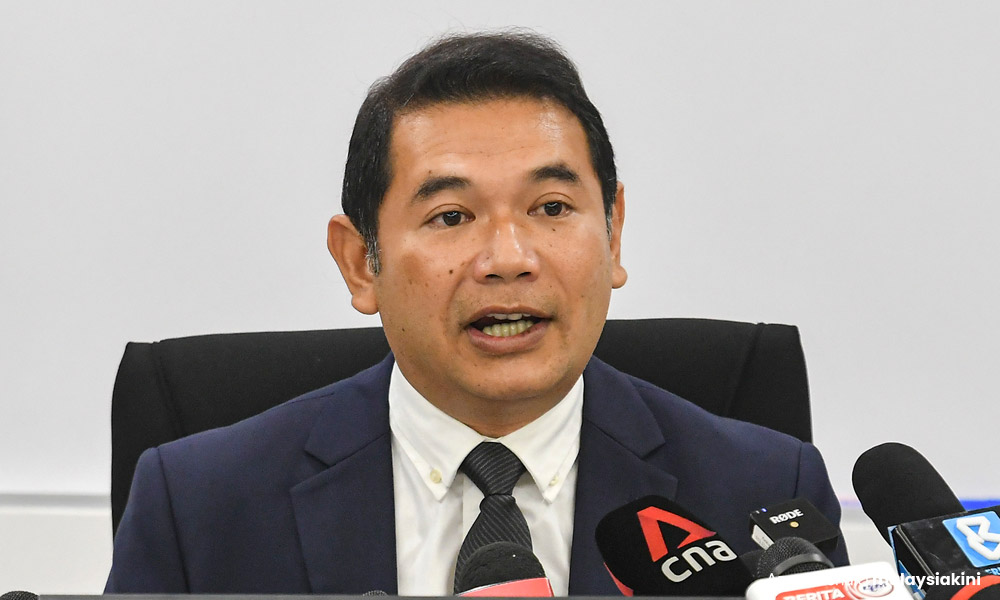
Economic Affairs Minister Rafizi Ramli has likened Malaysia’s economic recovery efforts to his weight loss struggles, saying that moving at a slower pace and making small cuts will ensure a better outcome for the economy.
“To explain it simply, it (the economy) is almost like my weight problems. I struggle with it every day, every month, and every year.
“But the best method I found in losing weight is that I went at my own pace and I made small cuts. Then I saw how good my progress was which allowed me to become comfortable to challenge myself harder,” he said.
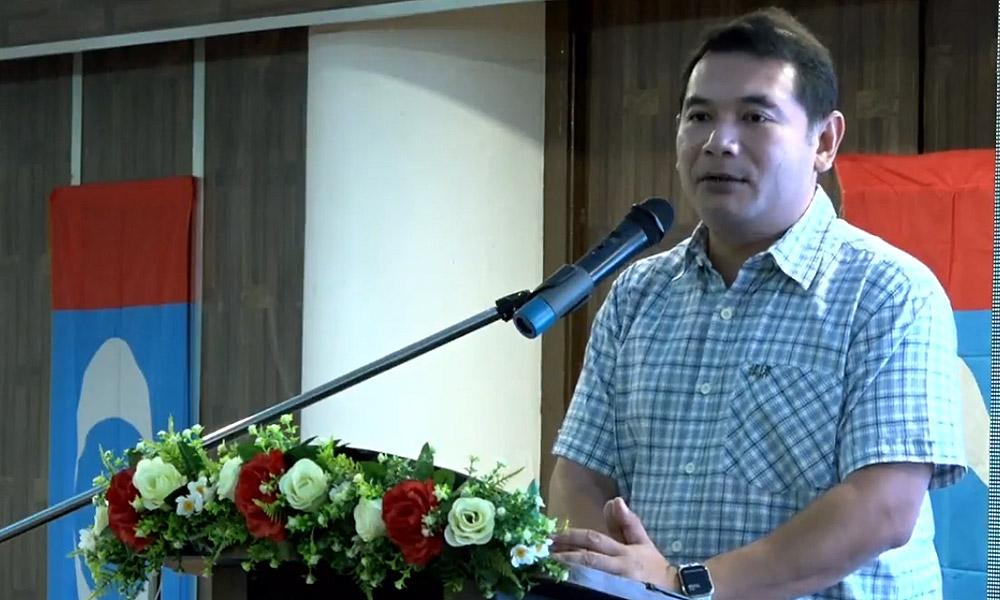
He said this at the Parliament Lecture Series 1.0: Resetting the Malaysian Economy event last night.
Rafizi equated the economy to obesity because “when people become obese, it will open a door to other health issues such as diabetes and heart disease.”
Much like his metaphor, he said that if the economic problems in this country were left to grow and worsen as time progresses, problems such as high cost of living or unemployment would occur and hinder Malaysia’s recovery.
He explained that in the past, most of the efforts to improve the country’s economic situation included implementing sudden and radical changes that negatively affected people’s livelihoods.
The minister said he realised how ineffective the initiatives were and saw how increasingly disappointed the people were getting with the government’s handling of the economy.
“So instead of making big changes at the cost of the people, we (the government) should take baby steps because we can still move forward in that sense.
“Once we’ve settled as much as we can, get the people to become at ease with smaller changes, then only we can push ourselves harder in the recovery process,” he added.
Some issues can be too overwhelming, he said, adding that if too much was spent trying to overcome them, then time and resources would be wasted.
Economy needs ‘resetting’
Rafizi laid out some of the issues his ministry has discovered as reasons to ‘reset’ the economy.
Firstly, he stressed that the government is too disconnected, which causes the public to perceive the current economic situation as unstable.
“There is a disconnect between the government and the economy. It gives the public the perception that we (the country) are not in a good position.
“Our economy is doing well, decently in fact, but the people cannot feel it. Some administrations made the mistake of not being transparent enough to show that the country is not dwindling,” the minister said.
He used subsidies as an example of the disconnect where he feared that if they are not allocated appropriately, it might thin out the country’s budget.
Aside from that, Rafizi also said the country needs to broaden its revenue base, citing Malaysia has one of the lowest tax revenue to GDP ratios in the world.
“If we don’t fix this, our problems might not resolve because the economy can be thriving, and companies can keep making money, but we just do not have enough money to broaden our revenue right now,” he said.
He also said the economy should be restructured to move away from a manufacturing-focused economy to a more service-based one.
Emphasising that the global economy is agile, Rafizi said the government needs to keep up with it.
“In the past, we were able to predict obstacles and then make up a plan on the spot to overcome them.
“Everything is so fast-paced now, changes happen almost every month so we need to come up with a more agile plan which also includes adopting a different mindset,” he said.
He continued by saying the government should adopt digitisation more thoroughly, rather than seeing it as a mere IT upgrade.
Separation of finance and economy
In his speech, Rafizi said he acknowledged there may have been confusion when the government created separate ministries for economy and finance.
He understood the public would assume those would go hand in hand, though he explained both sectors had too many problems for one ministry to handle alone.
“The economy and finance were separated because there was a need for individual focuses.
“They used to be under the same umbrella but after much deliberation, the cabinet realised one ministry cannot handle both at the same time,” he said.
Rafizi lauded Prime Minister Anwar Ibrahim, who is also the finance minister, for his performance.
He said although it had only been a few months since he took office, in his opinion, believed Anwar was dutifully executing his role.