
COMMENT | Putin's nuclear threats an 'extinction-level' event
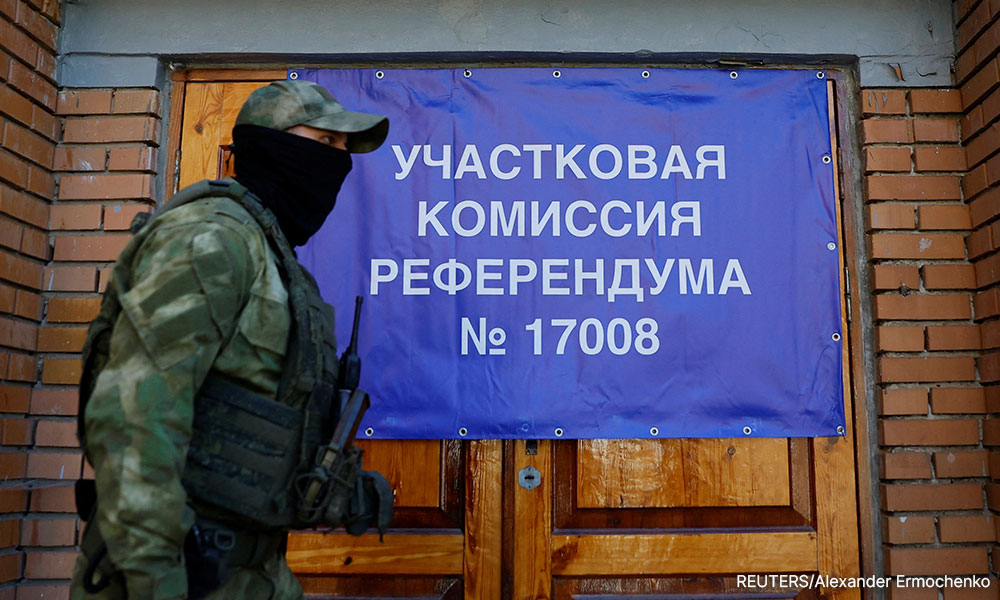
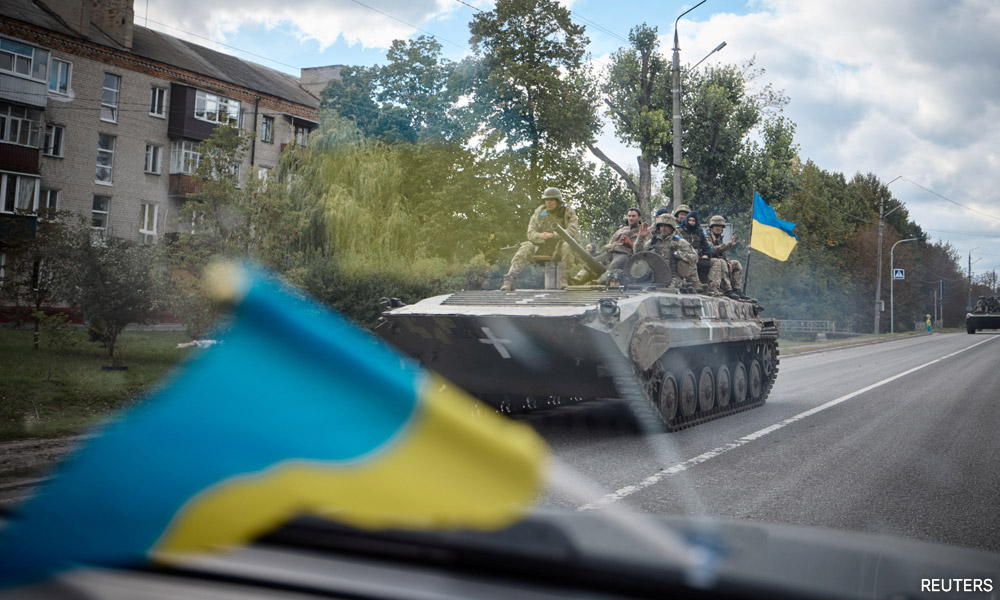
COMMENT | As of Sept 23, four provinces that belong to Ukraine are still under the occupation of Russian forces. These are Donetsk, Luhansk, Kherson and Zaporizhia, five if we count Crimea too as we should.
When one cares to look at the map of Ukraine, this reflects a sizable portion of Ukraine.
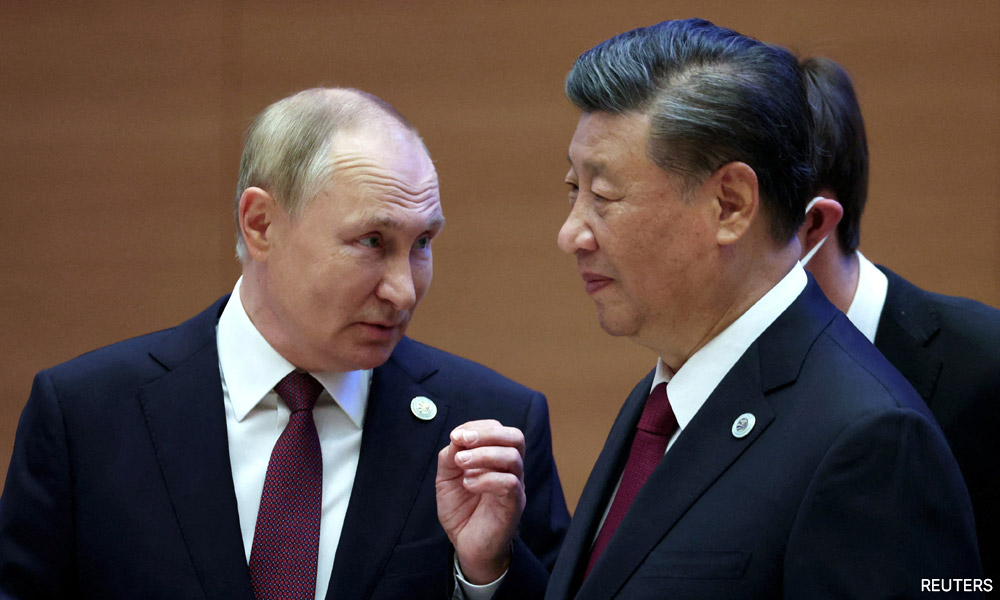
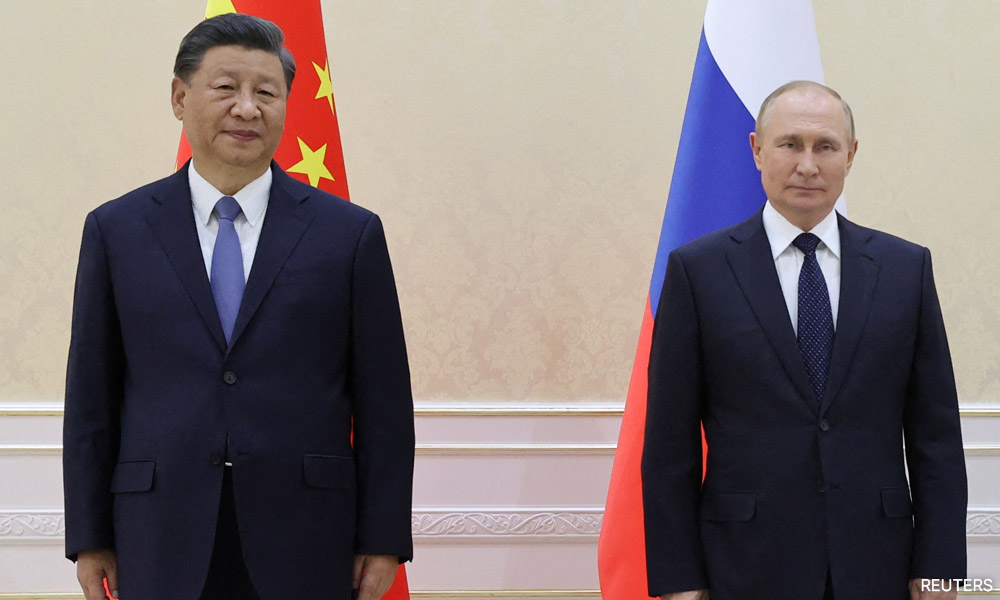
Invariably, when Russian President Vladimir Putin affirmed on Sept 22, that the biggest mobilisation in Russia since 1945 has been agreed, where up to 300,000 Russians would be commissioned, the seriousness with which the conflict between Russia and Ukraine has gone several notches up, is indeed in motion.
Rightfully, the international press has taken Putin's actions and words seriously; especially those in the West.
When it comes to the possibility of drawing on more...
COMMENT | As of Sept 23, four provinces that belong to Ukraine are still under the occupation of Russian forces. These are Donetsk, Luhansk, Kherson, and Zaporizhia, five if we count Crimea too as we should.
When one cares to look at the map of Ukraine, this reflects a sizable portion of Ukraine.
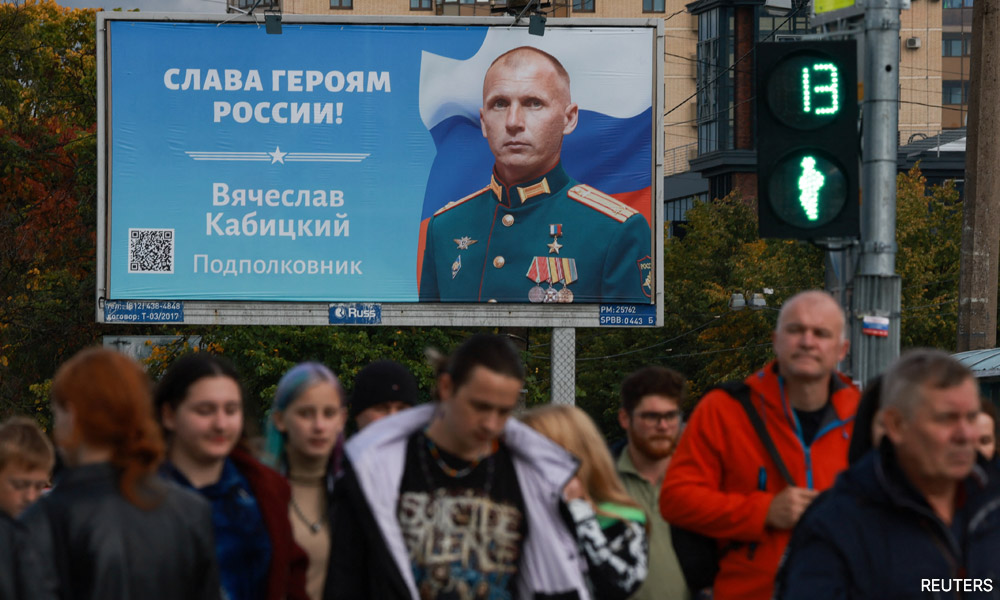
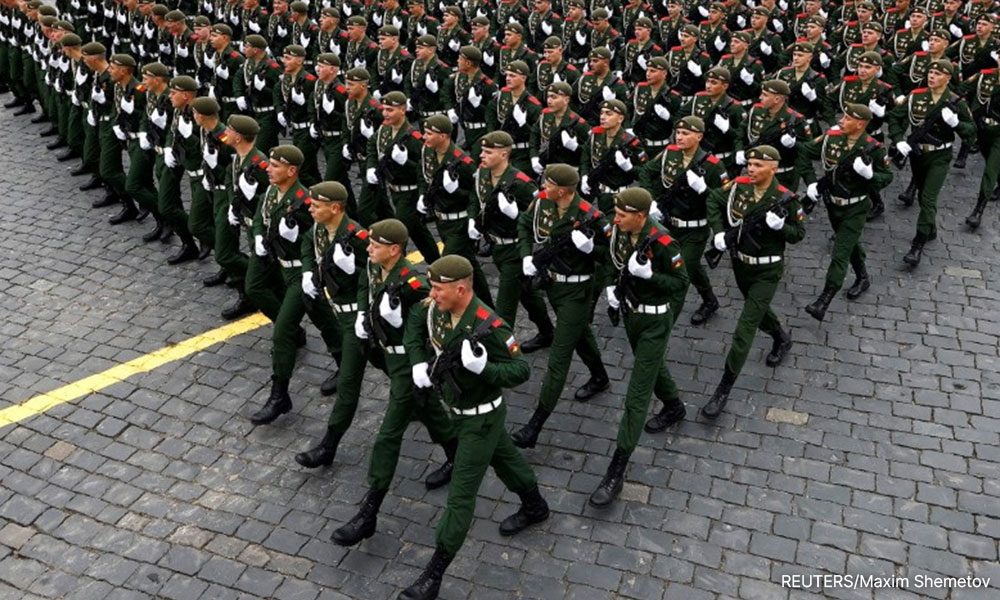
Invariably, when Russian President Vladimir Putin affirmed on Sept 22 that the biggest mobilisation in Russia since 1945 has been agreed upon, where up to 300,000 Russians would be commissioned, the seriousness with which the conflict between Russia and Ukraine has gone several notches up.
Rightfully, the international press has taken Putin's actions and words seriously; especially those in the West.
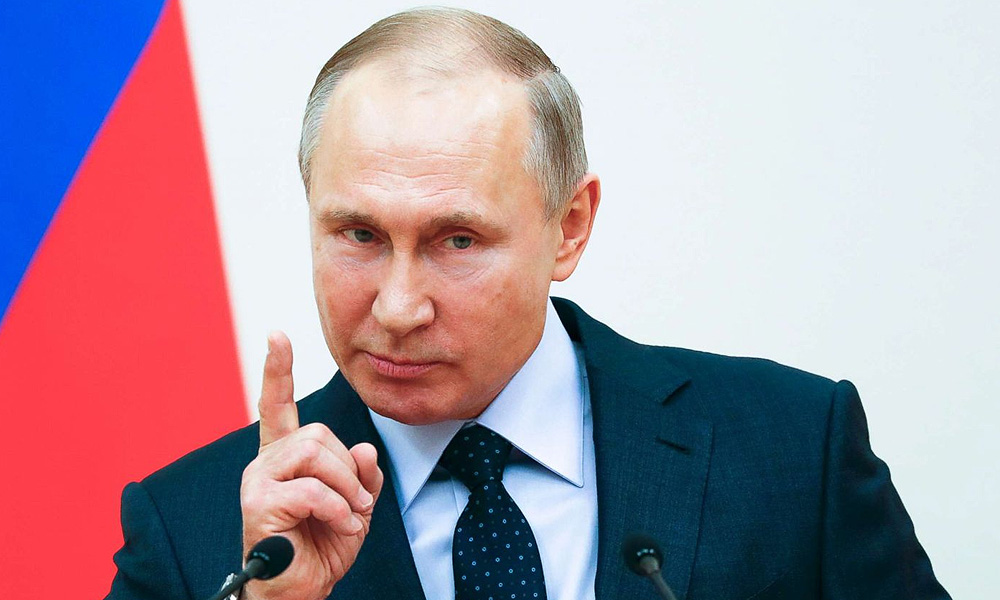
When it comes to the possibility of drawing on more weapons, potentially nuclear weapons, one should add that Putin further added: "This is not a bluff”.
The international press is not mistaken. The fact is there is no daylight that separates the incendiary nuclear rhetoric of a self-declared nuclear weapons power state such as North Korea, that did so this year, from that of Russia which has thousands of nuclear warheads. Why?
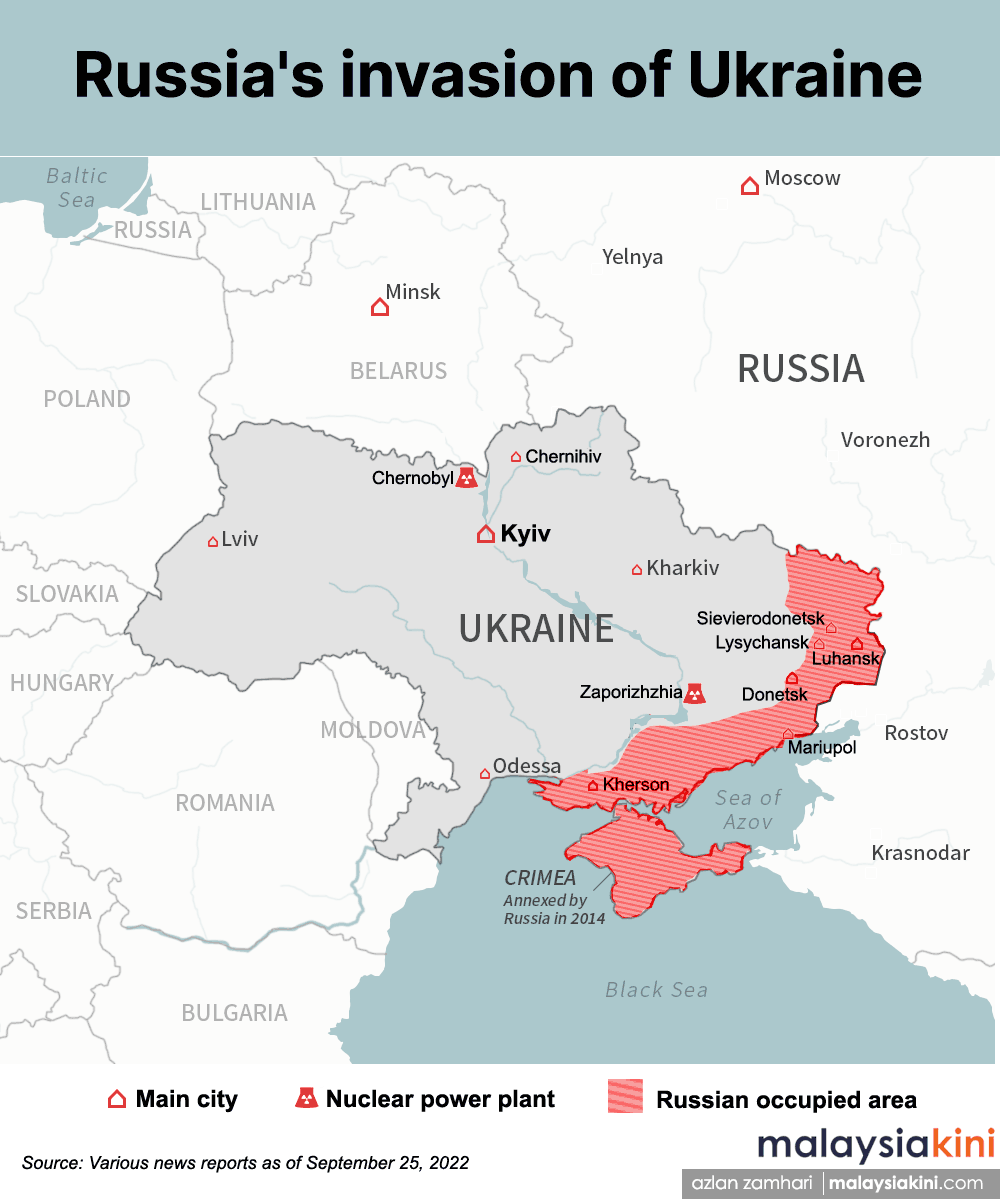
First and foremost, although Ukraine has four nuclear reactors, in the event Russia would launch a nuclear attack, in order to prevent Ukraine from being too closely aligned with the European Union (EU) and the North Atlantic Treaty Organisation (Nato), which Kyiv has already done, there is no shortage of targets in Putin’s view.
Of the four nuclear reactors, Putin has succeeded in controlling one, while the one in Chernobyl is no longer working. Yet, Chernobyl can be rendered once again into a nuclear wasteland.
By attacking such a target alone, Putin will immediately gain the upper hand. Among them, the Zaporizhia Nuclear Power Plant supplies up to 1/5 of the electricity supply in Ukraine.
But Putin will not attack a nuclear reactor that it seeks to annex.
Existential threat
That being said, what Putin is facing is not just a proxy war barely 200km away from Moscow.
Rather, it is a war where Ukraine, which has been a part of Russia for over two centuries and had been pro-Russia even since its independence, has refused to yield to the wishes of the Kremlin anymore since its annexation of Crimea and war in Donbas and Luhansk.
This is what Putin cannot stand. If anything, he sees this problem as an existential threat bar none.
Secondly, this problem also poses a huge legitimacy deficit to Putin's rule.
Whether the world likes it or not, Putin has always seen and projected himself as the defender of the Slavic People.
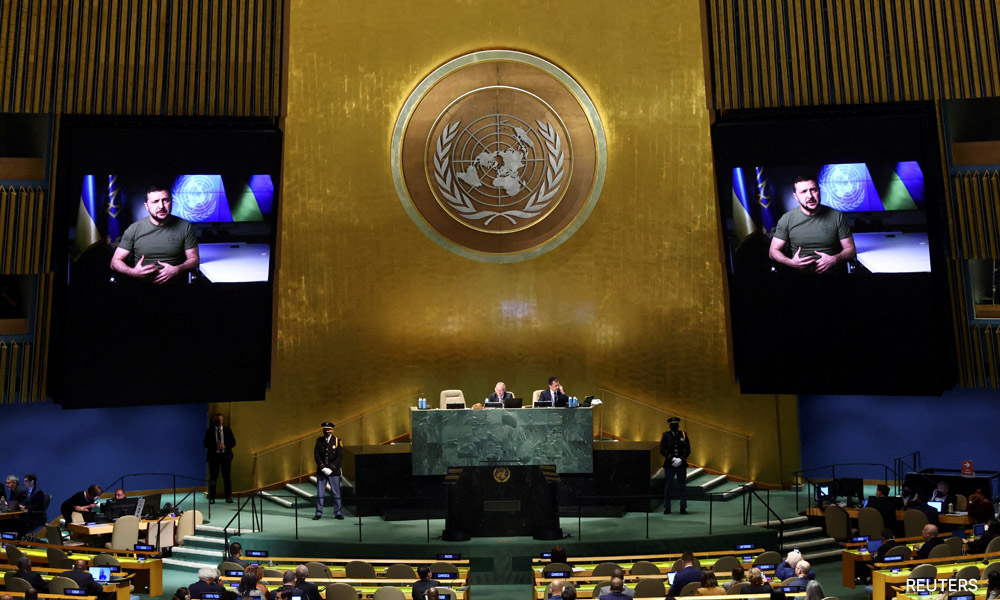
Just last week, prior to speaking to the UN General Assembly in New York City from Moscow, Putin again insisted he is protecting the "Russian world."
This policy is tantamount to the Brezhnev Doctrine of 1968 during the era of the Soviet Union when the then general secretary Brezhnev agreed to intervene in any area or any region that had dissidents rising against the Soviet Union.
Indeed, it is not a secret in the least bit that Putin has always longed and craved for the return of "Mother Russia", one as large as the Soviet Union.
The latter was formed of 14 republics, the collapse of which on Dec 26, 1991, was referred to by Putin as the "greatest geopolitical catastrophe of the century".
More importantly, although the Commonwealth of Independent States (CIS) still exist all but in name in Moscow, the very fact that Putin continues to have this "Imperial Nostalgia" can only suggest that increased use of force and coercion to rebuild the Soviet Union in some form are not quite beyond Putin.
In this context, every little word and gesture that Putin uses must not be taken lightly.
Not bluffing
A nuclear attack is within the realm of possibility since there are nuclear reactors that are not supplying energy to Russia but to Ukraine.
In turn, Ukraine can use the ones that are still under its control to keep up the supply of energy both to itself and to the member states of the European Union.
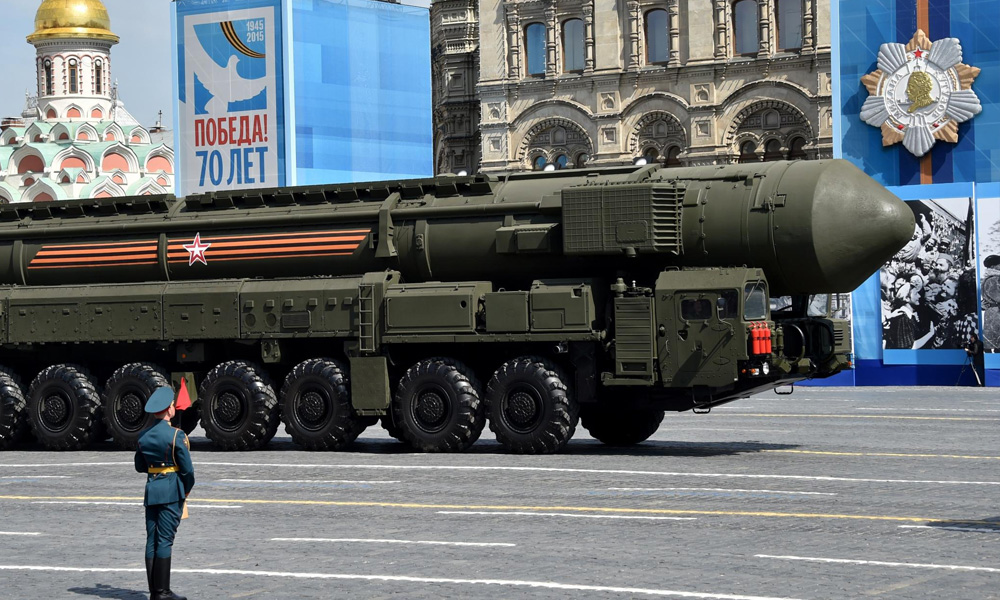
While a nuclear war will not be favoured by the Russians given its lethal blowback, Russian parents would not like to face the prospect of 300,000 Russian conscripts being deployed on the battlefront, especially when it is futile.
With 80,000 Russian casualties and counting, there is every possibility that the same number, if not more, can perish in Eastern Ukraine.
Thirdly, Putin is not "bluffing" precisely because his continued popularity counts on him winning this war.
And, as things go, with the West unwilling to concede that this war is just as dangerous to their national interest as it is to that of Russia, what the world is now witnessing, and living through, is an extended version of the Cuban Missile Crisis, the standoff between the US President John Kennedy and Soviet President Nikita Khrushchev.
As things are, this devastating war has crossed more than 200 days since Feb 24, 2022.
The West and countries such as Japan and South Korea that support Ukraine against Russia are not unlike the actors playing the Russian Roulette in the movie "The Deer Hunter".
Each seems to be taking turns to put one bullet in the six chambers of the Smith and Wesson revolver.
Finally, if the Russian casualties continue to mount, or, even triple to 240,000 fatalities, then the Siloviki, the Russian security elite, might deem Putin as a threat to Russia’s own survival and safety and may choose to topple him.
Should this scenario come to be, Putin has nothing to lose by pressing the nuclear button to launch not just one but multiple nuclear strikes that will trigger almost an automatic Mutual Assured Destruction from the West.
The plain and simple fact is all Intercontinental Ballistic Missiles (ICBMs) from Moscow to Washington DC take less than seven minutes to hit their targets.
Thus, the world must wake up to end this madness now.
Barring which the world, not excluding these writers or anyone who is reading this, is actually looking at an extinction-level event.
The key responsibility, however, rests with Indonesia to make peace, as Indonesia is the chair of G20 and the future chair of the Asean bloc that is against the use of all nuclear weapons. Malaysia must back Indonesia to the fullest extent.
OSMAN ERDOGDU is a PhD candidate and geo-strategic analyst. PHAR KIM BENG is the former director of political and security community in Asean Secretariat Jakarta.
The views expressed here are those of the author/contributor and do not necessarily represent the views of Malaysiakini.