
COMMENT | Rejected votes three times as common in Orang Asli areas
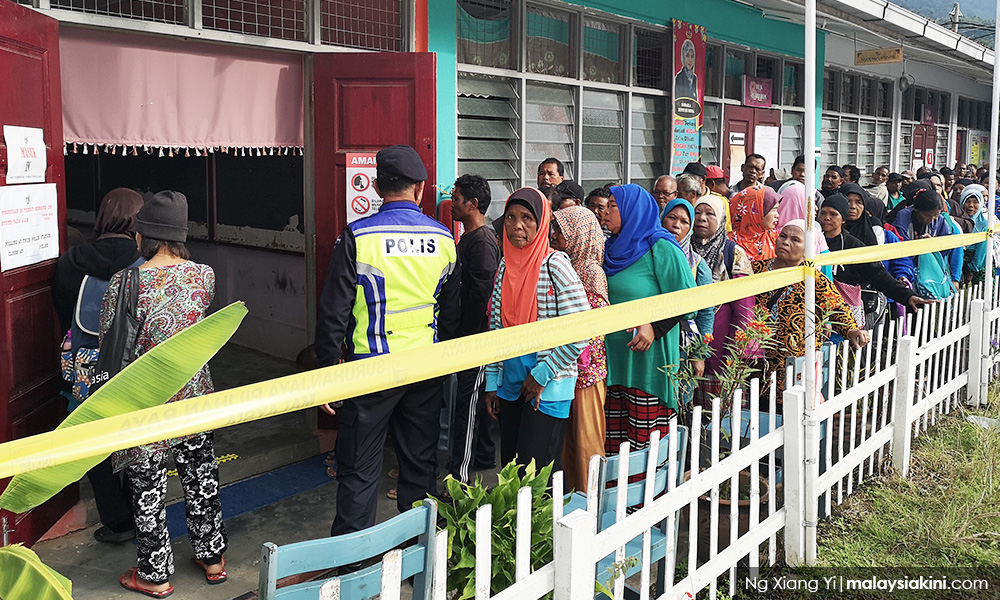
COMMENT | In January 2013, a group of Orang Asli voters from Perak protested at the Perak Orang Asli Development Department (Jakoa) office over a voter education event that was held for the Orang Asli community in Tapah.
According to Malaysiakini, Perak Pakatan Rakyat who was part of the protest claimed that the event attendees were forced to mark a dummy ballot in favour of BN in front of a Jakoa officer and a BN assemblyperson. Then BN Air Kuning assemblyperson Samsudin Abu Hassan explained that the event’s goal was to reduce rejected ballots among the Orang Asli.
Seven years later, electoral watchdog Bersih’s Inclusive Electoral Reforms in Malaysia report highlighted poor voter education among the Orang Asli, with anecdotal evidence that voters from the community may not know how to cross the ballot correctly.
Both accounts point to an unfortunate fact - almost seven decades since the country’s first national election in 1955, rejected votes are still prevalent among the Orang Asli.
To gauge the severity of the issue, Tindak Malaysia, an NGO specialising in electoral reform, has...
COMMENT | In January 2013, a group of Orang Asli voters from Perak protested at the Perak Orang Asli Development Department (Jakoa) office over a voter education event that was held for the Orang Asli community in Tapah.
According to Malaysiakini, Perak Pakatan Rakyat who was part of the protest claimed that the event attendees were forced to mark a dummy ballot in favour of BN in front of a Jakoa officer and a BN assemblyperson. Then BN Air Kuning assemblyperson Samsudin Abu Hassan explained that the event’s goal was to reduce rejected ballots among the Orang Asli.
Seven years later, electoral watchdog Bersih’s Inclusive Electoral Reforms in Malaysia report highlighted poor voter education among the Orang Asli, with anecdotal evidence that voters from the community may not know how to cross the ballot correctly.
Both accounts point to an unfortunate fact - almost seven decades since the country’s first national election in 1955, rejected votes are still prevalent among the Orang Asli.
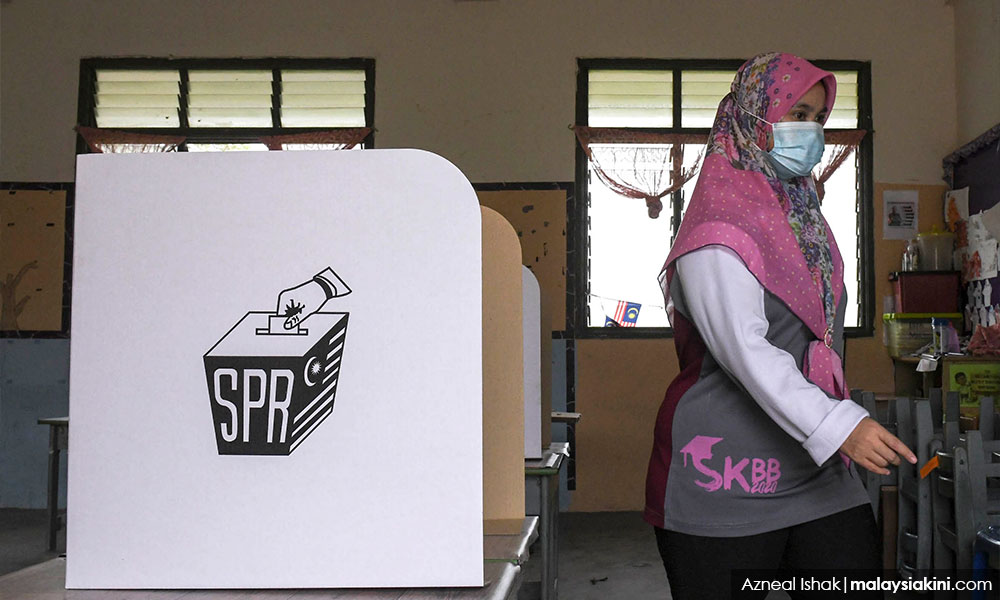
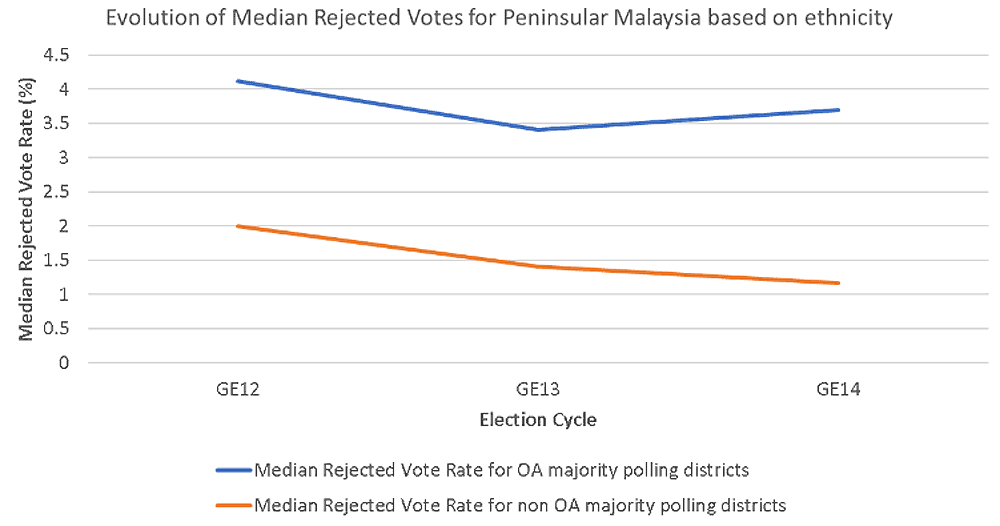
To gauge the severity of the issue, Tindak Malaysia, an NGO specialising in electoral reform, has crunched the numbers in the last three general elections and found that the polling districts with an Orang Asli majority had a median rejected vote rate (RVR) triple (3.15 times) that of non-Orang Asli majority areas for the 14th general election (GE14) in 2018.
Not only that, the gap between these two demographics has widened over the last three general elections.
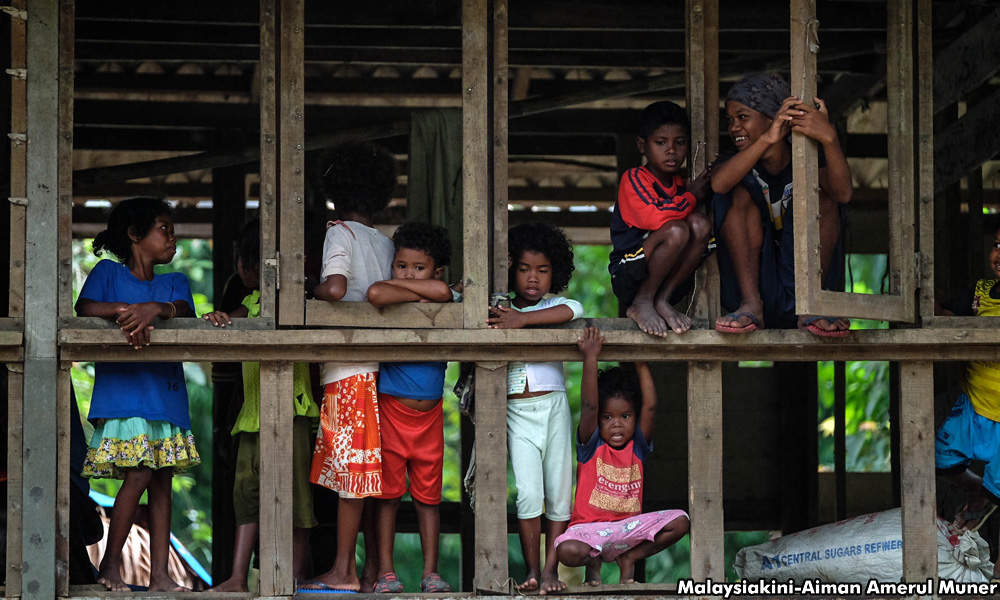
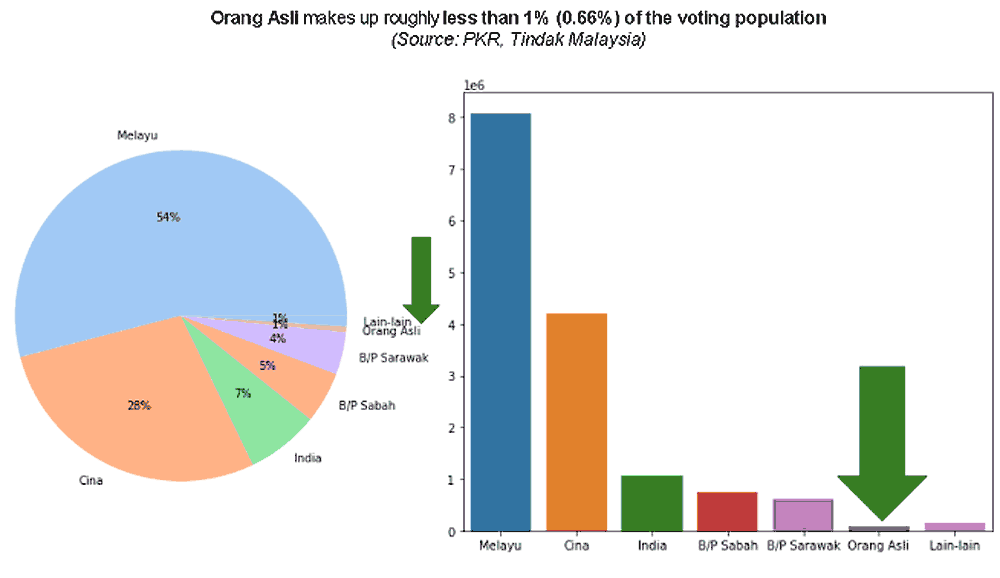
For every 200 voters in Malaysia, there is only one voter from the Orang Asli community (0.66 percent of the total voting population). The high RVR among the Orang Asli community can influence results in competitive seats, especially determining a winning candidate and potentially determining which coalition/political party can form a government.
One of the notable cases is the state constituency of Chenderiang (where Orang Asli community constitutes 21.95 percent of the GE14 voter population) where Ahmad Faizal Azumu, who later became Perak’s menteri besar under Pakatan Harapan rule, won by a razor-thin majority of 39 votes - but the number of rejected votes recorded was 365.
Two polling districts with Orang Asli majority in Chenderiang yielded 103 rejected votes, which is bigger than Faizal’s winning majority. As GE14 initially did not yield a single coalition with an outright majority to form a state government in Perak, unaddressed rejected votes of this community bear a lot of weight.
To appreciate the importance of this rarely discussed topic, we must understand some key concepts of our electoral system.
Rejected vote patterns from GE12 to GE14
Since we practise the first-past-the-post system and have geographical constituencies, Malaysia is divided into parliamentary and state constituencies.
Polling districts (daerah mengundi) are the subunits of a state constituency with one or more polling centres. In a given election, not only the public is made aware of the winner of the constituency (the one who wins the most valid votes), information about the rejected votes is shown.
In the simplest sense, a rejected vote is a vote where the preference of the voter was not able to be determined or rejected due to election laws (refer to the section on determining a rejected and spoilt vote).
In a tight contest between two or more candidates, rejected votes can play a big factor in determining the winner of the constituency. Tindak Malaysia carried out two separate research works on the issue of rejected votes.
In his recent research, Tindak Malaysia director Danesh Prakash Chacko discovered that rejected ballots made up around 1.32 percent of total votes issued to the voters (throughout Malaysia) in the 2018 general election.
When the study was done to see rejected vote patterns based on ethnicity, Sabah bumiputera-majority constituencies comprised the highest average RVR (2.40 percent) in Malaysia. In comparison, ethnic Chinese-majority constituencies constituted the lowest average RVR (close to 1 percent). However, these statistics masked the RVR of one community.
Through a separate research on the polling districts in Peninsular Malaysia from GE12 (2008) to GE14 (2018) by Danesh and Tindak Malaysia data scientist Teoh Keng Hooi, the highest rejected votes in Peninsular Malaysia took place in Orang Asli majority polling districts of Cameron Highlands for every election cycle. For example, the average rejected votes for Peninsular Malaysia (for all areas) was 1.4 percent in GE14 and Pos Lenjang - Orang Asli majority polling district - registered a rejected vote rate of 15.86 percent.
This study was repeated again to identify the number of Orang Asli majority polling districts found in top 20 polling districts with highest rejected votes for a given election cycle. Orang Asli majority polling districts constituted 15 out of top 20 polling districts with highest rejected votes in GE12, 10 out of top 20 in GE13 and 12 out of top 20 in GE14.
Further study was conducted to see the proportion of Orang Asli majority polling districts that had rejected vote rate greater than Peninsular Malaysia median rejected vote rate (for GE12 to GE14). Through this focused study, Danesh and researcher Teoh Keng Hooi, classified a polling district as high (or not high) RVR by comparing its RVR against the median RVR in polling districts across Peninsular Malaysia for a given election cycle. The aim of this part of the study is to measure the gravity of rejected vote prevalence among the Orang Asli voters.
In GE14, among the 79 polling districts with an Orang Asli majority, 71 of them had registered an RVR greater than the median Peninsular Malaysia RVR of 1.14 percent, ranging from 1.58 percent to 15.86 percent.
This means nearly all or all the Orang Asli majority polling districts in Johor, Kelantan Pahang and Selangor were classified as having a high RVR. All these outcomes point to strong evidence of Orang Asli majority areas having higher RVR compared to other demographic settings in Peninsular Malaysia.

Determining rejected, spoilt votes
In Malaysia, it is easy to confuse between a rejected vote (undi ditolak) and a spoilt vote (undi rosak). The spoilt vote applies to ballot papers not placed in the ballot box between the start (eg 8am) and end (eg 6pm) during the polling day. It arises when in one of the four situations stated below:
The ballot paper was torn before it was marked
The presiding officer (ketua tempat mengundi)* retrieves a ballot paper that was taken outside of the polling stream
The ballot paper is dirty and not useable
The voters wrongly marked their ballot paper
*The presiding officer is appointed officially by the returning officer to carry out and monitor the polling and counting process on polling day. He or she is the leader of the voting stream (saluran), and three to four polling clerks (kerani pengundian) assist the presiding officer.
A rejected vote is classified during the counting process (after the polling process). The potential rejected ballot paper will be included in the doubtful ballot tray during the counting process. A ballot paper is rejected if:
The ballot paper was not stamped or perforated with an official mark or not initialled by the presiding officer
The ballot paper shows marking for more than one candidate
The ballot paper has been marked or written in a manner where the voter can be identified
The ballot paper was marked or unmarked other than the place or manner in which it was provided
The ballot paper does not indicate the intention of the voter
RVR in Cameron Highlands
Of 79 polling districts in Peninsular Malaysia that have an Orang Asli majority, nine of them are located in the Cameron Highlands parliamentary constituency and they exhibited a very high RVR through the last three general elections. Some 21.56 percent of the electorate of Cameron Highlands in GE14 comes from the Orang Asli background. This constituency is home to the polling districts with the highest RVR in Peninsular Malaysia for GE12 to GE14.
Although the RVR for both Orang Asli and non-Orang Asli communities has been declining since GE12, the gap between Orang Asli, specifically the Semai community, and non-Orang Asli majority polling districts remains large.
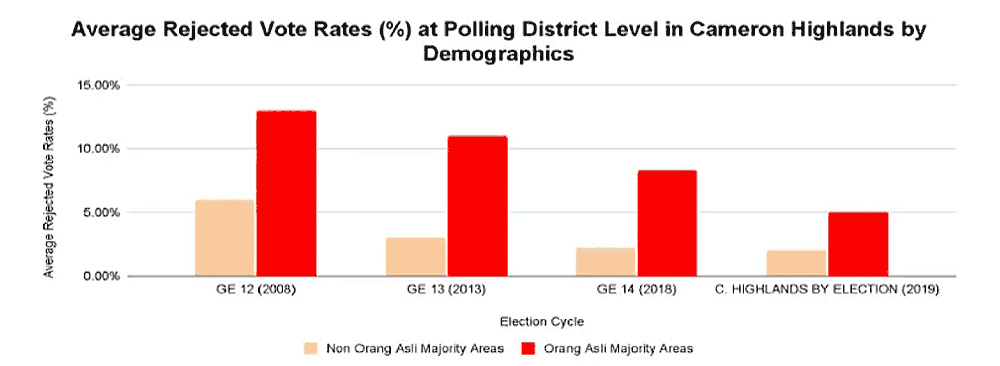
When looking at the voter demographic by age within Cameron Highlands, the data showed positive signs that rejected votes are reducing, especially among the young Orang Asli voters.
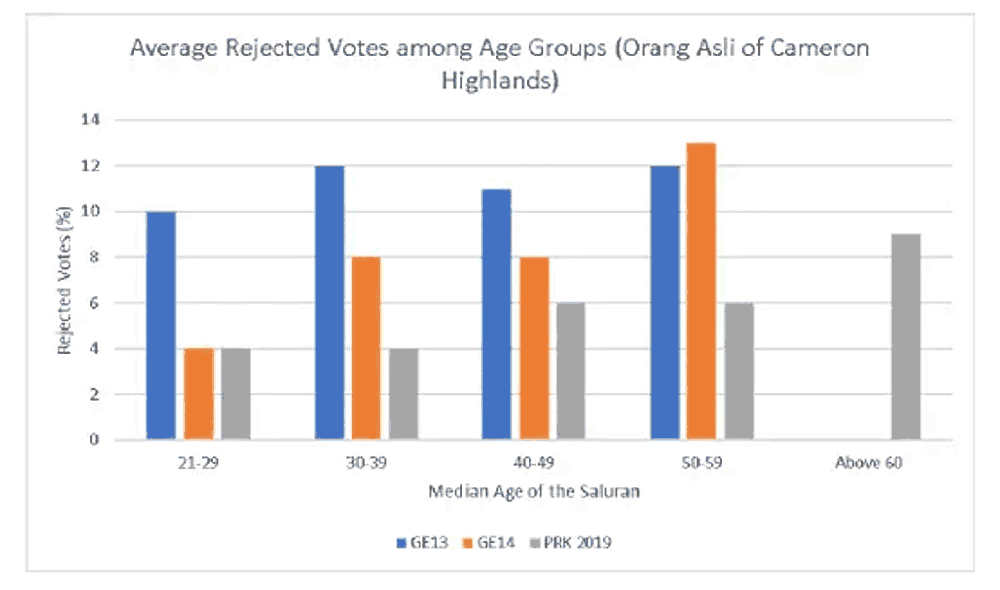
From the graph above, it is clear that the RVR of Orang Asli voters is declining irrespective of the voter’s age. The steepest decline occurred among first-time or young voters within the said community. Between GE13 and GE14, RVR was reduced by two and a half times for the youngest voters.
In a recent interview, PSM secretary-general Sivarajan Arumugam shared that the divide between younger and older Orang Asli generations may influence the rejected votes in specific Orang Asli communities.
While the young are proactive in tackling issues surrounding the community, older voters tend to take a backseat as they are limited in terms of their physical capabilities and exposure to critical information, which will help them to vote correctly.
RVR in Chini
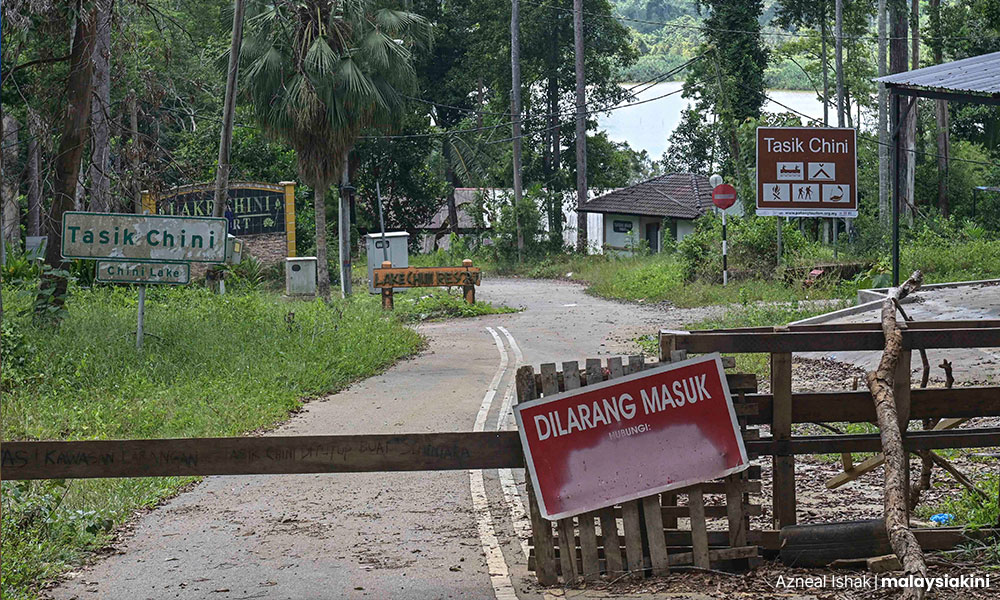
Further south of Cameron Highlands, the Chini state constituency in Pahang has 9 percent of its electorate categorised as Orang Asli (primarily Jakun with some Semai). Only three polling districts in Chini are Orang Asli majority areas. The analysis of RVR patterns between Orang Asli and non-Orang Asli majority areas also showed a significant gap.
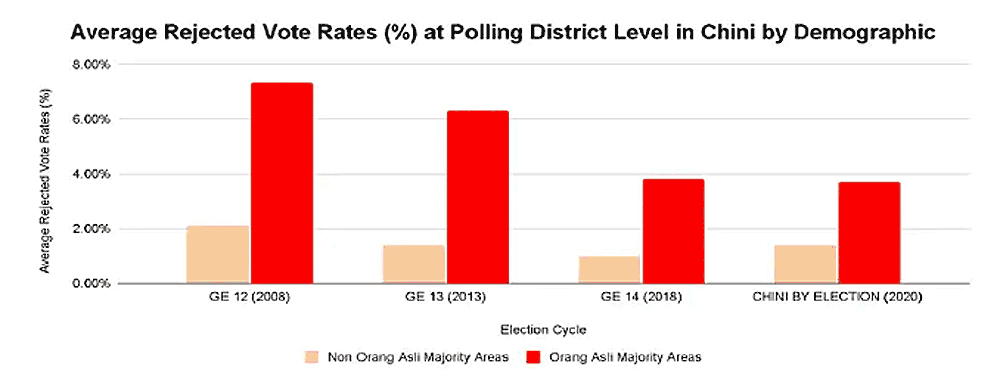
In GE12, the average RVR of Orang Asli majority areas within Chini was four times higher than non-Orang Asli majority areas. However, this gap has substantially narrowed since then. By the time the Chini by-election happened in 2020, the gap size for RVR was reduced to two times.
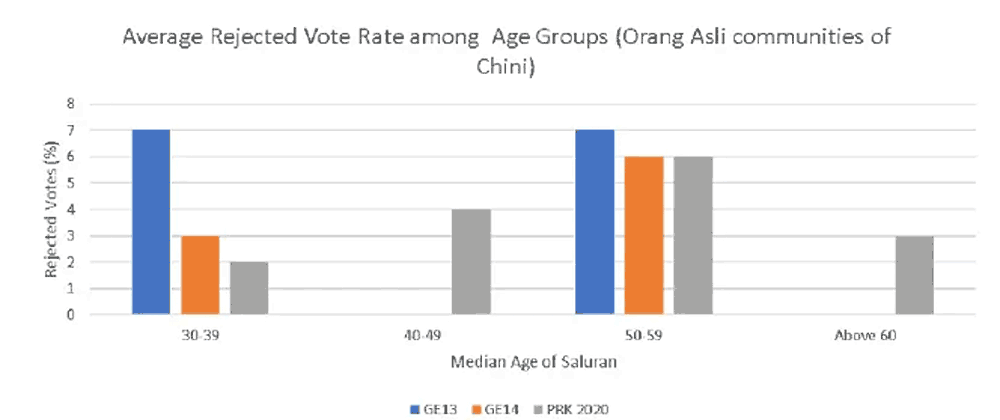
Tindak Malaysia further studied this RVR pattern for Chini, focusing on the voter age. Similar to Cameron Highlands, the RVR of younger Orang Asli voters has been substantially reduced.
For more studies of other seats with different Orang Asli ethnic groups, click here to view Tindak Malaysia’s statistical research.
In the second part of this special report, the authors look at the reasons behind the high RVR in Orang Asli areas and the potential solutions.
HEW HOONG LIANG and DANESH PRAKASH CHACKO are part of electoral reform NGO Tindak Malaysia.
This story was produced with the financial support of the European Union in the form of a grant from Internews Malaysia. The contents are the sole responsibility of Internews and do not necessarily reflect the views of the European Union.